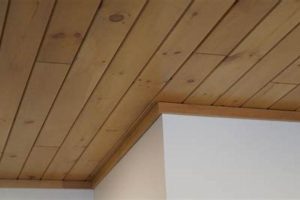
The term describes a manufactured panel, typically composed of wood or composite materials, that has undergone all necessary processing steps to render it suitable for its intended application. This includes cutting to specific dimensions, surface treatments such as sanding and coating, and edge finishing. As an example, a cabinet door component prepared for assembly, complete with applied finish and hardware mounting holes, would fit this description.
Such a product offers several advantages, including reduced labor costs for the end user as well as greater consistency in quality and appearance. Historically, manufacturers of furniture and other wood-based products often performed all finishing steps in-house. However, outsourcing these operations to specialized suppliers has become increasingly common due to the efficiency and expertise these suppliers can provide. This shift allows manufacturers to focus on core competencies such as design and assembly.
The subsequent sections of this discussion will delve into specific types of these panels, detailing various materials, construction methods, and applications relevant to different industries. This will provide a comprehensive understanding of the factors involved in selecting the appropriate solution for a given project.
Guidance on Utilizing Pre-Processed Panels
The following recommendations are designed to maximize the benefits derived from the use of pre-processed panels and to minimize potential challenges during integration into final products.
Tip 1: Precise Specification: Accurate and comprehensive specification is paramount. Dimensions, material type, finish requirements (color, sheen, durability), and edge details must be clearly defined in the order documentation. For example, specifying “maple veneer, clear coat satin finish, eased edges, dimensions 24″ x 36″ x 0.75″” leaves little room for ambiguity.
Tip 2: Quality Control Upon Receipt: Implement a thorough inspection process upon delivery. Verify dimensions, finish quality, and absence of damage during transit. AQL (Acceptable Quality Limit) sampling plans can be employed to ensure statistically significant assessment of batch quality.
Tip 3: Environmental Considerations: Acclimatize the material to the ambient conditions of the manufacturing environment prior to processing or assembly. This minimizes potential for warping, cracking, or finish inconsistencies due to moisture content fluctuations.
Tip 4: Edge Treatment Compatibility: Ensure that any additional edge treatment, such as the application of edge banding or molding, is compatible with the existing finish and substrate. Incompatibility can lead to adhesion issues or discoloration.
Tip 5: Hardware Compatibility: Verify that the selected hardware (hinges, fasteners, etc.) is suitable for the material type and thickness. Using undersized screws in a dense material, for instance, can result in stripped threads and compromised structural integrity.
Tip 6: Protective Handling: Employ careful handling practices to prevent scratching or damage to the surface. Use padded carts and storage racks, and avoid stacking components directly on top of one another.
Tip 7: Documentation and Traceability: Maintain detailed records of supplier specifications, batch numbers, and inspection results. This facilitates troubleshooting in the event of quality issues and enables efficient recall procedures if necessary.
Adhering to these guidelines will enhance the overall efficiency of the manufacturing process, reduce waste, and improve the quality and consistency of the finished product.
The subsequent analysis will explore cost-benefit considerations when deciding whether to utilize pre-processed materials versus performing all finishing operations in-house.
1. Appearance & Durability

The correlation between appearance and durability represents a foundational consideration when selecting a finished panel. The selected coating or surface treatment dictates both the aesthetic qualities and the resistance of the panel to wear, tear, and environmental factors. A comprehensive understanding of this interrelation is essential for ensuring the long-term performance and visual appeal of the final product.
- Coating Type and Composition
The specific type of coating appliedwhether lacquer, varnish, polyurethane, or other specialized formulationdirectly impacts both the aesthetic character and the protective properties. For example, a high-gloss lacquer provides a visually striking surface but may be more susceptible to scratching than a matte polyurethane. The chemical composition of the coating also determines its resistance to UV radiation, chemical exposure, and moisture penetration, directly affecting the longevity of the panel.
- Surface Preparation Techniques
Proper surface preparation is crucial for achieving optimal adhesion and performance of the finish. Sanding, priming, and cleaning processes ensure a smooth and uniform surface, free from imperfections that could compromise the integrity or appearance of the coating. Insufficient preparation can lead to premature peeling, blistering, or uneven color distribution, negatively impacting both the aesthetic and protective qualities of the panel.
- Scratch and Abrasion Resistance
The ability of the surface to withstand scratching and abrasion is a key indicator of its durability. Harder coatings, often incorporating additives such as ceramic particles or UV inhibitors, offer superior resistance to wear and tear, maintaining the appearance of the panel over time. The specific use case of the panel should dictate the required level of scratch and abrasion resistance; for example, a countertop surface requires a more durable finish than a decorative wall panel.
- Environmental Resistance
Exposure to moisture, heat, and chemicals can significantly degrade the appearance and structural integrity of a finished panel. The selection of appropriate coatings and edge treatments is critical for mitigating these effects. Water-resistant finishes, UV-resistant pigments, and chemical-resistant sealants can protect the panel from discoloration, warping, and delamination, extending its lifespan and maintaining its aesthetic appeal in challenging environments.
In summary, achieving the desired balance between aesthetic appeal and long-term durability requires careful consideration of the coating type, surface preparation techniques, scratch resistance, and environmental resistance. These factors are inextricably linked, and a holistic approach to their evaluation is essential for selecting the optimal solution. The subsequent sections will delve into the specific considerations surrounding dimensional accuracy.
2. Dimensional Accuracy

Dimensional accuracy, in the context of a finished board, refers to the degree to which its actual measurements conform to the specified dimensions outlined in the design or order. This is not merely a matter of precision; it is a critical factor influencing assembly, functionality, and the overall quality of the final product in which the board is incorporated. Deviations from specified dimensions, even seemingly minor ones, can cascade into significant problems during subsequent manufacturing stages. For example, if a cabinet door component is undersized by even a fraction of an inch, it may result in unsightly gaps, compromised structural integrity, or the need for costly rework. Conversely, an oversized component may be impossible to fit without alteration, leading to delays and material waste.
The importance of dimensional accuracy extends beyond basic fit and finish. In applications requiring precise alignment, such as electronic enclosures or scientific instrumentation, even minute discrepancies can impair performance. Furthermore, consistent dimensional accuracy across multiple boards is essential for mass production. Variations between boards can lead to inconsistencies in the final product, affecting its reliability and marketability. Achieving and maintaining dimensional accuracy requires careful control over the manufacturing process, including precise cutting equipment, rigorous quality control procedures, and proper handling and storage to prevent warping or distortion. The cost of neglecting dimensional accuracy far outweighs the investment in these measures, considering the potential for increased scrap rates, rework, and customer dissatisfaction.
In conclusion, dimensional accuracy is an indispensable attribute of a properly finished board, acting as a foundational element for subsequent processes and the overall success of the end product. Its impact spans from aesthetic considerations to functional performance and manufacturing efficiency. While challenges in achieving perfect accuracy exist, a commitment to minimizing deviations through robust quality control and process management is paramount. The subsequent section will address the crucial aspects of material composition.
3. Material Composition

Material composition is a foundational aspect of a finished board, influencing its structural integrity, performance characteristics, aesthetic properties, and suitability for specific applications. The selection of constituent materials determines the board’s strength, weight, resistance to moisture and pests, and its ability to accept finishes. Therefore, a thorough understanding of material options and their respective properties is essential for producing boards that meet the required performance criteria.
- Core Material Selection
The core material, forming the bulk of the board, dictates its primary structural characteristics. Options range from solid wood (hardwood or softwood) to engineered wood products like plywood, particleboard, medium-density fiberboard (MDF), and oriented strand board (OSB). Solid wood offers natural beauty and strength but can be prone to warping and expansion. Engineered wood products provide greater dimensional stability and consistency but may vary in strength and resistance to moisture. For instance, MDF is commonly used for painted cabinet doors due to its smooth surface and stability, while plywood is preferred for structural applications requiring high strength-to-weight ratio. The choice of core material must align with the intended application and desired performance characteristics.
- Veneer and Laminate Options
Veneers and laminates are thin layers applied to the surface of the core material, primarily to enhance the aesthetic appeal or provide a protective layer. Veneers consist of thin slices of real wood, offering the look and feel of solid wood at a lower cost. Laminates are synthetic materials, often made of plastic or paper, that can be printed with various patterns and textures. The selection of veneer or laminate affects the board’s appearance, durability, and resistance to wear and tear. For example, a high-pressure laminate (HPL) is commonly used for countertops due to its scratch and heat resistance, while a wood veneer might be chosen for furniture applications where a natural aesthetic is desired. The choice between veneer and laminate depends on the desired look, durability requirements, and budget constraints.
- Adhesive Selection and Performance
Adhesives play a critical role in bonding the core material to veneers or laminates, ensuring structural integrity and preventing delamination. Different types of adhesives offer varying levels of strength, water resistance, and VOC emissions. Formaldehyde-based adhesives, while strong and cost-effective, have raised concerns about indoor air quality. Alternatives like polyurethane and epoxy resins offer improved performance and lower VOC emissions but may be more expensive. The selection of adhesive must consider the intended application, environmental regulations, and desired performance characteristics. For example, a water-resistant adhesive is essential for boards used in humid environments, while a low-VOC adhesive is preferable for indoor applications to minimize health risks.
- Edge Banding Materials
Edge banding is a strip of material applied to the exposed edges of a board, primarily to conceal the core material, protect the edges from damage, and enhance the aesthetic appeal. Edge banding materials include wood veneer, PVC, ABS, and melamine. The choice of edge banding material affects the board’s appearance, durability, and resistance to moisture. For example, PVC edge banding is commonly used for kitchen cabinets due to its water resistance and durability, while wood veneer edge banding might be chosen for furniture applications where a seamless, natural look is desired. The edge banding must be compatible with the core material and adhesive to ensure a strong and durable bond.
In summary, the material composition of a finished board encompasses a range of interconnected factors, from the selection of core materials and veneers to the choice of adhesives and edge banding. Each component contributes to the overall performance, aesthetic appeal, and suitability of the board for its intended application. A comprehensive understanding of these factors is crucial for making informed decisions that optimize the board’s value and longevity. The following section will address the crucial aspects of edge treatments.
4. Edge Treatment

Edge treatment is an integral process in the production of a finished board, directly influencing its aesthetics, durability, and functional performance. The manner in which the edges are prepared and finished significantly impacts the overall quality and longevity of the resulting product. Neglecting proper edge treatment can lead to premature failure, compromised aesthetics, and reduced value.
- Edge Banding Application
Edge banding involves applying a thin strip of material to the exposed edges of the board, typically to conceal the core material (such as particleboard or MDF), protect the edges from moisture and impact, and enhance the aesthetic appeal. Common edge banding materials include PVC, ABS, wood veneer, and melamine. The choice of material depends on the desired aesthetic, the level of durability required, and the intended application. For example, PVC edge banding is often used in kitchen cabinets due to its water resistance, while wood veneer edge banding may be preferred for furniture applications where a natural wood look is desired. Improper edge banding application can result in peeling, chipping, or moisture intrusion, leading to premature degradation of the board.
- Profiling and Shaping
Profiling and shaping refer to the process of altering the edge profile of the board through machining or sanding. This can involve creating rounded edges, beveled edges, or decorative profiles. The purpose of profiling and shaping is to improve the aesthetic appeal, enhance ergonomics, and eliminate sharp edges that could pose a safety hazard. For example, a table top might have a rounded edge to prevent accidental bumps, while a cabinet door might have a decorative profile to enhance its visual appeal. The precision and quality of the profiling and shaping process directly impact the aesthetic value and perceived quality of the finished board.
- Sealing and Finishing
Sealing and finishing the edges of the board is crucial for preventing moisture intrusion and enhancing durability. This typically involves applying a sealant or finish that penetrates the edge material, creating a protective barrier against water, chemicals, and other environmental factors. Common sealants and finishes include polyurethane, varnish, and lacquer. The choice of sealant or finish depends on the type of edge material and the desired level of protection. For example, a polyurethane sealant might be used on wood edges to provide a durable and water-resistant finish, while a lacquer finish might be used on painted edges to enhance their aesthetic appeal. Proper sealing and finishing are essential for preventing edge swelling, cracking, and delamination, extending the lifespan of the board.
- Edge Preparation Techniques
Prior to any edge treatment application, proper preparation is vital for ensuring optimal adhesion and performance. This encompasses cleaning the edge to eliminate dust, grease, and any loose particles. The edge might undergo sanding to refine the surface, facilitating improved bonding for subsequent treatments. In certain instances, a primer might be applied to enhance adhesion, especially when dealing with porous materials. Meticulous edge preparation lays the groundwork for a robust, enduring, and visually pleasing edge treatment.
In conclusion, edge treatment is a critical aspect of finished board manufacturing, encompassing a range of techniques designed to enhance aesthetics, durability, and functional performance. The choice of edge banding material, profiling and shaping methods, sealing and finishing techniques, and preparation processes all contribute to the overall quality and longevity of the finished product. Proper edge treatment is essential for preventing premature failure, maintaining aesthetic appeal, and maximizing the value of the finished board.
5. Application Suitability
The concept of application suitability is paramount when specifying a finished board. It dictates the board’s ability to perform effectively and safely within its intended environment and under anticipated conditions. A mismatch between a board’s characteristics and its application can lead to premature failure, safety hazards, and economic losses.
- Environmental Factors
The intended environment significantly influences the choice of a finished board. Factors such as humidity, temperature fluctuations, exposure to sunlight, and potential contact with chemicals must be considered. For example, a board intended for outdoor use requires weather-resistant coatings and materials to prevent warping, cracking, and decay. In contrast, a board used in a laboratory setting may require chemical-resistant coatings to withstand spills and fumes. Neglecting these environmental factors can result in rapid degradation and functional impairment.
- Load-Bearing Requirements
The anticipated load-bearing requirements are crucial for determining the appropriate core material and construction of a finished board. The board must be able to withstand the weight and stress imposed upon it without deformation or failure. For example, a shelving unit requires a board with sufficient strength and stiffness to support the weight of stored items. In contrast, a decorative wall panel may have minimal load-bearing requirements. Failure to consider load-bearing capacity can lead to structural collapse and potential safety hazards.
- Aesthetic Considerations
Aesthetic considerations play a significant role in selecting a finished board, particularly in applications where visual appeal is paramount. The desired finish, color, texture, and edge treatment must align with the overall design aesthetic. For example, a high-end furniture piece may require a carefully selected wood veneer with a flawless finish. In contrast, a utilitarian storage unit may prioritize functionality over aesthetics. Neglecting aesthetic considerations can result in a visually unappealing product that fails to meet customer expectations.
- Regulatory Compliance
Compliance with relevant regulations and standards is essential when specifying a finished board, particularly in applications where safety and health are paramount. For example, boards used in food preparation areas must comply with hygiene standards to prevent contamination. Boards used in public buildings must meet fire safety regulations. Failure to comply with these regulations can result in legal penalties and potential health hazards.
The characteristics of a finished board, including its material composition, edge treatment, and surface finish, must be carefully matched to the demands of its intended application. A thorough assessment of environmental factors, load-bearing requirements, aesthetic considerations, and regulatory compliance is essential for ensuring optimal performance, safety, and longevity. By prioritizing application suitability, manufacturers and specifiers can minimize the risk of failure and maximize the value of their investment.
Frequently Asked Questions
This section addresses common inquiries regarding finished boards, providing detailed explanations to clarify their properties, applications, and selection criteria.
Question 1: What constitutes a finished board?
A finished board is a pre-processed panel, typically made of wood or composite material, prepared for immediate use. This preparation involves cutting to specified dimensions, surface treatments (sanding, coating), and edge finishing. In essence, it is a ready-to-use component, eliminating the need for further processing by the end user.
Question 2: What are the primary advantages of using finished boards?
Utilizing finished boards offers several benefits. It reduces labor costs by eliminating in-house finishing operations. It provides greater consistency in quality and appearance compared to manual finishing. It allows manufacturers to focus on core competencies such as design and assembly. Furthermore, specialized suppliers of finished boards often possess expertise and equipment that smaller manufacturers may lack.
Question 3: How does one ensure dimensional accuracy in finished boards?
Ensuring dimensional accuracy requires precise specification during the ordering process, rigorous quality control upon receipt, and acclimatization to the manufacturing environment. Detailed specifications should include dimensions, material type, finish requirements, and edge details. Quality control inspections should verify dimensions, finish quality, and absence of damage. Acclimatization minimizes warping or distortion due to moisture fluctuations.
Question 4: What factors should be considered when selecting a finished board’s material composition?
Selecting the appropriate material composition involves considering the core material (solid wood, plywood, MDF), veneer or laminate options, adhesive type, and edge banding materials. Each component influences the board’s strength, weight, moisture resistance, aesthetic properties, and suitability for specific applications. The choice should align with the intended use and desired performance characteristics.
Question 5: Why is edge treatment an important aspect of finished boards?
Edge treatment enhances aesthetics, durability, and functional performance. It involves edge banding application, profiling and shaping, sealing and finishing, and meticulous preparation techniques. Proper edge treatment prevents moisture intrusion, protects the edges from damage, and contributes to the overall quality and longevity of the finished board.
Question 6: How does one determine the application suitability of a finished board?
Determining application suitability requires a thorough assessment of environmental factors (humidity, temperature, chemical exposure), load-bearing requirements, aesthetic considerations, and regulatory compliance. Matching the board’s characteristics to the demands of its intended application is crucial for ensuring optimal performance, safety, and longevity.
In summary, understanding the composition, preparation, and application of finished boards is critical for informed decision-making. These FAQs provide a foundation for selecting the appropriate solution for a given project.
The subsequent analysis will explore case studies illustrating successful implementation of finished boards across various industries.
Conclusion
This exploration has presented a comprehensive overview of the term “finished board,” encompassing its definition, advantages, material composition, edge treatment, application suitability, and relevant considerations for selection and utilization. The analysis underscores the importance of a holistic approach, where material selection, manufacturing processes, and end-use requirements are carefully aligned to ensure optimal performance and longevity.
The ongoing evolution of manufacturing technologies and material science promises further advancements in the quality and versatility of this particular component. Continued research and development, coupled with a commitment to rigorous quality control, will be essential to maximizing its potential across diverse industries. Therefore, stakeholders are encouraged to remain informed about emerging trends and best practices in this field to ensure they are equipped to leverage this component’s benefits effectively.