This power tool is designed for producing exceptionally smooth surfaces on wood and other materials. Characterized by its fine grit sandpaper and high orbital speed, it minimizes visible scratches and swirl marks. For instance, it is commonly used in furniture making to prepare surfaces for staining or painting, ensuring a flawless appearance.
The value of this tool lies in its ability to achieve a refined texture unattainable through coarser sanding methods. This outcome results in enhanced aesthetics and improved adhesion of subsequent coatings. Historically, such results required laborious hand-sanding, making this tool a significant time-saver and efficiency enhancer in woodworking and related industries.
The subsequent sections will delve into the specific types of these tools, their operating principles, optimal usage techniques, and key considerations for selecting the appropriate model for various projects. This will provide a comprehensive understanding of how to leverage this valuable asset for achieving professional-grade results.
Tips for Optimal Use
This section outlines essential techniques for maximizing the effectiveness and longevity of the equipment, while also achieving superior surface finishes.
Tip 1: Employ consistent pressure. Applying excessive force does not accelerate the process; rather, it can lead to uneven sanding and premature wear of the abrasive pad. Maintain a steady, light touch.
Tip 2: Overlap passes strategically. Each pass should overlap the previous one by approximately 50%. This technique prevents the creation of ridges or lines and ensures uniform material removal.
Tip 3: Regularly inspect the abrasive pad. Clogged or worn pads reduce sanding efficiency and can mar the workpiece. Replace the pad as needed to maintain optimal performance.
Tip 4: Control dust effectively. Utilize a dust collection system or respirator to mitigate the inhalation of fine particles. A clean workspace also promotes better visibility and prevents abrasive contamination.
Tip 5: Sand with the grain whenever feasible. Sanding in the direction of the wood grain minimizes the appearance of scratches and enhances the natural beauty of the material.
Tip 6: Prioritize proper preparation. Thoroughly clean and inspect the workpiece before sanding. Remove any debris or imperfections that could damage the sanding pad or compromise the final finish.
Tip 7: Select the appropriate grit sequence. Progress gradually through increasingly finer grits of sandpaper. Avoid skipping grits, as this can result in an uneven or unsatisfactory finish.
Implementing these strategies will enhance the quality of finished surfaces, extend the lifespan of the equipment, and create a safer working environment. The following sections will delve deeper into the selection criteria and maintenance procedures.
1. Surface Refinement

Surface refinement, in the context of material processing, directly correlates to the functional purpose of this tool. It represents the degree to which irregularities, imperfections, and macroscopic flaws are eliminated from a workpiece’s exterior. This sanding tool, inherently, is engineered to achieve a high level of surface refinement, acting as the final stage in a multi-step sanding process. The tool’s design, employing fine-grit abrasives and rapid orbital action, minimizes material removal while smoothing and polishing the surface. For instance, the application of this equipment on wood prior to varnishing is not merely aesthetic; it creates a consistent substrate that promotes uniform varnish adhesion, directly influencing the durability and visual appeal of the final product.
The achievement of adequate surface refinement significantly impacts the performance and longevity of coated or finished materials. An inadequately prepared surface may exhibit imperfections that compromise the integrity of applied coatings, leading to premature chipping, peeling, or cracking. Consider the application of an automotive clear coat: insufficient surface refinement results in visible orange peel effect, reducing gloss and potentially hindering aerodynamic efficiency. Similarly, in fine woodworking, surface refinement is paramount to the tactile quality and visual depth of the finish. The tool’s capabilities in this regard contribute significantly to the product’s overall value and perceived craftsmanship.
In summary, surface refinement constitutes a critical performance parameter of the tool. Its ability to consistently and effectively smooth material surfaces directly dictates the quality and longevity of subsequently applied finishes. While various sanding techniques exist, it is specifically engineered to address the final stages of refinement, making it indispensable in applications where aesthetic and functional excellence are required. The significance of this relationship cannot be overstated, as it impacts the overall performance, durability, and value of the finished product.
2. Orbital Motion
Orbital motion is a defining characteristic of this specific sanding tool and a primary determinant of its ability to produce fine surface finishes. Unlike rotary sanders that move in a circular path, this tool utilizes an offset circular movement the orbit combined with the rotation of the sanding pad. This dual-action motion prevents the abrasive from repeatedly following the same scratch pattern, a common issue with rotary sanders that can result in visible swirl marks. The orbit effectively randomizes the sanding action, creating a smoother, more uniform surface.
The diameter of the orbit, often expressed in millimeters, is a critical specification. A smaller orbit typically yields a finer finish, making it ideal for delicate sanding tasks and preparation for final coatings. Conversely, a larger orbit allows for more aggressive material removal, suitable for tasks such as leveling or removing paint. Consider the use of these tools in automotive bodywork: a tool with a small orbit is used to refine the primer surface before applying the final paint coat, eliminating imperfections that would be visible in the finished product. In contrast, a tool with a larger orbit may be used initially to remove rust or old paint layers.
The effectiveness of the tool hinges on the proper control and management of its orbital motion. Excessive pressure or improper sanding technique can counteract the benefits of the orbital action, leading to localized overheating or uneven sanding. By understanding and utilizing the principles of orbital motion, users can achieve superior surface finishes with minimal risk of swirl marks or other defects. This understanding is essential for professionals and hobbyists alike, ensuring optimal results and maximizing the potential of the equipment.
3. Fine Grit Abrasives

Fine grit abrasives are integral components of this sanding tool, directly dictating its effectiveness in achieving smooth surface finishes. The tool, by design, accommodates sandpaper with a high grit rating, typically ranging from 220 to 400 and beyond. The correlation between grit size and surface smoothness is inverse: finer grits contain smaller abrasive particles, resulting in reduced material removal and minimized scratch depth. Consider the preparation of hardwood flooring for polyurethane application; the final sanding stage employs a tool equipped with 320-grit or finer sandpaper to eliminate any visible imperfections, ensuring optimal adhesion and a flawless appearance of the subsequent coating. The selection of an appropriate grit size is critical to prevent over-sanding or the creation of undesirable surface textures.
The implementation of fine grit abrasives with this tool yields practical benefits across various applications. In furniture restoration, for example, this combination allows for the gentle removal of old finishes without damaging the underlying wood. Similarly, in the fabrication of precision components, the precise control afforded by fine grit abrasives enables the attainment of exacting dimensional tolerances and surface quality specifications. The efficient dust collection systems integrated into many models of this tool further enhance the performance of fine grit abrasives by preventing the accumulation of debris that could compromise the smoothness of the final finish. These applications highlight the versatility and precision offered by this equipment.
In summary, fine grit abrasives constitute an indispensable aspect of the equipment. Their selection and proper utilization significantly impact the quality and appearance of finished surfaces. Challenges associated with clogging, abrasive wear, or inconsistent grit distribution necessitate careful monitoring and replacement of sanding pads. Proper technique, coupled with the appropriate abrasive selection, ensures that this tool effectively delivers the desired degree of surface refinement. Understanding this critical relationship is essential for professionals seeking to achieve superior results in a diverse range of surface preparation tasks.
4. Consistent Pressure
Consistent pressure is a foundational element in the effective operation of this tool. Uneven force application during sanding leads to an inconsistent surface finish, negating the benefits of the tool’s design. Excessive pressure can cause the abrasive to cut too deeply in certain areas, resulting in visible depressions or swirl marks. Conversely, insufficient pressure fails to adequately smooth the surface, leaving imperfections untouched. For example, when preparing a tabletop for staining, inconsistent pressure during sanding will manifest as uneven stain absorption, resulting in a blotchy and unprofessional appearance. Therefore, maintaining a uniform downward force is critical to achieving a consistent and aesthetically pleasing result.
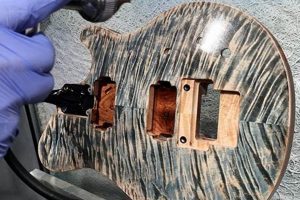
The practical significance of consistent pressure extends beyond surface appearance. It directly impacts the longevity of the abrasive pad. Uneven pressure concentrates wear on specific areas of the pad, causing premature degradation and reducing its overall lifespan. Furthermore, maintaining consistent pressure promotes efficient material removal. A steady, even force allows the abrasive to work at its optimal rate, reducing the time required to achieve the desired level of smoothness. An example can be seen when smoothing a wooden guitar body. Careful control of pressure ensures uniform material removal and preserves the desired contours and curves of the instrument’s design, while inconsistent pressure will ruin the final look.
Mastering the application of consistent pressure with this tool presents challenges. It requires developing a keen sense of feel and a controlled hand motion. Operators must learn to adapt to variations in material hardness and surface irregularities. Overcoming these challenges necessitates practice and attention to detail. The benefits of consistent pressure, however, are substantial: improved surface quality, extended abrasive lifespan, and enhanced efficiency. These factors collectively contribute to a higher standard of workmanship and a more professional outcome.
5. Dust Collection

Dust collection is an indispensable function when utilizing a sanding tool, directly affecting both user health and the quality of the finished surface. The process of sanding, by its nature, generates fine particulate matter that becomes airborne. Without effective dust collection, these particles pose a respiratory hazard and can contaminate the workpiece, leading to imperfections in subsequent finishing stages. Integrated dust collection systems, commonly employing a vacuum attachment connected to the tool, mitigate these risks by capturing dust at the point of origin.
The practical significance of dust collection extends beyond immediate health concerns. A clean working environment, facilitated by efficient dust removal, improves visibility and reduces the need for repeated cleaning. This increased visibility allows the operator to better assess the surface being sanded, leading to more precise material removal and a smoother final product. For example, when applying stain to wood, residual dust can prevent uniform absorption, resulting in an uneven appearance. Effective dust collection eliminates this issue, ensuring a consistent and professional finish. Many modern sanding tools feature integrated dust collection systems, optimizing performance and user safety.
In summary, the link between dust collection and this tool transcends mere convenience; it is fundamental to both the health of the operator and the attainment of high-quality results. The presence of a functional dust collection system enhances visibility, promotes uniform sanding, and prevents surface contamination. Users should ensure that their equipment includes an effective dust collection mechanism and utilize appropriate respiratory protection, even with such a system in place, to minimize the risks associated with airborne particulate matter.
6. Material Compatibility

The selection of an appropriate tool for surface refinement is intrinsically linked to the properties of the target material. Material compatibility, in this context, refers to the suitability of the tool’s design and functionality for use on specific substances without causing damage or compromising the desired finish. Operating this equipment on materials for which it is not intended can result in surface marring, excessive material removal, or premature tool wear. The hardness, density, and thermal sensitivity of the substrate are key considerations. For instance, using this tool on soft metals like aluminum with excessive pressure or an incorrect abrasive can lead to gouging or distortion, whereas employing it on hardwoods requires careful control to prevent burning or uneven sanding.
The impact of material compatibility is evident in various applications. In furniture restoration, distinguishing between different wood species and finishes is crucial. A delicate veneer requires a significantly lighter touch and finer grit abrasive than a solid oak tabletop. Similarly, in automotive refinishing, the type of paint, primer, and clear coat dictates the appropriate sanding technique and abrasive selection. Failure to account for these variations can lead to paint delamination, scratches, or an unsatisfactory final appearance. Understanding material properties enables operators to make informed decisions regarding tool settings, abrasive choice, and pressure application, thereby optimizing surface preparation and minimizing the risk of damage.
In summary, achieving successful surface refinement necessitates careful consideration of material compatibility. The selection of appropriate abrasive grits, pressure settings, and operating speeds must align with the specific characteristics of the material being processed. Disregarding this fundamental principle can lead to compromised surface quality, material damage, and reduced tool lifespan. A thorough understanding of material properties and their interaction with the sanding process is therefore essential for professionals and hobbyists alike, ensuring optimal results and maximizing the value of the surface refinement process.
Frequently Asked Questions
The following addresses common inquiries regarding this specialized sanding equipment. The information aims to provide clarity on usage, maintenance, and application.
Question 1: What is the primary application of a finishing sander?
This sander is primarily utilized for achieving exceptionally smooth surfaces on wood, metal, and other materials prior to the application of finishes such as paint, stain, or varnish. It removes minor imperfections and prepares the surface for optimal coating adhesion.
Question 2: How does a finishing sander differ from other types of sanders?
Unlike belt sanders or orbital sanders designed for aggressive material removal, the tool employs a fine grit abrasive and a high orbital speed to produce a polished surface with minimal scratch marks.
Question 3: What grit sandpaper is recommended for use with a finishing sander?
Generally, sandpaper with a grit range of 220 to 400 or higher is recommended. The specific grit depends on the material being sanded and the desired level of smoothness.
Question 4: Is dust collection necessary when operating a finishing sander?
Dust collection is highly recommended to improve visibility, reduce the risk of respiratory irritation, and prevent dust particles from contaminating the workpiece. Integrated dust collection systems are preferable.
Question 5: How does one prevent swirl marks when using a finishing sander?
To prevent swirl marks, it is crucial to use a light touch, overlap each pass, and ensure that the abrasive pad is clean and in good condition. Sanding with the grain whenever possible is also recommended.
Question 6: What maintenance procedures are required for a finishing sander?
Regular maintenance includes cleaning the tool after each use, inspecting the power cord for damage, and replacing worn-out sanding pads. The tool’s internal components may require periodic lubrication, as specified by the manufacturer.
Proper utilization and maintenance of this sanding tool will yield superior results and extend its operational lifespan. Understanding these fundamental aspects is crucial for achieving professional-grade surface finishes.
The next section will discuss advanced sanding techniques and troubleshooting common issues.
Concluding Remarks
This exploration of the finishing sander has underscored its vital role in achieving refined surface finishes. Its capacity to deliver smooth, consistent results, coupled with its adaptability to diverse materials and applications, positions it as an indispensable tool across numerous industries. The principles of proper operation, including consistent pressure, appropriate abrasive selection, and effective dust management, are paramount to realizing its full potential.
Continued advancements in sanding technology and abrasive materials promise further enhancements to the tool’s efficiency and precision. The diligent application of the knowledge presented herein will empower users to consistently produce surfaces of exceptional quality, thereby elevating the standards of craftsmanship and the overall value of finished products. Understanding and employing the techniques outlined is an investment in long-term productivity and professional excellence.