A surface treatment applied to metal substrates imparts a coloration resembling the precious metal. This aesthetic enhancement is achieved through various techniques, including electroplating, powder coating, and the application of specialized paints. For example, stainless steel fixtures can undergo electroplating to present an appearance similar to solid gold.
This technique offers a cost-effective alternative to using solid gold in manufacturing and design. It delivers visual appeal and perceived value, finding application in diverse sectors such as jewelry, hardware, and decorative arts. Historically, the practice of applying surface treatments to base metals to mimic precious metals dates back centuries, reflecting a desire for ornamentation and status symbols.
The subsequent sections will delve into the specific methods used to achieve this appearance, the various metal substrates commonly employed, and the considerations involved in selecting the appropriate finish for different applications. The durability, maintenance, and environmental implications of these finishes will also be explored.
Practical Considerations for Articles Featuring Gold-Colored Metal Coatings
The following recommendations aim to provide actionable advice when specifying or assessing articles enhanced with coatings intended to simulate the visual characteristics of gold. Proper selection and maintenance are crucial for long-term satisfaction.
Tip 1: Substrate Material Selection: Consider the underlying metal’s properties before applying any gold-colored finish. Brass offers inherent corrosion resistance, while steel requires a protective undercoat to prevent rust. The substrate will influence the overall durability and longevity of the item.
Tip 2: Evaluate Coating Method: Different coating processes yield varying levels of durability and color consistency. Electroplating generally provides a more robust and uniform finish compared to spray-applied paints. Research the specific method used to understand its strengths and limitations.
Tip 3: Consider the End-Use Environment: The intended environment significantly impacts the lifespan of the finish. Items exposed to high humidity, saltwater, or abrasive cleaners require more durable coatings and may benefit from protective topcoats.
Tip 4: Assess Color Consistency and Matching: Ensure that multiple items intended for a unified application exhibit consistent color and sheen. Subtle variations can be noticeable, particularly in adjacent installations. Request samples and conduct thorough visual inspections.
Tip 5: Implement Proper Cleaning Procedures: Avoid abrasive cleaners and harsh chemicals that can damage the delicate surface. Opt for mild, non-abrasive soaps and soft cloths to maintain the finish’s luster. Regular gentle cleaning is preferable to infrequent, aggressive cleaning.
Tip 6: Be Aware of Potential Tarnishing: Certain surface treatments are susceptible to tarnishing over time, particularly in environments with high sulfur content. Implement preventive measures, such as applying protective waxes or sealants, to minimize discoloration.
The implementation of these strategies will contribute to the optimal selection, maintenance, and enduring aesthetic appeal of articles embellished with coatings simulating the appearance of gold.
The subsequent section of the article will discuss the environmental impact of these surface treatments and explore sustainable alternatives within the finishing industry.
1. Appearance
The aesthetic characteristics imparted by a coating designed to mimic gold are a primary consideration in its selection and application. The visual attributes, including color, luster, and uniformity, significantly impact the perceived value and suitability for various design applications.
- Color Fidelity
Color fidelity refers to the accuracy with which the coating replicates the visual hues of genuine gold. Variations in color can stem from differences in the coating material, application technique, and the substrate’s inherent color. Achieving consistent color matching across multiple components is crucial for a cohesive aesthetic. An example is the use of different alloys in electroplating solutions, which can produce finishes ranging from pale yellow to reddish gold. These color characteristics require quality control to maintain standards in the final product.
- Luster and Sheen
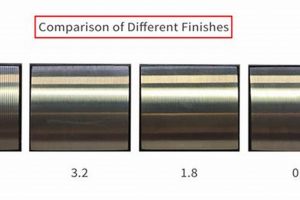
Luster and sheen describe the way light reflects from the coated surface. Electroplating typically yields a higher luster than powder coating or paint application. The substrate’s surface roughness influences the finish’s reflectiveness; a polished substrate will result in a glossier final appearance. For instance, a brushed stainless steel base, if coated, would maintain the brushed effect through the surface treatment, creating a distinct final affect.
- Surface Uniformity
Surface uniformity pertains to the consistency of the coating across the entire surface of the object. Imperfections, such as streaking, mottling, or pinholes, detract from the overall visual appeal. Electroplating, when properly executed, generally provides a more uniform coating compared to spray-applied methods. It is essential that objects in view should be matched with uniform coverage.
- Perceived Value and Aesthetics
The application of a gold-colored treatment aims to enhance the perceived value of an item. The psychological impact of this association with precious metals can influence consumer perception and purchasing decisions. However, the aesthetic success depends on a convincing simulation of gold’s characteristic appearance, avoiding a cheap or artificial look. For example, faux gold leafing can significantly change how an object is appreciated.
These facets of appearance are critical in determining the success of applications utilizing a gold-colored treatment. Proper selection of materials, application techniques, and quality control measures are essential to achieving the desired visual impact and enhancing the perceived value of the finished product. This emphasis on appearance is fundamental to the appeal and widespread adoption of coatings designed to simulate the appearance of precious metals.
2. Durability

The longevity and resilience of a coating designed to simulate gold are paramount considerations. Durability dictates the practical lifespan of the treated object and directly influences its long-term aesthetic appeal and functional performance.
- Abrasion Resistance
Abrasion resistance refers to the coating’s ability to withstand surface wear caused by friction or contact with other materials. Inferior surface treatments are susceptible to scratching and scuffing, which can compromise the appearance and expose the underlying substrate. The Martindale test, for instance, measures the abrasion resistance of textiles and can be adapted to assess the performance of certain coatings. Items in high-traffic areas require coatings with high abrasion resistance.
- Corrosion Resistance
Corrosion resistance defines the coating’s ability to prevent the degradation of the underlying metal substrate due to environmental factors like humidity, salt spray, and exposure to corrosive chemicals. An inadequate surface treatment allows corrosive elements to penetrate and attack the base metal, leading to rust, pitting, and eventual structural failure. Automotive coatings are frequently tested with salt spray to ensure corrosion resistance under harsh conditions.
- UV Resistance
UV resistance describes the coating’s capacity to withstand degradation caused by ultraviolet (UV) radiation from sunlight or artificial light sources. Prolonged exposure to UV radiation can lead to fading, discoloration, and embrittlement of the coating, diminishing its visual appeal and structural integrity. Outdoor furniture finished with a surface treatment must be tested for UV resistance to ensure its continued performance.
- Impact Resistance
Impact resistance signifies the coating’s ability to withstand sudden forceful impacts without chipping, cracking, or delaminating from the substrate. Poor impact resistance can lead to unsightly damage and expose the underlying metal to corrosion. A Gardner impact tester is often used to evaluate the impact resistance of coatings. Architectural hardware, such as door handles, requires high impact resistance to ensure functionality and aesthetics are maintained.
These facets of durability are interconnected and collectively determine the overall performance of a surface treatment. The selection of appropriate materials and application techniques, along with rigorous testing and quality control, are essential for ensuring the long-term durability and aesthetic appeal of articles embellished with a gold-colored finish. This emphasis is crucial for maintaining both the functional integrity and the visual qualities associated with coatings that simulate the appearance of precious metals.
3. Substrate

The underlying material, or substrate, significantly dictates the success and longevity of a surface treatment designed to mimic gold. The substrate’s inherent properties, including its chemical composition, surface roughness, and mechanical strength, exert a direct influence on the adhesion, durability, and final appearance of the applied coating. A poorly chosen or inadequately prepared substrate can compromise the coating’s performance, leading to premature failure and diminishing the desired aesthetic effect. For example, applying a surface treatment directly to untreated steel without a suitable primer often results in corrosion originating from the steel migrating through the coating, eventually causing it to blister and flake.
Different substrates necessitate tailored application techniques and specialized coatings. Brass, for instance, possesses inherent corrosion resistance and often requires minimal pre-treatment before receiving a surface treatment. Aluminum, on the other hand, forms a natural oxide layer that can impede coating adhesion and therefore demands specific surface preparation techniques like anodizing or chemical etching. Similarly, plastic substrates require coatings formulated with flexible binders to accommodate their higher coefficients of thermal expansion. The selection of the appropriate substrate material and the implementation of proper surface preparation protocols are therefore crucial steps in ensuring the coating adheres effectively and provides the intended aesthetic and protective functions. Consider furniture where an aluminum frame would benefit from specific coating preparation that wood frames dont.
In conclusion, the substrate is an indispensable component in the performance and appearance of treatments intended to simulate the appearance of gold. A comprehensive understanding of the substrate’s properties and the application of appropriate preparation and coating techniques are essential for achieving durable, aesthetically pleasing, and cost-effective results. Ignoring these critical factors can lead to compromised coating performance and ultimately undermine the desired qualities of the finished product.
4. Application
The application process is integral to achieving the desired aesthetic and functional properties of surfaces with a coating designed to mimic gold. The specific method employed significantly impacts the final appearance, durability, and cost-effectiveness of the treatment. Careful selection of the application technique is crucial for meeting performance criteria and visual expectations.
- Electroplating
Electroplating involves depositing a thin layer of gold or a gold-colored alloy onto a metallic substrate through an electrochemical process. This method offers excellent adhesion, uniformity, and corrosion resistance, making it suitable for applications requiring high durability and a realistic gold appearance. For instance, electroplating is commonly used in the production of jewelry and watch components, where a flawless finish and long-term wear resistance are paramount.
- Powder Coating
Powder coating involves applying a dry, free-flowing powder of pigmented resin onto a substrate, followed by curing under heat to form a durable, protective layer. Powder coating offers good abrasion resistance and is often used in applications where high durability is required, such as architectural hardware and automotive components. Powder coating provides a uniform, consistent finish.
- Liquid Coating (Paints and Lacquers)
The application of liquid coatings, such as paints and lacquers, represents a versatile approach to achieving a gold-colored finish. These coatings can be applied using various methods, including spraying, brushing, and dipping, offering flexibility in terms of coverage and complexity of design. They are frequently used on furniture, decorative items, and other applications where cost-effectiveness is a primary concern, albeit with potentially lower durability compared to electroplating or powder coating.
- Vacuum Deposition
Vacuum deposition techniques, such as Physical Vapor Deposition (PVD), involve vaporizing a material in a vacuum chamber and depositing it as a thin film onto a substrate. PVD offers exceptional adhesion, hardness, and corrosion resistance, making it suitable for high-performance applications, such as cutting tools and aerospace components. It also allows for precise control over the coating’s composition and thickness, enabling the creation of specialized colors and effects.
The choice of application method for achieving a treatment designed to simulate gold depends on the specific requirements of the product or application. Factors such as cost, durability, aesthetic considerations, and the nature of the substrate must be carefully weighed to determine the most suitable approach. Understanding the advantages and limitations of each method is essential for achieving the desired outcome and ensuring the long-term performance of the finished product.
5. Cost

The cost associated with achieving a gold-colored surface on metal components is a primary factor governing material selection and manufacturing processes. The price is directly influenced by the chosen application method, the type of metal substrate, and the desired level of durability and aesthetic quality. Electroplating using actual gold, while providing a highly realistic appearance and excellent corrosion resistance, is the most expensive option due to the material cost of gold. Alternatives such as gold-colored PVD coatings or less-precious metal electroplating offer more cost-effective solutions while still providing a visually similar result. The longevity and resistance to wear influence the long-term economic value. A less expensive surface treatment with lower durability will necessitate more frequent replacements, potentially negating the initial cost savings. The automotive industry, for instance, frequently utilizes gold-colored PVD coatings on decorative trim elements to achieve the desired aesthetic at a lower price point than solid gold or gold electroplating.
The substrate material also contributes significantly to the overall cost. Brass, though naturally possessing a color similar to gold, can be more expensive than steel. Steel, however, requires additional preparation steps, such as applying a corrosion-resistant undercoat, which adds to the manufacturing expense. Plastics, although inexpensive as base materials, demand specialized coating formulations and application processes to ensure adequate adhesion and durability, further increasing the total cost. Production volume affects the economics of these processes, with mass production often reducing per-unit costs due to economies of scale.
In summary, the cost element of achieving a gold-colored effect on metal represents a balance between initial outlay, desired visual quality, and long-term durability. The selection of a surface treatment requires a detailed evaluation of application requirements, budget constraints, and life-cycle considerations. Choosing a cheaper, less durable finish may lead to increased maintenance or replacement expenses. The determination must reflect a comprehensive understanding of the trade-offs between price and performance to secure an economically sound and visually satisfactory solution.
6. Maintenance
The preservation of the aesthetic and protective qualities is intrinsically linked to proper maintenance procedures. The longevity of the visual appeal is contingent upon the implementation of appropriate cleaning and care strategies. Neglecting regular maintenance can accelerate the degradation of the surface, leading to discoloration, scratching, and eventual loss of the desired golden hue. For instance, jewelry items with a gold-colored surface treatment, if exposed to harsh chemicals or abrasive cleaners, will exhibit a diminished luster and potentially experience a breakdown of the coating, revealing the base metal. The frequency and nature of maintenance are therefore critical considerations in preserving the investment and maintaining the intended visual impact.
The specific maintenance regimen depends on the type of surface treatment applied. Electroplated surfaces, known for their durability, typically require only gentle cleaning with a soft cloth and mild soap. Powder-coated surfaces, resistant to abrasion, can withstand more rigorous cleaning methods but should still avoid harsh chemicals that may dull the finish. Surfaces with liquid coatings, such as paints or lacquers, are the most susceptible to damage and necessitate careful handling and cleaning with specialized products designed to protect the finish. Regular dusting and avoidance of abrasive materials are crucial for prolonging the life of these coatings. Historical artifacts provide evidence of the importance of appropriate care; items maintained according to established conservation practices retain their aesthetic qualities, while those subjected to neglect exhibit significant deterioration.
In summary, the long-term success and visual appeal of surfaces with a gold-colored metallic treatment depend on consistent and appropriate maintenance protocols. Implementing a maintenance strategy tailored to the specific type of surface treatment not only preserves the aesthetic but also contributes to the overall cost-effectiveness of the application by minimizing the need for repairs or replacements. Understanding the interaction between maintenance practices and the material characteristics ensures sustained visual integrity and extends the lifespan of the finished product.
Frequently Asked Questions About Gold-Colored Metallic Treatments
The following section addresses common inquiries concerning articles with a gold-colored metallic treatment. These questions and answers aim to provide clarity and dispel misconceptions regarding the characteristics, performance, and maintenance of such finishes.
Question 1: What is the typical lifespan of a gold-colored surface treatment on metal?
The lifespan varies significantly based on the application method, the environmental conditions, and the level of maintenance provided. Electroplated finishes generally exhibit greater durability than painted surfaces. Exposure to harsh chemicals, abrasion, and UV radiation can reduce the lifespan of any treatment. A well-maintained, high-quality electroplated finish may last for several years, while a painted finish may require more frequent touch-ups or replacement.
Question 2: Are gold-colored surface treatments on metal susceptible to tarnishing?
The susceptibility to tarnishing depends on the specific materials used in the surface treatment. Some alloys, particularly those containing copper, are prone to tarnishing when exposed to air and moisture. Applying a protective sealant or clear coat can help mitigate tarnishing. Regular cleaning with appropriate cleaning agents is also essential for preventing tarnish buildup.
Question 3: Can the color of a gold-colored surface treatment on metal be accurately matched across different batches or production runs?
Achieving perfect color matching can be challenging due to variations in the manufacturing process. Factors such as variations in the chemical composition of the coating material, differences in application techniques, and variations in curing times can all contribute to color discrepancies. Reputable manufacturers employ quality control measures to minimize these variations, but slight differences may still be noticeable.
Question 4: Is it possible to repair scratches or damage to a gold-colored surface treatment on metal?
Repairing scratches or damage depends on the severity of the damage and the type of surface treatment. Minor scratches can sometimes be buffed out with specialized polishing compounds. More significant damage may require re-coating or refinishing the entire surface. Spot repairs are often difficult to blend seamlessly with the surrounding area, resulting in a noticeable color or texture difference.
Question 5: Are there environmentally friendly alternatives to traditional gold-colored surface treatments on metal?
Yes, several environmentally friendly alternatives are available. Powder coatings, for instance, emit fewer volatile organic compounds (VOCs) than liquid paints. Physical Vapor Deposition (PVD) is another eco-friendly option that minimizes waste and reduces the use of hazardous chemicals. The selection of a more sustainable surface treatment contributes to a reduced environmental footprint.
Question 6: How does the substrate material affect the performance of a gold-colored surface treatment on metal?
The substrate material plays a crucial role in the overall performance of the surface treatment. The substrate’s surface roughness, chemical composition, and corrosion resistance all influence the adhesion, durability, and appearance of the coating. Proper surface preparation is essential for ensuring that the coating adheres properly and provides adequate protection to the substrate. A mismatch between the substrate and the surface treatment can lead to premature failure of the coating.
These frequently asked questions highlight key considerations related to the selection, maintenance, and performance of gold-colored surface treatments. Understanding these aspects is essential for making informed decisions and ensuring the long-term satisfaction with such finishes.
The subsequent section will explore case studies illustrating the application of different surface treatments in various industries.
Conclusion
The preceding analysis has detailed the multifaceted considerations surrounding applications of gold finish metal. Topics ranging from substrate preparation and application methods to durability and maintenance protocols have been addressed. The material’s aesthetic properties and economic implications have also been examined. This comprehensive overview provides a foundation for informed decision-making in diverse industries.
The selection and implementation of surface treatments designed to simulate gold require a rigorous evaluation of performance criteria and application-specific demands. Further research into innovative and sustainable coating technologies will undoubtedly shape future advancements in this field. Continued adherence to established best practices will ensure the longevity and enduring value of these aesthetic enhancements.