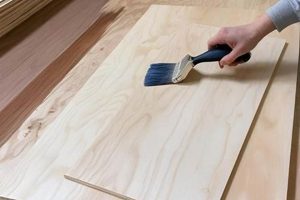
A collection of products and tools designed for applying a protective and aesthetically pleasing coating to a guitar’s body and neck. These sets typically include sealers, stains or colorants, clear coats (lacquer, polyurethane, or varnish), and abrasives. In practice, such a set facilitates the coloring, sealing, and glossing of unfinished wood surfaces on stringed instruments.
The application of a resilient surface layer is critical for instrument longevity, safeguarding the wood from moisture, impacts, and environmental factors. Furthermore, the coating impacts the instrument’s tonal qualities and greatly enhances its visual appeal. Historically, these processes were exclusively the domain of skilled luthiers; however, pre-packaged product collections have broadened accessibility, enabling hobbyists and independent builders to achieve professional-grade results.
The subsequent sections will delve into the specific components typically found within these collections, the various application techniques employed, and the critical considerations for selecting the appropriate products to achieve the desired outcome.
Essential Application Guidelines
Optimal results when utilizing a complete finishing solution for guitars necessitate adherence to established best practices. These recommendations are intended to maximize the protective qualities and aesthetic appeal of the final product.
Tip 1: Surface Preparation is Paramount: Ensure the wood is meticulously sanded to a smooth, even surface, typically progressing through grits up to 320 or 400, depending on the desired smoothness and wood type. Proper sanding eliminates imperfections that will be magnified by the finish.
Tip 2: Sealer Application: A quality sealer or sanding sealer is vital. This product fills the wood pores, creating a uniform base for subsequent color and clear coats, and minimizes finish absorption.
Tip 3: Controlled Color Application: When applying stains or colorants, maintain uniform application and avoid pooling. Multiple thin coats are preferable to a single heavy coat to prevent uneven coloration and potential drips or runs.
Tip 4: Environment Control: Finish application should occur in a dust-free and well-ventilated environment. Dust particles compromise the final surface, and adequate ventilation is crucial for safe handling of solvents and fumes.
Tip 5: Thin Coat Principle: Multiple thin coats of clear coat are superior to a single thick coat. This approach promotes even drying, reduces the likelihood of runs or sags, and allows for easier sanding and leveling between coats.
Tip 6: Sanding and Leveling: After sufficient drying time between clear coats, lightly sand the surface with fine-grit sandpaper (e.g., 600-800 grit) to level imperfections and prepare for subsequent coats. This step is crucial for achieving a smooth, glossy finish.
Tip 7: Buffing and Polishing: The final step involves buffing and polishing the cured finish to achieve the desired level of gloss. Use appropriate buffing compounds and pads, and exercise caution to avoid burning through the finish.
Consistent adherence to these principles will significantly improve the quality and durability of the instrument’s surface, ultimately enhancing its value and longevity.
The following sections will detail specific product selection considerations and troubleshooting common application issues.
1. Product Compatibility
Product compatibility within a guitar finishing solution is paramount. The effectiveness of any surface application directly depends on the chemical interactions between the various products used, including sealers, colorants, and clear coats. Incompatible materials can lead to a range of adverse effects, such as poor adhesion, lifting, cracking, or discoloration. For example, applying a lacquer topcoat over an incompatible stain can result in the lacquer failing to bond correctly, leading to peeling and an unsatisfactory finish. A well-formulated collection ensures that each component is designed to work synergistically, preventing such issues.
The selection of compatible products also impacts the long-term durability and stability of the finish. Using mismatched products can result in a finish that is susceptible to environmental factors, such as humidity or temperature changes. For instance, combining a rigid clear coat with a flexible sealer can lead to stress fractures in the topcoat as the wood expands and contracts. Manufacturers often provide guidelines specifying compatible product combinations to prevent such problems and ensure a robust, long-lasting finish. Adherence to these guidelines is crucial for hobbyists and professionals alike.
In conclusion, product compatibility is not merely a detail but a foundational requirement for successful instrument surfacing. Careful consideration of the chemical properties of each component, adherence to manufacturer recommendations, and a thorough understanding of the potential consequences of incompatibility are vital. Selecting a guitar finishing solution comprised of chemically compatible materials mitigates the risk of finish failures, ensuring a durable, aesthetically pleasing, and long-lasting result.
2. Application Techniques

The success of any guitar finishing endeavor is inextricably linked to the application techniques employed. Even the highest quality solutions will yield suboptimal results if applied improperly. Understanding and mastering appropriate methods is crucial for achieving a professional-grade finish.
- Spraying Techniques
Spraying, whether with compressed air, HVLP (High Volume Low Pressure), or aerosol cans, requires careful attention to distance, overlap, and pressure. Improper technique results in runs, orange peel texture, or uneven coverage. The viscosity of the material must be appropriate for the chosen spray method to ensure atomization and a smooth, even coat.
- Brushing Techniques
Brushing demands precision and patience. Selecting the appropriate brush for the material being applied is critical. Techniques such as “tipping off” (lightly dragging the brush across the surface to remove brush marks) are often necessary to achieve a smooth, level finish. Brushing is typically used for smaller areas or when spray equipment is unavailable but requires skill to avoid visible brushstrokes.
- Wiping Techniques
Wiping is commonly used for applying stains and some types of oil finishes. The technique involves saturating the surface with the material and then wiping away the excess. The type of cloth used, the pressure applied, and the wiping direction influence the final color and grain definition. Uneven wiping leads to blotchy coloration.
- Curing and Drying
Proper curing and drying are essential after the application. Environmental conditions, such as temperature and humidity, significantly impact drying times. Rushing the drying process can result in a soft, easily damaged finish or trapped solvents that cause long-term issues. Adhering to manufacturer-recommended drying times is critical.
The application techniques detailed above represent a critical component of any guitar finishing process. Mastery of these methods, in conjunction with a quality set, directly translates to a superior and more durable instrument finish. Skillful execution mitigates potential flaws and maximizes the protective and aesthetic qualities of the coating.
3. Environmental Conditions

The surrounding environment significantly affects the successful application and curing of substances used in a guitar finishing process. Controlling factors such as temperature, humidity, and air quality is crucial for achieving optimal results and ensuring the longevity of the instrument’s protective coating.
- Temperature Stability
Consistent ambient temperature is vital throughout the application and curing phases. Extreme fluctuations can negatively impact viscosity, flow, and drying rates. For instance, excessively low temperatures may inhibit proper film formation, leading to a soft, easily damaged surface. Conversely, high temperatures can cause premature drying, resulting in trapped solvents and potential cracking. Maintaining a stable temperature within the manufacturer’s recommended range promotes optimal chemical reactions and a uniform finish.
- Humidity Control
Relative humidity profoundly influences the drying characteristics of many materials found in finishing solutions. High humidity levels can retard the evaporation of solvents, prolonging drying times and increasing the risk of blushing (a cloudy or hazy appearance). Conversely, low humidity can cause rapid drying, potentially leading to shrinkage and cracking. Maintaining humidity within an acceptable range facilitates even drying and proper film formation, enhancing the overall durability and clarity of the finish.
- Air Quality and Contamination
The presence of airborne contaminants, such as dust, dirt, or overspray from other applications, poses a significant threat to surface quality. Particles suspended in the air can settle on the wet finish, creating imperfections and compromising the smoothness of the final coating. Adequate ventilation and the use of filtered air systems are essential for minimizing contamination and ensuring a clean, defect-free finish. Proper surface preparation, including tack-clothing, is also essential.
- UV Exposure
Ultraviolet radiation from sunlight or artificial sources can degrade certain types of finishes over time, leading to discoloration, cracking, or loss of gloss. Using products with UV inhibitors or applying a UV-resistant clear coat helps to protect the instrument from the harmful effects of UV exposure. Storage in a case away from direct sunlight is an effective long-term preventative measure.
In summary, meticulous control of environmental conditions is integral to the successful utilization of a guitar finishing solution. Managing temperature, humidity, air quality, and UV exposure allows for optimal application, curing, and long-term preservation of the finish, ensuring both the aesthetic appeal and structural integrity of the instrument.
4. Durability Assessment

The longevity and protective capabilities imparted by a guitar finishing solution are central to its value. Durability assessment comprises a systematic evaluation of a cured surface’s resistance to various forms of degradation, impacting the instrument’s structural integrity and aesthetic appeal over time. This assessment informs the selection of appropriate products and application methods.
- Scratch Resistance
Scratch resistance quantifies the finish’s ability to withstand superficial abrasions from handling, cleaning, and environmental exposure. Finishes with poor scratch resistance exhibit marring and dulling, diminishing the instrument’s visual appeal. Harder finishes, such as those based on catalyzed polyurethane, offer superior protection against scratching compared to softer finishes like nitrocellulose lacquer. Field testing or standardized scratch testing methods, such as the pencil hardness test, are employed to evaluate this property. This data informs product selection based on the expected use conditions of the instrument.
- Chemical Resistance
Chemical resistance measures the finish’s capacity to withstand exposure to solvents, cleaning agents, sweat, and other common substances encountered during instrument use. Degradation can manifest as softening, swelling, discoloration, or even complete dissolution of the surface. Polyurethane and epoxy-based finishes typically exhibit superior chemical resistance compared to traditional lacquer formulations. Immersion testing and spot testing using various chemicals are utilized to assess this attribute. The chemical resistance properties guide the choice of appropriate cleaning and maintenance products.
- Impact Resistance
Impact resistance assesses the finish’s ability to withstand sudden shocks or impacts without chipping, cracking, or delamination. This is critical for protecting the underlying wood from damage. Thicker, more flexible finishes generally exhibit greater impact resistance. Drop tests and impact testing machines are used to quantify this characteristic. This is important in assessing different levels of protection offered for an instrument.
- UV Resistance
UV resistance gauges the finish’s capacity to withstand prolonged exposure to ultraviolet radiation without discoloration, fading, or cracking. UV radiation degrades many common finish polymers over time. Finishes formulated with UV absorbers or stabilizers offer enhanced protection. Accelerated weathering tests, simulating years of sunlight exposure, are used to evaluate UV resistance. A high degree of UV resistance is necessary for instruments which will be exposed to sunlight.
Collectively, these facets of durability assessment provide a comprehensive understanding of a surface’s ability to withstand the rigors of use and environmental exposure. The data derived from these assessments guides the selection of a guitar finishing solution and influences application techniques, ultimately determining the instrument’s long-term structural integrity and aesthetic preservation.
5. Aesthetic Considerations
Aesthetic considerations form an integral component of any guitar finishing solution, directly influencing the perceived value and visual appeal of the instrument. The choice of finishing products and application techniques impacts color saturation, gloss level, and surface texture, contributing to the overall aesthetic impression. For example, a high-gloss finish often signifies premium quality, while a matte finish can evoke a vintage or understated character. Careful consideration of these visual elements is therefore essential to align the instrument’s appearance with its intended market or stylistic direction. The application of tinted finishes, ranging from subtle amber hues to vibrant bursts of color, offers extensive customization, allowing for unique visual identities that resonate with specific musical genres or artistic expressions.
The interplay between wood grain and finish selection presents a significant factor in aesthetic outcomes. Transparent finishes accentuate the natural figure of the wood, highlighting patterns such as flame maple or quilted maple. Conversely, opaque finishes conceal the grain, allowing for bolder color choices and a more uniform surface appearance. The skill of the finisher lies in understanding these interactions and selecting products that complement the inherent beauty of the wood while achieving the desired visual effect. Furthermore, the proper surface preparation, including sanding and pore filling, ensures a smooth and even base for the finish, preventing imperfections that detract from the overall aesthetic quality. Consideration of edge finishing, contouring, and any detailing work are likewise a part of the process to provide a harmonious whole, even on close inspection.
In conclusion, aesthetic considerations are not merely superficial embellishments, but rather fundamental design elements that contribute to the overall value and appeal of a finished guitar. The careful selection of the complete finishing solution, combined with meticulous application techniques, allows for the creation of instruments that are both visually striking and representative of the luthier’s or manufacturer’s artistic vision. While durability and protection are of paramount importance, the aesthetic properties of a high-quality instrument surface should also be prioritized in order to create an instrument of both beauty and resilience.
Frequently Asked Questions Regarding Guitar Finishing Solutions
The following section addresses common inquiries concerning the selection, application, and maintenance of surface solutions for guitars. These questions are intended to provide clarity on aspects of the finishing process.
Question 1: What constitutes a comprehensive set for guitar finishing?
A complete set generally comprises sealers, colorants (stains or dyes), clear coats (lacquer, polyurethane, or varnish), sanding materials (various grits of sandpaper), application tools (brushes or spray equipment), and buffing compounds. The specific contents vary depending on the desired finish type and application method.
Question 2: What factors dictate the selection of clear coat (lacquer, polyurethane, etc.)?
The choice is governed by desired durability, gloss level, and application method. Lacquer offers ease of repair and a vintage aesthetic but exhibits lower durability. Polyurethane provides superior protection and resistance to chemicals but can be more challenging to repair. The selection depends on the specific requirements of the instrument and the user’s preferences.
Question 3: How does surface preparation impact the final finish quality?
Meticulous surface preparation is paramount. Proper sanding, pore filling, and cleaning are essential for achieving a smooth, even base for the finishing materials. Imperfections in the substrate will be magnified by the finish, compromising the aesthetic outcome.
Question 4: What safety precautions should be observed during the finishing process?
Adequate ventilation is essential, as many finishing materials contain volatile organic compounds (VOCs). Respiratory protection (a suitable respirator) is recommended. Eye protection (safety glasses or goggles) is mandatory. Appropriate gloves should be worn to prevent skin contact. Fire hazards should be minimized, as many solvents are flammable.
Question 5: How does ambient temperature and humidity influence the finishing process?
Temperature and humidity significantly affect drying times and surface quality. Elevated humidity can retard drying and lead to blushing (a cloudy appearance). Extreme temperatures can affect viscosity and flow. Maintaining temperature and humidity within the manufacturer’s recommended range is crucial for optimal results.
Question 6: What are the recommended methods for achieving a high-gloss finish?
Achieving a high-gloss surface necessitates multiple coats of clear coat, meticulous sanding between coats (using progressively finer grits), and a final buffing and polishing stage using appropriate compounds and pads. Patience and attention to detail are essential.
These frequently asked questions highlight critical considerations for anyone undertaking instrument surfacing. By addressing these areas, a superior finish quality and product longevity can be achieved.
The subsequent section details troubleshooting common problems encountered when working with different surfacing processes and materials.
Conclusion
This exploration of guitar finishing kits has underscored their multifaceted nature, extending beyond mere cosmetic enhancement. From surface preparation to environmental control, the successful application of such a solution demands a thorough understanding of material properties, application techniques, and potential pitfalls. The durability and aesthetic qualities of the final surface are directly linked to the adherence to established best practices and the careful selection of compatible products.
The information detailed herein serves as a foundation for achieving professional-grade results. Continued research and experimentation, coupled with a commitment to proper safety protocols, are essential for navigating the complexities of guitar finishing. Ultimately, the judicious application of a comprehensive set will not only enhance the visual appeal of the instrument, but also contribute significantly to its long-term preservation and value.