A surface coating characterized by its exceptional reflectivity and sheen, resulting from a smooth, highly polished surface. This type of coating offers a mirror-like appearance. An example would be its application on trim and doors to accentuate architectural details.
Its selection is often driven by its durability and ease of cleaning. The hard, non-porous nature of the coating resists stains and scuffs, making it suitable for high-traffic areas. Historically, achieving such a surface required meticulous layering and polishing of natural materials, but modern formulations now provide this effect with relative ease. The resulting aesthetic can dramatically enhance the perceived value and appeal of a space.
The subsequent sections will delve into the application techniques, ideal use cases, and comparative analysis with other sheen levels, providing a thorough understanding of this impactful surface treatment.
Essential Considerations for Achieving a Superior Sheen
The following guidelines offer critical insights for maximizing the visual impact and longevity when utilizing this specialized coating.
Tip 1: Surface Preparation is Paramount: Ensure the substrate is flawlessly smooth. Any imperfections will be magnified by the reflective nature of the coating. Sanding, filling, and priming are essential steps.
Tip 2: Employ a High-Quality Primer: A premium primer creates a uniform base, promoting optimal adhesion and sheen consistency. Tint the primer to match the topcoat for enhanced color saturation.
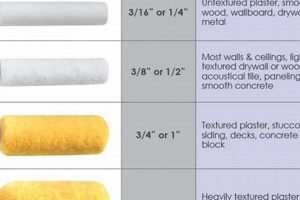
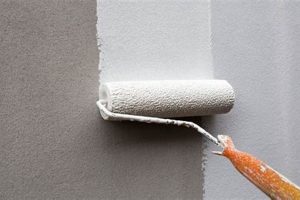
Tip 3: Use Appropriate Application Tools: A fine-nap roller or a high-quality brush designed for smooth finishes is crucial. Avoid tools that create excessive stippling or brushstrokes.
Tip 4: Apply Thin, Even Coats: Multiple thin coats are preferable to a single thick coat. This minimizes the risk of runs, drips, and uneven drying, ensuring a uniform sheen.
Tip 5: Allow Adequate Drying Time: Adhere strictly to the manufacturer’s recommended drying times between coats. Premature recoating can lead to a compromised finish.
Tip 6: Consider Environmental Factors: Optimal application conditions include moderate temperatures and low humidity. Extreme temperatures or high humidity can negatively impact drying and curing.
Tip 7: Proper Ventilation is Key: Ensure adequate ventilation to facilitate proper drying and to minimize exposure to potentially harmful vapors during application.
Tip 8: Curing Time: Allow the finish to fully cure before exposing it to regular use. The curing process hardens the finish and enhances its durability.
By meticulously following these recommendations, one can achieve a professional, durable, and visually striking surface.
The subsequent sections will address troubleshooting common issues and explore specific applications in various environments.
1. Reflectivity

Reflectivity constitutes a defining characteristic. This coating’s ability to reflect a significant amount of incident light results directly from its extremely smooth surface. The smooth surface minimizes light scattering, causing a higher percentage of light to bounce back towards the viewer. This phenomenon is responsible for the mirror-like sheen associated with the finish.
The degree of reflectivity directly influences the perceived brightness and apparent size of a space. For example, a small, dark room painted with this finish will appear brighter and somewhat larger due to the amplified reflection of existing light. However, high reflectivity also exacerbates the visibility of surface imperfections. Any irregularities, such as bumps or dents, will cast shadows and create distortions in the reflected image, making them more noticeable. The selection and the surface preparation are therefore intrinsically linked.
In summary, reflectivity is not merely an aesthetic attribute; it is a functional property that affects both the visual perception and practical performance of the coating. While it offers benefits in terms of brightness and cleanability, its potential to highlight imperfections necessitates meticulous surface preparation and application. This trade-off between aesthetic advantages and practical considerations warrants careful evaluation based on the specific application context.
2. Durability

The enhanced resistance to wear, abrasion, and chemical degradation is a primary attribute. The dense, tightly cross-linked polymer matrix characteristic of these coatings results in a hard, non-porous surface. This inherent hardness provides a protective barrier against scratches, scuffs, and impacts, thereby extending the lifespan of the coated surface. The smooth, impermeable surface also inhibits the penetration of liquids and contaminants, facilitating easy cleaning and preventing the formation of stains.
Consider the application on kitchen cabinets. The frequent exposure to grease, spills, and cleaning agents necessitates a resilient surface. The coating’s ability to withstand repeated wiping and cleaning without degradation makes it a practical choice in such environments. Similarly, in high-traffic areas like hallways and corridors, its resistance to scuffing and abrasion reduces the need for frequent repainting, leading to long-term cost savings. Furthermore, the chemical resistance of the finish makes it suitable for use in laboratories and industrial settings where exposure to harsh chemicals is common.
In summary, durability is an integral component, contributing significantly to its overall value. This attribute not only enhances the aesthetic appeal of the coated surface but also provides long-term protection and reduces maintenance requirements. The enhanced resistance to wear, abrasion, and chemical degradation makes it a practical and cost-effective choice for a wide range of applications. However, the selection should always consider the specific environmental conditions and performance requirements to ensure optimal durability and longevity.
3. Cleanability

Cleanability constitutes a significant advantage. The virtually non-porous nature of the surface minimizes the penetration of dirt, grime, and stains. This characteristic allows for swift and efficient removal of surface contaminants with minimal effort, typically requiring only mild detergents and water. The connection is causal; the smoothness results in the enhanced ability to clean the surface easily.
The importance is particularly evident in environments prone to frequent staining or soiling. Hospital operating rooms, for instance, benefit from its cleanability, enabling thorough sanitation and infection control. In school hallways, crayon marks, food spills, and scuff marks can be readily removed, maintaining a hygienic environment. Even in residential settings, kitchens and bathrooms benefit from the coatings ability to repel moisture and resist mold growth. This ease of maintenance reduces the need for harsh cleaning chemicals, contributing to a healthier indoor environment. The coating is an element which has a crucial cleaning component.
In conclusion, cleanability is not merely a convenient feature but a practical necessity in various settings. The non-porous surface facilitates efficient cleaning, promotes hygiene, and reduces maintenance costs. While other coatings may offer aesthetic advantages, the combination of visual appeal and ease of cleaning reinforces the value of the surface finish in applications where cleanliness is paramount.
4. Application Technique

The correlation between application technique and the attainment of a desirable surface is profound. The inherent properties of this finish, namely its high reflectivity, demand a meticulous application approach to mitigate potential imperfections. Inadequate technique invariably results in visible defects, such as brushstrokes, roller marks, or uneven sheen levels, thereby compromising the intended aesthetic. This is because the surface finish tends to magnify the unevenness during application, making it a core component of success.
For instance, consider the process of refinishing a wooden door. If the coating is applied using a low-quality brush, the resulting brushstrokes will be prominently displayed, detracting from the smooth, reflective surface. Similarly, improper roller application can create an undesirable “orange peel” texture. The use of appropriate tools, such as fine-nap rollers or spray equipment, combined with proper layering techniques, is essential to achieve a consistent and uniform surface. An expert painter would know the benefits of using a sprayer instead of a low quality brush for a surface.
In summary, the quality of the final surface is inextricably linked to the application technique employed. While the inherent characteristics of the coating offer visual and practical advantages, these benefits can only be fully realized through skilled application. The meticulous adherence to best practices, including proper surface preparation, appropriate tool selection, and careful layering techniques, is paramount to achieving a professional, durable, and visually appealing surface finish. Addressing this link is essential to avoid disappointment and maximize the investment in materials and labor.
5. Surface Preparation

Surface preparation is not merely a preliminary step; it is an integral determinant of the final quality. The reflective nature of the finish amplifies any existing imperfections on the substrate. This characteristic necessitates a meticulous approach to surface preparation to minimize visual defects. The connection is causal: inadequate surface preparation directly results in a compromised finish, irrespective of the quality of the coating itself. The surface treatment will not compensate for defects within a wall. Filling holes or dents is therefore an integral and very important element of the preparation stage.
Consider the application on a previously painted surface. If the existing paint layer is uneven, peeling, or contains imperfections, the direct application will only accentuate these flaws. The proper procedure involves thorough cleaning, sanding to create a smooth and uniform surface, and the application of a high-quality primer to promote adhesion and level the substrate. Without these steps, the resulting finish will exhibit visible imperfections, undermining the intended aesthetic. Furthermore, proper surface preparation extends the lifespan by ensuring optimal adhesion and preventing premature failure due to substrate instability. Preparing a surface therefore has a long term effect on longevity.
In summary, surface preparation is not simply a precursor; it is a fundamental component of achieving a superior result. The inherent characteristics demand a meticulous approach to surface preparation, as imperfections will be magnified by the reflective sheen. Proper preparation not only enhances the aesthetic outcome but also ensures the durability and longevity. Neglecting this critical step inevitably leads to a compromised finish, negating the intended visual impact and undermining the investment in materials and labor. The steps should be viewed as a critical investment in the value of the wall or surface.
6. Light Amplification

The phenomenon of light amplification is significantly pronounced when employing coatings characterized by exceptional reflectivity. This effect arises from the smooth, unbroken surface, which redirects a substantial proportion of incident light back into the surrounding environment, thereby increasing the overall luminance within a space.
- Increased Perceived Brightness
This refers to the subjective increase in illumination levels experienced by an observer. The surface finish effectively concentrates and redirects available light, leading to a heightened perception of brightness. For instance, in a room with limited natural light, walls coated in such a finish can significantly enhance the room’s overall luminosity, reducing the need for artificial lighting. The increased light reflects off all areas making the room feel brighter.
- Enhanced Color Vibrancy
Light amplification can intensify the saturation and vibrancy of colors. The increased light reflection enhances the perception of the pigments within the paint, resulting in a richer and more visually striking appearance. This effect is particularly noticeable with darker or more saturated colors, which benefit from the additional light to reveal their full depth and intensity.
- Highlighting Architectural Details
The amplification of light can accentuate architectural features and details. By reflecting light onto these elements, the finish draws attention to their shapes, textures, and forms, making them more prominent and visually appealing. This is frequently employed to emphasize crown molding, trim work, or other decorative elements within a space.
- Exacerbation of Surface Imperfections
While light amplification offers numerous benefits, it also possesses the potential to accentuate surface defects. The increased light reflection can highlight any unevenness, dents, or scratches, rendering them more visible to the eye. This necessitates meticulous surface preparation to ensure a flawless substrate before applying the coating.
In summary, the interplay between light amplification and coatings is a complex phenomenon with both advantages and disadvantages. While it can enhance brightness, color vibrancy, and architectural details, it also requires careful attention to surface preparation to avoid exacerbating imperfections. The selection should therefore be contingent upon a thorough assessment of the existing lighting conditions, the desired aesthetic effect, and the condition of the substrate.
7. Scratch Visibility
Scratch visibility is a salient consideration when evaluating surface coatings. The high degree of reflectivity inherent in this finish exacerbates the perception of surface imperfections, including scratches. The smooth, mirror-like surface amplifies the contrast between the scratch and the surrounding undamaged area, rendering even minor abrasions readily apparent.
- Specular Reflection and Contrast
Specular reflection, the hallmark, also creates a scenario where any disruption to the smooth surface (a scratch) causes light to scatter differently. This difference in light reflection between the scratch and the surrounding finish generates a strong visual contrast, making the scratch stand out. This effect is more pronounced under direct lighting conditions, where the specular reflection is most intense. Imagine a car with a glossy finish parked in direct sunlight; even hairline scratches become easily visible.
- Depth and Angle of Incidence
The depth and angle of incidence play a crucial role in scratch visibility. Deeper scratches, naturally, create greater contrast due to the increased disruption of the reflective surface. Similarly, the angle at which light strikes the surface affects the intensity of the reflected light, thereby influencing the visibility of the scratch. Certain angles of incidence may render scratches almost invisible, while others can make them appear significantly more prominent. Scratches may be more obvious if you are shorter or taller than the surface.
- Surface Color and Pigmentation
The color and pigmentation of the coating can also influence scratch visibility. Darker colors tend to accentuate scratches more than lighter colors because the contrast between the scratch (often appearing lighter due to the exposed substrate) and the surrounding dark finish is more pronounced. Similarly, certain pigments may be more susceptible to scratching or may exhibit greater contrast when scratched.
- Maintenance and Repair Considerations
Due to the heightened scratch visibility, careful maintenance and repair procedures are essential for surfaces coated with this finish. Regular cleaning with non-abrasive materials and the prompt repair of scratches are necessary to maintain the aesthetic appearance. Repairing scratches on this finish can be challenging, often requiring specialized techniques and materials to achieve a seamless blend with the surrounding surface.
The implications of scratch visibility extend beyond mere aesthetics. In high-traffic areas or environments where surfaces are prone to abrasion, the frequent appearance of scratches can detract from the overall perception of quality and cleanliness. While this coating offers undeniable visual appeal and durability, the susceptibility to scratch visibility necessitates careful consideration of the intended application and the expected level of wear and tear. Alternative coatings with lower sheen levels may be more suitable in situations where scratch resistance is paramount.
Frequently Asked Questions
The following addresses common inquiries regarding this specialized coating.
Question 1: Is application of this paint finish more difficult compared to other sheens?
Yes, its application presents a higher degree of difficulty. The reflective nature of the coating amplifies any imperfections, requiring meticulous surface preparation and skilled application techniques to achieve a flawless result. The inherent smoothness of the surface finish will always need more focus.
Question 2: Does this specific type of finish require specialized cleaning products?
Generally, no. However, abrasive cleaners should be avoided as they can scratch the surface and diminish the sheen. Mild detergents and soft cloths are typically sufficient for maintaining its appearance.
Question 3: Is it suitable for high-humidity environments, such as bathrooms?
Its resistance to moisture makes it a viable option for bathrooms. However, proper ventilation is essential to prevent moisture buildup and potential damage to the coating over time. A surface that holds moisture can damage the coating.
Question 4: Can it be applied over existing paint?
It can be applied over existing paint, provided the existing surface is properly prepared. This includes cleaning, sanding to create a smooth surface, and priming to ensure adequate adhesion.
Question 5: Does it yellow over time?
The tendency to yellow depends on the specific formulation. Higher-quality formulations often incorporate UV inhibitors to minimize yellowing, particularly in areas exposed to direct sunlight. It is important to check the material properties before applying.
Question 6: Is the cost of this product higher than other finishes?
Generally, it is more expensive than lower sheen options due to the higher quality resins and pigments required to achieve the desired level of reflectivity and durability. The application cost may also be higher due to the increased skill and time required for proper application.
In summary, proper surface preparation, skillful application, and appropriate maintenance are essential to maximize the benefits and longevity.
The following sections will explore comparative analyses with alternative coating options.
High Gloss Paint Finish
Throughout this exploration, the unique characteristics and implications have been meticulously examined. From its exceptional reflectivity and durability to the critical considerations of surface preparation and application technique, a comprehensive understanding has been established. The interplay between light amplification, scratch visibility, and cleanability has been elucidated, underscoring the multifaceted nature of this surface treatment. These aspects must be considered during selection of the finish.
The judicious selection and implementation represents a commitment to both aesthetic refinement and enduring performance. As technological advancements continue to shape the evolution of coating materials, ongoing research and development will undoubtedly yield further enhancements in durability, application ease, and environmental sustainability. Architects, designers, and applicators must remain abreast of these innovations to fully harness the potential of this impactful surface solution and other coatings. The future of coatings is bright and more innovative finishes are coming every year.