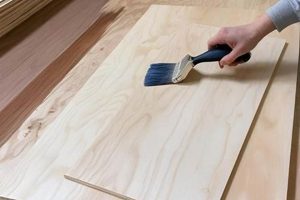
A surfacing material applied to a substrate, typically wood or particleboard, provides a durable and aesthetically pleasing surface. This process involves bonding multiple layers under heat and pressure to create a unified, resilient covering. For example, kitchen countertops often utilize this type of surface for its resistance to scratches and stains.
The application offers several advantages, including increased longevity, ease of maintenance, and a wide range of design possibilities. Its resistance to wear and tear makes it a cost-effective option over time. Historically, its development allowed for the mass production of furniture and surfaces with consistent quality and visual appeal, replacing more labor-intensive methods.
Understanding the properties of this surface treatment is crucial when selecting materials for various applications. The subsequent sections will delve into the specific types available, their respective applications, and considerations for installation and maintenance, thereby providing a thorough understanding of its practical use.
Essential Guidance
The following recommendations provide practical guidance for selecting and maintaining surfaces treated with this material, ensuring optimal performance and longevity.
Tip 1: Selecting the Appropriate Grade: Evaluate the intended application. High-pressure options are suitable for high-traffic areas like countertops, while low-pressure options may suffice for vertical surfaces or low-impact environments. Consider factors such as abrasion resistance and impact strength.
Tip 2: Substrate Preparation is Crucial: Ensure the substrate is clean, dry, and level before application. Any imperfections in the substrate will telegraph through the surface, affecting the final appearance and potentially compromising adhesion.
Tip 3: Proper Adhesion Techniques: Utilize adhesives specifically formulated for bonding this surface to the chosen substrate. Follow the manufacturer’s instructions meticulously, paying close attention to open time and clamping pressure to ensure a secure bond.
Tip 4: Mitigating Moisture Exposure: Seal edges and seams meticulously to prevent moisture intrusion, particularly in environments prone to humidity or water exposure. Moisture can cause delamination and swelling of the substrate.
Tip 5: Implementing Appropriate Cleaning Protocols: Employ non-abrasive cleaners and soft cloths to maintain the surface. Harsh chemicals and abrasive materials can scratch or dull the finish over time. Regularly clean spills to prevent staining.
Tip 6: Evaluating Edge Treatment Options: Choose edge treatments that complement the design and provide adequate protection against impact and moisture. Options include self-edges, wood edges, and metal edges, each offering varying degrees of durability and aesthetic appeal.
Tip 7: Considering Pattern and Texture: Evaluate the visual impact of different patterns and textures. While some patterns may conceal minor imperfections, others may highlight them. Choose a pattern and texture that aligns with the overall design aesthetic and functional requirements.
By adhering to these guidelines, the performance and appearance of surfaces treated with this surfacing material can be maximized, resulting in long-term satisfaction.
The subsequent sections will provide a detailed analysis of installation processes and maintenance procedures, offering a comprehensive understanding of its effective utilization.
1. Durability
Durability, in the context of this surface treatment, refers to its capacity to withstand wear, tear, and environmental factors without significant degradation. This characteristic is paramount in determining its suitability for diverse applications and its long-term economic viability.
- Abrasion Resistance
This facet denotes the surface’s ability to resist scratching and scuffing from contact with abrasive materials. High abrasion resistance is crucial in countertops and flooring applications where exposure to friction from objects and foot traffic is frequent. A higher rating translates to a longer lifespan and sustained aesthetic appeal.
- Impact Resistance
Impact resistance quantifies the material’s capacity to absorb sudden force without fracturing or denting. In areas prone to accidental impacts, such as kitchen cabinets or retail displays, impact resistance becomes a critical performance factor. Enhanced impact resistance minimizes the risk of damage and reduces the need for costly repairs or replacements.
- Chemical Resistance
Chemical resistance assesses the surface’s ability to withstand exposure to various chemicals, including household cleaners, solvents, and acids, without staining or etching. This property is essential in laboratory settings and food preparation areas where exposure to harsh chemicals is likely. Superior chemical resistance ensures the integrity and appearance of the surface are maintained under challenging conditions.
- Moisture Resistance
Moisture resistance describes the surface’s ability to prevent water penetration and subsequent damage to the underlying substrate. This facet is particularly important in bathrooms and kitchens where exposure to moisture is prevalent. Effective moisture resistance prevents swelling, warping, and delamination, extending the lifespan of the application in humid or wet environments.
The interconnectedness of these facets dictates the overall durability of the surface. Optimizing each of these aspects enhances its suitability for demanding applications and contributes to its cost-effectiveness over its lifespan. A balanced consideration of abrasion, impact, chemical, and moisture resistance provides a comprehensive assessment of the product’s potential longevity and its ability to maintain its intended aesthetic and functional characteristics.
2. Aesthetics
The aesthetic properties of the surface material significantly influence its market value and acceptance in various design applications. The diverse range of colors, patterns, and textures achievable directly impacts its suitability for specific interior design schemes. For instance, a high-gloss, solid-color option may complement a modern, minimalist design, whereas a textured wood-grain pattern might align with a more traditional or rustic aesthetic. Consequently, the ability to replicate natural materials, such as wood or stone, affordably contributes to its widespread use in residential and commercial settings.
The visual quality often dictates the perception of overall product quality, despite its physical properties. A poorly executed pattern or a color mismatch can detract from the perceived value, even if the material possesses superior durability. Consider retail environments: the cohesive aesthetic achieved through consistent surface treatments across shelving, display units, and countertops enhances brand image and creates a more appealing shopping experience. Similarly, in healthcare settings, calming colors and textures can contribute to a more welcoming and less clinical atmosphere.
In conclusion, aesthetics are not merely superficial; they are an integral component of this surface treatment’s value proposition. The interplay between visual appeal and functional characteristics determines its success in meeting diverse consumer demands. While advancements in manufacturing techniques have expanded the range of available aesthetic options, the challenge remains to balance aesthetic considerations with durability and cost-effectiveness, ensuring the final product meets both visual and performance expectations.
3. Cost-effectiveness
The economic advantage of this surface treatment arises from a confluence of factors spanning material costs, installation expenses, and long-term maintenance requirements. Initial material costs are notably lower compared to natural materials such as solid wood or stone, providing an immediate budgetary benefit. Reduced labor costs during installation further enhance its economic appeal. The standardized dimensions and ease of cutting minimize waste, while simpler adhesive application techniques require less specialized skill than, for example, tile or hardwood installation. This collective reduction in material and labor costs contributes significantly to its overall economic viability.
Beyond upfront savings, the surface material’s durability contributes to long-term cost-effectiveness. The resistance to scratches, stains, and moisture minimizes the need for frequent repairs or replacements, translating to reduced lifetime expenditure. Consider the use case of kitchen countertops: a properly installed surface can withstand daily use for several years without significant degradation, whereas a less durable material may require more frequent and costly interventions. Similarly, in commercial settings, durable surfacing reduces disruption to operations and minimizes downtime associated with maintenance or replacement, indirectly impacting profitability.
In summary, the economic appeal of this surface treatment is multifaceted. The initial cost savings coupled with its inherent durability result in a fiscally prudent surfacing solution. While other materials may offer unique aesthetic or tactile advantages, the combination of performance and affordability often positions it as a viable choice, particularly in projects where budgetary constraints are a primary consideration. The lifecycle cost analysis reveals that benefits extend beyond initial investment, providing long-term value that must be considered.
4. Application Suitability

The effectiveness of this surface material hinges directly on its suitability for the intended application. The relationship between the two is causal: selecting an inappropriate material grade or type for a given environment leads to premature failure, diminished performance, and increased lifecycle costs. Application suitability, therefore, is not merely a consideration, but a critical component in maximizing its value and longevity. Consider the difference between horizontal and vertical surfaces; horizontal surfaces like countertops require higher abrasion and impact resistance than vertical surfaces such as wall panels. Using a thinner, less durable option in a high-traffic horizontal application will likely result in scratches, dents, and premature wear. Practical significance resides in the reduced maintenance, repair, and replacement costs that result from a suitable application.
Examining specific use cases further underscores the importance of this understanding. In laboratory settings, chemical resistance is paramount. A surface that is not resistant to acids and solvents will quickly degrade, posing safety hazards and requiring frequent replacement. Conversely, in retail environments, aesthetics often take precedence. While durability remains important, the visual appeal of the surface contributes directly to brand image and customer perception. Selecting a finish with appropriate visual characteristics, such as a realistic wood grain or a vibrant color, can enhance the overall shopping experience. These examples illustrate the need for a nuanced understanding of application-specific requirements to ensure optimal surface performance. Moreover, moisture resistance in bathrooms requires tightly sealed edges.
In conclusion, application suitability is inextricably linked to the overall success of this surface material. Failing to carefully assess the environmental factors, potential stresses, and performance requirements of a given application compromises its functionality and economic viability. While aesthetic preferences and initial cost considerations may influence selection, prioritizing suitability is vital for maximizing long-term performance and minimizing lifecycle costs. The challenge for specifiers and installers lies in balancing these competing factors to achieve an optimal outcome that satisfies both functional and aesthetic objectives. Further research into specific installation techniques and edge treatments is key.
5. Maintenance

Proper maintenance is crucial to preserving the aesthetic appeal and extending the lifespan of this surface treatment. Consistent and appropriate maintenance practices directly influence its long-term performance and cost-effectiveness.
- Regular Cleaning
Routine cleaning is essential for removing surface dirt, dust, and spills. The use of mild detergents and non-abrasive cloths prevents the accumulation of grime and minimizes the risk of scratching the surface. For example, wiping down kitchen countertops daily helps prevent staining from food residue. Inadequate cleaning leads to stubborn stains and a dull appearance.
- Spill Management
Promptly addressing spills, particularly those involving acidic substances or dyes, is vital to prevent permanent staining. The longer a spill remains on the surface, the greater the likelihood of penetration and irreversible damage. Immediate cleanup with appropriate cleaning agents minimizes the risk of discoloration and preserves the surface’s original appearance. Neglecting spills, especially of corrosive substances, causes discoloration and surface damage.
- Protection from Heat
Shielding the surface from excessive heat is necessary to prevent blistering and warping. Direct contact with hot cookware or appliances can cause irreparable damage. Using trivets or heat-resistant pads provides a protective barrier, preventing thermal degradation. Direct placement of hot items can cause irreversible damage.
- Avoidance of Abrasive Cleaners
The use of abrasive cleaners and scouring pads can cause scratches and dull the finish. These materials compromise the protective layer, making the surface more susceptible to staining and damage. Employing non-abrasive cleaning agents and soft cloths preserves the integrity of the surface and maintains its aesthetic appeal. Abrasive cleaners gradually diminish the surface integrity.
The implementation of these maintenance practices directly impacts the long-term performance of this surface treatment. By consistently adhering to proper cleaning protocols and preventative measures, the aesthetic appeal and functional integrity can be preserved, maximizing its lifespan and cost-effectiveness. The relationship between diligent upkeep and surface longevity is demonstrably evident. Implementing appropriate protection measures will preserve the surface.
6. Installation

The successful deployment of this surface material is inextricably linked to the quality of its installation. Improper installation techniques undermine its inherent durability and aesthetic qualities, negating the intended benefits. The connection between these two aspects is causal: substandard installation practices directly lead to premature failure, increased maintenance costs, and diminished visual appeal. This interconnectedness is paramount, as the material itself, regardless of its inherent qualities, cannot compensate for flawed installation. Consider the case of kitchen countertops. If the substrate is uneven or improperly prepared, the surface may delaminate or exhibit an uneven appearance. Similarly, inadequate adhesive application leads to bubbling or lifting. These examples illustrate that installation is not merely a final step, but a critical component that directly dictates long-term performance. This understanding is practically significant because it emphasizes the necessity for skilled installers and adherence to manufacturer specifications, which can prevent common issues arising from improper mounting.
Further analysis reveals the importance of specific installation techniques. Edge banding, for example, is essential to prevent moisture intrusion and damage to the substrate. Improperly applied edge banding compromises the surface’s water resistance, leading to swelling and delamination, especially in environments with high humidity or frequent exposure to liquids. Seam placement is another critical factor. Improperly aligned seams are visually unappealing and create weak points that are susceptible to damage and moisture penetration. Correct seam placement, utilizing appropriate adhesives and sealing techniques, ensures a seamless and durable surface. Practical applications demonstrate that meticulous attention to these details yields surfaces that not only look superior but also perform better over time. For example, in hospitals, where cleanliness and durability are paramount, properly installed surfaces are essential for maintaining hygienic conditions and preventing the spread of infections. Moreover, precise measurements are important. Any error in cutting may cause issues for whole surface.
In conclusion, the quality of installation is a non-negotiable factor in maximizing the value and lifespan of this surface material. While the material itself offers inherent advantages in terms of cost, aesthetics, and durability, these benefits are contingent upon proper installation techniques. Challenges often arise from a lack of skilled labor, inadequate substrate preparation, or failure to adhere to manufacturer guidelines. Overcoming these challenges requires a commitment to training, quality control, and meticulous attention to detail. The connection between installation and performance underscores the importance of viewing installation not as a separate process but as an integral component of the complete surface solution, ensuring its functionality and long-term value are realized. Therefore, a proper installation is critical for maximum value and durability.
Frequently Asked Questions about Laminate Finish
The following addresses common inquiries regarding this surface treatment, providing clarity on its properties, applications, and maintenance.
Question 1: What is the typical lifespan of a surface with this treatment?
The lifespan depends on several factors, including the grade of the material, the level of traffic, and the adherence to proper maintenance protocols. High-pressure options in residential settings often last 10-20 years, while commercial applications may experience a shorter lifespan due to higher wear and tear.
Question 2: Is it suitable for use in bathrooms and other moisture-prone areas?
Specific grades designed for moisture resistance are appropriate for bathrooms. However, meticulous sealing of edges and seams is essential to prevent water penetration and subsequent substrate damage. General-purpose grades are not recommended for areas with prolonged exposure to moisture.
Question 3: Can it be repaired if it becomes scratched or damaged?
Minor scratches can sometimes be addressed with specialized repair kits. However, significant damage, such as deep scratches or delamination, typically requires replacement of the affected section or the entire surface. Prevention is crucial.
Question 4: What is the difference between high-pressure and low-pressure options?
High-pressure options are manufactured under higher pressure and temperature, resulting in a more durable and impact-resistant surface suitable for high-traffic areas. Low-pressure options are less durable and generally used for vertical surfaces or low-impact applications.
Question 5: What types of cleaning products are safe for use?
Non-abrasive cleaners and soft cloths are recommended. Harsh chemicals, abrasive cleaners, and scouring pads can damage the surface and dull the finish. A pH-neutral cleaner is generally a safe option.
Question 6: Does the color or pattern affect its durability?
The color or pattern typically does not directly affect its physical durability. However, darker colors may show scratches more readily than lighter colors, and certain patterns may conceal minor imperfections better than others.
A comprehensive understanding of these considerations is essential for making informed decisions regarding the selection, application, and maintenance of surfaces treated with this material.
The subsequent section will provide a detailed examination of sustainability aspects and environmental considerations associated with its use.
Conclusion
The preceding analysis provides a comprehensive understanding of laminate finish, encompassing its definition, benefits, durability considerations, maintenance requirements, and installation nuances. Key findings highlight its cost-effectiveness, aesthetic versatility, and application-specific suitability. The exploration emphasizes the importance of informed material selection, meticulous installation techniques, and diligent maintenance practices to maximize its lifespan and performance attributes.
Moving forward, continued advancements in manufacturing technologies and material science will likely enhance its sustainability profile and expand its range of applications. A thorough assessment of lifecycle costs and environmental impact remains crucial for responsible material selection. Therefore, stakeholders should prioritize informed decision-making to ensure that this finish contributes to durable, aesthetically pleasing, and economically viable built environments.