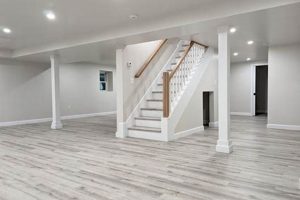
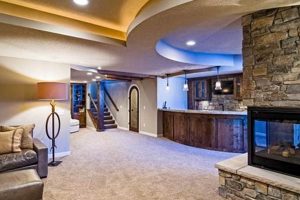
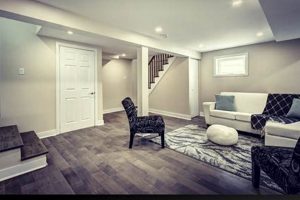
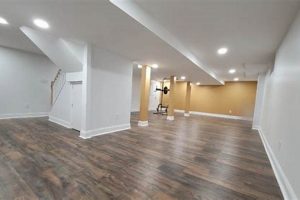
Effective strategies for completing a basement space where vertical height is limited represent a unique design challenge. These approaches encompass a variety of techniques aimed at maximizing perceived space and functionality within the confines of a reduced headroom environment. A common example involves selecting lighting fixtures that sit flush against the ceiling rather than hanging pendants, thereby preserving valuable inches.
Optimizing a below-grade area with diminished headroom enhances property value and expands usable living space. Addressing the limitations inherent in these spaces requires careful planning to avoid exacerbating feelings of claustrophobia and to ensure code compliance. Historically, homeowners have shied away from finishing basements with restricted height, but modern design solutions offer practical and aesthetically pleasing alternatives.
The subsequent sections will explore specific methods for mitigating the impact of reduced ceiling height, including strategic lighting choices, flooring options, design layouts and space planning, and clever design choices to maximize vertical space while enhancing the usability and aesthetic appeal of the finished basement.
Strategies for Optimizing Basements with Limited Vertical Space
The following recommendations provide guidance for enhancing the usability and perceived spaciousness of basements characterized by low ceilings.
Tip 1: Recessed Lighting Installation: Integrate recessed lighting fixtures to minimize encroachment on headroom. Unlike traditional pendant lights, recessed lights sit flush with the ceiling, preserving valuable vertical space and providing ample illumination.
Tip 2: Light-Colored Ceiling and Walls: Employ light hues for ceilings and walls to maximize light reflection. Light colors create an illusion of spaciousness by making the area appear brighter and more open.
Tip 3: Flooring Selection: Opt for thin flooring materials to minimize floor-to-ceiling height reduction. Engineered wood or low-profile tile options offer durable and aesthetically pleasing alternatives to thicker flooring choices.
Tip 4: Horizontal Design Elements: Incorporate horizontal design features to visually expand the space. Horizontal stripes on walls or long, low furniture pieces can create a sense of width and openness.
Tip 5: Low-Profile Furniture: Select furniture with a lower profile to maintain a sense of spaciousness. Sofas, chairs, and tables that sit closer to the floor reduce visual clutter and enhance the perception of height.
Tip 6: Strategic Mirror Placement: Position mirrors strategically to reflect light and create the illusion of greater depth. Large mirrors on walls can significantly expand the perceived size of the basement.
Tip 7: Open Concept Layout: Consider an open concept layout to eliminate unnecessary walls and partitions. A seamless flow between different functional zones maximizes available space and enhances the overall sense of openness.
By implementing these strategies, homeowners can significantly enhance the functionality and aesthetic appeal of basements with limited vertical space, creating a comfortable and inviting living area.
The subsequent section will address code considerations to consider before basement renovations.
1. Strategic lighting selection

Strategic lighting selection is a critical component of successfully executing basement finishing projects where ceiling height is limited. In these spaces, standard pendant or chandelier-style lighting fixtures often exacerbate the feeling of confinement. The deployment of recessed lighting, track lighting, or flush-mounted fixtures becomes essential. These options minimize vertical intrusion and provide ambient illumination without compromising the already limited headroom. For instance, a basement with a seven-foot ceiling height could benefit significantly from recessed LED lighting, which adds only a few inches to the ceiling depth, compared to a hanging fixture that could reduce usable space by a foot or more. The careful positioning of these light sources can also mitigate shadows, making the space appear brighter and more open.
Consider the alternative: the use of traditional, low hanging lights that reduce the ceiling clearance and can hinder movement, potentially creating safety hazards. Strategic lighting selections positively impact the perceived spaciousness, usability, and safety of the finished basement. Furthermore, the energy efficiency of modern LED options reduces long-term operating costs, representing a pragmatic economic benefit in addition to the aesthetic and functional improvements. In a practical setting, this might involve installing a combination of recessed lights for general illumination, coupled with strategically placed wall sconces to direct light upwards, further enhancing the perceived height of the space.
In summary, strategic lighting selection directly influences the success of basement finishing endeavors characterized by low ceilings. By prioritizing fixtures that minimize vertical intrusion and maximize light distribution, it is possible to create a more comfortable and aesthetically pleasing living space. The careful consideration of lighting options is, therefore, not merely an aesthetic choice, but a fundamental design principle for such renovations. Neglecting to address the importance of this aspect may compromise the entire project, rendering the finished space less usable and appealing.
2. Minimalist flooring solutions

Minimalist flooring solutions, within the context of low ceiling basement finishing ideas, represent a critical consideration for maximizing available vertical space and enhancing overall room aesthetics. Flooring selection can either exacerbate or mitigate the sense of confinement often associated with basements characterized by limited headroom.
- Reduced Thickness Materials
Employing flooring materials with minimal thickness is paramount. Options such as luxury vinyl tile (LVT), engineered wood, or thin-profile ceramic tile contribute negligibly to floor-to-ceiling height reduction. For instance, a self-leveling underlayment coupled with LVT can add as little as a quarter inch, a significant advantage over traditional hardwood flooring installation.
- Direct Application Systems
Flooring systems that allow for direct application to the subfloor further minimize height consumption. Epoxy coatings, for example, can be applied directly to concrete subfloors, eliminating the need for additional underlayment and reducing the overall floor height. This approach is particularly beneficial in basements with exceptionally low ceilings.
- Light Reflectance Properties
Selecting flooring materials with high light reflectance values enhances the perceived spaciousness of the basement. Light-colored flooring options, such as light gray or beige, reflect more light than darker shades, contributing to a brighter and more open atmosphere. This is particularly important in basements where natural light is limited.
- Seamless Installation
Seamless or near-seamless flooring installations reduce visual clutter and contribute to a more expansive feel. Large-format tiles or epoxy flooring offer a continuous surface, minimizing grout lines or seams that can visually compress a space. This streamlined approach enhances the overall sense of openness in a low ceiling basement.
The strategic selection and installation of minimalist flooring solutions are integral to optimizing basement finishing projects where ceiling height is a constraint. By prioritizing thin materials, direct application systems, light reflectance properties, and seamless installations, it is possible to mitigate the limitations of low ceilings and create a more comfortable and visually appealing living space. This approach exemplifies the principle of maximizing functionality while minimizing visual and physical intrusion in confined spaces.
3. Space-optimizing layouts

Space-optimizing layouts are crucial when approaching finishing a basement characterized by low ceilings, directly impacting the perceived spaciousness and functionality of the finished area. Limited vertical height necessitates a strategic design that maximizes usable floor space while minimizing any elements that visually compress the environment. For example, a conventional layout might incorporate multiple enclosed rooms, which, in a low-ceiling basement, could create a claustrophobic effect. Conversely, an open-concept layout allows for unobstructed views and maximizes the available footprint, thus improving the overall sense of openness. This approach commonly involves minimizing the number of permanent walls and opting for furniture arrangements or partial partitions to define distinct zones within the larger space. Therefore, space-optimizing layouts serve as a fundamental component in achieving a successful outcome for low ceiling basement finishing projects.
Consider the practical implications: A basement intended as a recreational area could benefit from an open layout incorporating a media zone, a game area, and a wet bar, all seamlessly integrated without physical barriers. Conversely, a basement designed as a home office or guest suite may require some degree of separation. In such cases, the use of strategically placed half-walls, bookshelves, or sliding partitions can provide visual definition while maintaining an open feel. The furniture selection also plays a vital role. Using low-profile furniture, such as platform sofas and streamlined storage units, helps maintain a greater sense of vertical space, preventing the room from feeling crowded or cramped. Careful consideration of traffic flow and accessibility further enhances the usability of the space, ensuring that the layout complements the limited vertical height and facilitates comfortable movement throughout the basement.
In summary, space-optimizing layouts address the challenges presented by low ceiling basements by prioritizing open designs, strategic division of space, and careful furniture selection. The absence of a well-thought-out layout can negate other design efforts, leading to a finished basement that feels confined and unwelcoming. Understanding the principles of space optimization is, therefore, paramount for homeowners and designers seeking to maximize the potential of these challenging spaces. This approach not only enhances the aesthetic appeal of the finished basement but also significantly improves its functionality and overall livability.
4. Reflective surface application

The incorporation of reflective surfaces is a strategic design element in low ceiling basement finishing ideas, serving to amplify ambient light and create an illusion of increased spatial volume. The proper implementation of such materials mitigates the restrictive nature of limited vertical space, enhancing overall aesthetic and functionality.
- Mirror Placement for Light Diffusion
Strategic positioning of mirrors, particularly on walls opposite or adjacent to light sources, maximizes light diffusion throughout the basement. Large mirrors reflect natural or artificial light, effectively doubling the illumination and visually expanding the space. For instance, a full-length mirror installed along a wall can create the perception of a longer room, alleviating the sense of confinement.
- High-Gloss Paint Utilization
The application of high-gloss paint on ceilings and select wall areas enhances light reflectivity. High-gloss finishes bounce light more effectively than matte or satin finishes, thereby brightening the basement and creating an impression of greater height. The judicious use of high-gloss paint is particularly effective in smaller basements with minimal natural light.
- Metallic Accent Incorporation
Metallic accents, such as stainless steel trim, chrome fixtures, or metallic wallpaper, contribute to light reflection and visual interest. These elements introduce subtle highlights that catch and reflect light, adding depth and dimension to the basement. A metallic backsplash in a wet bar or reflective tiles in a bathroom can enhance the overall brightness and aesthetic appeal.
- Polished Flooring Surfaces
Polished concrete or epoxy flooring, when treated to a high sheen, acts as a reflective surface, increasing the ambient light levels. These flooring options not only enhance light reflectivity but also offer durability and ease of maintenance. A polished floor can significantly contribute to the overall brightness and spaciousness of a low ceiling basement.
The application of reflective surfaces is integral to optimizing the design of low ceiling basements. By strategically incorporating mirrors, high-gloss paints, metallic accents, and polished flooring, one can effectively mitigate the limitations imposed by restricted vertical space. The careful integration of these elements not only enhances the aesthetic appeal but also improves the perceived spaciousness and functionality of the finished basement.
5. Low-profile furnishings

The selection of low-profile furnishings is a critical design consideration when implementing low ceiling basement finishing ideas. Traditional, bulky furniture can exacerbate the sense of confinement in a space already limited by vertical height. Therefore, opting for furnishings with reduced vertical dimensions becomes essential for maximizing the perceived spaciousness and functionality of the finished basement.
- Reduced Vertical Height:
Low-profile furnishings are characterized by their diminished vertical height compared to standard furniture. Sofas, chairs, tables, and storage units designed with a lower silhouette minimize visual clutter and maintain a greater sense of vertical space. For example, a platform sofa that sits closer to the floor reduces visual obstruction and creates an open atmosphere, contrasting with a high-backed sofa that can dominate the room and accentuate the low ceiling.
- Horizontal Emphasis:
Low-profile pieces often emphasize horizontal lines, contributing to a wider and more expansive feel. Long, low console tables, wide sectionals, and elongated shelving units visually stretch the space, creating a sense of openness. This horizontal orientation helps counteract the vertical limitations of the basement, making the area feel less cramped and more inviting.
- Streamlined Design:
Furnishings with streamlined designs and minimal ornamentation further enhance the sense of spaciousness. Avoiding bulky arms, excessive detailing, and ornate legs allows for a cleaner, more modern aesthetic that doesn’t overwhelm the limited vertical space. Simplistic designs reduce visual noise and create a more cohesive and open environment.
- Multi-Functional Pieces:
Low-profile, multi-functional furniture optimizes space utilization. Ottomans with built-in storage, coffee tables with lift-top mechanisms, and sofa beds provide practical solutions for storage and seating without adding unnecessary bulk. These versatile pieces maximize functionality while minimizing the physical footprint, making them ideal for low ceiling basements.
The strategic integration of low-profile furnishings significantly enhances the success of low ceiling basement finishing ideas. By prioritizing reduced vertical height, horizontal emphasis, streamlined designs, and multi-functional pieces, it becomes possible to mitigate the limitations of a low ceiling and create a more comfortable, functional, and visually appealing living space. Neglecting the importance of appropriate furniture selection can compromise the overall design and lead to a finished basement that feels cramped and uninviting, undermining the goals of the finishing project.
Frequently Asked Questions
The following questions and answers address common concerns and considerations related to finishing basements with limited ceiling height. Accurate information and planning are essential for successful project execution.
Question 1: What constitutes a ‘low ceiling’ in the context of basement finishing?
A ‘low ceiling’ generally refers to any ceiling height below the standard residential requirement, typically less than 8 feet (2.44 meters). Specific building codes often dictate minimum ceiling heights for habitable spaces, potentially impacting the feasibility of finishing a basement.
Question 2: Are there specific building code requirements that affect finishing a low-ceiling basement?
Building codes vary by jurisdiction, but commonly address minimum ceiling heights, egress windows, and adequate ventilation. Some codes may not permit finishing a basement if the ceiling height is below a specified threshold. Compliance with all applicable building codes is mandatory.
Question 3: How does lighting selection impact the perceived height of a low-ceiling basement?
Lighting choices significantly influence the perception of vertical space. Recessed lighting and flush-mounted fixtures minimize intrusion on headroom, unlike pendant or chandelier-style lighting which can visually compress the space. Strategic placement of lighting enhances illumination and mitigates shadows.
Question 4: What flooring options are best suited for basements with limited ceiling height?
Flooring materials with minimal thickness are recommended to avoid further reducing headroom. Suitable options include luxury vinyl tile (LVT), engineered wood, and thin-profile ceramic or porcelain tiles. Direct application flooring systems, such as epoxy coatings, can also minimize height consumption.
Question 5: How can an open concept layout improve the functionality of a low-ceiling basement?
An open concept layout minimizes the need for walls, creating unobstructed sightlines and maximizing the available floor space. This approach improves traffic flow and enhances the overall sense of openness, making the basement feel less confined.
Question 6: What role do reflective surfaces play in mitigating the effects of low ceilings?
Reflective surfaces, such as mirrors and high-gloss paint, amplify ambient light and create the illusion of greater spatial volume. Strategic placement of mirrors and utilization of reflective finishes brighten the basement and enhance the perception of height.
Careful planning and adherence to building codes are essential when finishing a low-ceiling basement. Strategic selection of materials and design elements can optimize the space and create a functional and aesthetically pleasing living area.
The subsequent section will delve into cost considerations related to low ceiling basement finishing projects.
Conclusion
Effective execution of “low ceiling basement finishing ideas” demands a comprehensive understanding of spatial limitations, code requirements, and strategic design solutions. The preceding sections have explored the importance of optimized layouts, lighting, flooring, and reflective surfaces to successfully create livable spaces. Navigating these aspects necessitates careful planning and informed decision-making.
The creation of functional and aesthetically pleasing basements in spaces where height is limited is challenging but achievable. Thoughtful application of the discussed principles provides opportunities to transform formerly underutilized areas into valuable living spaces, enhancing property value and overall quality of life. Further research into specific local building codes and professional consultation is highly encouraged prior to undertaking any renovation project of this nature.