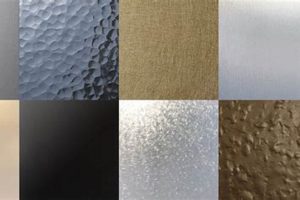
An imitation of a metal surface achieved through paint and glazing techniques offers a cost-effective and versatile alternative to using actual metal. These surface treatments can replicate the appearance of various metals, such as gold, silver, copper, and bronze, on a wide range of substrates, including walls, furniture, and architectural details. For example, a base coat of paint might be overlaid with a metallic glaze, then further manipulated with brushes or rags to create depth and texture, simulating the visual characteristics of real metal.
The application of these surface treatments provides numerous advantages. These include reduced material costs compared to solid metal, lighter weight, and adaptability to complex shapes and surfaces that would be difficult or impossible to achieve with solid metal. Historically, simulated metal finishes have been employed to add a touch of luxury and sophistication to interiors and exteriors, offering an accessible way to emulate the grandeur of precious metals without the associated expense. They have also been used in theatrical set design and decorative arts.
The subsequent sections will delve into specific techniques for achieving varied metal effects, examine the appropriate materials and tools, and offer guidance on preparing surfaces to ensure optimal adhesion and longevity of the applied finish. Furthermore, this will explore the range of applications for these decorative treatments and provide insights into troubleshooting common problems encountered during the application process.
Tips for Achieving Superior Metallic Faux Finishes
The following guidelines provide essential considerations for successful application and lasting quality of these surface treatments. Proper execution ensures a visually compelling and durable simulated metal appearance.
Tip 1: Surface Preparation is Paramount: Prior to application, thoroughly clean and prime the surface. Remove any loose paint, dirt, or grease. Apply a primer compatible with both the substrate and the subsequent paint layers to ensure proper adhesion and prevent premature failure.
Tip 2: Select Quality Materials: Opt for high-quality paints and glazes specifically designed for these finishes. Inferior materials may lack the desired sheen, durability, or color consistency, resulting in a subpar appearance.
Tip 3: Experiment with Techniques: Before committing to a large area, practice various application techniques on a sample board. Experiment with different brushes, rags, and sponges to achieve the desired texture and metallic effect.
Tip 4: Layering Creates Depth: Multiple thin layers of glaze are preferable to a single thick coat. Layering allows for greater control over the intensity of the metallic effect and creates a more nuanced and realistic appearance.
Tip 5: Consider the Lighting: The appearance of these treatments varies significantly depending on the lighting. Evaluate the finished sample under the lighting conditions in which it will be viewed to ensure the desired effect is achieved.
Tip 6: Sealing for Durability: Once the finish is complete and dry, apply a clear topcoat or sealant to protect the surface from wear, moisture, and UV damage. This will extend the lifespan of the finish and maintain its visual appeal.
Tip 7: Proper Ventilation is Essential: Work in a well-ventilated area to minimize exposure to fumes from paints, glazes, and sealants. Use appropriate respiratory protection, such as a respirator, as needed.
Adherence to these principles will greatly enhance the final result, producing a sophisticated and enduring imitation metal finish. These surface treatments, when properly executed, can elevate the aesthetic appeal of a variety of surfaces.
The subsequent sections will explore common challenges and offer troubleshooting advice for achieving professional-looking results with these treatments.
1. Adhesion

Achieving a durable and aesthetically pleasing imitation metal surface is fundamentally reliant on the bond between the applied finish and the substrate. Insufficient adhesion invariably leads to premature failure, undermining the visual intent and increasing maintenance requirements. Understanding the factors influencing this bond is therefore critical for successful implementation.
- Surface Preparation and Adhesion Strength
Thorough surface preparation is paramount for maximizing adhesion. Removal of contaminants like grease, dust, and loose paint provides a clean and receptive surface. Priming, in particular, plays a crucial role by creating a consistent and chemically compatible layer that promotes strong adhesion. Without adequate preparation, the imitation metal finish may peel, chip, or blister, even under normal environmental conditions.
- Compatibility of Materials and Adhesion
The chemical compatibility between the substrate, primer, base coat, and the imitation metal layers directly affects adhesion. Using incompatible materials can lead to weak bonding, resulting in delamination. For instance, applying a water-based finish over an oil-based primer may compromise the bond. Careful selection of compatible systems, guided by manufacturer specifications, is essential.
- Environmental Factors and Adhesion Integrity
Environmental factors such as temperature and humidity during application and curing significantly influence adhesion. Extreme temperatures or high humidity can interfere with the proper drying and bonding of the finish. Adhering to recommended environmental conditions ensures optimal adhesion and long-term performance. Furthermore, subsequent exposure to moisture or extreme temperatures can test the integrity of the bond over time; robust adhesion mitigates these risks.
- Application Techniques and Adhesion Quality
Application techniques significantly influence adhesion. Applying thin, even coats allows for proper drying and bonding between layers, whereas thick, uneven coats can trap solvents and compromise the bond. Proper curing time, as specified by the manufacturer, is crucial for achieving maximum adhesion strength. Ignoring recommended application procedures can lead to insufficient adhesion, resulting in premature failure.
In summary, achieving robust adhesion is not merely a preliminary step but an ongoing consideration throughout the entire process of applying an imitation metal finish. From initial surface preparation to the final application and curing, each stage contributes to the strength and longevity of the bond. Ensuring optimal adhesion through careful material selection, diligent preparation, adherence to proper application techniques, and control of environmental factors is indispensable for a successful and lasting result.
2. Technique

The application of an imitation metal surface is highly dependent on the chosen technique. Skillful execution of these methods dictates the final aesthetic quality, realism, and perceived value of the finished work. The selection of appropriate techniques is therefore crucial to successfully replicating the appearance of various metals.
- Layering and Glazing
Layering involves applying multiple thin coats of paint and glaze to build depth and dimension. Glazing, in particular, utilizes translucent mediums to create subtle variations in color and sheen. For example, a base coat might be overlaid with a tinted glaze, then wiped away in certain areas to reveal the base color, simulating the highlights and shadows found in aged metal. The success of layering hinges on controlling the viscosity of the glaze and the pressure applied during wiping or ragging techniques.
- Dry Brushing and Stippling
Dry brushing involves applying a small amount of paint with a nearly dry brush, creating a textured, uneven surface. Stippling employs a specialized brush to create a dotted or speckled effect. These techniques are often used to simulate the texture of hammered metal or the pitted surface of cast iron. The key to effective dry brushing is maintaining a light touch to prevent the paint from becoming too opaque and obscuring the underlying layers.
- Sponging and Ragging
Sponging uses natural or synthetic sponges to apply paint in an irregular pattern, creating a mottled effect. Ragging involves using a cloth to dab or drag paint across the surface, producing a textured, fabric-like finish. These methods are particularly useful for replicating the subtle variations in color and texture found in oxidized metal surfaces. Achieving a natural look with sponging and ragging requires careful control of the amount of paint applied and the pressure used to create the texture.
- Metal Leaf Application
The application of metal leaf, such as gold leaf or silver leaf, offers a more authentic metallic appearance. This technique involves adhering thin sheets of metal to the surface using an adhesive size. The leaf is then carefully burnished to create a smooth, reflective finish. While providing a higher level of realism, metal leaf application requires specialized tools and skills, and it is more labor-intensive than paint-based techniques. Metal leaf creates a highly reflective, genuine metallic surface but requires sealing to protect from tarnishing.
These techniques, when properly applied, enable the creation of highly convincing imitation metal surfaces. The choice of technique depends on the desired effect, the substrate material, and the skill level of the applicator. A combination of these methods may be used to achieve complex and realistic metal finishes, enhancing the aesthetic appeal of a wide range of surfaces and objects.
3. Durability

The connection between durability and imitation metal surfaces is intrinsic. The success of this treatment hinges not only on its aesthetic appeal but also on its ability to withstand environmental stressors and physical wear over an extended period. A visually convincing finish that deteriorates rapidly offers limited practical value. Therefore, durability is a paramount consideration, directly influencing the longevity and cost-effectiveness of this application. For instance, an imitation bronze finish applied to exterior architectural details must resist UV radiation, moisture, and temperature fluctuations to maintain its appearance and structural integrity. Failure to achieve adequate durability results in fading, cracking, and eventual degradation, necessitating costly repairs or replacements.
The selection of appropriate materials and application techniques plays a crucial role in determining the durability of the finish. High-quality paints, glazes, and sealants formulated for exterior use provide enhanced resistance to environmental factors. Proper surface preparation, including thorough cleaning and priming, ensures optimal adhesion, preventing premature peeling or chipping. Application techniques such as layering and the use of protective topcoats further enhance durability. In high-traffic areas, such as commercial spaces, the application of a durable clear coat is essential to protect the finish from abrasion and scuffs. The absence of these protective measures significantly reduces the lifespan of the treatment, rendering it a less viable alternative to actual metal.
In summary, the durability of imitation metal surfaces is a critical determinant of their overall value and suitability for various applications. Achieving a long-lasting and visually appealing finish requires careful attention to material selection, surface preparation, and application techniques. The enhanced resistance to environmental factors and physical wear provided by durable imitation metal treatments translates to reduced maintenance costs and extended service life, making it a practical and cost-effective alternative to solid metal in a wide range of contexts. The understanding of these durability factors is indispensable for architects, designers, and contractors seeking to implement sustainable and aesthetically pleasing surface solutions.
4. Appearance

The aesthetic presentation of simulated metal surfaces constitutes a primary determinant of their success. These finishes are fundamentally visual, designed to replicate the look of actual metals. The degree to which they convincingly achieve this determines their acceptance and utility. The imitation’s fidelity to the genuine material’s characteristics, including luster, texture, and color variations, is directly correlated to its perceived value and applicability in decorative or functional contexts. For instance, a finish intended to mimic aged bronze would necessitate the incorporation of subtle patinas and color gradations to create a believable representation. Without achieving a convincing visual appearance, the finish fails to deliver its intended purpose, irrespective of its durability or cost-effectiveness.
Factors influencing the appearance extend beyond mere color matching. The application technique significantly impacts the final look. Layering, glazing, and dry-brushing techniques, for example, can create depth and dimension, adding realism to the finish. The ambient lighting under which the finish will be viewed also plays a crucial role. The way light interacts with the treated surface affects its perceived color and texture; therefore, the application should be tailored to the intended lighting conditions. In interior design, a simulated gold finish might be used to add a touch of opulence to a room. However, the lighting must complement the finish to highlight its reflective qualities and prevent it from appearing artificial or gaudy. A well-executed finish, considered in context, enhances the overall aesthetic of the space.
In summation, the appearance of imitation metal finishes is paramount to their efficacy. The visual fidelity to the genuine material, the application technique, and the ambient lighting all contribute to the final aesthetic impact. Achieving a convincing and visually appealing finish necessitates careful consideration of these elements. The imitation must not only resemble the target metal in color and texture but also respond to light in a manner consistent with the real material. The practical significance lies in the fact that, without a believable appearance, the finish fails to fulfill its intended decorative or functional purpose, undermining the entire application effort. The appearance determines the acceptability and overall value of the simulated metal surface.
5. Substrate
The substrate, as the foundational surface to which a metallic faux finish is applied, wields significant influence over the final aesthetic and durability of the treatment. Its composition, condition, and preparation are critical determinants of the success or failure of any attempt to simulate the appearance of metal. Understanding the interplay between these factors is essential for achieving a high-quality, long-lasting finish.
- Surface Texture and Adhesion
The texture of the substrate profoundly affects the adhesion of the metallic faux finish. Smooth, non-porous surfaces, such as metal or glossy paint, often require abrading or the application of a bonding primer to create a mechanical key for the finish to grip. Conversely, porous substrates like unsealed wood or drywall may need sealing to prevent excessive absorption of the paint and glaze, which can compromise adhesion and alter the intended appearance. For example, applying a metallic glaze directly to untreated drywall would likely result in uneven absorption and a blotchy finish.
- Material Composition and Compatibility
The chemical composition of the substrate must be compatible with the chosen paints, glazes, and sealants. Applying a water-based metallic faux finish over an oil-based primer, or vice-versa, can lead to delamination or other adhesion problems. Similarly, certain plastics may react adversely to solvents in some metallic paints, causing them to soften or degrade. It is crucial to consult manufacturer guidelines and conduct compatibility tests on a small, inconspicuous area before applying the finish to the entire surface. Consider, for instance, a faux copper finish applied to PVC piping; the choice of appropriate primer and sealant is critical to ensure the finish doesn’t react with or damage the underlying plastic.
- Surface Condition and Preparation Techniques
The condition of the substrate dictates the necessary preparation techniques. Surfaces marred by cracks, dents, or imperfections must be properly repaired and smoothed before applying the metallic faux finish. Failure to address these issues will result in an uneven finish and highlight the flaws in the substrate. For example, applying a metallic faux finish to a wall with patched drywall requires careful sanding and priming to create a uniform surface that will not detract from the simulated metal appearance. Proper preparation ensures the faux finish is not undermined by existing surface defects.
- Substrate Color and its Influence on the Finish
The existing color of the substrate can subtly affect the final appearance of the metallic faux finish, particularly when using translucent glazes. A dark substrate may darken the overall tone of the finish, while a light substrate may lighten it. Understanding this effect allows for strategic selection of a base coat color that complements the desired metallic hue. For example, when attempting to replicate the appearance of aged silver, a gray or black primer may be used to enhance the antique effect, while a white primer might be preferable for achieving a brighter, more reflective silver finish.
In conclusion, the substrate is not merely a passive surface; it actively participates in the final outcome of a metallic faux finish. By carefully considering the substrate’s texture, composition, condition, and color, and by employing appropriate preparation techniques and compatible materials, it is possible to achieve a convincing and durable simulation of metal on a wide range of surfaces. The selection of right substrate ensures faux finishing is achieved professionally.
6. Materials
The creation of convincing imitation metal surfaces is inextricably linked to the selection and application of appropriate materials. The inherent properties of paints, glazes, sealants, and metallic powders directly dictate the final appearance, durability, and overall success of the metallic faux finish. Utilizing inferior or incompatible materials inevitably results in a substandard imitation, characterized by poor adhesion, unrealistic color, and premature degradation. For example, employing a non-UV-resistant clear coat over a simulated bronze finish on an exterior door will lead to rapid fading and discoloration, negating the initial aesthetic investment. The choice of materials, therefore, is not merely a procedural step but a fundamental determinant of the project’s outcome. The practical significance of understanding material properties lies in the ability to predict and control the behavior of the finish under various environmental conditions.
The type of metallic pigment used is also critical. Genuine metallic powders, such as bronze or aluminum, offer superior reflectivity and authenticity compared to synthetic alternatives. However, they also require careful handling and may be more prone to tarnishing or corrosion. Conversely, synthetic pigments offer greater stability and ease of use but may lack the subtle nuances of real metal. The base coat also significantly influences the final appearance. A dark base coat, for instance, will deepen the tone of a gold metallic glaze, creating a richer, more antique look, while a light base coat will result in a brighter, more reflective finish. Furthermore, the vehiclethe liquid component of the paint or glazeaffects the application properties and drying time. Acrylic-based mediums offer quick drying and ease of cleanup, while oil-based mediums provide better blending and a longer open time, allowing for more intricate techniques.
In summary, the materials used in a metallic faux finish are not simply passive ingredients; they actively shape the visual and physical characteristics of the final product. Selecting the correct combination of paints, glazes, sealants, and metallic pigments, based on their inherent properties and compatibility with the substrate, is essential for achieving a durable, realistic, and aesthetically pleasing imitation metal surface. Understanding the cause-and-effect relationship between material choices and final outcome empowers artisans and designers to create convincing and enduring simulated metal finishes that meet both aesthetic and functional requirements. The challenges are selecting the right materials; the wrong one can ruin the entire project.
Frequently Asked Questions
The following addresses common inquiries regarding the application, maintenance, and suitability of imitation metal surface treatments.
Question 1: What is the typical lifespan of a metallic faux finish, and what factors influence its longevity?
The lifespan of a metallic faux finish varies considerably based on several factors, including the quality of materials used, the thoroughness of surface preparation, the application technique, and the environmental conditions to which it is exposed. A well-executed interior application, utilizing high-quality materials and proper sealing, may last for a decade or more. Exterior applications, subject to weathering and UV exposure, may require more frequent maintenance and reapplication, potentially every 3-5 years.
Question 2: Can a metallic faux finish be applied to any surface, or are there specific substrate limitations?
While metallic faux finishes are versatile, they are not universally applicable. Ideal substrates include properly prepared drywall, wood, metal, and primed plastics. Surfaces that are oily, unstable, or subject to extreme moisture may not be suitable. Adhesion testing is recommended to ensure compatibility between the finish and the substrate.
Question 3: How does one properly clean and maintain a metallic faux finish to preserve its appearance?
Cleaning should be performed with a soft, damp cloth and a mild, pH-neutral cleaner. Abrasive cleaners or harsh chemicals should be avoided, as they can damage the finish. For high-traffic areas, the application of a durable, clear topcoat can provide added protection against wear and tear. Periodic dusting helps prevent the buildup of grime that can dull the metallic luster.
Question 4: Is a metallic faux finish a cost-effective alternative to using real metal materials?
Yes, in most instances, a metallic faux finish offers a significant cost advantage over using solid metal. The cost of materials and labor is generally lower, and faux finishes can be applied to surfaces and in configurations that would be prohibitively expensive or technically challenging with real metal. However, the long-term cost-effectiveness depends on the durability of the finish and the frequency of maintenance required.
Question 5: What are the common challenges encountered when applying a metallic faux finish, and how can they be mitigated?
Common challenges include achieving uniform coverage, avoiding brush strokes or uneven textures, and ensuring proper adhesion. These issues can be mitigated through careful surface preparation, the use of high-quality brushes or application tools, and the application of multiple thin layers rather than a single thick coat. Practicing on a sample board before applying the finish to the final surface is highly recommended.
Question 6: Can a metallic faux finish be repaired if it becomes damaged or scratched?
Minor scratches and imperfections can often be touched up with matching paints or glazes. More extensive damage may require reapplication of the entire finish to the affected area. It is crucial to identify the cause of the damage and address it before attempting repairs. For example, if the damage is due to moisture, the source of the moisture must be eliminated to prevent recurrence.
In summary, metallic faux finishes provide a versatile and often cost-effective way to achieve the look of metal. Their longevity and success depend heavily on proper application, maintenance, and substrate compatibility.
The subsequent section will explore case studies and real-world applications of these surface treatments, illustrating their versatility and impact.
Conclusion
This exploration of metallic faux finish has underscored its multifaceted nature, extending beyond mere aesthetic imitation. The discussion has detailed critical elements such as adhesion, technique, durability, appearance, substrate compatibility, and material selection. The success of metallic faux finish applications hinges upon a comprehensive understanding of these factors and their interplay. The information presented facilitates informed decision-making in diverse contexts, from interior design to architectural detailing.
The implementation of metallic faux finish represents a deliberate choice with long-term implications. Prudent execution demands careful consideration of project-specific requirements, budgetary constraints, and environmental conditions. By applying the knowledge outlined herein, practitioners can maximize the potential of metallic faux finish to achieve visually compelling and enduring results. The ongoing evolution of materials and techniques warrants continuous professional development in this specialized domain.