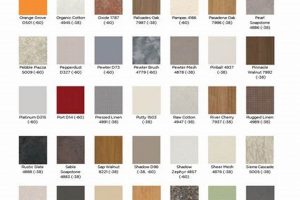
The concluding treatments applied to photographic prints significantly influence their aesthetic appeal and longevity. These processes, ranging from coatings to mounting techniques, define the final presentation and physical durability of an image. For instance, a glossy application enhances color vibrancy, while a matte application reduces glare and imparts a softer, more subtle appearance.
Careful selection of these processes is crucial for preserving photographic works and realizing an artist’s vision. The treatment chosen impacts perceived value, archival stability, and viewer experience. Historically, advancements in materials science have expanded the available range of treatments, providing photographers with increased control over the final outcome of their work and allowing for nuanced expressions of creativity.
The subsequent sections will delve into specific types, focusing on their characteristics, applications, and considerations for selection. The diverse options available will be examined, providing a practical understanding of their impact on the final piece.
Considerations for Optimal Photographic End Products
Achieving a superior result in photography requires careful attention to the concluding treatments applied to prints. The following points offer guidance for making informed decisions.
Tip 1: Evaluate Image Content: The subject matter and tonal range of the photograph should influence the selection. High-contrast images often benefit from glossy applications, while images with subtle gradations may be enhanced by matte or satin applications.
Tip 2: Assess Viewing Conditions: The intended display environment should factor into the choice. Matte applications are generally preferable in brightly lit spaces to minimize glare, whereas glossy applications are suitable for controlled lighting.
Tip 3: Prioritize Archival Stability: If preservation is a primary concern, select options known for their archival qualities. Certain coatings and mounting materials are specifically designed to resist fading, discoloration, and degradation over time.
Tip 4: Match to Presentation Style: The desired aesthetic should align with the chosen treatment. A contemporary presentation may benefit from a sleek, minimalist style, while a more traditional approach may call for a textured surface or ornate framing.
Tip 5: Test Before Committing: Whenever possible, obtain samples or test prints with different applications before finalizing a large order. This allows for a direct comparison and ensures satisfaction with the end product.
Tip 6: Seek Professional Advice: Consult with experienced printmakers or photography professionals to gain insights into the suitability of various processes for specific needs. Their expertise can guide in making informed decisions.
Careful consideration of these factors will lead to a final product that effectively communicates the artistic vision, preserves the integrity of the image, and enhances its visual impact. The selection of appropriate options represents a crucial step in realizing the full potential of any photographic endeavor.
The subsequent sections will explore specific applications and their impact on the final work in greater detail.
1. Surface Texture

Surface texture is a fundamental aspect of photographic prints, directly influencing the visual and tactile experience. The specific texture imparted by the final application impacts light reflection, perceived sharpness, and the overall aesthetic character of the image.
- Gloss Application
A high-gloss application creates a smooth, reflective surface. This enhances color saturation and contrast, making the image appear vibrant and sharp. However, it is susceptible to glare and fingerprints, making it less suitable for high-traffic environments or direct sunlight. Gloss surfaces offer minimal texture to the touch.
- Matte Application
Matte applications provide a non-reflective surface with a subtle texture. This reduces glare and hides fingerprints, making it suitable for display in various lighting conditions. Color saturation and contrast are generally subdued compared to gloss surfaces, resulting in a softer, more understated appearance. Matte textures can range from smooth to slightly rough.
- Satin/Semi-Gloss Application
Satin or semi-gloss applications offer a balance between gloss and matte. They provide some degree of reflectivity while minimizing glare. Color saturation and contrast are enhanced compared to matte surfaces but less so than with high-gloss options. The surface texture is typically smooth with a slight sheen.
- Textured Application
Certain treatments incorporate a pronounced texture, such as canvas or linen. These applications add a tactile dimension to the image, simulating the look and feel of traditional art materials. The texture can soften the image, reduce sharpness, and mask minor imperfections. Such treatments significantly alter the perceived realism of the photograph.
The choice of surface texture represents a critical decision in the selection of photography applications. The intended display environment, desired aesthetic effect, and preservation requirements all contribute to the optimal selection. Each texture offers a unique set of characteristics that significantly impact the final presentation and perceived value of the photographic work.
2. Light Reflectance

Light reflectance, a critical property of photographic prints, is directly governed by the selection of surface applications. The manner in which light interacts with the surface dictates perceived color vibrancy, contrast, and overall viewing experience. Control over light reflectance is therefore essential for realizing the intended artistic vision and ensuring optimal image presentation.
- Specular Reflection and Gloss Applications
Specular reflection occurs when light reflects from a smooth surface at an angle equal to the angle of incidence. Gloss applications, characterized by their highly polished surfaces, exhibit high specular reflection. This results in enhanced color saturation and contrast, but also increases the potential for glare, especially in brightly lit environments. The glossy surface can become a mirror, reflecting distracting light sources and hindering the viewing experience.
- Diffuse Reflection and Matte Applications
Diffuse reflection occurs when light scatters in multiple directions after striking a rough surface. Matte applications, with their non-reflective texture, promote diffuse reflection. This minimizes glare and allows the image to be viewed comfortably from various angles. However, the scattering of light can reduce color saturation and contrast, resulting in a softer, more subdued appearance. Matte surfaces are often preferred for environments where controlling glare is paramount.
- Satin and Semi-Gloss Applications as Intermediate Solutions
Satin and semi-gloss applications offer a compromise between specular and diffuse reflection. These applications provide a degree of sheen while mitigating the excessive glare associated with high-gloss surfaces. They offer a balance between color vibrancy and comfortable viewing, making them versatile choices for various display conditions. The subtle texture of these surfaces contributes to a more refined visual experience.
- Impact on Perceived Detail and Sharpness
Light reflectance significantly influences the perceived detail and sharpness of a photograph. High specular reflection from gloss applications can create the illusion of increased sharpness, but this effect can be diminished by glare. Diffuse reflection from matte applications can soften the image, potentially reducing the perception of fine details. The selection of an application must therefore consider the image content and the desired level of detail visibility.
In conclusion, light reflectance is a primary consideration in the selection of photographic surface applications. The interplay between specular and diffuse reflection determines the visual impact and viewing experience of the final print. Careful consideration of these factors is crucial for achieving optimal results and ensuring that the application complements the artistic intent.
3. Archival Stability

Archival stability, concerning photographic prints, denotes the resistance of the image and substrate to deterioration over extended periods. The selection of concluding treatments profoundly influences the longevity of photographic work. The following facets explore key considerations for maximizing archival performance.
- Lightfastness of Inks and Coatings
Lightfastness refers to the ability of inks and coatings to resist fading or discoloration when exposed to light. Pigment-based inks generally exhibit superior lightfastness compared to dye-based inks. Similarly, UV-protective coatings can significantly mitigate light-induced degradation. For instance, a print utilizing pigment inks and a UV-inhibiting laminate demonstrates increased resistance to fading over several decades compared to a print employing dye-based inks without protective coatings.
- Chemical Inertness of Materials
The chemical inertness of materials used in applications is critical for preventing degradation. Acid-free papers and mounting boards help prevent the yellowing and embrittlement of the print over time. Additionally, coatings should be chemically stable and non-reactive with the underlying image layer. For example, a print mounted on acidic cardboard is prone to discoloration and structural damage, whereas a print mounted on acid-free board remains stable for a longer period.
- Resistance to Environmental Factors
Environmental factors such as humidity, temperature fluctuations, and air pollutants can accelerate the deterioration of photographic prints. Protective coatings can provide a barrier against moisture and pollutants. Proper storage in a climate-controlled environment minimizes the risk of degradation. As an illustration, a print stored in a humid basement is susceptible to mold growth and image degradation, while a print stored in a dry, temperature-stable environment maintains its integrity.
- Physical Protection Against Abrasion and Damage
Concluding treatments also provide physical protection against abrasion, scratches, and other forms of physical damage. Laminates and coatings create a durable surface that resists wear and tear. Proper mounting techniques further protect the print from bending and warping. For example, a print laminated with a scratch-resistant film is better protected against handling damage compared to an unprotected print.
The selection of appropriate treatments directly affects the long-term preservation of photographic prints. By prioritizing lightfastness, chemical inertness, resistance to environmental factors, and physical protection, it is possible to significantly extend the lifespan of photographic work and ensure its accessibility for future generations.
4. Color Rendition

Color rendition, defined as the accuracy and fidelity with which a visual medium reproduces colors, is inextricably linked to photography applications. The application process significantly impacts the perceived color of a photographic print, influencing saturation, contrast, and overall tonal balance. The selection of a particular process can either enhance or detract from the original color palette captured in the photograph. Thus, a careful understanding of how different applications affect color reproduction is essential for achieving the desired aesthetic outcome and ensuring the artistic intent is faithfully represented. For example, a photograph with vibrant, saturated colors may appear muted when printed with a matte application, whereas a glossy application may intensify these colors, sometimes to an undesirable degree. The practical significance lies in the artist’s ability to control the final color appearance through informed application choices.
Further illustrating this connection, consider the application of laminates and coatings. These concluding treatments, while providing protection against environmental factors and physical damage, also alter the surface properties and, consequently, the way light interacts with the print. This alteration can lead to shifts in perceived color. Certain laminates, for instance, may introduce a slight yellow cast, affecting the neutrality of white tones and the overall color balance. Similarly, some coatings may enhance certain color ranges while suppressing others. In practical application, this demands careful testing and calibration to ensure the application complements the original color characteristics of the photograph, rather than distorting them. The use of color management workflows, including ICC profiles tailored to specific applications and printing processes, becomes crucial for predicting and controlling these color shifts.
In summary, color rendition is a vital consideration in the selection of photography applications. The choice of application directly influences the perceived color accuracy, saturation, and contrast of the final print. Understanding the impact of each process, including laminates and coatings, is essential for preserving the artistic integrity of the photograph and achieving the desired aesthetic result. The challenges lie in the subtle nuances of color perception and the need for precise color management to mitigate unwanted color shifts. However, by carefully considering the connection between color rendition and photographic applications, the artist can effectively control the visual outcome and ensure the long-term quality of their work.
5. Tactile Quality

Tactile quality, a frequently overlooked aspect of photographic prints, is intrinsically linked to the concluding treatments applied to their surfaces. The texture and feel of a print contribute significantly to the overall sensory experience, shaping the viewer’s perception and engagement with the image. The concluding application directly determines the tactile characteristics, influencing whether the print feels smooth and slick, textured and organic, or something in between. This tactile element can evoke subconscious associations and emotions, adding layers of meaning beyond the purely visual content. For example, a photograph of a rough landscape might benefit from a textured application that reinforces the sense of ruggedness, while a portrait might be enhanced by a smooth application that emphasizes the subject’s skin texture. The practical significance of understanding this connection lies in the ability to consciously manipulate tactile qualities to amplify the impact of the photograph.
The selection of specific applications offers a wide range of tactile options. Gloss applications typically result in a smooth, almost glass-like surface, devoid of significant texture. Matte applications, on the other hand, often introduce a subtle texture, creating a more tactile and less reflective surface. Textured applications, such as those mimicking canvas or watercolor paper, impart a pronounced tactile sensation, blurring the line between photography and traditional art forms. In practice, choosing the appropriate application involves considering the subject matter, the intended viewing environment, and the desired emotional response. A commercial print designed for mass consumption might prioritize durability and visual appeal over tactile quality, whereas a fine art print intended for close examination might prioritize tactile quality to enhance the viewer’s engagement. The ability to predict and control the tactile properties of a print through application selection is a valuable skill for photographers and printmakers.
In conclusion, tactile quality is an integral, although often subtle, component of the overall photographic experience. The concluding application plays a crucial role in determining the texture and feel of the print, directly influencing the viewer’s perception and engagement. While challenges exist in quantifying and precisely controlling tactile qualities, a conscious awareness of this connection allows photographers to make informed decisions that amplify the impact of their work. By carefully considering the tactile dimension, it is possible to create prints that are not only visually compelling but also deeply engaging on a sensory level, thereby enriching the overall artistic expression.
Frequently Asked Questions
This section addresses common inquiries regarding the selection and application of concluding treatments for photographic prints, providing clarity on factors influencing longevity, aesthetics, and preservation.
Question 1: What distinguishes a glossy from a matte application?
Glossy applications provide a highly reflective surface, enhancing color saturation and contrast. Matte applications offer a non-reflective surface, minimizing glare and providing a softer aesthetic.
Question 2: How do concluding treatments affect the archival stability of a photograph?
The selection of archival-quality inks, coatings, and mounting materials can significantly extend the lifespan of a photographic print by resisting fading, discoloration, and physical damage.
Question 3: Can a concluding treatment correct imperfections in a photograph?
While some treatments can minimize the appearance of minor imperfections, such as scratches or dust, they cannot fundamentally correct issues with image quality or composition.
Question 4: Are certain concluding treatments better suited for specific types of photography?
Yes. High-gloss applications are often preferred for vibrant, high-contrast images, while matte applications are suitable for portraits or images with subtle tonal variations.
Question 5: What is the role of UV protection in concluding treatments?
UV-protective coatings shield the photograph from ultraviolet radiation, which is a primary cause of fading and discoloration, particularly in prints displayed in direct sunlight.
Question 6: How does the selection of a concluding treatment impact the cost of a photographic print?
The cost varies depending on the materials and processes involved. Archival-quality materials and specialized applications typically incur a higher cost than standard options.
The appropriate treatment choice directly impacts the overall quality and longevity of photographic work. Understanding the properties and limitations of various processes ensures informed decision-making.
The subsequent section will address specific types, providing detailed insights into their applications and characteristics.
Photography Finishes
The preceding sections have examined the critical role of photographic processes in determining the final aesthetic and archival properties of printed images. The interplay of surface texture, light reflectance, archival stability, color rendition, and tactile quality fundamentally shapes the viewer’s experience and the long-term preservation of photographic work. Proper selection and implementation directly influence the perceived value and artistic merit of the final piece.
The careful application of these processes is therefore paramount for photographers and printmakers seeking to realize their artistic vision and safeguard their work for future generations. Continued research and development in materials science will undoubtedly yield further advancements, expanding the possibilities for creative expression and archival excellence. Understanding and adopting these advancements remains crucial for maintaining the integrity and longevity of photographic art.