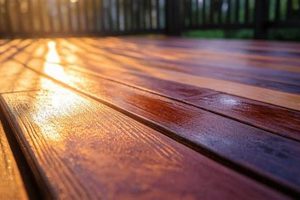
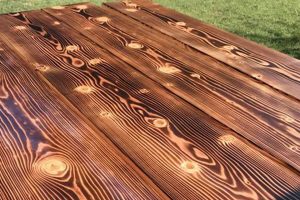
A coating designed for application onto wooden surfaces via spraying mechanisms, this product category encompasses a range of formulations. These finishes, delivered through compressed air or airless sprayers, create a protective and often aesthetically pleasing layer. An example is a clear lacquer applied to a dining table to enhance its durability and visual appeal.
The significance of these coatings lies in their ability to provide a uniform and consistent application, often more efficiently than traditional brushing methods. Benefits include reduced brush marks, faster drying times, and enhanced coverage, particularly on intricate or large surfaces. Historically, the evolution of these finishes has mirrored advancements in spraying technology and chemical formulations, offering increased resistance to environmental factors and improved user-friendliness.
The following sections will delve into specific types of these coatings, application techniques, equipment selection, safety considerations, and troubleshooting common issues. Understanding these aspects allows for informed decision-making when selecting and utilizing these materials for various woodworking projects.
Application Best Practices
Achieving a professional result requires careful attention to detail and adherence to established procedures.
Tip 1: Surface Preparation. Proper preparation is paramount. Ensure the wood is clean, dry, and sanded to the appropriate grit level. Remove any dust or contaminants that could interfere with adhesion. Failure to adequately prepare the surface will compromise the finish’s longevity and appearance.
Tip 2: Viscosity Adjustment. The viscosity must be optimized for the specific sprayer and application. Thinning, as directed by the manufacturer, is often necessary. Incorrect viscosity can result in runs, orange peel texture, or inadequate atomization.
Tip 3: Consistent Spray Pattern. Maintain a consistent distance and speed while spraying. Overlapping each pass by approximately 50% ensures uniform coverage. Avoid arcing the wrist, which can lead to uneven distribution.
Tip 4: Environmental Control. Apply in a well-ventilated area, free from dust and excessive humidity. High humidity can affect drying times and lead to clouding or blushing of the finish. Adequate ventilation prevents the buildup of harmful vapors.
Tip 5: Multiple Thin Coats. Applying multiple thin coats is preferable to a single thick coat. This minimizes the risk of runs, sags, and trapped solvents. Allow each coat to dry completely before applying the next.
Tip 6: Proper Nozzle Selection. Choose the correct nozzle size and type for the specific finish being used. A fine-finish nozzle will provide better atomization and a smoother surface.
Tip 7: Regular Equipment Maintenance. Clean the sprayer thoroughly after each use to prevent clogging and ensure optimal performance. Refer to the manufacturer’s instructions for proper cleaning procedures.
Following these guidelines will contribute significantly to a superior finish, enhancing both the aesthetic appeal and protective qualities of the wood surface.
The next section will address common problems encountered during the spraying process and offer troubleshooting solutions.
1. Viscosity

Viscosity, a fluid’s resistance to flow, is a critical parameter directly affecting the performance of sprayable wood finishes. Optimal viscosity ensures proper atomization and film formation, ultimately influencing the finish’s appearance and protective qualities.
- Atomization Quality
Higher viscosity fluids require greater force to atomize, potentially leading to larger droplet sizes and a coarser finish. Conversely, excessively low viscosity can result in runs and sags due to insufficient surface tension. Therefore, the viscosity must align with the sprayer’s capabilities to achieve a fine, uniform spray pattern.
- Film Thickness and Leveling
Viscosity dictates the film thickness achieved with each pass of the sprayer. Higher viscosity generally results in a thicker film, while lower viscosity produces a thinner film. The leveling properties of the finish, its ability to smooth out imperfections and brush marks, are also viscosity-dependent. An appropriate viscosity promotes even film distribution and minimizes surface irregularities.
- Solvent Content and Drying Time
The viscosity of a finish is often adjusted through the addition of solvents. Higher solvent content typically lowers viscosity, which can reduce drying time but may also compromise the finish’s durability. Finding the right balance between viscosity, solvent content, and desired drying time is crucial for efficient and effective application.
- Sprayer Compatibility
Different types of sprayers, such as airless, HVLP (High Volume Low Pressure), and conventional air sprayers, are designed to handle specific viscosity ranges. Using a finish with an inappropriate viscosity for a particular sprayer can lead to poor atomization, equipment malfunction, and an unsatisfactory final result. Matching the viscosity to the sprayer’s specifications is essential for optimal performance.
The interrelationship between viscosity, atomization, film thickness, and sprayer compatibility underscores its pivotal role in achieving a high-quality sprayable wood finish. Careful attention to viscosity, often achieved through thinning or adjusting formulations, is paramount for successful application and a durable, aesthetically pleasing outcome.
2. Atomization

Atomization, the process of converting a liquid into a fine spray, is a fundamental component of applying wood finishes via spraying. Effective atomization directly influences the uniformity, smoothness, and overall quality of the resulting finish. When a wood finish is properly atomized, it breaks down into minute droplets that are propelled onto the wood surface, creating an even and consistent coating. Inadequate atomization, conversely, results in larger, uneven droplets, leading to runs, sags, and an undesirable “orange peel” texture. The proper selection of spraying equipment and adjusting its settings are crucial factors in achieving optimal atomization. For example, an improperly calibrated airless sprayer may deliver insufficient pressure, causing the finish to exit the nozzle in large globules rather than a fine mist.
The quality of atomization is further influenced by the finish’s viscosity. Highly viscous finishes are more challenging to atomize, requiring higher pressure or specialized nozzles. Thinning the finish with appropriate solvents can reduce viscosity and improve atomization, but excessive thinning can compromise the finish’s protective properties. The type of wood being finished also plays a role. Open-grained woods, such as oak, require a finer atomization to ensure the finish penetrates the pores evenly, while closed-grained woods, like maple, may tolerate a slightly coarser spray. Correct atomization minimizes waste, reduces the likelihood of defects, and contributes to efficient material usage.
In conclusion, atomization represents a critical link in the application of sprayable wood finishes. Achieving the appropriate level of atomization is essential for obtaining a durable, aesthetically pleasing, and professional-quality result. While challenges remain in optimizing atomization across different finishes and application scenarios, a thorough understanding of the principles involved allows for informed decision-making and improved finishing techniques, highlighting the importance of proper equipment maintenance and adherence to manufacturer guidelines.
3. Adhesion
Adhesion is paramount to the long-term performance of any sprayable wood finish. Without adequate adhesion, the finish will be prone to chipping, peeling, and premature failure, negating its intended protective and aesthetic benefits.
- Surface Preparation’s Influence
The condition of the wood surface directly impacts the degree of adhesion. Contaminants such as dirt, grease, wax, or previous coatings can create a barrier, preventing the finish from properly bonding with the wood fibers. Thorough cleaning, sanding, and the use of appropriate primers are essential steps to ensure a clean, receptive surface. For example, failure to remove sanding dust can result in a weak bond and subsequent peeling of the finish.
- Finish Formulation and Compatibility
The chemical composition of the finish significantly affects its ability to adhere to the wood. Different types of finishes, such as lacquer, varnish, and polyurethane, possess varying adhesive properties. Compatibility between the finish and the underlying wood species is also crucial. Some wood species, particularly those with high oil content, may require specialized primers or surface treatments to promote adhesion. Using an incompatible finish can result in poor bonding and eventual delamination.
- Application Technique and Environmental Factors
The application method and environmental conditions during application can also influence adhesion. Applying a finish too thickly can lead to poor curing and reduced adhesion. Conversely, applying it too thinly may result in inadequate coverage and a weak bond. Temperature and humidity levels can affect the drying and curing process, impacting the finish’s ability to properly adhere to the wood surface. Applying a finish in excessively humid conditions, for instance, can trap moisture, hindering proper adhesion.
- Intercoat Adhesion
For multi-coat applications, adhesion between successive layers is critical. Proper sanding between coats creates a mechanical key, enhancing intercoat adhesion. Failure to sand between coats can result in a weak bond and potential delamination of the finish. Additionally, the recoat window, the time frame within which subsequent coats can be applied without additional surface preparation, must be adhered to for optimal intercoat adhesion.
The interplay between surface preparation, finish formulation, application technique, and environmental factors underscores the complexity of achieving optimal adhesion. Adherence to established best practices, including proper surface preparation, selection of compatible finishes, and controlled application environments, is essential for ensuring the long-term durability and aesthetic appeal of sprayable wood finishes.
4. Durability

The durability of a sprayable wood finish is a primary determinant of its long-term performance and value. It dictates the finish’s ability to withstand environmental stressors, physical abrasion, and chemical exposure, thus protecting the underlying wood substrate from degradation. The cause-and-effect relationship is direct: a higher degree of durability translates into a longer lifespan for the finished product and reduced maintenance requirements. For instance, a durable, sprayable polyurethane finish applied to exterior wooden doors effectively resists weathering, UV radiation, and moisture absorption, thereby preventing warping, cracking, and fungal growth. This stands in stark contrast to less durable finishes that may quickly exhibit signs of deterioration, requiring frequent reapplication or complete replacement.
Durability encompasses several specific attributes, including resistance to scratching, impact, water penetration, and chemical solvents. Each attribute contributes to the overall protection afforded to the wood. A sprayable conversion varnish, for example, offers exceptional chemical resistance, making it suitable for laboratory or kitchen countertops where exposure to harsh cleaning agents is common. Similarly, a catalyzed lacquer, known for its hardness and scratch resistance, is often used on high-traffic furniture surfaces. The practical significance of understanding these aspects lies in selecting the appropriate finish for a given application. Choosing a finish that lacks the necessary durability for its intended use will inevitably lead to premature failure and increased costs over the product’s life cycle.
In conclusion, durability is an indispensable component of sprayable wood finishes, influencing both the functional longevity and aesthetic appeal of finished wood products. While challenges persist in developing finishes that offer optimal durability across all environmental conditions and usage scenarios, the careful selection and application of durable sprayable finishes are critical for maximizing the investment in woodworking projects. A focus on this crucial characteristic ensures that the finish effectively protects the wood, preserves its beauty, and provides lasting value.
5. Clarity
Clarity, in the context of sprayable wood finishes, refers to the finish’s ability to allow light to pass through without significant distortion or discoloration. This property directly influences the visual appearance of the wood, either enhancing its natural grain and color or obscuring them. The pursuit of optimal clarity is a key objective in many finishing applications.
- Material Composition and Refractive Index
The chemical composition of a sprayable wood finish significantly influences its clarity. Finishes with a lower refractive index typically exhibit greater clarity, as they minimize light scattering. Resins, solvents, and additives used in the formulation can all affect the overall refractive index and, consequently, the finish’s transparency. For example, certain UV absorbers, while protecting the wood from sunlight, may slightly reduce the clarity of the finish.
- Application Technique and Film Thickness
The method of application and the resulting film thickness can impact the perceived clarity of a sprayable wood finish. Uneven application or excessive film build-up can lead to clouding or haziness, diminishing clarity. Proper atomization, consistent spray patterns, and controlled film thickness are essential for maintaining optimal transparency. A poorly atomized finish may result in a textured surface that scatters light, reducing overall clarity.
- Surface Preparation and Contamination
The condition of the wood surface prior to finishing plays a crucial role in the final clarity of the coating. Imperfections, such as scratches or sanding marks, can refract light and detract from the finish’s transparency. Similarly, contaminants like dust or grease can become embedded in the finish, causing clouding or discoloration. Thorough surface preparation, including fine sanding and cleaning, is necessary to maximize clarity.
- Curing Process and Environmental Factors
The curing process and environmental factors during and after application can also affect clarity. Incomplete curing may result in a soft, hazy finish, while exposure to high humidity or temperature fluctuations can cause clouding or blushing. Proper ventilation and temperature control are essential for ensuring complete and consistent curing, thereby preserving the finish’s clarity.
These interconnected factors collectively determine the clarity of a sprayable wood finish. The optimal balance of material selection, application technique, surface preparation, and environmental control is crucial for achieving a high-quality, transparent coating that enhances the natural beauty of the wood.
6. Coverage

Coverage, in the context of sprayable wood finishes, represents the area a specified volume of finish can effectively coat while achieving the desired film thickness and aesthetic qualities. It is a critical parameter for estimating material requirements, controlling project costs, and ensuring a uniform and protective coating.
- Spreading Rate and Viscosity
The spreading rate, typically expressed as square feet per gallon, is inversely proportional to the finish’s viscosity. Lower viscosity finishes tend to spread more easily, yielding higher coverage rates. However, excessively low viscosity can lead to thin film builds, compromising durability. Manufacturers’ data sheets provide recommended spreading rates based on specific product formulations and application methods. Exceeding the recommended rate results in insufficient protection; applying less results in material wastage.
- Substrate Porosity and Absorption
The porosity of the wood substrate significantly influences coverage. Open-grained woods, such as oak, absorb more finish than closed-grained woods like maple, requiring additional material to achieve uniform coverage. Pre-sealing the wood with a compatible sealer reduces porosity and subsequent finish absorption, thereby increasing the effective coverage rate. Failure to account for substrate porosity often leads to uneven color saturation and inconsistent sheen levels.
- Application Technique and Equipment
The chosen application technique and equipment directly affect the efficiency of material transfer and, consequently, coverage. Spraying, compared to brushing or wiping, generally offers greater coverage efficiency due to uniform atomization and distribution. High-volume low-pressure (HVLP) sprayers minimize overspray and material waste, maximizing coverage. Improper sprayer settings or nozzle selection can result in excessive overspray, significantly reducing the effective coverage rate. The angle of the spray gun to the substrate is also important as this determines how much material is lost. Therefore, application settings and environmental conditions have a large influence.
- Film Build and Number of Coats
The desired film build, or thickness of the cured finish, directly impacts coverage. Achieving a higher film build necessitates more material per unit area, reducing the overall coverage rate. Multiple thin coats, as opposed to a single thick coat, promote better adhesion, leveling, and durability. Each additional coat reduces the effective coverage rate per initial volume of finish. Applying one coat of primer, followed by two coats of finishing will allow for a more accurate coverage of a wood surface.
These facets, intricately linked, collectively determine the practical coverage achievable with sprayable wood finishes. Accurate estimation of coverage requirements, based on substrate properties, finish characteristics, and application parameters, is critical for successful project execution and optimal material utilization. Furthermore, the interrelationship between environmental conditions, equipment settings and the desired result should be taken into account.
7. Application Technique
The performance of any sprayable wood finish is inextricably linked to the application technique employed. The finish’s inherent qualities its viscosity, drying time, and chemical composition are only realized through proper application. A poorly executed technique can negate the benefits of even the highest-quality finish. For instance, using an incorrect nozzle size on a sprayer can lead to inadequate atomization, resulting in an uneven finish with runs and sags, regardless of the finish’s purported durability or clarity. Conversely, a skilled application can maximize the protective and aesthetic properties of a less expensive finish. The technique becomes a critical component in the overall system, influencing everything from adhesion to the final appearance.
Specific examples further illustrate this connection. Consider the application of a sprayable lacquer to a complex, multi-dimensional piece of furniture. A novice applicator, using inconsistent spray patterns and overlapping techniques, might produce a finish with variations in gloss and texture. An experienced applicator, however, would employ precise trigger control, maintain a consistent distance from the workpiece, and utilize overlapping passes to create a uniform, flawless finish. Furthermore, factors such as ambient temperature, humidity levels, and air circulation must be carefully considered and adjusted during the application process. Ignoring these factors will impact the finishs leveling properties and drying time, ultimately compromising the final result. The surface preparation, prior to the spraying itself, needs to be considered in the application. An unproperly prepped surface will cause visible imperfections.
In summary, the application technique is not merely a supplemental step but an integral part of the entire sprayable wood finish process. A thorough understanding of spraying equipment, finish properties, and environmental conditions is essential for achieving optimal results. While advancements in finish formulations continue, the skill and expertise of the applicator remain crucial for unlocking the full potential of these products. The ongoing challenge lies in bridging the gap between product innovation and user proficiency, ensuring consistent and predictable outcomes across diverse applications.
Frequently Asked Questions About Sprayable Wood Finish
The following addresses commonly encountered questions regarding sprayable wood finish products, aiming to clarify key aspects for both novice and experienced users.
Question 1: What differentiates a sprayable wood finish from traditional brush-applied finishes?
Sprayable formulations are specifically engineered for application via spraying equipment, exhibiting optimized viscosity and atomization characteristics for this purpose. Brush-applied finishes typically possess higher viscosities and are designed to level and flow using brush techniques. Substituting one for the other can lead to suboptimal results.
Question 2: Is specialized equipment required for the application of sprayable wood finish?
Yes, the application necessitates the use of spraying equipment, such as compressed air sprayers, airless sprayers, or HVLP (High Volume Low Pressure) systems. The choice of equipment depends on the finish type, project scale, and desired level of control. Proper equipment setup and maintenance are crucial.
Question 3: What safety precautions should be observed when using sprayable wood finish products?
Adequate ventilation is paramount to prevent the inhalation of harmful vapors. Respirators, protective eyewear, and gloves should be worn to minimize exposure. Flammable finishes should be used away from ignition sources. Consult the manufacturer’s safety data sheet (SDS) for specific product hazards and handling recommendations.
Question 4: How should the viscosity of sprayable wood finish be adjusted?
Viscosity adjustment is typically achieved through the addition of compatible solvents, as specified by the manufacturer. Over-thinning can compromise the finish’s protective properties, while insufficient thinning can lead to poor atomization. Gradual solvent addition, coupled with viscosity testing, is recommended.
Question 5: What factors contribute to achieving a smooth, even finish when spraying?
Key factors include proper surface preparation, optimized sprayer settings (pressure, nozzle size), consistent spray patterns, and appropriate environmental conditions (temperature, humidity). Test spraying on a non-critical area is advisable before commencing the project.
Question 6: How can common problems like runs, sags, and orange peel be avoided?
These defects typically arise from excessive film build, improper viscosity, inadequate atomization, or incorrect spraying technique. Applying multiple thin coats, adjusting sprayer settings, and maintaining a consistent spray distance can mitigate these issues.
Understanding these fundamental aspects contributes significantly to the successful utilization of sprayable wood finish products. Adherence to best practices enhances the final result and minimizes potential complications.
The next section will explore advanced techniques and troubleshooting strategies for optimizing sprayable wood finish applications.
Conclusion
The preceding exploration of sprayable wood finish has underscored the multifaceted nature of its application. From understanding the nuances of viscosity and atomization to mastering surface preparation and application techniques, the successful utilization of these products requires a comprehensive understanding of the interplay between material properties, equipment capabilities, and environmental conditions. The pursuit of optimal durability, clarity, and coverage hinges on informed decision-making at each stage of the finishing process.
While advancements in finish formulations continue to emerge, the fundamental principles of proper application remain paramount. Further research and development are essential to address ongoing challenges in achieving consistent results across diverse wood species and environmental conditions. Continued adherence to best practices and a commitment to ongoing learning will ensure the effective and responsible use of sprayable wood finish in both professional and amateur woodworking endeavors.