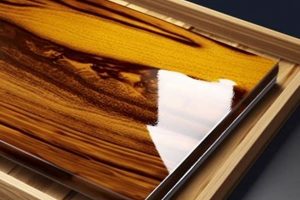
Protective coatings applied to wooden surfaces intended for exterior use shield the material from environmental elements. These treatments, available in various formulations, provide a barrier against moisture, ultraviolet radiation, temperature fluctuations, and biological degradation. An example is a clear, penetrating oil applied to a cedar deck, preserving its natural color while preventing water damage and graying from sun exposure.
The application of these protective measures is crucial for prolonging the lifespan and maintaining the aesthetic appeal of outdoor wood structures and furniture. Historically, natural oils and resins served as primary protectants. Modern formulations offer enhanced durability, resistance to mildew and algae growth, and color retention. This protection minimizes warping, cracking, and decay, preserving the wood’s structural integrity and reducing the need for frequent repairs or replacements.
The following sections will delve into the different types of coatings available, appropriate application techniques, and factors to consider when selecting the optimal product for a specific outdoor wood project.
Guidance for Exterior Wood Protection
Selecting and applying the appropriate protective coating is vital for preserving outdoor wood surfaces. These tips offer practical advice to ensure longevity and aesthetic appeal.
Tip 1: Surface Preparation is Paramount: Thoroughly clean and sand the wood surface before application. Remove any existing coatings, dirt, or mildew to ensure proper adhesion. Pressure washing can be effective, followed by a drying period.
Tip 2: Choose the Right Product Type: Consider the wood species, exposure to the elements, and desired aesthetic. Options range from penetrating oils that enhance the natural grain to film-forming finishes like paints and varnishes that offer greater protection. Spar urethane is well-suited for marine environments due to its flexibility and water resistance.
Tip 3: Apply Multiple Thin Coats: Avoid applying thick coats, which can lead to cracking, peeling, or uneven drying. Multiple thin coats provide better penetration and a more durable finish. Allow each coat to dry completely before applying the next.
Tip 4: Utilize UV-Resistant Formulations: Ultraviolet radiation degrades wood and many coatings. Select products specifically formulated with UV inhibitors to minimize fading, discoloration, and structural damage.
Tip 5: Pay Attention to End Grain: End grain absorbs moisture more readily than other surfaces. Apply extra coats of protective coating to end grain to prevent water penetration and subsequent decay.
Tip 6: Maintain Regularly: Inspect the finish periodically for signs of wear or damage. Reapply a maintenance coat every one to two years, depending on the product and exposure conditions, to preserve its protective properties.
Tip 7: Consider Environmental Factors: Opt for low-VOC (Volatile Organic Compounds) products whenever possible to minimize environmental impact and reduce harmful emissions. Water-based options often offer comparable performance with lower VOC content.
Adhering to these recommendations will significantly extend the life of outdoor wood structures and maintain their beauty, preventing costly repairs and replacements.
The subsequent section will provide information on selecting applicators and cleaning equipment.
1. Durability

Durability, in the context of coatings applied to exterior wood, denotes the finish’s capacity to withstand environmental stressors over an extended period. This characteristic is crucial for minimizing maintenance requirements and maximizing the lifespan of the underlying wood substrate.
- Resistance to Abrasion and Impact
Exterior wood surfaces are subject to physical wear from foot traffic, weather events, and accidental impacts. A durable finish must resist scratching, chipping, and other forms of surface damage to maintain its protective barrier. Decks, for example, require finishes that can withstand constant abrasion from foot traffic and furniture movement. Failure to provide adequate abrasion resistance leads to premature coating failure and exposes the wood to degradation.
- Weathering and Environmental Resistance
The primary function of a wood finish is to protect against weathering, including moisture ingress, ultraviolet (UV) radiation, and temperature fluctuations. Durable coatings maintain their integrity under these conditions, preventing warping, cracking, and decay of the wood. Finishes formulated with UV absorbers and water repellents are essential for long-term performance in outdoor environments. Without such protection, the wood is vulnerable to rapid deterioration.
- Resistance to Biological Degradation
Outdoor wood is susceptible to attack by fungi, mold, and insects. A durable finish may incorporate biocides or create a barrier that inhibits the growth of these organisms. This resistance is particularly important in humid climates where biological degradation is accelerated. Coatings that lack this property can contribute to rot and structural weakening of the wood, necessitating costly repairs or replacements.
- Adhesion and Flexibility
A durable coating must maintain strong adhesion to the wood surface and possess sufficient flexibility to accommodate wood movement caused by changes in temperature and humidity. Poor adhesion leads to peeling and blistering, while insufficient flexibility results in cracking. Finishes that can expand and contract with the wood substrate provide a more resilient and long-lasting protective layer.
The interplay of abrasion resistance, weathering protection, biological resistance, adhesion, and flexibility defines the overall durability of coatings. Selecting products that prioritize these factors is essential for ensuring long-term protection and minimizing the life-cycle costs associated with exterior wood structures.
2. UV Resistance

Ultraviolet (UV) radiation from sunlight is a primary catalyst for the degradation of both wood and coatings applied to it. The lignin component of wood absorbs UV light, leading to its breakdown. This process causes discoloration, surface roughening, and ultimately, structural weakening. Protective coatings mitigate this damage. Coatings formulated without adequate UV resistance permit radiation to penetrate, accelerating the wood’s deterioration beneath. This manifests as graying, cracking, and eventual decay. Clear varnishes without UV absorbers, for example, provide aesthetic enhancement initially, but offer minimal long-term protection against solar radiation. The practical consequence is a reduced lifespan for the wood structure and more frequent, costly recoating.
The incorporation of UV-absorbing additives or pigments within coating formulations significantly enhances their protective capabilities. These substances selectively absorb UV radiation, preventing it from reaching the wood surface. Pigmented coatings, such as opaque stains or paints, inherently offer greater UV protection than clear finishes due to their higher opacity. Semitransparent stains containing UV absorbers provide a balance between aesthetic appeal and protection. Regular inspection and maintenance are essential, even with UV-resistant coatings. The rate of UV exposure varies based on geographic location, orientation of the wood surface, and the presence of shading. Surfaces that receive direct sunlight for extended periods require more frequent reapplication of the protective coating.
Therefore, the selection of a “wood finish for outdoor” must prioritize UV resistance to ensure longevity and structural integrity. Ignoring this factor results in premature failure of both the coating and the underlying wood. Selecting products specifically formulated for UV protection, combined with diligent maintenance practices, represents a crucial investment in the long-term preservation of exterior wood structures.
3. Water Repellency

Water repellency is a critical attribute of any effective protective measure for exterior wood. Untreated wood readily absorbs moisture, leading to a cascade of detrimental effects that compromise its structural integrity and aesthetic appeal. Consequently, a “wood finish for outdoor” must possess inherent or imparted water-resistant properties to mitigate these risks.
- Minimizing Moisture Absorption
The primary role of water repellency is to reduce the wood’s capacity to absorb liquid water from rain, dew, or snow. When wood absorbs moisture, it swells. Repeated cycles of wetting and drying cause dimensional instability, leading to warping, cracking, and joint failure. A water-repellent coating minimizes water uptake, stabilizing the wood’s dimensions and preventing these structural issues. For instance, a deck constructed with pressure-treated lumber will still degrade if not properly sealed against moisture ingress, which can cause the wood to splinter and crack over time.
- Preventing Fungal Decay
Moisture is a prerequisite for fungal growth, which is a major cause of wood decay. Wood-decaying fungi thrive in environments with high moisture content, breaking down the wood’s cellular structure and causing it to rot. Water-repellent coatings deny fungi the moisture they need to flourish, thereby preventing decay and prolonging the wood’s lifespan. An example is the application of a water-repellent stain to siding, preventing the growth of mold and mildew that can compromise the wood’s integrity and appearance.
- Reducing Staining and Discoloration
Water can carry dissolved minerals and organic matter that stain and discolor wood surfaces. These stains can be unsightly and difficult to remove. Water-repellent coatings create a barrier that prevents water from penetrating the wood and depositing these staining agents. This is particularly important for light-colored woods, such as cedar or pine, which are more susceptible to staining. Regular application of water repellent seals, such as on exterior doors, can prevent water marks and discoloration, preserving the wood’s natural appearance.
- Enhancing Coating Durability
Water repellency can also improve the durability of other protective coatings, such as paints and varnishes. When water penetrates these coatings, it can cause them to blister, peel, or crack. A water-repellent undercoat or topcoat can prevent water from reaching the underlying layers, extending the lifespan of the entire coating system. For example, applying a water repellent primer before painting an exterior window frame helps to prevent the paint from blistering and peeling, resulting in a longer-lasting, more attractive finish.
The facets of minimizing moisture absorption, preventing fungal decay, reducing staining, and enhancing coating durability underscore the critical role of water repellency in a “wood finish for outdoor.” Selecting coatings with strong water-repellent properties is essential for safeguarding wood from the damaging effects of moisture and ensuring its long-term preservation in exterior environments.
4. Application Ease
Application ease is a significant, though often understated, attribute of a “wood finish for outdoor.” It directly impacts project timelines, labor costs, and, ultimately, the quality and longevity of the protective coating. A finish that is difficult to apply is prone to errors, such as uneven coating thickness, runs, or trapped air bubbles, all of which compromise its protective properties. For instance, a high-build varnish that requires multiple coats and careful sanding between each coat, if not applied correctly, can result in a brittle, easily cracked finish, negating its intended durability. Conversely, a penetrating oil that is simply brushed or wiped on and requires minimal surface preparation is less likely to suffer from application-related failures.
The choice of application method also influences the application ease. Spraying, while efficient for large surfaces, requires specialized equipment, skill, and appropriate safety precautions. Brushing or rolling, on the other hand, are more accessible to the average user but may result in brush marks or uneven coverage if not executed properly. Water-based finishes generally offer easier cleanup and lower odor compared to solvent-based options, further contributing to application ease. The viscosity of the product also plays a role; excessively thick finishes are difficult to spread evenly, while excessively thin finishes may run or drip. A well-formulated “wood finish for outdoor” strikes a balance between protective properties and ease of handling, taking into account the skill level of the intended user.
In summary, application ease is not merely a convenience; it is a critical factor influencing the ultimate performance and longevity of a “wood finish for outdoor.” The selection process should consider not only the protective qualities of the finish but also its suitability for the intended application method and the user’s skill level. A finish that is easy to apply minimizes the risk of application errors, ensuring optimal protection and a longer lifespan for the treated wood. Furthermore, selecting products known for their ease of application can reduce project time, labor, and costs and environmental impact with decreased waste from poor application.
5. Maintenance Needs
The longevity and sustained protection offered by any “wood finish for outdoor” are intrinsically linked to its maintenance requirements. Different coating types necessitate varying levels of upkeep, directly affecting long-term costs and labor investments. Understanding these needs is crucial for selecting a finish that aligns with available resources and desired performance.
- Frequency of Reapplication
Some finishes, such as penetrating oils and some stains, require more frequent reapplication than others, like film-forming paints or varnishes. Reapplication frequency is influenced by factors like UV exposure, climate, and the wood’s inherent properties. Failing to adhere to recommended reapplication schedules can lead to premature coating failure and compromise the wood’s protection. A deck finished with a clear oil might require annual reapplication, while a properly applied exterior paint could last five to ten years before needing recoating. Ignoring these intervals increases the risk of water damage, fungal growth, and structural deterioration.
- Cleaning Requirements
All exterior wood surfaces accumulate dirt, mildew, and other contaminants. The ease with which a finish can be cleaned impacts its long-term appearance and performance. Some finishes are more resistant to staining and mildew growth than others. Regular cleaning, typically involving mild soap and water, is necessary to maintain the finish’s integrity. Neglecting cleaning can lead to the buildup of contaminants that degrade the coating and promote biological growth. For example, siding covered with a dark-colored stain might require less frequent cleaning than siding painted white, which is more susceptible to showing dirt and mildew.
- Surface Preparation for Maintenance Coats
Before applying a maintenance coat, some level of surface preparation is usually required. This can range from a simple cleaning to light sanding or even complete removal of the existing coating. The amount of preparation needed depends on the type of finish and its condition. Film-forming finishes often require more extensive preparation than penetrating finishes, as peeling or cracking must be addressed before recoating. Neglecting proper surface preparation can compromise the adhesion and performance of the maintenance coat. For instance, applying a new coat of paint over a peeling surface without proper scraping and priming will likely result in continued peeling and a substandard finish.
- Repair and Spot Treatment
Localized damage, such as scratches, dents, or water stains, may require spot treatments or repairs to maintain the finish’s protective barrier. The ease with which these repairs can be made varies depending on the type of finish. Some finishes blend easily with existing coats, while others may require more extensive blending or even complete recoating of the affected area. Promptly addressing localized damage prevents it from spreading and causing more significant problems. Failing to repair a small crack in a painted window frame can allow water to penetrate, leading to rot and structural damage over time.
The interconnectedness of reapplication frequency, cleaning protocols, surface preparation for maintenance, and repair strategies highlights the holistic nature of “Maintenance Needs” in relation to any “wood finish for outdoor.” Thoughtful consideration of these aspects during the selection process will ensure that the chosen finish provides optimal protection and longevity, while aligning with the owner’s willingness and capacity to perform ongoing maintenance.
6. Wood Type
The selection of an appropriate protective coating for exterior wood is inextricably linked to the specific wood species being treated. Wood types exhibit varying characteristics in terms of density, porosity, natural oil content, and dimensional stability, all of which significantly influence the performance and longevity of a “wood finish for outdoor.” Therefore, a thorough understanding of the wood’s properties is paramount before choosing a finish.
- Porosity and Absorption Rates
Wood species differ significantly in their cellular structure and porosity, impacting the rate at which they absorb protective coatings. Highly porous woods, such as pine, absorb finishes readily but may require multiple coats to achieve adequate protection. Dense hardwoods, like teak, exhibit lower absorption rates, potentially hindering the penetration and adhesion of certain coatings. Failure to account for porosity can result in uneven finish application, inadequate protection, and premature coating failure. For example, applying a thick, film-forming finish to a highly porous wood without proper sealing may lead to blistering or peeling as moisture becomes trapped beneath the film.
- Natural Oil Content
Certain wood species, notably cedar and redwood, contain natural oils that contribute to their inherent resistance to decay and insect infestation. However, these oils can also interfere with the adhesion of some protective coatings. Finishes that rely on strong penetration and bonding may not perform well on oily woods unless the surface is properly prepared to remove excess oils. Applying an oil-based stain to redwood without allowing it to weather and leach some of its natural oils may result in poor adhesion and a blotchy finish. Selecting a coating that is compatible with the wood’s natural oil content is crucial for long-term performance.
- Dimensional Stability
Dimensional stability refers to a wood’s ability to resist changes in size and shape in response to fluctuations in moisture content. Wood species with low dimensional stability are prone to warping, cracking, and swelling, placing stress on the protective coating. Finishes that lack flexibility may crack or peel as the wood expands and contracts. Choosing a finish with sufficient elasticity to accommodate the wood’s natural movement is essential for maintaining a continuous protective barrier. For instance, using a rigid varnish on a wood species known for significant dimensional changes may lead to cracking and water penetration.
- Grain Pattern and Texture
The grain pattern and texture of a wood species influence the aesthetic outcome of a protective coating. Some finishes enhance the natural grain, while others obscure it. Open-grained woods, like oak, may require grain fillers to achieve a smooth, uniform finish with certain coatings. The choice of finish should complement the wood’s natural characteristics and align with the desired aesthetic. Applying a solid-color paint to a highly figured wood, such as curly maple, would conceal its unique grain pattern, which may be undesirable.
The interconnectedness of wood porosity, natural oil presence, dimensional stability, and grain characteristics underscores the importance of considering the wood species when selecting a “wood finish for outdoor.” A finish that is well-suited for one type of wood may be entirely inappropriate for another. Careful consideration of these factors ensures optimal protection, longevity, and aesthetic appeal for exterior wood structures. Examples of this are easily found when examining failed or cracking deck finishes that had been applied incorrectly or with incorrect products. Proper sealing and the consideration of expansion is vital.
7. Aesthetic Goals

The selection of a protective coating for exterior wood often extends beyond mere preservation, encompassing deliberate aesthetic considerations. These goals influence the choice of finish, application technique, and maintenance protocols, impacting the final appearance and perceived value of the wood structure. Balancing protective function with desired aesthetic outcomes is crucial for achieving a satisfactory result.
- Color and Tint
The selection of color profoundly influences the perceived character of exterior wood surfaces. Transparent finishes accentuate the wood’s natural tone, while semi-transparent stains introduce color while allowing the grain to remain visible. Opaque paints and stains offer a wider color palette but conceal the underlying wood grain. The selection should complement the architectural style of the structure and its surroundings. For instance, a natural-toned stain may be preferred for a rustic cabin, while a vibrant paint color might suit a modern home. Mismatched colors detract and clash from an otherwise visually appealing scene.
- Sheen Level
The sheen, or gloss level, of a coating affects its reflectivity and perceived smoothness. Matte finishes minimize reflection and create a subtle, natural appearance. Semi-gloss finishes offer a moderate sheen, while high-gloss finishes provide a shiny, reflective surface. The choice of sheen can impact the perceived formality and durability of the finish. High-gloss finishes are often used on trim and doors to highlight architectural details and provide greater resistance to dirt and abrasion. Lower sheens blend more with the surroundings and are commonly applied to other parts of wood structured.
- Grain Enhancement vs. Concealment
Some finishes are designed to enhance the natural grain pattern of wood, while others conceal it. Penetrating oils and clear sealers emphasize the wood’s texture and figure, while opaque paints and stains obscure the grain. The choice depends on whether the goal is to showcase the wood’s natural beauty or to create a uniform, painted appearance. Transparent finishes are often used on high-quality hardwoods to highlight their inherent character, while opaque finishes may be preferred for less visually appealing or damaged wood. A balance is important here.
- Texture and Smoothness
The application technique and finish type influence the final texture and smoothness of the wood surface. Some coatings create a smooth, even surface, while others leave a textured or rustic appearance. Multiple coats and careful sanding can achieve a glass-smooth finish, while a single coat of a textured stain can create a weathered look. The choice should align with the desired aesthetic and the intended use of the wood surface. For example, a smooth finish is often preferred for furniture, while a textured finish may be appropriate for decks or fences to provide better traction.
Ultimately, the effective application of a “wood finish for outdoor” requires a synthesis of protective requirements and carefully considered aesthetic objectives. Balancing the need for durability and weather resistance with the desire for a specific color, sheen, grain enhancement, and texture ensures that the final result not only protects the wood but also enhances its visual appeal, complementing the surrounding environment. This aesthetic plays a role in adding value to a property.
Frequently Asked Questions
This section addresses common inquiries regarding coatings for wooden surfaces exposed to the elements. The following questions and answers aim to clarify best practices and dispel misconceptions.
Question 1: What are the primary factors to consider when selecting a finish for outdoor wood?
The selection process necessitates consideration of wood species, exposure to sunlight and moisture, desired aesthetic, and maintenance requirements. Each factor influences the suitability of a particular product.
Question 2: How often should exterior wood finishes be reapplied?
Reapplication frequency varies based on the type of finish, environmental conditions, and wood species. Penetrating oils may require annual reapplication, while paints and some stains can last several years. Regular inspection is crucial for determining the need for recoating.
Question 3: Is surface preparation truly necessary before applying a finish?
Thorough surface preparation, including cleaning and sanding, is essential for optimal adhesion and performance. Failure to properly prepare the surface can result in premature coating failure and compromised protection.
Question 4: Are all “wood finish for outdoor” equally resistant to UV radiation?
No. Formulations vary in their UV resistance. Products specifically designed to protect the wooden surface from UV radiation need to be prioritized, and these contain additives or pigments known to absorb ultraviolet rays.
Question 5: What are the advantages and disadvantages of water-based versus oil-based finishes?
Water-based coatings typically offer lower VOC content, easier cleanup, and faster drying times. Oil-based counterparts often provide better penetration and enhanced durability. Each has different use cases, but oil-based usually need more steps.
Question 6: Can a single coating product provide complete protection for exterior wood?
The combination of several coating products, such as primer, sealer, and topcoat provides the best protection for exterior wood. Some of this depends on the wood being protected and the level of protection needed.
In summary, a nuanced understanding of wood properties, finish characteristics, and environmental factors is crucial for ensuring the long-term protection and aesthetic appeal of exterior wood surfaces.
The subsequent section will provide resources for further research and expert consultation.
Conclusion
The preceding discussion has illuminated the critical role of appropriate treatment in safeguarding exterior wood surfaces. Factors such as wood species, environmental exposure, application techniques, maintenance protocols, and desired aesthetics all influence the selection and performance of any protective coating. A comprehensive understanding of these variables is essential for ensuring longevity, structural integrity, and visual appeal. Failure to adequately address these considerations can result in premature coating failure, wood degradation, and costly repairs.
Therefore, informed decision-making is paramount. Property owners and construction professionals are encouraged to carefully evaluate their specific needs, consult with experts, and invest in high-quality products and proper application techniques. Such diligence represents a commitment to preserving valuable wood resources and maintaining the enduring beauty of exterior wood structures.

![Buy Quality Finished Shelf Wood - [Your Brand] | Best Final Touch: Elevate Your Projects with Professional Finishing](https://bestfinaltouch.com/wp-content/uploads/2026/05/th-447-300x200.jpg "Buy Quality Finished Shelf Wood - [Your Brand] Best Final Touch: Elevate Your Projects with Professional Finishing")
![Buy Premium Walnut Finished Wood [Deals Inside] | Best Final Touch: Elevate Your Projects with Professional Finishing](https://bestfinaltouch.com/wp-content/uploads/2026/05/th-405-300x200.jpg "Buy Premium Walnut Finished Wood [Deals Inside] Best Final Touch: Elevate Your Projects with Professional Finishing")