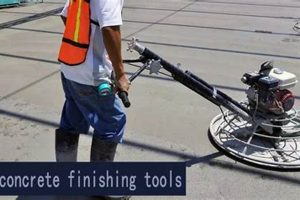
Equipment utilized in the final stages of concrete placement and finishing is designed to manipulate, smooth, and texture the material to meet specified requirements. These implements range from hand-held floats and trowels to powered machinery, each serving a distinct purpose in achieving the desired surface characteristics. For example, a bull float extends reach across freshly poured slabs, while a groover creates control joints to manage cracking.
The quality and longevity of concrete structures depend heavily on the proper application of these instruments. Effective finishing techniques enhance aesthetics, improve wear resistance, and prevent premature deterioration due to environmental factors. Historically, advancements in this equipment have significantly impacted construction timelines and the overall durability of concrete infrastructure, from sidewalks to high-rise buildings.
The subsequent sections will explore specific categories of these instruments, detailing their function, operation, and relative advantages in various concrete finishing applications. This includes examination of hand tools, power tools, specialized equipment for decorative finishes, and considerations for proper maintenance and safety protocols.
Essential Usage Guidance
Optimal utilization of implements designed for concrete finishing necessitates adherence to established best practices. These guidelines aim to maximize efficiency, ensure a high-quality surface, and prolong the lifespan of both the concrete and the implements themselves.
Tip 1: Proper Cleaning: Thorough cleaning after each use prevents build-up that can compromise performance and accelerate wear. Residual concrete should be removed using appropriate solvents and brushes, followed by drying and lubrication where applicable.
Tip 2: Edge Maintenance: The cutting edges of floats, trowels, and edgers must be maintained to ensure clean, precise work. Regular sharpening, or replacement when necessary, prevents tearing and inconsistent finishes.
Tip 3: Controlled Water Usage: The amount of water used during the finishing process directly affects the concrete’s strength and durability. Excessive water weakens the surface, leading to dusting and cracking. Judicious application is critical.
Tip 4: Appropriate Timing: Concrete’s workability changes rapidly after placement. Commence finishing operations when the surface can support the weight of the finisher without significant indentation. Adjust timing based on weather conditions.
Tip 5: Employing the Right Implement: Selection of the appropriate implement for each stage of the finishing process is essential. Using a bull float for initial leveling, followed by hand floats and trowels for finer detailing, optimizes results.
Tip 6: Consistent Pressure: Applying consistent pressure during floating and troweling ensures a uniform surface. Uneven pressure results in variations in density and texture, compromising both aesthetics and structural integrity.
Tip 7: Tool Storage: Proper storage protects against damage and corrosion. Implements should be stored in a dry environment, away from direct sunlight and extreme temperatures. Protect edges and blades with appropriate covers or sheaths.
Adhering to these suggestions will enhance the quality and longevity of concrete finishes, while also maximizing the operational life of the implements used. These practices represent a fundamental investment in the durability and aesthetic appeal of concrete structures.
The following sections will delve into specific aspects of maintaining these instruments, offering detailed guidance on repair, replacement, and safety protocols.
1. Surface preparation

Surface preparation is a foundational element in concrete finishing, directly influencing the effectiveness and longevity of the final product. The quality of the prepared surface dictates the performance characteristics required from finishing implements, and ultimately, the success of the finishing process.
- Formwork Integrity
The formwork establishes the initial shape and dimensions of the concrete element. Imperfections in the formwork, such as misalignments or gaps, translate to surface irregularities that necessitate increased effort and specialized implements to correct during finishing. Accurate formwork minimizes the need for extensive grinding or patching, allowing finishers to focus on achieving the desired surface texture and smoothness using standard floats and trowels.
- Subgrade Compaction
A properly compacted subgrade provides uniform support for the concrete slab. Inadequate compaction leads to differential settlement, resulting in cracks and unevenness that are difficult to rectify during finishing. While some surface imperfections can be addressed with hand tools, significant settlement requires corrective measures beyond the scope of standard finishing techniques.
- Reinforcement Placement
Correct placement of reinforcement bars (rebar) is critical for structural integrity and surface finish. Protruding rebar or insufficient concrete cover necessitates chipping and patching, disrupting the finishing process. Precise rebar placement minimizes the need for corrective work, enabling finishers to concentrate on achieving a smooth and consistent surface using appropriate tools.
- Concrete Mix Consolidation
Proper consolidation of the concrete mix, typically achieved through vibration, removes air voids and ensures uniform density. Inadequate consolidation results in honeycombing and surface imperfections that require patching and additional finishing effort. While hand floats can address minor surface defects, severe honeycombing necessitates more extensive repair procedures.
In summary, meticulous surface preparation reduces the reliance on corrective measures during the finishing stage. Accurate formwork, adequate subgrade compaction, precise rebar placement, and thorough concrete consolidation collectively contribute to a surface that is conducive to efficient and high-quality finishing. The effectiveness of concrete finishers tools is maximized when applied to a properly prepared surface, resulting in a durable and aesthetically pleasing concrete structure.
2. Material characteristics

The performance of implements used in concrete finishing is intrinsically linked to the characteristics of the concrete itself. Concrete mix design, including aggregate type and size, cement type, and the water-cement ratio, significantly influences the workability and setting time, thereby dictating which finishing implements are most appropriate. A mix with a high water-cement ratio, for example, may require a longer period of floating to allow excess bleed water to evaporate before troweling can commence. Conversely, a mix incorporating accelerating admixtures will necessitate expedited finishing procedures to prevent premature hardening, potentially requiring power floats or trowels to efficiently manage the rapid setting.
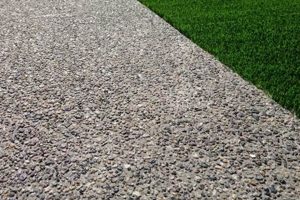
Aggregate type and size directly affect the texture and finish achievable with specific implements. A mix with large, angular aggregates may be unsuitable for achieving a perfectly smooth, polished surface, regardless of the quality or type of trowel employed. In such cases, techniques like grinding or overlaying with a finer material might be necessary. Similarly, the presence of supplementary cementitious materials, such as fly ash or slag, can alter the setting characteristics and hydration process, necessitating adjustments to finishing timing and implement selection. The use of fibers, whether synthetic or natural, also demands specific tools or adaptations in finishing techniques to prevent fiber pullout or uneven distribution across the finished surface.
In conclusion, a thorough understanding of concrete material characteristics is paramount for successful finishing. Informed selection of finishing implements, coupled with appropriate timing and techniques, is essential for achieving desired surface qualities and ensuring long-term durability. Ignoring these interdependencies can lead to surface defects, reduced wear resistance, and compromised structural integrity. The effective application of implements designed for concrete finishing necessitates a comprehensive awareness of the material being manipulated.
3. Tool selection

The selection of appropriate implements is a critical determinant of success in concrete finishing. Improper tool selection can lead to surface imperfections, compromised durability, and increased labor costs. The following facets outline key considerations in this process.
- Surface Area and Accessibility
The size and accessibility of the concrete pour dictate the type of implements required. Large, open slabs benefit from the use of power floats and trowels, increasing efficiency and consistency. Confined spaces, such as corners and edges, necessitate the use of hand tools for precise manipulation. Failure to account for the spatial constraints can result in uneven finishes and extended completion times.
- Desired Finish Texture
The desired surface texture, ranging from smooth to textured, influences implement selection. Achieving a smooth, polished finish requires the use of steel trowels and potentially polishing equipment. Conversely, a textured finish may necessitate specialized floats or stamps. Selecting implements inconsistent with the desired texture can result in substandard aesthetic outcomes.
- Concrete Setting Time
The setting time of the concrete mix dictates the timing and type of implements used. Rapid-setting concrete requires the use of power floats and trowels to efficiently manage the accelerated hardening process. Conversely, slower-setting concrete allows for extended use of hand tools for greater control. Disregarding the setting time can lead to surface defects and compromised structural integrity.
- Operator Skill Level
The skill level of the operator influences implement selection. Power floats and trowels require experience and expertise to operate effectively. Inexperienced operators may achieve better results with hand tools, allowing for greater control and precision. Matching implement complexity to operator skill is crucial for achieving optimal outcomes and minimizing errors.
In conclusion, the selection of implements used in concrete finishing must be informed by a comprehensive understanding of the project’s specific requirements. Factors such as surface area, desired finish texture, concrete setting time, and operator skill level all play a critical role in ensuring a successful outcome. Proper implement selection maximizes efficiency, minimizes errors, and ensures the delivery of durable and aesthetically pleasing concrete surfaces.
4. Finishing techniques

Finishing techniques represent the practical application of skill and methodology, translating the potential of concrete and implements into a functional and aesthetically pleasing surface. The effectiveness of any implement designed for concrete finishing is directly proportional to the operator’s proficiency in applying the appropriate technique for the given material and environment.
- Floating Techniques
Floating, the initial stage of finishing, uses floats to embed large aggregate particles, eliminate imperfections, and level the surface. Proper floating employs techniques such as overlapping passes and varying pressure to achieve a uniform texture. The choice of float material, whether wood or magnesium, influences the degree of surface manipulation and is directly linked to the concrete’s slump and setting characteristics. For example, a bull float is used for large surfaces, while a hand float is used for edges or detail work.
- Troweling Techniques
Troweling refines the floated surface, creating a smooth, dense finish. Techniques such as flat troweling, fresno troweling, and edging are used to achieve varying levels of smoothness and detail. Steel trowels are used to compact the surface and can require skill to prevent creating unevenness. Edgers are used to round off the edges of slabs and joints.
- Texturing Techniques
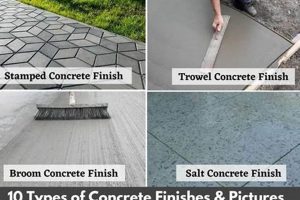
Texturing techniques impart a specific aesthetic or functional characteristic to the concrete surface. Broom finishing creates a non-slip surface, while stamping replicates the look of natural stone or brick. These techniques require specialized implements and a thorough understanding of pattern application and pressure control. Example: Using a broom finish on a sidewalk and stamping finish for patios.
- Curing Techniques
While not a manipulation of the fresh concrete, proper curing is an essential finishing technique. Curing ensures proper hydration, which is essential for long-term durability. Curing can be done by wetting the slab with water, covering the slab with a plastic sheet, or applying a curing compound. The effectiveness of curing is directly linked to the concrete’s water-cement ratio and the ambient environmental conditions. Proper curing ensures a durable finished product.
The selection and application of finishing techniques represent a critical intersection between material science, manual skill, and environmental awareness. The proper execution of these techniques, using the appropriate implements, ensures the long-term performance and aesthetic appeal of concrete structures.
5. Environmental conditions

Environmental conditions exert a profound influence on concrete finishing operations, dictating the selection, application, and effectiveness of implements. Temperature, humidity, and wind speed directly impact the rate of hydration and evaporation, affecting the workability of the concrete and the optimal timing for finishing processes. High temperatures accelerate setting, reducing the window of opportunity for using hand floats or trowels, and potentially necessitating the use of power tools for efficient manipulation. Conversely, low temperatures retard setting, extending the working time but increasing the risk of surface cracking due to prolonged exposure to freezing conditions. High humidity levels reduce evaporation, requiring adjustments to finishing techniques to prevent surface dusting or scaling, while low humidity and high wind speed can cause rapid surface drying, leading to plastic shrinkage cracks. Therefore, awareness and proactive management of environmental factors are crucial for achieving desired concrete finishes.
The interplay between environmental conditions and implement selection is evident in various scenarios. For instance, direct sunlight on a freshly poured slab necessitates the immediate use of a bull float to mitigate rapid surface crusting. In cold weather, heated blankets or enclosures may be employed to maintain adequate temperatures for proper hydration, allowing for the effective use of standard hand tools. Moreover, the type of concrete mix used should be tailored to the expected environmental conditions. A mix with a lower water-cement ratio may be preferred in humid environments to reduce the risk of surface defects, while a mix with air-entraining admixtures is essential in areas prone to freezing and thawing cycles. These considerations highlight the need for a holistic approach that integrates environmental monitoring, mix design, and implement selection to optimize finishing outcomes.
In summary, environmental conditions are not merely external factors but integral components of the concrete finishing process. Understanding their impact on concrete behavior is essential for selecting and applying the appropriate implements and techniques. Failure to account for these variables can result in compromised durability, aesthetic defects, and increased maintenance costs. Adaptive strategies, incorporating real-time monitoring and proactive mitigation measures, are critical for ensuring the successful execution of concrete finishing operations in diverse and challenging environments.
6. Maintenance protocols
Adherence to established maintenance protocols is paramount for preserving the functionality and extending the lifespan of implements designed for concrete finishing. Neglecting proper maintenance results in diminished performance, increased repair costs, and potential safety hazards. These protocols encompass cleaning, inspection, repair, and storage procedures, each contributing to the overall efficiency and effectiveness of concrete finishing operations.
- Cleaning and Residue Removal
Concrete residue accumulation on implements reduces their effectiveness and accelerates wear. Regular cleaning, using appropriate solvents and brushes, prevents hardening of concrete on surfaces, edges, and moving parts. Failure to remove residue leads to increased friction, reduced precision, and potential damage to delicate components. For example, hardened concrete on the blade of a power trowel can cause uneven finishes and increased vibration, compromising operator control.
- Edge and Surface Inspection
Regular inspection of edges, blades, and surfaces identifies wear, damage, or misalignment. Nicks, chips, and distortions compromise the implement’s ability to create smooth, uniform surfaces. Timely detection and repair of these issues prevents further degradation and ensures consistent finishing results. For instance, a worn edge on a hand float can leave undesirable marks and require additional effort to achieve a level surface.
- Lubrication and Component Maintenance
Moving parts on power floats, trowels, and other mechanized implements require regular lubrication to minimize friction and prevent seizing. Component maintenance, including belt tightening, filter replacement, and spark plug inspection, ensures optimal performance and extends the equipment’s operational life. Lack of lubrication and maintenance leads to increased wear, reduced power output, and potential breakdowns, disrupting workflow and increasing repair costs.
- Storage and Environmental Protection
Proper storage protects implements from environmental damage, such as rust, corrosion, and deformation. Implements should be stored in a dry, covered location, away from direct sunlight and extreme temperatures. Protecting edges and blades with covers or sheaths prevents accidental damage and ensures readiness for future use. Improper storage leads to accelerated degradation and reduces the implement’s overall lifespan.
In conclusion, the implementation of rigorous maintenance protocols is a critical investment in the longevity and performance of concrete finishing equipment. Adherence to these protocols ensures consistent finishing quality, minimizes downtime, and maximizes the return on investment in these essential implements.
Frequently Asked Questions
This section addresses common inquiries regarding implements used in concrete finishing. The information provided aims to clarify their purpose, application, and maintenance.
Question 1: What differentiates a bull float from a hand float?
A bull float is a large, flat implement attached to a long handle, designed for initial leveling and smoothing of large concrete surfaces. A hand float is smaller, manually operated, and used for more detailed finishing work and edge refinement.
Question 2: How often should concrete finishers tools be cleaned?
Implements should be cleaned immediately after each use. This prevents the hardening of concrete residue, which can compromise their performance and accelerate wear.
Question 3: What is the purpose of a concrete edger?
A concrete edger creates a rounded edge on concrete slabs, preventing chipping and spalling. It also improves the aesthetic appearance of the finished concrete.
Question 4: What factors determine the selection of a power trowel blade?
The type of blade depends on the desired finish and the concrete’s hardness. Floating blades are used for initial passes, while finishing blades create a smoother surface. Blade selection should be based on achieving the appropriate level of compaction and smoothness.
Question 5: How does temperature affect the choice of tools?
In hot weather, concrete sets more quickly, necessitating the use of power tools to expedite the finishing process. In cold weather, slower setting times allow for greater use of hand tools.
Question 6: What safety precautions are necessary when operating power concrete finishers tools?
Operators should wear appropriate personal protective equipment, including eye protection, gloves, and safety footwear. Equipment should be inspected regularly for mechanical defects, and manufacturers’ safety guidelines should be strictly followed.
Properly selecting, maintaining, and using concrete finishers tools requires a thorough understanding of their purpose and the concrete’s properties. This knowledge ensures high-quality and durable results.
The following section provides a summary of the key considerations discussed in this article.
Conclusion
The preceding discussion has explored the diverse facets of implements employed in concrete finishing. From the initial selection of tools based on material characteristics and environmental conditions, to the application of appropriate techniques and adherence to rigorous maintenance protocols, each stage contributes to the creation of durable and aesthetically pleasing concrete structures. The effective utilization of these implements demands a comprehensive understanding of both their individual capabilities and their collective impact on the final product.
The continued advancement of concrete technology and finishing techniques necessitates ongoing education and adaptation within the construction industry. A commitment to best practices, informed decision-making, and a dedication to quality workmanship remain essential for ensuring the longevity and structural integrity of concrete infrastructure. Further research and development in this field hold the potential to enhance efficiency, improve sustainability, and expand the possibilities of concrete construction.