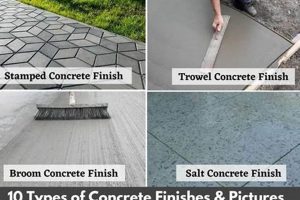
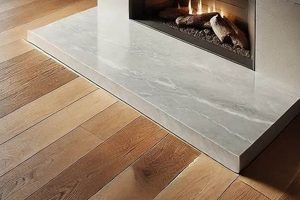
A textured surface applied to concrete, this technique involves dragging a broom across freshly laid concrete before it fully hardens. The resulting finish is characterized by fine, parallel lines that provide a subtle but effective slip-resistant quality. This method is commonly employed in outdoor areas such as sidewalks, patios, and driveways, where traction is a primary concern.
The value of this surface treatment lies in its balance of practicality and aesthetics. Its inherent safety features reduce the risk of slips and falls, particularly in wet conditions. Furthermore, the understated texture complements a variety of architectural styles without being visually overpowering. Historically, it represents a simple yet effective solution for enhancing concrete’s functionality, tracing back to early construction practices that prioritized durability and safety.
The following sections will delve into the specific applications, installation procedures, maintenance requirements, and potential variations within this surface finishing category. These elements contribute to a comprehensive understanding of its role in contemporary construction and design.
Practical Guidance
The following points offer important considerations when specifying or working with this type of concrete surface.
Tip 1: Timing is Critical: The broom finish must be applied at the correct stage of concrete setting. Too early, and the broom will sink and create an uneven, overly aggressive texture. Too late, and the concrete will be too hard to properly broom, resulting in a weak or non-existent texture.
Tip 2: Broom Selection Matters: Different broom bristle materials (e.g., nylon, horsehair) and stiffness levels will produce varying textures. A stiffer bristle generally results in a more pronounced and coarse texture, while softer bristles create a finer, more subtle appearance. Experimentation on a test area is recommended to achieve the desired effect.
Tip 3: Consistent Technique Ensures Uniformity: Maintain a consistent speed, angle, and pressure when dragging the broom across the concrete surface. Overlapping strokes slightly can help to eliminate noticeable start and stop points. Any variation will become readily apparent in the finished product.
Tip 4: Consider Aggregate Exposure: The depth of the broom finish can influence the degree to which the concrete aggregate is exposed. A deeper finish may reveal more aggregate, potentially altering the overall aesthetic. Consult design specifications to ensure appropriate aggregate exposure levels.
Tip 5: Proper Curing is Essential: The surface must be properly cured after finishing to maintain its integrity and prevent cracking. Employ standard concrete curing practices, such as applying a curing compound or using wet coverings, immediately following the broom finish application.
Tip 6: Account for Slope and Drainage: When installing exterior surfaces, ensure proper sloping to facilitate water runoff. Incorrect drainage can lead to water pooling and potential slip hazards, negating the intended benefits of the textured finish.
Adhering to these guidelines will improve the quality and longevity of the finished concrete surface, delivering both functional and aesthetic advantages.
The concluding section will provide information on troubleshooting common issues and long-term maintenance practices for this type of surface.
1. Slip Resistance

The primary function of a concrete light broom finish is to enhance slip resistance on otherwise smooth concrete surfaces. The dragging of a broom across the setting concrete creates a series of ridges and grooves, which, in turn, increase the coefficient of friction. This elevated friction reduces the likelihood of slips and falls, particularly in environments exposed to moisture, such as rain, snow, or spills. The effectiveness is directly proportional to the depth and spacing of these ridges; a more pronounced texture provides greater traction. For example, walkways around swimming pools and entrances to commercial buildings frequently employ this finish to mitigate slip hazards.
The practical significance of understanding this relationship is multifaceted. From a safety perspective, it helps prevent injuries and potential legal liabilities. In terms of design, it allows for the specification of a functional surface without sacrificing aesthetic considerations. Furthermore, the maintenance of slip resistance is a crucial aspect of long-term performance. Over time, the texture can wear down due to abrasion or the accumulation of dirt and debris, necessitating periodic cleaning or resurfacing to restore its initial effectiveness. Certain coatings can also be applied to further enhance the slip-resistant properties.
In summary, the inherent slip resistance provided by a concrete light broom finish is a critical safety feature that warrants careful consideration during both the design and maintenance phases of concrete construction. The balance between texture depth, aesthetic appeal, and long-term performance determines the overall suitability of this finish for a given application. Compromising on the textural integrity can have significant implications for user safety.
2. Texture Uniformity

Achieving a consistent and even surface appearance defines texture uniformity in a concrete light broom finish. This uniformity is not merely an aesthetic consideration; it directly impacts the slip resistance and overall visual quality of the finished surface. The cause of inconsistent texturing can stem from variations in the concrete mix, inconsistent broom pressure, changes in the broom’s angle of attack, or varying levels of moisture on the concrete surface during the finishing process. Uneven texture can lead to localized areas of higher or lower slip resistance, creating potential safety hazards. For instance, a sidewalk with sections of differing roughness could pose a tripping risk, especially in wet conditions. The importance of texture uniformity as a component of this finishing technique cannot be overstated, as it ensures both predictable performance and a professional appearance.
The practical significance of understanding and controlling factors that affect texture uniformity extends to both initial installation and long-term maintenance. During installation, proper training and consistent technique are essential for the finishing crew. Monitoring the concrete mix for uniform consistency and moisture content is also critical. In terms of maintenance, pressure washing or light abrasive cleaning may be necessary to remove dirt or stains that could accentuate textural inconsistencies. Regular inspection can identify areas where the texture has worn down unevenly, allowing for timely repairs or resurfacing to maintain a uniform appearance and slip resistance. The use of test sections or mockups prior to large-scale application is a proactive measure to assess and refine the finishing technique and ensure desired uniformity.
In conclusion, texture uniformity in a concrete light broom finish is a critical characteristic, influencing both safety and aesthetics. Addressing the potential causes of inconsistency through careful planning, execution, and ongoing maintenance is crucial for realizing the full benefits of this finishing technique. While achieving perfect uniformity can be challenging, striving for a consistently textured surface is essential for ensuring both the functional performance and visual appeal of the finished concrete.
3. Application Timing

The success of a concrete light broom finish hinges critically on the application timing. This timing dictates the ease and effectiveness with which the broom texture is imparted onto the concrete surface. Concrete, as it cures, transitions through various stages of plasticity. Applying the broom finish too early, when the concrete is excessively fluid, results in the broom sinking too deeply, obliterating the desired subtle texture and potentially creating an uneven surface. Conversely, attempting the broom finish too late, after the concrete has hardened considerably, proves difficult or impossible. The broom bristles will not penetrate the surface effectively, leading to a weak or nonexistent texture. This delicate window for optimum application is influenced by factors such as ambient temperature, humidity, concrete mix design, and the presence of set-accelerating or retarding admixtures. A delay of even a few minutes can significantly impact the final result. A practical example includes a scenario where a contractor started brooming a large concrete slab but was delayed by a sudden rain shower. By the time the rain stopped, sections of the slab had hardened too much, leading to a noticeable difference in the texture compared to the earlier sections.
The practical significance of understanding application timing is directly linked to the quality, durability, and aesthetics of the concrete surface. Skilled concrete finishers constantly assess the concrete’s “plasticity” through visual inspection and feel, adjusting their technique accordingly. They may use tools like a gauge to measure the concrete’s penetration resistance, providing a more objective assessment of its readiness for brooming. In hot weather, the rapid setting of concrete necessitates faster working speeds or the use of set retarders to extend the window of opportunity. Conversely, in colder weather, extra care must be taken to avoid premature hardening, potentially requiring the use of set accelerators or protective measures like insulated blankets. The selection of the appropriate broom, bristle type, and brooming technique is also dependent on the concrete’s consistency at the time of application. For instance, a stiffer broom may be needed if the concrete is slightly firmer than ideal, whereas a softer broom is more suitable for a surface with optimal plasticity.
In conclusion, application timing is a fundamental element in achieving a successful concrete light broom finish. Mastering this aspect requires a blend of experience, technical knowledge, and careful monitoring of environmental conditions and concrete properties. The challenges associated with nailing the timing underscore the importance of proper planning, skilled labor, and the use of appropriate materials and techniques. The subtle yet significant impact of this timing on the final product reinforces its position as a crucial determinant of the finished concrete’s functionality and aesthetic appeal.
4. Broom Type

The selection of the appropriate broom is paramount in achieving the desired texture and performance characteristics in a concrete light broom finish. The type of broom directly influences the depth, pattern, and overall aesthetic of the finished surface, making it a critical decision in the concrete finishing process.
- Bristle Material
The composition of the bristles significantly impacts the texture imparted on the concrete. Brooms with nylon bristles generally produce a finer, more uniform texture suitable for areas where slip resistance is desired but a less aggressive appearance is preferred. Conversely, natural bristle brooms, such as those made with horsehair or tampico fibers, tend to create a slightly coarser texture, ideal for areas requiring enhanced traction, such as exposed ramps or sloped walkways. The choice of bristle material must align with the intended use and aesthetic requirements of the concrete surface.
- Bristle Stiffness
The stiffness of the broom bristles governs the depth and prominence of the resulting texture. Stiffer bristles exert greater force on the concrete surface, creating deeper grooves and a more pronounced pattern. These brooms are often employed when a highly slip-resistant surface is required or when attempting to expose aggregate within the concrete mix. Softer bristles, on the other hand, produce a shallower texture, offering a subtler aesthetic while still providing adequate slip resistance for pedestrian traffic. The operator must carefully consider the desired level of aggressiveness in the texture when selecting the bristle stiffness.
- Broom Size and Shape
The size and shape of the broom influence the efficiency and uniformity of the finishing process. Wider brooms allow for quicker coverage of large areas, but may be less maneuverable in tight spaces. Narrower brooms offer greater precision and control, particularly when working around edges or obstacles. The shape of the broom flat or curved also affects the texture pattern. Flat brooms generally create a linear, consistent texture, while curved brooms can produce a more varied or swirled effect. Selecting the appropriate size and shape of the broom enhances both the speed and quality of the broom finishing process.
- Handle Design and Ergonomics
The design of the broom handle directly affects the comfort and control of the operator during the finishing process. An ergonomically designed handle reduces fatigue and allows for consistent pressure and angle to be maintained throughout the brooming operation. Adjustable handles accommodate operators of different heights, ensuring proper posture and minimizing strain. A well-designed handle enhances the operator’s ability to create a uniform and aesthetically pleasing texture on the concrete surface, ultimately contributing to the overall quality of the finished product.
The careful consideration of broom type, encompassing bristle material, stiffness, size, shape, and handle design, is integral to the successful execution of a concrete light broom finish. The selection process must reflect the specific requirements of the project, balancing functional considerations, such as slip resistance, with aesthetic goals. The judicious choice of broom ensures a durable, safe, and visually appealing concrete surface.
5. Curing Process

The curing process is an indispensable stage following the application of a concrete light broom finish. Its proper execution ensures the durability, strength, and longevity of the finished surface. Inadequate or neglected curing can compromise the benefits of the broom finish, leading to surface defects and premature deterioration.
- Hydration Control
Curing primarily manages the hydration of cement particles within the concrete mix. Hydration is the chemical reaction between cement and water that produces the binding compounds responsible for concrete’s strength. A concrete light broom finish exposes a larger surface area compared to a smooth finish, increasing the potential for rapid moisture loss, especially in hot or windy conditions. Controlled curing prevents excessive evaporation, allowing the cement to hydrate fully and develop optimal strength. For example, covering the finished surface with wet burlap or applying a curing compound effectively retains moisture, facilitating complete hydration.
- Crack Mitigation
Rapid moisture loss during the early stages of curing can induce tensile stresses within the concrete, leading to the formation of cracks. The presence of a concrete light broom finish, while enhancing slip resistance, can also create stress concentrators at the edges of the broom marks. Proper curing minimizes these stresses by maintaining a stable moisture content, reducing the risk of cracking. An example includes the application of a curing compound immediately after brooming to prevent surface shrinkage and subsequent cracking.
- Surface Hardness and Durability
Curing significantly affects the surface hardness and abrasion resistance of the finished concrete. Insufficient curing results in a weaker, more porous surface that is susceptible to damage from abrasion, impact, and freeze-thaw cycles. A well-cured concrete surface with a light broom finish exhibits enhanced resistance to wear and tear, ensuring its long-term durability. For instance, sidewalks and driveways that undergo proper curing maintain their texture and appearance for a longer period, reducing the need for frequent repairs or replacements.
- Minimizing Dusting
Inadequate hydration of the cement paste can lead to a phenomenon known as “dusting,” where a fine layer of powdery material forms on the concrete surface. This is particularly problematic with a concrete light broom finish, as the texture can trap the dust, making it more noticeable and difficult to remove. Proper curing promotes complete hydration, minimizing the formation of dust and ensuring a cleaner, more durable surface. For example, using a continuous water-curing method for several days after brooming significantly reduces the risk of dusting, especially in arid climates.
The correlation between the curing process and a concrete light broom finish is undeniable. Optimal curing practices are crucial for realizing the full potential of this finishing technique, maximizing its benefits in terms of durability, safety, and aesthetic appeal. Neglecting proper curing can negate the advantages of the broom finish, leading to a compromised surface that is prone to defects and premature failure. Therefore, adherence to established curing protocols is essential for ensuring the long-term performance of concrete surfaces with a light broom finish.
6. Cost-Effectiveness
The utilization of a concrete light broom finish presents a compelling balance of initial investment and long-term value, contributing to its designation as a cost-effective surfacing solution. The application process itself is relatively straightforward, requiring minimal specialized equipment beyond standard concrete finishing tools and a suitable broom. This simplicity translates to reduced labor costs and faster project completion times when compared to more elaborate surfacing treatments. The widespread availability of materials and the ease of installation further contribute to minimizing upfront expenses. The effect of this reduced initial expenditure is a project that remains within budget while achieving a functional and aesthetically acceptable surface. For example, municipalities frequently opt for a light broom finish on sidewalks and pedestrian walkways due to its combination of low installation cost and adequate slip resistance.
The durability and low maintenance requirements further enhance the economic advantages of this finishing technique. The textured surface provides increased resistance to wear and tear compared to a smooth finish, extending the lifespan of the concrete. Routine maintenance typically involves simple cleaning methods, such as pressure washing, to remove dirt and debris. The need for expensive resurfacing or repairs is significantly reduced, resulting in substantial long-term savings. A practical application is observed in residential driveways, where a light broom finish withstands vehicular traffic and weathering while requiring minimal upkeep, thus proving more economical over time than alternative paving materials. Moreover, the reduced risk of slip-and-fall accidents associated with this finish can translate to lower insurance premiums and liability expenses for property owners.
In conclusion, the cost-effectiveness of a concrete light broom finish stems from its ease of installation, minimal material requirements, inherent durability, and reduced maintenance demands. While more elaborate surfacing options may offer enhanced aesthetics or specialized performance characteristics, the light broom finish provides a pragmatic and economical solution for a wide range of applications. The long-term savings associated with reduced maintenance and the mitigation of potential liability risks further solidify its position as a financially sound choice for both residential and commercial projects. However, factors such as project scale, labor costs, and desired aesthetic should be carefully considered to ensure optimal cost-effectiveness.
Frequently Asked Questions
The following section addresses common inquiries regarding this concrete finishing technique, offering detailed explanations to ensure a comprehensive understanding.
Question 1: What is the typical lifespan of a surface treated with this finish?
The lifespan is influenced by several factors, including the quality of the concrete mix, the thoroughness of the curing process, and the level of traffic exposure. When properly installed and maintained, this finish can endure for 15 to 20 years or more. Harsh environmental conditions and heavy usage may shorten this lifespan.
Question 2: Does this finishing method require specialized concrete mixes?
While standard concrete mixes can be utilized, incorporating admixtures, such as air-entraining agents or set retarders, can improve workability and durability, particularly in extreme weather conditions. The specific mix design should align with local climate and soil conditions.
Question 3: How does one clean a surface with this type of finish?
Routine cleaning involves sweeping or rinsing with water. For more stubborn stains or dirt accumulation, a pressure washer with a low-pressure nozzle is effective. Avoid harsh chemicals or abrasive cleaning agents, as these can damage the concrete surface.
Question 4: Can this finish be applied to existing concrete surfaces?
Applying this finish to existing concrete requires a resurfacing process. A concrete overlay is applied to the existing surface, followed by the broom finishing technique. Proper surface preparation is essential for ensuring adequate adhesion.
Question 5: What are the primary factors affecting the cost of this finish?
The cost is influenced by the size of the project, the complexity of the design, labor rates in the area, and any necessary site preparation. Obtaining multiple quotes from qualified contractors is advisable to ensure competitive pricing.
Question 6: Is this finish suitable for indoor applications?
While primarily used for outdoor surfaces due to its slip-resistant properties, this finish can be applied indoors. However, consideration should be given to the texture’s potential to accumulate dust and the aesthetic appropriateness for the interior space.
The answers provided offer clarification on practical aspects of this concrete finishing method, aiding in informed decision-making and proper maintenance.
The following section will delve into best practices for installing and maintaining this type of surface.
Conclusion
This exploration has detailed the characteristics, applications, and considerations surrounding concrete light broom finish. From its crucial role in enhancing slip resistance to the nuances of application timing and broom selection, the factors influencing the quality and longevity of this surface treatment have been examined. Understanding these elements is essential for informed specification, installation, and maintenance practices.
The sustained performance of concrete light broom finish depends on diligent adherence to established guidelines and a commitment to quality workmanship. As construction practices evolve, ongoing research and refinement will further optimize the use of this versatile and cost-effective surfacing solution. Continued attention to detail will ensure its continued relevance in both residential and commercial applications.