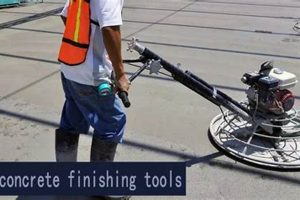
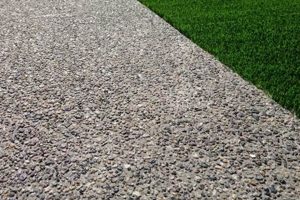
The process results in a surface texture achieved through mechanical means after concrete placement. Typically, equipment such as power floats or trowels are employed to refine the surface, creating a smoother and more uniform appearance compared to hand-finishing techniques. For instance, large warehouse floors often undergo this process to ensure levelness and durability for heavy traffic.
This approach offers several advantages, including increased efficiency in large-scale projects and enhanced surface hardness, contributing to greater resistance against wear and tear. Furthermore, the resultant smoothness can be crucial in applications where hygiene or ease of cleaning are paramount. Historically, the adoption of these methods represented a significant advancement, allowing for more consistent and predictable outcomes in construction projects.
Understanding the nuances of this mechanically achieved surface treatment is essential for specifying appropriate construction methods, evaluating project costs, and ensuring long-term structural performance. The following sections will delve into specific techniques, potential challenges, and quality control measures relevant to achieving optimal results.
Guidance for Optimal Mechanically Finished Concrete
Achieving a high-quality outcome with mechanically finished concrete requires careful planning, execution, and attention to detail. The following recommendations are designed to minimize potential issues and maximize the lifespan and performance of the finished surface.
Tip 1: Substrate Preparation is Paramount: The underlying concrete mix design directly influences the final finish. Ensure appropriate aggregate size, cement content, and water-cement ratio are specified and adhered to. Improper mix design can lead to surface defects such as dusting or crazing.
Tip 2: Timing of Mechanical Treatment: The timing of power floating or troweling is critical. Begin only after bleed water has dissipated and the concrete has reached a sufficient level of stiffness to support the equipment and prevent surface tearing. Premature operation will trap bleed water, weakening the surface.
Tip 3: Equipment Selection and Maintenance: The choice of machinery must be appropriate for the project scale and desired finish. Regularly inspect and maintain equipment to ensure proper functionality and prevent surface irregularities caused by malfunctioning blades or floats. Consider using walk-behind or ride-on power trowels based on area dimensions.
Tip 4: Proper Technique and Overlap: Employ consistent, overlapping passes with the equipment to avoid unevenness and ensure uniform compaction. Overlapping passes should cover approximately 25% of the previous pass to eliminate ridges or swirl marks.
Tip 5: Curing Procedures are Non-Negotiable: Implement a comprehensive curing strategy immediately following the mechanical finishing process. Proper curing prevents premature drying and minimizes cracking. Employ methods such as wet curing, curing compounds, or plastic sheeting, selecting the most appropriate technique based on environmental conditions and project specifications.
Tip 6: Control Environmental Factors: Temperature and humidity significantly impact concrete setting and curing. Take measures to protect the surface from extreme heat, cold, or wind, as these conditions can lead to rapid moisture loss and surface defects. Consider using windbreaks or shade cloths when necessary.
Tip 7: Regular Inspection and Quality Control: Conduct frequent visual inspections during and after the finishing process to identify and address any potential issues promptly. Rectify surface defects immediately to prevent them from worsening. Utilize a straight edge to assess surface levelness and flatness.
Adhering to these guidelines significantly enhances the likelihood of achieving a durable, aesthetically pleasing, and functionally sound mechanically finished concrete surface. Diligence in each stage of the process is crucial for long-term success.
The subsequent section will explore common challenges encountered during the mechanical finishing process and strategies for their mitigation.
1. Surface Tolerance

Surface tolerance, in the context of mechanically finished concrete, defines the permissible deviation of the finished surface from a specified plane or profile. It represents a critical performance parameter impacting functionality, aesthetics, and overall project success. The process aims to achieve surfaces within defined tolerance ranges.
- Flatness and Levelness Specifications
Flatness refers to the local variation in surface elevation, while levelness indicates the overall slope or inclination of the surface. Surface tolerance requirements are typically defined using parameters such as FF (flatness number) and FL (levelness number), as specified in industry standards. These specifications directly influence the selection of appropriate equipment and finishing techniques. For instance, warehouse floors requiring high flatness tolerances necessitate the use of laser-guided equipment and experienced operators to minimize deviations.
- Impact on Functionality
Surface tolerance profoundly affects the intended use of the concrete surface. In industrial settings, precise flatness is crucial for the smooth operation of material handling equipment, such as forklifts. Deviations beyond specified tolerances can lead to equipment instability, increased wear and tear, and potential safety hazards. Similarly, in residential or commercial applications, uneven surfaces can compromise the stability of furniture and fixtures, resulting in aesthetic and functional issues. Meeting surface tolerance requirements is therefore essential for ensuring optimal performance and longevity of the structure.
- Achieving Tolerance Through Equipment
The choice of machinery plays a significant role in achieving the desired surface tolerance. Power floats and trowels, when operated by skilled technicians, can effectively reduce surface irregularities. Laser screeds, equipped with electronic leveling systems, offer even greater precision, particularly in large-scale projects. The equipment must be regularly calibrated and maintained to ensure accurate performance and prevent surface defects. The operator’s technique and experience are also critical factors in achieving the specified tolerance.
- Measurement and Quality Control
Accurate measurement and quality control are essential for verifying compliance with surface tolerance specifications. Instruments such as digital levels, straightedges, and profilometers are used to assess surface flatness and levelness. Regular inspections should be conducted throughout the finishing process to identify and rectify any deviations promptly. Documentation of surface tolerance measurements provides a record of compliance and serves as a basis for resolving any disputes or warranty claims.
The successful achievement of surface tolerance in mechanically finished concrete necessitates a comprehensive approach encompassing careful planning, appropriate equipment selection, skilled execution, and rigorous quality control. Failing to meet specified tolerances can lead to significant functional and aesthetic issues, impacting the overall value and performance of the structure.
2. Equipment Calibration
Equipment calibration is inextricably linked to the successful execution and quality of mechanically finished concrete. The machinery used to achieve the desired surface texture, including power floats, trowels, and laser screeds, relies on precise adjustments and settings to perform optimally. Deviations from calibrated specifications directly translate into surface imperfections and failures to meet specified tolerances. For instance, a power trowel with improperly aligned blades will create unevenness and swirl marks, compromising the aesthetic and functional quality of the finished surface. Conversely, a well-calibrated laser screed ensures accurate leveling and flatness, particularly crucial in large-scale industrial flooring applications where deviations can impact operational efficiency and safety. In essence, equipment calibration is not merely a procedural step but a fundamental prerequisite for achieving the desired outcome.
The practical significance of understanding this connection extends to project planning and execution. Construction managers must incorporate regular equipment checks and recalibration schedules into their workflows. Neglecting this aspect can lead to costly rework, delays, and compromised structural integrity. Furthermore, operators require specialized training to recognize signs of equipment malfunction and implement corrective actions. A proactive approach to equipment maintenance and calibration not only minimizes the risk of surface defects but also prolongs the lifespan of the machinery, contributing to overall project cost-effectiveness. An example of this can be seen on large-scale construction projects. Where ignoring to calibrate machinery can cause not meeting deadlines due to potential reworks.
In summary, equipment calibration serves as the linchpin in delivering high-quality mechanically finished concrete. Its influence permeates all aspects of the process, from surface tolerance to operational efficiency. By recognizing its importance and integrating it into standard operating procedures, construction professionals can mitigate risks, enhance project outcomes, and ensure the long-term performance of concrete structures.
3. Mix consistency

Mix consistency, a critical parameter in concrete production, significantly influences the characteristics of the resulting mechanically finished surface. It encompasses factors such as water-cement ratio, aggregate gradation, and admixture usage, all of which determine the concrete’s workability and cohesiveness. Inconsistencies in the mix can manifest as segregation, bleeding, or excessive air entrainment, directly impacting the ease and quality of mechanical finishing. For instance, a mix with excessive bleeding will produce a weak surface layer prone to dusting and cracking, while a mix with poor aggregate distribution will result in an uneven texture that is difficult to smooth with power trowels. The selection of a mix design appropriate for the chosen mechanical finishing technique is therefore paramount to achieving the desired aesthetic and functional properties. A concrete machine finish for a high traffic parking lot needs to have a different mix consistency than an indoor storage unit.
Further, maintaining consistency throughout the concrete placement process is crucial. Variations in slump between batches can lead to noticeable differences in surface appearance and performance. Implementing rigorous quality control measures at the batching plant, including regular testing and adjustments, is essential for mitigating these risks. Site practices also play a vital role; proper vibration techniques ensure uniform consolidation of the concrete, preventing air pockets and promoting a dense, homogenous structure. In projects involving large pours, employing a dedicated quality control team to monitor mix consistency and placement procedures is highly recommended. If the mix consistency is too high, it can cause the concrete to stick to the machine and cause and uneven finish.
In conclusion, mix consistency acts as a foundational element in achieving a satisfactory mechanically finished concrete surface. Variations in mix design or on-site handling can undermine the effectiveness of the mechanical finishing process, resulting in surface defects and compromised performance. Adhering to strict quality control protocols and employing experienced personnel are critical for ensuring consistent mix consistency and realizing the full potential of mechanically finished concrete applications. It’s a small part, but it can make or break the quality of the project if it’s ignored.
4. Timing control

The temporal aspect of concrete placement and finishing is a determining factor in achieving the desired characteristics of a mechanically finished surface. Appropriate timing of each stage, from initial placement to final surface treatment, directly affects the concrete’s workability, consolidation, and surface integrity. Accurate timing control prevents defects and ensures optimal performance of the finished product.
- Bleed Water Dissipation
The dissipation of bleed water is a key temporal indicator. Premature commencement of power floating or troweling before bleed water has completely evaporated or been reabsorbed can trap moisture beneath the surface. This leads to a weakened surface layer susceptible to dusting, scaling, and reduced durability. The waiting period is contingent on ambient temperature, humidity, and concrete mix design, requiring vigilant monitoring of surface conditions. Improper timing during bleed water evaporation can lead to a reduced durability of the concrete.
- Concrete Setting Rate
The concrete’s setting rate influences the window of opportunity for effective mechanical finishing. Commencing the process too early, while the concrete is still excessively plastic, can cause surface tearing and displacement of aggregates. Conversely, delaying the process until the concrete becomes too rigid can result in difficulty achieving a smooth, uniform surface and increased effort in equipment operation. Knowledge of the concrete mix’s setting characteristics and precise monitoring of surface hardness are essential. Surface tearing may result during setting if there is not proper monitoring of surface hardness.
- Equipment Operation Sequence
The sequence and timing of equipment operation influence the final surface texture and flatness. A typical sequence involves initial leveling with a bull float, followed by power floating to consolidate the surface, and then power troweling to achieve the desired smoothness. Overlapping passes and gradual adjustments in blade pitch are crucial for avoiding unevenness and swirl marks. Improper sequencing can result in a lack of surface smoothness.
- Curing Commencement
Prompt initiation of curing procedures following mechanical finishing is critical for preventing rapid moisture loss and subsequent cracking. Delays in applying curing compounds or initiating wet curing can compromise the concrete’s hydration process, leading to reduced strength and increased permeability. The timing of curing commencement is particularly important in hot or windy conditions, where evaporation rates are accelerated. Cracking can occur if curing compounds are not applied quickly enough.
These interconnected timing factors demonstrate the need for a coordinated and precise approach to achieving a high-quality mechanically finished concrete surface. Failure to account for these temporal considerations can lead to irreversible surface defects and reduced structural performance.
5. Curing protocol

Curing protocols represent a crucial stage in concrete construction, significantly impacting the final properties of mechanically finished surfaces. These protocols dictate the methods and duration for maintaining adequate moisture content and temperature within the concrete, ensuring proper hydration of the cement and development of strength. The effectiveness of a mechanical finish is directly contingent on the adherence to appropriate curing practices.
- Moisture Retention Methods
Various techniques are employed to retain moisture within the concrete, including wet curing (ponding or spraying water), covering with impermeable membranes (plastic sheeting), and application of chemical curing compounds. Wet curing provides continuous hydration, promoting optimal strength development and minimizing surface cracking. Membrane curing and curing compounds create a barrier against moisture loss, particularly beneficial in large-scale projects where continuous wetting is impractical. The selection of the appropriate method depends on environmental conditions, project scale, and concrete mix design. For example, in hot, arid climates, extended wet curing is often necessary to counteract rapid evaporation, whereas in cooler climates, membrane curing may suffice. Failure to adequately retain moisture during the critical hydration period can lead to surface defects, reduced strength, and diminished durability of the mechanically finished concrete.
- Temperature Control
Temperature management is equally important during the curing process. Extremes of temperature can negatively impact cement hydration, potentially resulting in reduced strength, thermal cracking, and delayed setting times. In cold weather, insulation blankets or heating systems may be employed to maintain the concrete temperature above a minimum threshold, ensuring adequate hydration and preventing freezing. In hot weather, shading or evaporative cooling methods may be used to mitigate excessive heat buildup and prevent rapid moisture loss. Maintaining a consistent temperature gradient throughout the concrete mass is also crucial for minimizing thermal stresses and preventing cracking. Examples of temperature control implementations are using insulated concrete forms in colder climates and misting systems on hot days.
- Curing Duration
The duration of the curing period is directly related to the concrete’s strength development and durability. Longer curing times promote more complete hydration, leading to higher compressive strength and enhanced resistance to abrasion, chemicals, and freeze-thaw cycles. The required curing duration is influenced by factors such as cement type, mix design, ambient temperature, and desired performance characteristics. Industry standards and project specifications typically outline minimum curing periods for different concrete applications. For mechanically finished surfaces subjected to heavy traffic or harsh environmental conditions, extended curing durations are often specified to ensure long-term durability. Typical curing durations range from 3 to 28 days depending on requirements.
- Impact on Surface Properties
The curing protocol directly influences the surface properties of mechanically finished concrete, including its hardness, smoothness, and resistance to dusting and scaling. Proper curing promotes a dense, well-hydrated surface layer, minimizing the formation of microcracks and improving abrasion resistance. Inadequate curing, on the other hand, can lead to a porous, weakened surface susceptible to deterioration. For example, insufficient curing can result in a dusty surface that requires repeated maintenance or surface treatments to improve its appearance and performance. Properly cured concrete is more resistant to chemicals and de-icing salts, leading to longer lifespan.
Effective curing protocols are essential for maximizing the benefits of mechanically finished concrete, ensuring long-term durability, aesthetic appeal, and functional performance. Implementing a comprehensive curing strategy, tailored to specific project requirements and environmental conditions, is a critical step in achieving successful outcomes and minimizing the risk of costly repairs or premature deterioration.
Frequently Asked Questions
The following addresses common inquiries regarding the application, benefits, and limitations of concrete machine finish. Understanding these points is crucial for informed decision-making in construction projects.
Question 1: What distinguishes this method from hand-finished concrete?
Mechanical finishing employs powered equipment to refine the surface, achieving a smoother and more uniform texture compared to manual techniques. This results in increased efficiency, particularly for large-scale applications, and potentially enhanced surface hardness.
Question 2: What types of projects benefit most from mechanical finishing?
Large-area projects, such as warehouse floors, industrial facilities, and commercial buildings, typically benefit the most. The mechanized process allows for efficient and consistent finishing over vast surfaces, minimizing variations and improving overall quality.
Question 3: What equipment is commonly used?
Power floats and power trowels are the primary equipment employed. Laser screeds may also be utilized for achieving precise leveling in larger projects. Equipment selection depends on the project scale, desired finish, and surface tolerance requirements.
Question 4: What are the potential challenges associated with the mechanical method?
Potential challenges include surface defects arising from improper timing, equipment malfunction, or inadequate curing. Consistent mix consistency and skilled operation are crucial to mitigating these risks. Environmental factors such as temperature and humidity also play a crucial role in the final product.
Question 5: Does mechanical finishing always guarantee a perfectly flat surface?
While the process aims to improve surface flatness, achieving absolute perfection is often impractical. Surface tolerance specifications should be established and realistic expectations managed. Proper equipment calibration and experienced operators are essential for maximizing flatness and meeting project requirements.
Question 6: How does curing affect the final outcome?
Curing plays a pivotal role in the strength and durability of mechanically finished concrete. Implementing proper curing protocols immediately following finishing minimizes cracking and promotes adequate hydration, leading to a stronger, more resilient surface.
In summary, concrete machine finish offers significant advantages in terms of efficiency and consistency, but requires careful planning, skilled execution, and adherence to best practices to achieve optimal results. Proper material selection and process execution are very important.
The subsequent section will cover relevant industry standards and guidelines applicable to mechanically finished concrete.
Conclusion
This exploration has illuminated the multifaceted aspects of mechanically finished concrete, emphasizing its significance in modern construction. The process, involving power floats, trowels, and advanced leveling equipment, demands rigorous quality control at each stage, from mix design to curing protocols. Achieving optimal surface tolerance, consistent mix consistency, and precise timing are critical for successful implementation.
The long-term performance and aesthetic appeal of concrete surfaces depend on a comprehensive understanding of the factors influencing the outcome. Continuous research and development in equipment and techniques will undoubtedly further enhance the capabilities and reliability of mechanically finished concrete, solidifying its role as a cornerstone of construction practices.