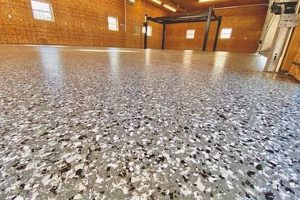
The application of a protective and/or decorative layer to a garage’s concrete surface enhances its durability and aesthetic appeal. This process typically involves cleaning, repairing any damage, and applying a coating system, such as epoxy or sealant. As an example, one might apply a two-part epoxy coating to a cleaned and etched concrete slab to create a resistant surface.
Implementing such a procedure offers numerous advantages, including increased resistance to stains, chemicals, and abrasions. This extends the lifespan of the concrete, reduces maintenance requirements, and creates a more visually pleasing and functional workspace. Historically, simpler methods like painting were common; however, modern coating technologies provide superior performance and longevity.
The following sections will delve into the specific preparation steps required for successful execution, explore different coating options available, and outline application techniques to ensure a professional and lasting result. Subsequent discussions will also cover safety precautions and long-term maintenance strategies.
Essential Considerations for Garage Floor Enhancement
Achieving a durable and aesthetically pleasing garage floor requires meticulous planning and execution. The following guidelines are designed to optimize the process and ensure a long-lasting, professional-quality finish.
Tip 1: Surface Preparation is Paramount: Thoroughly clean the concrete surface to remove all oil, grease, and debris. This may involve pressure washing, degreasing, and etching with muriatic acid or a suitable alternative. A clean surface ensures proper adhesion of the coating.
Tip 2: Address Existing Damage: Repair any cracks, chips, or spalling with a concrete patching compound. Failure to do so will compromise the integrity of the applied coating and result in premature failure. Level uneven surfaces for a uniform application.
Tip 3: Select the Appropriate Coating: Consider the intended use of the garage and choose a coating system that meets the specific requirements. Epoxy coatings offer excellent durability and chemical resistance, while polyurethane coatings provide superior flexibility and UV resistance. Evaluate the pros and cons of each option.
Tip 4: Apply a Moisture Vapor Barrier: If moisture vapor transmission is a concern, apply a moisture vapor barrier before applying the coating. This will prevent moisture from seeping through the concrete and causing the coating to delaminate. Test for moisture levels prior to application.
Tip 5: Follow Manufacturer Instructions Precisely: Adhere strictly to the manufacturer’s instructions regarding mixing ratios, application rates, and curing times. Deviations from these instructions can negatively impact the performance and longevity of the coating.
Tip 6: Ensure Adequate Ventilation: Work in a well-ventilated area to avoid exposure to harmful fumes. Use appropriate respiratory protection as recommended by the manufacturer of the coating system.
Tip 7: Apply Multiple Thin Coats: Apply multiple thin coats of the coating rather than one thick coat. This will result in a stronger, more durable finish and reduce the risk of air bubbles or other imperfections.
Consistent application of these guidelines ensures a professionally enhanced surface. The resulting floor provides increased durability, resistance to wear and tear, and an improved aesthetic.
With a solid foundation of preparation and application, the article now transitions to detailing specific product choices and maintenance strategies.
1. Preparation

Surface preparation constitutes a critical stage in the successful execution of any procedure involving the enhancement of a garage floor. Inadequate preparation invariably leads to compromised coating adhesion, diminished durability, and ultimately, premature failure of the applied finish. The removal of existing contaminants such as oil, grease, dirt, and previous coatings is paramount. This often necessitates a multi-step process involving degreasing, pressure washing, and potentially, mechanical abrasion or chemical etching to create a porous surface profile conducive to bonding.
The specific methods employed during preparation are directly contingent upon the existing condition of the concrete substrate. For instance, concrete exhibiting significant cracking or spalling requires thorough repair using appropriate patching compounds prior to any coating application. Failure to address these structural defects will result in their propagation through the newly applied finish, thereby undermining its integrity. A concrete surface that is not properly profiled will fail to achieve proper bond and be susceptible to delamination.
In summation, the quality of surface preparation is inextricably linked to the long-term performance of the enhanced garage floor. It serves as the foundation upon which the entire finishing process is built, and neglecting this foundational step will invariably lead to unsatisfactory results and a need for costly repairs. Therefore, meticulous attention to detail during the preparation phase is not merely advisable, but rather, absolutely essential for achieving a durable and aesthetically pleasing outcome.
2. Epoxy Coatings
Epoxy coatings represent a prevalent and durable solution for concrete surface enhancement in garage environments. Their inherent properties provide a robust barrier against various forms of degradation, making them a preferred choice for many applications.
- Chemical Resistance
Epoxy’s inherent resistance to a wide array of chemicals, including automotive fluids, solvents, and household cleaners, ensures the integrity of the garage surface. Spillage incidents, common in automotive repair environments, are mitigated by the coating’s ability to withstand prolonged exposure without degradation. This chemical inertness reduces the risk of staining, etching, or structural weakening of the underlying concrete.
- Abrasion Resistance
The robust nature of epoxy formulations provides significant protection against abrasion from vehicular traffic, dropped tools, and foot traffic. The hardened surface minimizes wear and tear, preventing the formation of dust and maintaining a smooth, easily cleanable surface. This abrasion resistance extends the lifespan of the floor, reducing the frequency of maintenance and repair.
- Adhesion and Bonding
Proper application of epoxy coatings involves meticulous surface preparation to ensure adequate adhesion. The epoxy resin forms a strong chemical bond with the concrete substrate, creating a cohesive layer that resists peeling and delamination. Effective bonding is crucial for long-term performance, preventing moisture intrusion and maintaining the protective barrier against external elements.
- Aesthetic Enhancement
Beyond their functional benefits, epoxy coatings offer a range of aesthetic options. They are available in various colors, textures, and finishes, allowing for customization to match the overall design of the garage. The glossy, reflective surface enhances the brightness of the space, creating a more visually appealing and functional work environment. Decorative flakes or metallic pigments can be incorporated to further enhance the aesthetic appeal.
The selection and application of epoxy coatings demand careful consideration of the specific requirements of the garage environment. Factors such as traffic volume, chemical exposure, and aesthetic preferences should inform the selection process. When properly applied and maintained, epoxy coatings provide a durable, attractive, and long-lasting enhancement for concrete surfaces, solidifying their position as a prevalent solution in garage floor finishing.
3. Polyaspartic

Polyaspartic coatings represent an advanced solution in the realm of garage floor finishing, distinguished by their rapid curing times and enhanced durability characteristics. Their increasing adoption stems directly from the need for quick turnaround times in both residential and commercial settings. Unlike traditional epoxy systems, polyaspartic formulations can often be applied and cured within a single day, minimizing disruption to garage use. This accelerated process is achieved through the coating’s chemical composition, allowing for a faster reaction and subsequent hardening. Furthermore, polyaspartics exhibit superior UV resistance, preventing yellowing or fading over time, a common issue with some epoxy coatings. This is particularly relevant in garages exposed to direct sunlight.
The practical significance of polyaspartic systems is evidenced by their use in demanding environments such as automotive dealerships and commercial garages, where floors are subjected to heavy traffic, chemical spills, and constant abrasion. For example, a car repair shop might opt for a polyaspartic coating to ensure minimal downtime during floor maintenance, allowing operations to resume quickly. Similarly, homeowners frequently choose polyaspartic for its quick installation, enabling them to use their garage space sooner. The cost considerations, while potentially higher than some epoxy options, are often offset by the reduced labor costs associated with faster application and the longer lifespan attributable to the coating’s enhanced durability.
In summary, polyaspartic coatings offer a compelling alternative in garage floor finishing, driven by their rapid curing, UV resistance, and robust performance under demanding conditions. While initial investment may be a factor, the long-term benefits of reduced downtime, enhanced durability, and aesthetic longevity make them a valuable consideration. The ongoing development of polyaspartic technology continues to refine its application and broaden its appeal within the garage floor enhancement sector. These materials provide resistance to most elements for an extended period of time.
4. Sealers

Sealers, in the context of garage floor finishing, represent a crucial component in preserving the integrity and extending the lifespan of the treated surface. Their application follows initial coating procedures and serves to provide an added layer of protection against various detrimental factors.
- Moisture Resistance
Concrete is inherently porous, allowing moisture to penetrate and potentially cause damage such as cracking or spalling, especially in regions with freeze-thaw cycles. Sealers mitigate this risk by creating a barrier that inhibits water absorption. For example, a silane-based sealer can be applied to a garage floor in a northern climate to prevent water penetration during winter, minimizing the risk of frost heave.
- Chemical Protection
Garage floors are frequently exposed to a range of chemicals, including automotive fluids, de-icing salts, and cleaning agents, all of which can degrade the coating over time. Sealers act as a sacrificial layer, protecting the underlying epoxy or polyaspartic from direct contact with these substances. Consider a scenario where a vehicle leaks oil onto a sealed garage floor; the sealer prevents the oil from staining or damaging the primary coating.
- Abrasion Resistance Enhancement
While primary coatings provide a degree of abrasion resistance, sealers can further fortify the surface against wear and tear from vehicular traffic, foot traffic, and dropped objects. They act as a buffer, absorbing the initial impact and minimizing damage to the underlying layers. A garage used for woodworking, for instance, benefits from a sealer that protects against scratches and scuffs from tools and equipment.
- Aesthetic Preservation
Sealers contribute to maintaining the aesthetic appeal of a garage floor finish. They can enhance the gloss, prevent yellowing from UV exposure, and make the surface easier to clean, thereby preserving the initial appearance. A clear, UV-resistant acrylic sealer applied over a decorative epoxy floor will help maintain its vibrant color and prevent fading over time.
The utilization of sealers represents a pragmatic approach to safeguarding the investment made in finishing a garage floor. By providing enhanced protection against moisture, chemicals, abrasion, and UV damage, sealers contribute significantly to the longevity and visual appeal of the finished surface. The appropriate selection and application of a sealer are essential for maximizing the benefits and ensuring a durable and aesthetically pleasing result.
5. Durability
The endurance of a finished garage floor is a primary consideration for any application, directly impacting long-term costs and the overall utility of the space. Selecting appropriate materials and employing proper application techniques are crucial in achieving a durable and resilient surface. The following facets illustrate key aspects of durability in this context.
- Material Selection
The choice of coating material fundamentally influences the lifespan of the finished surface. Epoxy and polyaspartic coatings, for instance, offer varying degrees of resistance to abrasion, chemical exposure, and impact. A high-solids epoxy formulation, compared to a water-based acrylic, provides superior resistance to wear from vehicle tires and dropped tools. Consequently, careful consideration of the intended usage patterns is essential for selecting a material that meets the specific demands of the environment.
- Surface Preparation
Adequate surface preparation is paramount for ensuring optimal coating adhesion and, thus, long-term durability. Improperly prepared surfaces, such as those contaminated with oil or grease, will compromise the bond between the coating and the concrete substrate, leading to premature failure. Thorough cleaning, etching, and patching of existing cracks or imperfections are necessary steps to create a sound foundation for the finish. A garage floor that is not properly prepared and sealed will be more likely to degrade and crack.
- Application Techniques
Correct application techniques are integral to achieving a uniform and durable finish. Variations in coating thickness, improper mixing ratios, or inadequate curing times can all negatively impact the material’s performance. For example, applying multiple thin coats, as opposed to a single thick coat, typically yields a more resilient finish, minimizing the risk of bubbling or cracking. Adherence to manufacturer specifications regarding application rates and curing protocols is therefore essential.
- Environmental Factors
The surrounding environment also exerts a significant influence on the durability of a garage floor finish. Exposure to extreme temperature fluctuations, high levels of moisture, or direct sunlight can accelerate degradation. A garage in a region with harsh winters, for example, may require a coating system specifically formulated to withstand freeze-thaw cycles. Similarly, UV-resistant coatings are necessary for garages exposed to prolonged sunlight to prevent yellowing and discoloration.
These interconnected facets highlight the multifaceted nature of durability in the context of finishing a garage floor. A comprehensive approach, encompassing careful material selection, meticulous surface preparation, proper application techniques, and consideration of environmental factors, is necessary to maximize the lifespan and performance of the finished surface. The long-term value derived from such an approach far outweighs the initial investment in quality materials and skilled labor.
6. Aesthetics
The aesthetic dimension of concrete floor enhancement exerts a significant influence on the perceived value and overall functionality of a garage space. A well-executed finishing process transcends mere structural protection, transforming a utilitarian area into an extension of the home’s living space. The choice of color, texture, and finish directly impacts the ambiance and usability of the garage, influencing tasks ranging from vehicle maintenance to hobbyist activities. For example, a light-colored, reflective epoxy coating can significantly brighten a garage, improving visibility and creating a more welcoming environment. Conversely, a drab, unfinished concrete floor can contribute to a sense of neglect and disorganization.
The selection of aesthetic elements, such as decorative flakes, metallic pigments, or custom patterns, allows for personalization and integration with existing architectural styles. Consider a modern home where a seamless, polished concrete floor with minimalist design complements the overall aesthetic. In contrast, a traditional home might benefit from a textured, stained concrete floor that evokes a rustic, handcrafted feel. Furthermore, the application of a glossy finish can enhance the perceived cleanliness and professionalism of the garage, a factor particularly important for those utilizing the space for business purposes. Neglecting these aesthetic considerations can result in a space that feels detached from the home’s overall design, diminishing its usability and value.
The integration of aesthetic considerations into the concrete treatment process presents certain challenges, including the need for careful color matching, proper application techniques to achieve desired textures, and the selection of durable materials that maintain their appearance over time. However, the benefits of a well-designed and aesthetically pleasing garage floor far outweigh these challenges, transforming a potentially overlooked space into a functional and visually appealing asset. The careful balance of practical functionality with aesthetic design contributes significantly to the overall value and enjoyment of the home.
7. Maintenance
The durability and aesthetic appeal of a finished garage floor are inextricably linked to diligent maintenance practices. The initial investment in surface enhancement, whether through epoxy coatings, polyaspartic systems, or sealers, represents only the first step in ensuring long-term performance. Without regular and appropriate maintenance, the protective benefits of the finishing process diminish over time, leading to accelerated wear, increased susceptibility to damage, and ultimately, the need for costly repairs or reapplication. The failure to implement a maintenance routine effectively negates a significant portion of the initial investment.
The specifics of maintenance protocols vary based on the type of coating applied. However, certain principles remain universal. Regular sweeping or vacuuming removes abrasive debris that can scratch or dull the surface. Prompt cleaning of spills, particularly oil, grease, or chemical solutions, prevents staining and potential degradation of the coating. Periodic washing with mild detergents and appropriate cleaning tools helps to remove embedded dirt and grime, restoring the finish’s luster. For example, a garage floor coated with epoxy might require occasional waxing to maintain its shine and provide an additional layer of protection against scratches. Ignoring spills or failing to remove abrasive particles will reduce the finished floors life span. In high-traffic areas, or those subject to heavy abrasion, more frequent maintenance interventions are necessary.
In conclusion, maintenance is not merely an ancillary consideration but an integral component of a comprehensive garage floor finishing strategy. It is the ongoing effort that translates an initial investment into a durable, aesthetically pleasing, and functionally sound surface. Neglecting maintenance activities undermines the benefits of the finishing process, leading to premature deterioration and increased long-term costs. Therefore, establishing and adhering to a consistent maintenance schedule is crucial for maximizing the lifespan and preserving the value of a finished garage floor.
Frequently Asked Questions
This section addresses common inquiries regarding the process of surface enhancement, providing clarity on crucial aspects for informed decision-making.
Question 1: What constitutes proper surface preparation before the application of any coating?
Effective surface preparation entails the removal of all contaminants, including oil, grease, dirt, and existing coatings. This typically necessitates degreasing, pressure washing, and mechanical abrasion or chemical etching to achieve a porous surface profile conducive to proper bonding.
Question 2: Which coating is most suitable for garages exposed to frequent chemical spills?
Epoxy coatings, particularly those formulated with high solids content, generally offer superior chemical resistance compared to other options. However, polyaspartic coatings can also provide adequate protection depending on the specific chemicals involved and the exposure duration. Consulting manufacturer specifications is essential.
Question 3: How does moisture vapor transmission affect the longevity of a finished floor?
Excessive moisture vapor transmission from the concrete substrate can compromise the adhesion of the coating, leading to blistering, peeling, or delamination. Applying a moisture vapor barrier prior to coating is recommended in areas with high moisture levels.
Question 4: What is the typical lifespan of an epoxy-coated garage floor?
The lifespan of an epoxy-coated surface depends on several factors, including the quality of the materials, the thoroughness of the surface preparation, the application techniques employed, and the level of traffic and exposure to chemicals. With proper installation and maintenance, a well-applied epoxy coating can last for several years.
Question 5: Can the process be undertaken independently, or is professional installation recommended?
While independent execution is possible, professional installation is generally recommended to ensure proper surface preparation, precise mixing ratios, and uniform application. Professional installers possess the expertise and equipment necessary to achieve a durable and aesthetically pleasing result.
Question 6: What maintenance procedures are required to prolong the lifespan of a finished floor?
Regular sweeping and cleaning with mild detergents are essential for removing abrasive debris and preventing staining. Prompt removal of spills, especially oil and chemicals, is crucial. Periodic reapplication of a sealant may also be necessary to maintain the protective barrier.
In summary, informed decision-making, meticulous preparation, and consistent maintenance are crucial for successful and long-lasting garage surface enhancement.
The subsequent section will outline specific product recommendations and application best practices.
Conclusion
This discourse has examined various facets of finishing a garage floor, encompassing preparation techniques, material selection, application methodologies, and ongoing maintenance protocols. Emphasis has been placed on the correlation between proper execution and the resultant durability, aesthetic appeal, and longevity of the finished surface. Critical considerations, such as moisture mitigation, chemical resistance, and abrasion resilience, have been addressed to provide a comprehensive understanding of the relevant factors influencing long-term performance.
The decision to undertake a garage floor finishing project necessitates a thorough evaluation of specific needs and environmental conditions. While diverse coating systems and application methods exist, the fundamental principles of meticulous preparation and consistent maintenance remain paramount. A commitment to these principles ensures not only an enhanced physical space but also a durable and functional asset, adding long-term value to the property.