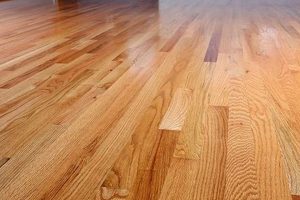
Surface imperfections appearing as small, raised pockets within the protective coating applied to wood floors represent a common issue in wood finishing. These imperfections often manifest during or shortly after the application of varnish, polyurethane, or similar sealants designed to protect the wood substrate. The size and density of these imperfections can vary, ranging from barely perceptible pinholes to larger, more noticeable blemishes that detract from the floor’s aesthetic appeal and potentially compromise its durability.
The presence of these defects detracts from the visual appeal of a finished floor and can significantly reduce the lifespan of the protective layer. A compromised surface allows moisture to penetrate the wood, potentially leading to warping, staining, and eventual decay. Understanding the causes and methods of prevention is crucial for achieving a durable, attractive, and long-lasting wood floor finish. Historically, achieving a flawless finish has been a hallmark of quality craftsmanship, requiring meticulous preparation and application techniques.
Addressing the underlying causes and implementing preventative measures are essential for achieving a smooth, durable, and aesthetically pleasing result. The following sections will explore the factors contributing to this common flooring problem, including preparation techniques, application methods, and environmental considerations, as well as effective strategies for remediation and prevention.
Mitigating Surface Imperfections in Wood Floor Coatings
Achieving a flawless and durable finish on hardwood floors requires careful attention to detail throughout the entire process. Minimizing surface imperfections ensures both the aesthetic appeal and the long-term protection of the wood.
Tip 1: Proper Substrate Preparation: Thoroughly sand the wood surface, removing all existing finishes and imperfections. Progress through increasingly finer grits of sandpaper, concluding with a grit appropriate for the type of finish being applied. Vacuum the floor meticulously after each sanding pass, followed by tack cloth wiping to remove any remaining dust particles.
Tip 2: Controlled Environmental Conditions: Maintain a consistent temperature and humidity level within the recommended range specified by the finish manufacturer. Avoid applying finishes in direct sunlight or during periods of high humidity, as these conditions can trap moisture and contribute to issues during the curing process.
Tip 3: Appropriate Finish Selection: Choose a finish specifically formulated for hardwood floors and compatible with the intended use and traffic level. Consider the drying time, VOC content, and durability characteristics of different finishes to ensure optimal performance and longevity.
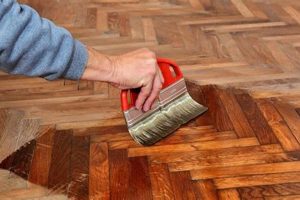
Tip 4: Proper Application Technique: Apply the finish in thin, even coats, following the manufacturer’s recommendations for spread rate and application method. Use a high-quality applicator (brush, roller, or pad) designed for the specific type of finish being applied. Avoid over-brushing or over-rolling, which can introduce air and create surface imperfections.
Tip 5: Adequate Drying Time Between Coats: Allow each coat of finish to dry completely before applying the next coat. Adhere to the manufacturer’s recommended drying times, as insufficient drying can trap solvents and lead to issues. Lightly sand between coats with fine-grit sandpaper to promote adhesion and create a smoother surface.
Tip 6: Strain the Finish: Prior to application, strain the finish through a fine-mesh filter to remove any particles or contaminants that may be present. This step can significantly reduce the likelihood of imperfections in the final finish.
Tip 7: Minimize Airflow During Application and Drying: Reduce air movement during application and drying to prevent dust particles from settling on the wet finish. Turn off fans and close windows, but ensure adequate ventilation to prevent the accumulation of harmful vapors.
By adhering to these guidelines, a durable, aesthetically pleasing, and long-lasting wood floor finish can be achieved. These preventative measures minimize the likelihood of surface imperfections and enhance the overall quality of the finished product.
These tips provide a foundation for achieving a flawless hardwood floor finish. The following sections will delve into specific troubleshooting techniques and advanced finishing strategies.
1. Contamination

Contamination represents a significant factor in the formation of surface defects during hardwood floor finishing. Foreign particles introduced during any stage of the finishing process can interfere with the uniform application and curing of the coating, directly contributing to the presence of imperfections. These contaminants can range from microscopic dust particles to larger debris, each capable of disrupting the smooth, continuous film necessary for a flawless finish. The introduction of these substances prevents the finish from properly adhering to the wood or creating a cohesive layer, resulting in voids and subsequent surface irregularities.
Examples of common contaminants include sawdust from sanding, lint from cloths, airborne particles, and residues from cleaning agents. Even trace amounts of oil or wax can inhibit adhesion and promote the formation of imperfections. The effect of contamination is twofold: firstly, it physically obstructs the finish, leading to an uneven surface. Secondly, it can chemically react with the finish, altering its curing properties and potentially creating gaseous byproducts that become trapped within the coating. A real-world example is observed when inadequate vacuuming after sanding leaves behind fine dust; when the finish is applied, these dust particles become embedded, leading to small, noticeable bumps and imperfections across the floor surface. Proper identification and management of potential contamination sources is therefore paramount to achieving a successful floor finishing outcome.
In conclusion, understanding and controlling contamination is crucial for preventing imperfections. Rigorous cleaning protocols, the use of appropriate application tools, and maintaining a clean work environment are essential steps in minimizing the risk of contamination. By addressing contamination proactively, the likelihood of encountering surface imperfections is significantly reduced, leading to a more durable, aesthetically pleasing, and ultimately, higher-quality hardwood floor finish. This focus on cleanliness represents not merely a best practice but a fundamental requirement for achieving optimal results.
2. Entrapped Air
The presence of air bubbles within a hardwood floor finish is frequently attributable to entrapped air. This phenomenon occurs when air becomes mixed into the liquid finish during application, or when air already present on the floor surface or within the wood pores is unable to escape as the finish cures. The result is the formation of small voids within the solidified coating, manifesting as visible imperfections that compromise both the aesthetic appearance and the protective qualities of the finish. Entrapped air contributes significantly to a compromised finish, as these air pockets can weaken the overall structure, making it more susceptible to wear, scratching, and moisture penetration. For example, vigorous shaking of the finish container prior to use, or the use of an incorrect application technique, such as excessively fast rolling or brushing, introduces air into the material. Similarly, applying finish to a porous wood surface without proper sealing can lead to air being drawn up from the wood itself.
The impact of entrapped air is not merely cosmetic. The resulting bubbles create uneven surfaces that are more prone to damage. Furthermore, these air pockets can act as pathways for moisture, which can then seep into the wood and cause swelling, warping, or even decay. Addressing this issue requires careful attention to application methods and environmental conditions. Specifically, slow and deliberate application techniques, combined with proper surface preparation that minimizes air pockets within the wood itself, are crucial. Degassing the finish by allowing it to stand for a period of time after mixing can also reduce the amount of air present in the liquid. The selection of appropriate applicators, such as high-quality brushes or rollers designed to minimize air incorporation, plays a vital role.
In summary, entrapped air is a primary contributor to the formation of surface defects in hardwood floor finishes. Its impact extends beyond mere aesthetics, affecting the durability and longevity of the protective coating. Addressing this issue requires meticulous attention to detail throughout the entire finishing process, from surface preparation and material handling to application techniques and environmental control. Failure to mitigate the risk of air entrapment can result in a compromised finish, leading to costly repairs and premature wear. Therefore, a thorough understanding of the mechanisms by which air becomes entrapped and the implementation of effective preventative measures are essential for achieving a high-quality, long-lasting hardwood floor finish.
3. Solvent Evaporation

Solvent evaporation is a critical process in the application and curing of hardwood floor finishes, directly influencing the formation of surface imperfections. The rate and uniformity of solvent release from the finish significantly impact the final appearance and durability of the coating. When solvents do not evaporate properly, it can lead to the entrapment of gases, resulting in the formation of imperfections.
- Excessive Film Thickness
Applying finish in excessively thick layers hinders solvent evaporation. The upper layer of the finish may skin over, trapping solvents beneath. As these solvents attempt to escape, they create pressure, leading to the formation of imperfections in the partially cured surface. For instance, a polyurethane finish applied too thickly may develop surface imperfections due to trapped solvents that cannot adequately diffuse through the dense upper layer.
- Inadequate Ventilation
Insufficient airflow during the drying process impedes solvent evaporation. A poorly ventilated room can create a saturated atmosphere, slowing down the rate at which solvents are released from the finish. This extended drying time increases the likelihood of imperfections forming as the solvents remain trapped within the coating for a prolonged period. A practical example is finishing a floor in a room with closed windows and doors, leading to a buildup of solvent vapors and subsequent surface irregularities.
- High Humidity
Elevated humidity levels can significantly slow solvent evaporation. The presence of moisture in the air reduces the capacity of the finish to release its solvents, resulting in a prolonged drying time and increased risk of imperfections. In humid conditions, solvents may evaporate unevenly, causing localized pressure points and leading to surface defects. For example, applying a finish on a rainy day without proper climate control can lead to slow drying and the formation of surface bubbles.
- Improper Solvent Selection
The type of solvent used in the finish formulation plays a crucial role in its evaporation rate. Finishes containing slower-evaporating solvents require more time and optimal conditions for proper curing. If the solvent evaporates too slowly, it can become trapped beneath the surface, leading to imperfections. An instance of this is using a finish formulated for low-VOC compliance, which often utilizes slower-evaporating solvents, and not providing adequate drying time or ventilation, ultimately leading to imperfections.
These interconnected facets highlight the importance of managing solvent evaporation during the hardwood floor finishing process. Controlling film thickness, ensuring adequate ventilation, monitoring humidity levels, and selecting appropriate finishes are crucial steps in preventing the formation of surface imperfections. By addressing these factors, a smoother, more durable, and aesthetically pleasing floor finish can be achieved. Understanding these parameters enables a more predictable and successful finishing outcome.
4. Application Thickness

The correlation between application thickness and the emergence of surface imperfections is significant in hardwood floor finishing. Applying an excessive layer of finish impedes the proper release of solvents, leading to the entrapment of gases and the subsequent formation of these surface defects. When a thick coat is applied, the surface may skin over prematurely, creating a barrier that prevents solvents from evaporating efficiently. The trapped solvents then exert pressure from beneath, resulting in imperfections. For instance, a polyurethane finish applied in a thick layer will likely exhibit small, raised imperfections due to the hindered escape of solvents during the curing process. Conversely, an insufficient application of finish may not adequately seal the wood, failing to provide the necessary protective barrier and leaving the floor vulnerable to damage, although this scenario is less directly linked to this type of visual defect.
Maintaining the proper thickness, as specified by the manufacturer, is critical. Applying multiple thin coats, rather than a single thick coat, allows for better solvent evaporation and reduces the risk of imperfections. Each thin layer has a greater surface area exposed to the air, facilitating a more complete and uniform curing process. The application tool also plays a role; using a high-quality applicator, such as a brush or roller designed for the specific type of finish, can help ensure even distribution and avoid pooling of the finish in certain areas. Practical application involves carefully monitoring the spread rate of the finish and adjusting the application technique as needed to achieve the recommended film thickness. The avoidance of over-application is paramount to a successful outcome.
In summary, the thickness of the applied finish directly influences the propensity for surface imperfections. While adequate coverage is necessary for protection, exceeding the recommended thickness can lead to solvent entrapment and the formation of unsightly defects. Adhering to manufacturer guidelines regarding application thickness, employing appropriate application techniques, and ensuring adequate ventilation are crucial steps in mitigating the risk. Recognizing and addressing the implications of application thickness contributes to a more durable and aesthetically pleasing hardwood floor finish. The challenges associated with improper application can be overcome through careful preparation and a commitment to best practices.
5. Surface Preparation

Surface preparation is paramount in achieving a defect-free hardwood floor finish. Inadequate preparation introduces variables that significantly increase the likelihood of surface imperfections, undermining the aesthetic and protective qualities of the final coating.
- Inadequate Sanding
Insufficient sanding leaves behind pre-existing finishes, contaminants, and uneven surfaces. Residual coatings inhibit proper adhesion, while irregularities create pockets for air and solvent entrapment, fostering the development of imperfections. For example, if an old varnish layer is not completely removed, the new finish may not bond correctly, leading to small voids as it cures.
- Dust and Debris Retention
Failure to thoroughly remove dust and debris post-sanding introduces particulate matter that interferes with the finish’s ability to form a smooth, continuous film. These particles act as nucleation points for defects, as the finish cures around them, creating raised bumps and imperfections. If sawdust remains after sanding, the applied finish will encapsulate these particles, resulting in a textured, uneven surface.
- Moisture Content Imbalance
Applying finish to wood with a high moisture content or significant moisture content variation across the floor leads to dimensional changes as the wood dries. This movement can disrupt the finish layer, creating stresses that result in cracking and the formation of imperfections. For instance, applying a finish to wood that has not acclimated to the environment can lead to imperfections as the wood shrinks and expands.
- Incompatible Cleaning Agents
Residues from cleaning agents, particularly those containing oils or waxes, can compromise the adhesion of the finish. These residues create a barrier between the wood and the finish, preventing a strong bond and increasing the likelihood of imperfections. Using an inappropriate cleaner before finishing, such as one containing silicone, can leave a film that inhibits proper adhesion.
These facets illustrate the critical role of proper surface preparation in preventing surface imperfections. Comprehensive sanding, meticulous dust removal, moisture content management, and the use of compatible cleaning products are essential steps in ensuring a flawless hardwood floor finish. Overlooking these aspects during preparation can have significant ramifications on the final quality and longevity of the finished surface, emphasizing the need for diligent adherence to best practices.
6. Humidity Levels

Ambient humidity exerts a significant influence on the application and curing of hardwood floor finishes, directly impacting the occurrence of surface imperfections. High humidity levels, in particular, can impede the proper evaporation of solvents, prolong drying times, and ultimately contribute to the formation of defects within the finish layer. Understanding the mechanisms by which humidity affects the finishing process is essential for achieving optimal results and mitigating the risk of surface imperfections.
- Slowed Solvent Evaporation
Elevated humidity reduces the rate at which solvents evaporate from the finish. A high moisture content in the air diminishes the finish’s capacity to release its solvents, leading to a prolonged drying period. This extended drying time increases the likelihood of solvent entrapment, which can manifest as imperfections. For example, applying a finish on a humid day without climate control measures can result in solvent retention and the subsequent appearance of imperfections.
- Surface Skinning and Solvent Entrapment
In high-humidity conditions, the surface of the finish may cure faster than the underlying layers. This rapid surface curing creates a skin that traps solvents beneath, preventing their escape. As these trapped solvents attempt to evaporate, they exert pressure, resulting in imperfections. A practical example is observed when the surface of a polyurethane finish applied in humid conditions hardens prematurely, trapping solvents and creating small imperfections beneath the surface.
- Increased Risk of Contamination
High humidity can also increase the risk of contamination. Humid air holds more moisture, which can attract dust and other airborne particles. These contaminants can settle on the wet finish, disrupting its uniformity and contributing to the formation of imperfections. For instance, dust particles suspended in humid air may adhere to a freshly applied finish, creating small bumps and imperfections as the finish cures around them.
- Impact on Finish Viscosity
Humidity may also indirectly affect finish viscosity. Some water-based finishes can be sensitive to high humidity, leading to subtle changes in their consistency. While not a direct cause of gas entrapment, alterations in viscosity could impact proper leveling, leading to slight variations in surface tension and contributing to surface imperfections. High humidity can cause some water-based finishes to become slightly thicker or tackier, hindering smooth application.
In summary, humidity levels play a crucial role in the hardwood floor finishing process, particularly in the formation of surface imperfections. High humidity slows solvent evaporation, promotes surface skinning, increases the risk of contamination, and may indirectly impact finish viscosity, all of which can contribute to imperfections. Controlling humidity through climate control measures, such as dehumidification, is essential for achieving a durable, aesthetically pleasing, and high-quality hardwood floor finish. The manipulation of ambient conditions significantly enhances the prospects for a successful outcome.
7. Finish Compatibility

The compatibility of different finishing products used on hardwood floors is a critical determinant of the final result, directly influencing the likelihood of surface imperfections. Incompatible products can lead to a range of issues, including inadequate adhesion, improper curing, and ultimately, the formation of imperfections. The selection of compatible finishes is therefore a paramount consideration in achieving a durable and aesthetically pleasing floor.
- Incompatible Base and Top Coats
The combination of incompatible base coats (e.g., stain or sealer) and top coats (e.g., polyurethane) can lead to adhesion problems and the subsequent formation of gas pockets. If the top coat does not properly bond with the base coat, the resulting separation can create voids where air and solvents become trapped. For example, applying an oil-based polyurethane over a poorly dried water-based stain can result in the top coat failing to adhere correctly, leading to surface imperfections over time.
- Mixing Different Finish Types
Combining different types of finishes, such as mixing oil-based and water-based products, can lead to chemical reactions that interfere with proper curing. These reactions can produce gaseous byproducts that become trapped within the finish layer, resulting in imperfections. The introduction of an incompatible thinner or additive can also compromise the integrity of the finish, creating imperfections. For instance, adding an oil-based thinner to a water-based finish can cause the mixture to separate and cure improperly, leading to surface irregularities.
- Overcoating Incompatible Existing Finishes
Applying a new finish over an existing finish that is incompatible can lead to adhesion problems and the eventual peeling or blistering of the new coat. If the existing finish is not properly prepared or is incompatible with the new finish, the new layer may not bond correctly, leading to imperfections as it ages. For example, applying a water-based finish over an old wax finish without thorough removal of the wax can cause the new finish to peel and blister due to the lack of proper adhesion.
- Impact of Additives and Modifiers
The use of incompatible additives or modifiers, such as those designed to alter gloss levels or improve durability, can disrupt the finish’s chemical balance and lead to imperfections. Some additives may react negatively with the finish components, creating gaseous byproducts or compromising its ability to cure properly. For instance, adding an excessive amount of flattening agent to reduce gloss can alter the finish’s viscosity and adhesion properties, leading to imperfections on the surface.
In conclusion, the compatibility of all finishing products used in a hardwood floor system is crucial for preventing imperfections. Selecting compatible base coats, top coats, additives, and modifiers, as well as ensuring proper preparation of existing finishes, is essential for achieving a durable and aesthetically pleasing result. The use of incompatible products can lead to adhesion problems, improper curing, and the formation of defects, undermining the integrity and longevity of the finished floor. Therefore, a thorough understanding of finish compatibility is a prerequisite for successful hardwood floor finishing.
Frequently Asked Questions
The following addresses common inquiries regarding the causes, prevention, and remediation of surface imperfections in hardwood floor finishes.
Question 1: What factors contribute to the formation of surface imperfections in hardwood floor finishes?
The presence of surface imperfections can stem from several interrelated factors, including inadequate surface preparation, contamination, entrapped air, improper solvent evaporation, excessive finish thickness, high humidity levels during application, and the use of incompatible finishing products. Understanding these factors is crucial for preventing these issues.
Question 2: How does improper surface preparation lead to the development of surface imperfections?
Insufficient sanding fails to remove existing finishes, contaminants, and uneven surfaces, all of which impede proper adhesion and create pockets for air and solvent entrapment. Furthermore, failure to thoroughly remove dust and debris post-sanding introduces particulate matter that interferes with the finish’s ability to form a smooth, continuous film.
Question 3: Why are high humidity levels detrimental to hardwood floor finishing?
Elevated humidity reduces the rate at which solvents evaporate from the finish, prolonging drying times and increasing the likelihood of solvent entrapment. Moreover, high humidity can cause the surface of the finish to cure faster than the underlying layers, creating a skin that traps solvents beneath, resulting in imperfections.
Question 4: What role does application thickness play in the formation of surface imperfections?
Applying finish in excessively thick layers hinders solvent evaporation, leading to the entrapment of gases and the subsequent formation of imperfections. When a thick coat is applied, the surface may skin over prematurely, creating a barrier that prevents solvents from escaping efficiently.
Question 5: How can finish compatibility issues contribute to surface imperfections?
The combination of incompatible base coats and top coats, or the mixing of different types of finishes, can lead to adhesion problems and improper curing. These incompatibilities can generate gaseous byproducts that become trapped within the finish layer, resulting in visible surface irregularities.
Question 6: What are the primary steps in remediating surface imperfections already present in a hardwood floor finish?
Remediation strategies depend on the severity and extent of the imperfections. Minor imperfections may be addressed through light sanding and the application of an additional finish coat. More severe imperfections may necessitate complete removal of the existing finish, followed by proper surface preparation and reapplication of the finish.
Prevention is paramount. Diligent adherence to established best practices during surface preparation, application, and curing is the most effective approach to minimize the occurrence of surface imperfections.
The subsequent sections will address specific techniques for troubleshooting and resolving common finishing issues.
Mitigating Bubbles in Hardwood Floor Finish
This exploration has delineated the multifarious factors contributing to the formation of “bubbles in hardwood floor finish.” Surface preparation deficiencies, contamination introduction, air entrapment during application, solvent evaporation impediments, inappropriate finish thickness, environmental condition deviations, and material incompatibility were identified as primary causes. Careful consideration and mitigation of these elements are essential for achieving a durable, aesthetically pleasing, and high-quality result. Ignoring any of these factors increases the likelihood of a compromised final product, necessitating potentially costly and time-consuming remedial actions.
Achieving a flawless wood floor finish demands a rigorous adherence to established best practices. Investing in proper training, utilizing appropriate materials and equipment, and implementing strict quality control measures are crucial steps. The long-term performance and appearance of a wood floor are directly proportional to the diligence exercised during the finishing process. A commitment to excellence in technique and materials will minimize the occurrence of defects, ensuring a lasting and valuable investment. Future innovations in finish formulations and application technologies may further refine the process, but the fundamental principles of careful preparation and execution will remain paramount.