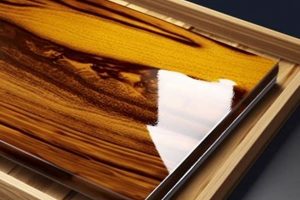
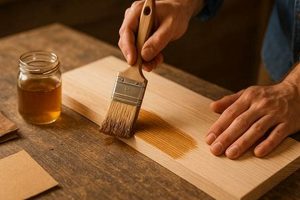
The processes of coloring and protecting wood surfaces are often confused, yet serve distinct purposes. One penetrates the wood to impart color, enhancing the natural grain, while the other forms a protective layer on the surface, shielding it from damage and wear. Examples of the former include products designed to alter the wood’s hue, such as those available in various shades of brown, red, or even more vibrant colors. The latter encompasses substances like varnish, lacquer, and polyurethane, creating a durable barrier against moisture, scratches, and UV light.
Understanding the differences between these two is crucial for achieving desired aesthetic results and ensuring the longevity of wooden items. Historically, natural oils and waxes were used to both color and protect wood. However, modern formulations offer a broader range of colors, levels of protection, and application methods. Properly selecting and applying the appropriate substance contributes to both the visual appeal and the functional lifespan of wooden furniture, floors, and other architectural elements. This knowledge allows for informed choices regarding the appearance and preservation of wood.
The subsequent discussion will delve into the specific characteristics, application techniques, advantages, and disadvantages of each type of product. This will cover considerations such as wood type, desired sheen level, environmental factors, and the intended use of the finished object to guide selection for optimal results.
Essential Considerations for Wood Coloring and Protection
The following guidelines offer crucial advice for selecting and applying products to enhance and safeguard wooden surfaces. Careful consideration of these points will contribute to a durable and aesthetically pleasing result.
Tip 1: Wood Preparation is Paramount: Ensure the wood surface is clean, dry, and free of any existing coatings. Sanding to the appropriate grit level, typically between 120 and 220, is essential for optimal penetration and adhesion.
Tip 2: Understand Product Compatibility: Verify that the chosen coloring agent and protective coating are compatible. Oil-based stains generally pair well with oil-based finishes, while water-based products should ideally be used together to prevent adhesion issues.
Tip 3: Test Before Committing: Always test the selected products on an inconspicuous area of the wood or a sample piece. This allows for assessment of the color, sheen, and compatibility before applying to the entire project.
Tip 4: Multiple Thin Coats are Preferable: Apply thin, even coats of both the coloring agent and the protective coating, allowing adequate drying time between each application. This prevents runs, drips, and uneven coloration.
Tip 5: Consider Environmental Factors: Temperature and humidity can significantly affect drying times and product performance. Adhere to the manufacturer’s recommended application guidelines for optimal results in varying conditions.
Tip 6: Evaluate the Intended Use: The choice of protective coating should be based on the intended use of the wood surface. For high-traffic areas, a durable finish such as polyurethane is recommended, while surfaces with less wear and tear may benefit from a softer wax or oil finish.
Tip 7: Prioritize Proper Ventilation: When applying solvent-based products, ensure adequate ventilation to minimize exposure to harmful fumes. Use appropriate personal protective equipment, such as respirators and gloves.
These tips emphasize the importance of meticulous preparation, product compatibility, and careful application techniques. By adhering to these guidelines, the likelihood of achieving a professional and long-lasting finish is significantly increased.
The subsequent sections will explore common application challenges and offer troubleshooting advice for ensuring a flawless final product.
1. Color Penetration
The fundamental distinction between coloring agents and protective coatings lies in their interaction with the wood itself. Color penetration, the defining characteristic of a stain, involves the absorption of pigment into the wood’s porous structure. This process alters the wood’s hue while allowing the natural grain pattern to remain visible. Conversely, a protective coating, such as varnish or lacquer, forms a film on the surface, encapsulating the wood and shielding it from external elements. The difference in how color is applied is a primary factor in determining the final appearance and durability of the wood project. For example, a desk treated with a penetrating stain might display subtle variations in color depending on the wood’s density, creating a natural, aged look. In contrast, a film-forming finish provides a uniform, often glossy, surface that highlights the wood’s texture but minimizes the perceived depth of color.
The degree of color penetration directly impacts the wood’s resistance to fading and wear. A deeply penetrating stain is less susceptible to scratches and abrasions, as the color is integral to the wood fibers. Minor surface damage is less noticeable because the underlying wood is also colored. A protective coating, while offering a barrier against scratches and moisture, can be compromised, revealing the original wood color beneath the finish layer. Consider wooden flooring; a stained floor will maintain its color even with light wear, whereas a floor coated with a protective layer might show scratches that expose the unstained wood, diminishing its aesthetic appeal. The selection of a penetrating colorant versus a surface coating, therefore, hinges on the desired level of durability and the acceptability of natural variations in color.
In summary, color penetration is a critical element distinguishing the use of a coloring agent from a protective coating. While both enhance the appearance of wood, the former alters the wood’s inherent color and provides a degree of inherent resistance to wear, whereas the latter creates a protective film, sacrificing some depth of color for enhanced surface protection. The choice between the two depends on the desired aesthetic, level of protection, and maintenance requirements. Understanding this distinction allows for informed decisions that optimize the beauty and longevity of wood projects.
2. Surface Protection
Surface protection is a primary differentiator. Coloring agents, by design, offer minimal inherent safeguarding against physical damage, moisture, or ultraviolet radiation. Their primary function is aesthetic, altering the color of the wood without necessarily improving its resistance to external factors. Protective coatings, however, are specifically formulated to provide a durable barrier. This barrier shields the wood from scratches, abrasions, water damage, and the harmful effects of sunlight. The choice between the two necessitates a careful evaluation of the environment in which the wood will reside and the level of protection required. An exterior door, for example, demands a robust protective coating to withstand weather exposure, whereas an interior decorative item might only require a coloring agent for aesthetic enhancement.
The level of surface protection directly impacts the longevity and maintenance requirements. A piece of furniture finished with a durable protective coating, such as polyurethane, will withstand daily use and require less frequent maintenance compared to a similar piece treated only with a coloring agent. The protective coating prevents liquids from penetrating the wood, minimizing the risk of staining and warping. It also reduces the likelihood of scratches and abrasions, preserving the aesthetic appeal of the wood for an extended period. Conversely, wood treated solely with a coloring agent is more susceptible to damage and requires more frequent cleaning and refinishing to maintain its appearance. Consider wooden decking; protective coatings are essential to prevent water damage, rot, and splintering caused by prolonged exposure to the elements.
In summation, the need for surface protection is a critical factor in determining whether a coloring agent alone is sufficient or whether a protective coating is necessary. Understanding the environmental factors to which the wood will be exposed, and the level of physical wear it will endure, allows for informed selection. The trade-off between enhanced aesthetics and the practical benefits of a durable protective barrier must be carefully weighed to ensure the long-term preservation of the wood item.
3. Application Method

The application method is a critical factor differentiating coloring agents and protective coatings, significantly influencing the final appearance, durability, and overall success of any wood finishing project. The techniques employed vary widely, depending on the product’s viscosity, chemical composition, and the desired aesthetic outcome. These methods directly affect the penetration, coverage, and uniformity of the applied substance, thereby impacting both the appearance and longevity of the treated wood.
- Stain Application Techniques
Coloring agents are typically applied using methods that facilitate penetration into the wood grain. These include brushing, wiping, and spraying. Brushing allows for controlled application, particularly on intricate surfaces, but can result in uneven coverage if not executed carefully. Wiping involves applying the colorant and then immediately removing the excess, leaving a thin, even layer that highlights the wood’s natural texture. Spraying provides a uniform coat, especially useful for large or complex surfaces, but requires careful masking and ventilation. The choice depends on the wood type, desired color intensity, and the applicator’s skill level. Improper stain application can lead to blotching or uneven color distribution, detracting from the wood’s natural beauty.
- Finish Application Techniques
Protective coatings necessitate application techniques that ensure a uniform, durable film formation on the wood surface. Common methods include brushing, rolling, and spraying. Brushing, similar to stain application, requires meticulous technique to avoid brush marks and ensure even coverage. Rolling is often used for larger surfaces, providing a smooth finish with minimal effort. Spraying, again, allows for uniform application but demands careful preparation and environmental control. The selection hinges on the type of protective coating (e.g., varnish, lacquer, polyurethane), the size of the project, and the desired level of smoothness. An inadequately applied protective coating can lead to bubbles, runs, or an uneven surface, compromising its protective function.
- Equipment and Tools
The appropriate equipment and tools are essential for achieving optimal results with both coloring agents and protective coatings. High-quality brushes, designed for specific types of finishes, ensure smooth application and minimize brush marks. Foam brushes are often preferred for water-based products, while natural bristle brushes are better suited for oil-based finishes. Spray guns, both airless and conventional, require careful calibration and maintenance to deliver a consistent spray pattern. Additionally, proper ventilation, masking materials, and personal protective equipment are crucial for safety and to prevent contamination of the surrounding environment. Neglecting the importance of quality tools can result in a subpar finish and increased application time.
- Layering and Drying Times
Both coloring agents and protective coatings often require multiple coats to achieve the desired effect and level of protection. Proper layering techniques involve applying thin, even coats and allowing sufficient drying time between applications. This prevents the formation of runs, drips, and bubbles, ensuring a smooth, durable finish. Drying times vary depending on the product type, environmental conditions, and the thickness of the application. Rushing the drying process can lead to adhesion problems and a compromised finish. Sanding lightly between coats of protective coatings is often recommended to create a smooth surface for subsequent layers. Patience and attention to detail are paramount for achieving a professional-quality finish.
In summary, the application method is a pivotal aspect that distinguishes the use of coloring agents from protective coatings. The chosen technique directly impacts the aesthetic outcome, durability, and overall success of the project. Understanding the nuances of each application method and selecting the appropriate tools and materials are crucial for achieving a professional, long-lasting finish that enhances the beauty and longevity of the wood.
4. Durability Level
Durability level fundamentally differentiates coloring agents and protective coatings, acting as a critical determinant in their appropriate selection for various applications. Coloring agents, primarily designed to alter the wood’s aesthetic, impart minimal inherent durability. Conversely, protective coatings are specifically formulated to enhance the wood’s resistance to environmental factors, physical wear, and chemical exposure. The durability level, therefore, directly correlates with the intended use of the wooden item and the anticipated degree of stress it will endure. For instance, a tabletop subjected to daily use requires a high-durability coating to resist scratches, stains, and heat damage, whereas a decorative molding may only need a coloring agent to enhance its appearance without significant concern for its physical resilience.
The cause-and-effect relationship between the selected treatment and the long-term performance of the wood is significant. Selecting a coloring agent alone for a high-traffic area results in premature wear, discoloration, and potential structural damage. Protective coatings, offering varying degrees of resistance, mitigate these effects. Polyurethane, for example, provides superior abrasion resistance and chemical resistance compared to varnish, making it suitable for flooring and kitchen cabinets. Understanding these distinctions allows for informed decisions that optimize the lifespan and aesthetic appeal of wooden surfaces. Consider outdoor furniture: the absence of a durable, UV-resistant coating leads to rapid fading, cracking, and degradation of the wood, necessitating frequent repairs or replacement. The practical significance of this understanding lies in minimizing maintenance costs and preserving the value of wooden assets.
In summary, durability level is a key component when considering coloring agents and protective coatings. The choice between the two, or their combined application, hinges on the anticipated environmental stress and physical wear. Recognizing the cause-and-effect relationship between the selected treatment and the wood’s long-term performance is crucial for ensuring both aesthetic appeal and functional longevity. Challenges often arise in balancing the desired aesthetic with the required level of protection, necessitating a thorough assessment of the wood’s intended use and environmental context. A holistic approach to wood finishing, considering both aesthetic and protective needs, is essential for preserving the beauty and extending the lifespan of wooden items.
5. Chemical Composition
The chemical composition of wood stains and finishes dictates their performance characteristics, environmental impact, and suitability for specific applications. Stains, designed to penetrate wood fibers and impart color, typically consist of pigments or dyes dissolved in a solvent carrier. The carrier, which can be water, oil, or a synthetic compound, influences the stain’s drying time, penetration depth, and compatibility with subsequent finishes. The specific pigments or dyes determine the color and lightfastness of the stain. The chemical makeup of the coloring agent must be carefully considered in relation to the wood species to ensure even color absorption and prevent unwanted reactions. Improper pairing can lead to blotching or discoloration. For example, a water-based stain applied to a dense hardwood like maple may result in uneven coloration due to the wood’s limited absorbency.
Finishes, intended to form a protective layer on the wood surface, exhibit a diverse range of chemical compositions. Varnish, lacquer, and polyurethane represent common types, each with distinct properties. Varnish typically comprises a resin, a drying oil, and a solvent, offering a durable, glossy surface. Lacquer, known for its rapid drying time, consists of a resin dissolved in a volatile solvent, often requiring specialized spray equipment for application. Polyurethane, a synthetic resin, provides exceptional abrasion resistance and chemical resistance, making it suitable for high-traffic areas. The chemical composition influences the finish’s flexibility, hardness, and resistance to moisture, UV light, and solvents. A finish with inadequate UV resistance, when applied to outdoor furniture, will result in premature fading and degradation of the wood. The practical significance lies in selecting a finish whose chemical properties align with the intended use and environmental conditions, thereby maximizing the wood’s longevity and aesthetic appeal.
In summation, the chemical composition is a pivotal aspect distinguishing wood stains and finishes. Understanding the specific chemical makeup of each product enables informed decisions regarding compatibility, performance, and environmental impact. Challenges often arise in selecting products that balance desired aesthetic qualities with necessary protective properties, while also minimizing potential health and environmental hazards. A comprehensive approach, considering both the chemical properties and intended application, is essential for achieving optimal results in wood finishing, ensuring both lasting beauty and functional performance.
Frequently Asked Questions
The following addresses common inquiries concerning the selection and application of products intended to alter the appearance and protect wood surfaces. The information aims to clarify misconceptions and provide practical guidance.
Question 1: Is a coloring agent sufficient for protecting wood exposed to outdoor elements?
A coloring agent, by itself, offers minimal protection against the damaging effects of sunlight, moisture, and temperature fluctuations. Exterior applications necessitate a protective coating specifically formulated to withstand environmental stressors.
Question 2: Can any protective coating be applied over any coloring agent?
Compatibility between a coloring agent and a protective coating is crucial. Solvent-based coloring agents generally pair well with solvent-based protective coatings, while water-based products should be used together to prevent adhesion issues and finish defects.
Question 3: How does the sheen level of a protective coating affect its durability?
The sheen level (gloss, semi-gloss, satin, matte) primarily affects the aesthetic appearance and has minimal impact on the protective qualities. However, higher-gloss finishes may exhibit scratches and imperfections more readily than matte finishes.
Question 4: Is sanding necessary between coats of protective coating?
Light sanding between coats is generally recommended to create a smooth surface for subsequent layers. This improves adhesion and minimizes imperfections, resulting in a more professional-looking finish. However, always consult the manufacturer’s instructions for specific recommendations.
Question 5: What are the signs of an improperly applied protective coating?
Signs of improper application include runs, drips, bubbles, uneven sheen, and poor adhesion. These issues can result from inadequate surface preparation, improper application techniques, or incompatible products.
Question 6: Does the wood species affect the choice of coloring agent or protective coating?
The wood species significantly influences product selection. Dense hardwoods like maple require specific preparation techniques to ensure even stain absorption, while resinous softwoods may require a sealant to prevent bleeding. The wood’s inherent properties must be considered for optimal results.
These FAQs highlight the importance of understanding product properties, application techniques, and environmental factors when working with wood. Proper selection and application are essential for achieving both aesthetic appeal and long-term protection.
The next section will offer a comprehensive guide to troubleshooting common finishing problems and achieving professional results.
Concluding Remarks
This exploration has elucidated the critical differences between coloring agents and protective coatings. The key distinction lies in the fundamental purpose: one alters the aesthetic appearance of the wood by penetrating its surface, while the other forms a protective barrier against external elements. Understanding this differentiation, along with the nuances of application, durability, and chemical composition, is essential for achieving desired results and ensuring the longevity of wood projects.
The effective use of wood stain vs wood finish requires careful consideration of both aesthetic goals and practical needs. Further research and informed product selection are strongly encouraged for optimal outcomes in any woodworking endeavor. A commitment to proper technique and understanding of material properties will yield lasting beauty and protection.
![Buy Quality Finished Shelf Wood - [Your Brand] | Best Final Touch: Elevate Your Projects with Professional Finishing](https://bestfinaltouch.com/wp-content/uploads/2026/05/th-447-300x200.jpg "Buy Quality Finished Shelf Wood - [Your Brand] Best Final Touch: Elevate Your Projects with Professional Finishing")
![Buy Premium Walnut Finished Wood [Deals Inside] | Best Final Touch: Elevate Your Projects with Professional Finishing](https://bestfinaltouch.com/wp-content/uploads/2026/05/th-405-300x200.jpg "Buy Premium Walnut Finished Wood [Deals Inside] Best Final Touch: Elevate Your Projects with Professional Finishing")