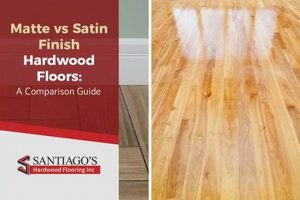
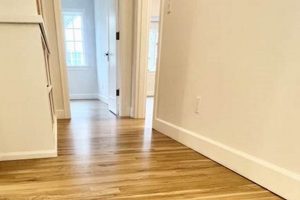
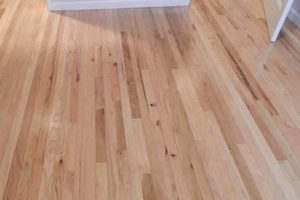
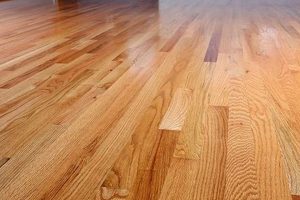
The choice between sheen levels significantly impacts the aesthetic and functional characteristics of wood flooring. Two common options, each offering a distinct appearance and level of durability, are differentiated by their light reflectance properties. The first presents a low-luster, matte appearance, minimizing the visibility of scratches and imperfections. The second provides a moderate shine, offering a brighter, more reflective surface that enhances the wood’s natural grain.
Selecting the appropriate sheen level is crucial because it affects not only the floor’s visual appeal but also its maintenance requirements and suitability for different environments. Higher sheen levels tend to show more dirt and scratches, requiring more frequent cleaning. Lower sheen levels, while more forgiving in terms of maintenance, may not provide the desired level of brightness in certain rooms. Historically, the selection was often dictated by practical considerations, with lower sheens preferred in high-traffic areas. However, current trends allow for greater aesthetic flexibility, with choices often based on personal preference and the overall design scheme of the space.
Understanding the nuances of each sheen level is essential before making a final decision. Factors such as light exposure, room size, and expected wear and tear should all be considered. Further exploration of these factors will allow for a more informed decision regarding the selection of wood floor finish.
Guidance on Selecting Sheen Levels for Hardwood Floors
The following recommendations provide insights into choosing between sheen levels for hardwood flooring, based on practical considerations and aesthetic preferences. Consider these points to ensure optimal selection and long-term satisfaction.
Tip 1: Assess Light Exposure. Rooms with ample natural light may benefit from the lower reflectance, which diffuses brightness and minimizes glare. Conversely, darker rooms might benefit from the increased reflectivity of a moderate-shine finish.
Tip 2: Evaluate Traffic Levels. In high-traffic areas, the understated sheen is often a more practical choice. Its ability to conceal minor scratches and imperfections reduces the need for frequent maintenance.
Tip 3: Consider Room Size. In smaller rooms, the light-reflective properties of a moderate-shine finish can create a perception of greater space. However, this effect should be balanced against potential glare issues.
Tip 4: Account for Furniture Style. The chosen sheen should complement the existing furniture and dcor. Modern or minimalist styles may pair well with the cleaner lines of a higher sheen, while traditional or rustic styles may benefit from the warmth of a lower sheen.
Tip 5: Understand Maintenance Requirements. The lower sheen is typically easier to maintain due to its ability to mask dirt and minor imperfections. Moderate-shine finishes require more diligent cleaning to preserve their luster.
Tip 6: Sample Before Committing. Always test both options in the intended space before making a final decision. Observe how the light interacts with each finish at different times of the day.
Tip 7: Review Subfloor Condition. Imperfections in the subfloor can be more noticeable with a moderate-shine finish due to increased light reflection. Ensure the subfloor is properly prepared before installation.
Making an informed decision hinges on a thorough understanding of the functional and aesthetic characteristics of each option. By carefully weighing the considerations outlined above, one can select a hardwood floor finish that enhances the beauty and longevity of the space.
The subsequent sections will delve deeper into the specific properties of each finish type, providing a more detailed comparison to aid in the decision-making process.
1. Light Reflectance

Light reflectance, a fundamental property of surface finishes, plays a decisive role in differentiating satin and semi-gloss hardwood floors. The degree to which a surface reflects light directly influences the perceived brightness, color saturation, and visibility of surface imperfections. A satin finish diffuses light, exhibiting lower reflectance values. This characteristic contributes to a matte appearance, minimizing glare and concealing minor scratches or dust. Conversely, a semi-gloss finish features higher light reflectance, creating a brighter and more reflective surface. This enhances the wood grain and color depth but also accentuates imperfections and requires more frequent cleaning to maintain its luster. For example, a room with significant natural light exposure may benefit from the diffusion offered by a satin finish to reduce glare.
The practical application of understanding light reflectance extends to space planning and interior design. In smaller rooms, a semi-gloss floor can create the illusion of increased spaciousness due to its reflective properties. However, in larger rooms, the same finish may create excessive glare, potentially diminishing visual comfort. Moreover, the type and intensity of artificial lighting can significantly impact the perceived appearance of each finish. Under direct, intense lighting, the differences in light reflectance become more pronounced, emphasizing the need to carefully consider the lighting scheme in conjunction with the chosen floor finish.
In summary, light reflectance is a critical factor in distinguishing and selecting between satin and semi-gloss hardwood floor finishes. Its influence on brightness, imperfection visibility, and overall aesthetic makes it a primary consideration for homeowners and designers. While a higher reflectance can enhance visual appeal, it also demands increased maintenance and can amplify the appearance of flaws. The choice ultimately depends on balancing aesthetic preferences with practical needs, considering factors such as room size, lighting conditions, and expected traffic levels.
2. Durability

The durability of a hardwood floor is intrinsically linked to the finish applied, impacting its resistance to wear, scratches, and the effects of daily use. Selecting between sheen levels represents a decision affecting the floor’s longevity and aesthetic preservation.
- Scratch Resistance and Sheen Level
Lower sheen finishes, such as satin, tend to obscure minor scratches and imperfections due to their light-diffusing properties. Conversely, higher sheen finishes, like semi-gloss, highlight surface blemishes, making scratches more visible. A family with pets might find a satin finish more practical, as it will better conceal paw scratches compared to a semi-gloss.
- Impact of Traffic and Wear
Areas with high foot traffic experience greater wear and tear on floor finishes. Semi-gloss floors in such areas may require more frequent refinishing to maintain their appearance, while satin finishes can withstand similar traffic levels with less visible degradation. For example, a commercial space might opt for a satin finish to minimize maintenance costs associated with refinishing.
- Layer Thickness and Protective Quality
The thickness of the finish layer directly correlates with its protective capabilities. Regardless of sheen level, a thicker, more robust finish will provide greater resistance to moisture, stains, and abrasion. However, even with equivalent thickness, the visibility of damage differs between satin and semi-gloss finishes, with satin offering a more forgiving surface.
- Refinishing Considerations
Both satin and semi-gloss floors can be refinished to restore their original appearance. However, the frequency of refinishing will likely differ based on the chosen sheen and the floor’s exposure to wear. The cost and effort associated with refinishing should factor into the initial decision, particularly for those prioritizing long-term maintenance strategies.
The interplay between sheen level and durability highlights the importance of assessing the intended use of the space and anticipating the level of wear the floor will endure. The choice must balance aesthetic preferences with practical considerations related to maintenance and long-term performance.
3. Maintenance

Maintaining hardwood floors is directly influenced by the sheen level selected, impacting the frequency and intensity of cleaning required to preserve their appearance. The choice between satin and semi-gloss finishes has notable consequences for routine upkeep.
- Visibility of Dirt and Scratches
Semi-gloss finishes, due to their higher light reflectivity, tend to reveal dust, dirt, and scratches more readily than satin finishes. This necessitates more frequent cleaning to maintain a pristine appearance. Conversely, the matte surface of satin finishes conceals minor imperfections, reducing the demand for immediate attention. For instance, a household with young children may find a satin finish more practical due to its ability to mask everyday wear and tear.
- Cleaning Frequency and Products
The recommended cleaning regimen varies based on the sheen level. Semi-gloss floors often require more frequent sweeping or vacuuming to remove surface debris that becomes highly visible under direct light. Satin floors, while requiring less frequent cleaning, still benefit from regular maintenance to prevent the buildup of grime. Specific cleaning products formulated for hardwood floors should be used, avoiding harsh chemicals that can damage the finish regardless of sheen level.
- Buffing and Polishing Requirements
To maintain the luster of a semi-gloss floor, periodic buffing or polishing may be necessary. This process helps restore the finish’s reflectivity and minimize the appearance of minor scratches. Satin floors generally do not require buffing or polishing, as their matte finish is not intended to be highly reflective. The decision to invest in buffing equipment or professional services is a factor to consider when selecting a semi-gloss finish.
- Long-Term Maintenance Costs
While the initial cost of hardwood floor installation may be similar for both satin and semi-gloss finishes, the long-term maintenance costs can diverge. Semi-gloss floors may necessitate more frequent professional cleaning or refinishing to preserve their aesthetic appeal, potentially increasing overall expenses. Satin floors, requiring less intensive maintenance, may offer a more cost-effective solution over the lifespan of the flooring.
In summary, the maintenance implications associated with satin and semi-gloss hardwood floors represent a significant factor in the selection process. The visibility of imperfections, cleaning frequency, and potential for buffing or polishing all contribute to the overall effort and cost of maintaining the floor’s appearance. Balancing aesthetic preferences with practical maintenance considerations is crucial for ensuring long-term satisfaction with the chosen hardwood floor finish. A discerning homeowner will carefully weigh these factors to make an informed decision aligned with their lifestyle and budgetary constraints.
4. Scratch Resistance

The scratch resistance of a hardwood floor is a critical attribute influencing its longevity and aesthetic appeal. The choice between satin and semi-gloss finishes directly impacts the floor’s ability to withstand daily wear and tear, as well as the visibility of any resulting imperfections.
- Sheen Level and Scratch Visibility
Lower sheen finishes, exemplified by satin, inherently mask minor surface scratches more effectively than their higher-gloss counterparts. The matte surface diffuses light, minimizing the contrast between scratched and undamaged areas. A semi-gloss finish, conversely, reflects light more directly, amplifying the visibility of imperfections and making scratches appear more pronounced. A floor in a household with pets or active children will likely exhibit fewer visible scratches with a satin finish compared to a semi-gloss finish under similar conditions.
- Finish Hardness and Scratch Resilience
The inherent hardness of the finish material itself is a primary determinant of scratch resistance. Polyurethane-based finishes, commonly employed in both satin and semi-gloss formulations, offer varying degrees of hardness depending on their composition and application method. Ceramic-reinforced finishes, for example, provide enhanced scratch resistance regardless of the sheen level. The selection of a harder finish contributes significantly to minimizing the occurrence and severity of scratches, irrespective of whether a satin or semi-gloss sheen is chosen.
- Traffic Patterns and Scratch Accumulation
Areas of high foot traffic are inherently more susceptible to scratch accumulation. Entryways, hallways, and kitchens often experience greater wear and tear compared to less frequented spaces. In high-traffic zones, the choice between satin and semi-gloss should carefully weigh the aesthetic preferences against the practical implications of scratch visibility. A satin finish in such areas will maintain a more uniform appearance over time, while a semi-gloss finish may require more frequent refinishing to address accumulated scratches.
- Maintenance Practices and Scratch Prevention
Proper maintenance practices play a crucial role in mitigating scratches and preserving the finish of hardwood floors. Regular sweeping or vacuuming to remove abrasive particles, the use of protective mats in high-traffic areas, and avoiding harsh cleaning agents can significantly reduce the likelihood of scratching. While these practices benefit all hardwood floors, their impact is particularly noticeable on semi-gloss finishes, where even minor scratches are readily apparent. Consistent adherence to recommended maintenance protocols can extend the lifespan and maintain the aesthetic appeal of both satin and semi-gloss floors.
In conclusion, while both satin and semi-gloss hardwood floors are susceptible to scratching, the chosen sheen level significantly impacts the visibility of these imperfections. The interplay between sheen level, finish hardness, traffic patterns, and maintenance practices determines the long-term scratch resistance and overall appearance of the flooring. A thorough consideration of these factors enables a homeowner to make an informed decision that balances aesthetic preferences with practical needs.
5. Aesthetic Appeal

Aesthetic appeal constitutes a primary consideration when selecting hardwood floor finishes. The distinction between satin and semi-gloss surfaces markedly influences the perceived character of a space, impacting both visual comfort and stylistic coherence. The selection process requires a careful evaluation of subjective preferences alongside objective factors such as lighting and room size.
- Light Reflection and Perceived Brightness
The degree of light reflection directly affects the brightness and ambiance of a room. Semi-gloss finishes exhibit higher reflectance, creating a brighter, more vibrant space. This can be particularly advantageous in rooms with limited natural light. Conversely, satin finishes diffuse light, resulting in a softer, more muted appearance, which may be preferred in areas with abundant natural light where glare is a concern. For instance, a sunroom may benefit from the diffused light of a satin finish, while a dimly lit hallway could be enhanced by the reflectivity of a semi-gloss surface.
- Color Saturation and Grain Definition
Sheen levels impact the perceived depth and richness of the wood’s color and grain. Semi-gloss finishes tend to accentuate the natural grain patterns and color variations within the wood, creating a more visually dynamic surface. Satin finishes, on the other hand, provide a more uniform appearance, subtly muting color contrasts and grain details. The choice depends on whether one seeks to emphasize the wood’s inherent characteristics or prioritize a more understated aesthetic. A rustic-style home may benefit from the enhanced grain definition of a semi-gloss floor, while a modern, minimalist space might be better suited to the subtle elegance of a satin finish.
- Formal vs. Informal Ambiance
The finish level contributes to the overall formality of a space. Semi-gloss floors, with their reflective sheen, often convey a sense of sophistication and formality. They are frequently selected for formal living rooms or dining areas. Satin finishes, with their understated matte appearance, tend to create a more relaxed and informal atmosphere, making them well-suited for bedrooms or family rooms. This distinction should be considered in relation to the intended use of the space and the desired emotional response.
- Coordination with Interior Design Elements
The chosen floor finish should harmonize with other design elements within the room, including furniture, wall colors, and decorative accents. Semi-gloss floors can complement contemporary or modern designs characterized by clean lines and reflective surfaces. Satin finishes often pair well with traditional or rustic styles, providing a grounding element that balances bolder textures and patterns. Careful consideration of these relationships ensures a cohesive and aesthetically pleasing interior environment.
Ultimately, the aesthetic appeal of hardwood floors is a subjective matter influenced by individual preferences and contextual considerations. The nuanced differences between satin and semi-gloss finishes offer distinct visual characteristics that can significantly impact the overall ambiance of a space. By thoughtfully assessing the interplay between light, color, style, and personal taste, a homeowner can select the finish that best achieves their desired aesthetic outcome.
6. Application

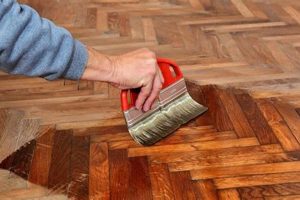
The application process exerts a considerable influence on the final appearance and performance of hardwood floors, particularly concerning the choice between satin and semi-gloss finishes. Variations in technique, environmental conditions, and the quality of application directly affect the uniformity, durability, and overall aesthetic of the finished surface. Improper application can result in inconsistencies in sheen level, uneven coverage, and premature finish failure, negating the intended benefits of either a satin or semi-gloss selection. For example, inadequate surface preparation, such as insufficient sanding or failure to remove contaminants, can compromise adhesion and lead to peeling or blistering, irrespective of the chosen sheen. Furthermore, the number of coats applied, the drying time between coats, and the use of appropriate application tools all contribute to the ultimate success of the finishing process.
Proper application techniques tailored to the specific product and sheen level are paramount. Satin finishes, which rely on light diffusion for their matte appearance, may be more forgiving of minor application imperfections than semi-gloss finishes, where any unevenness in the surface is accentuated by light reflection. The use of a high-quality applicator, such as a lambswool pad or microfiber applicator, is crucial for achieving a smooth, consistent finish. Furthermore, maintaining a consistent application speed and overlap pattern minimizes the risk of lap marks or streaking. Environmental factors such as temperature and humidity also play a significant role, with optimal conditions ensuring proper curing and adhesion of the finish. Consider a scenario where a contractor applies a semi-gloss finish in excessively humid conditions. The resulting slow drying time can lead to dust settling on the surface, creating a textured, uneven finish that diminishes the intended glossy appearance.
In conclusion, the success of achieving the desired outcome with satin or semi-gloss hardwood floors is heavily contingent upon the application process. Meticulous surface preparation, adherence to recommended application techniques, and careful attention to environmental conditions are all essential for realizing the full potential of the chosen finish. While the inherent properties of satin and semi-gloss finishes contribute to their distinct aesthetic qualities, proper application ensures that these qualities are maximized, resulting in a durable, visually appealing hardwood floor. Failure to prioritize proper application can lead to compromised results, underscoring the importance of engaging experienced professionals and adhering to industry best practices.
7. Cost
The economic considerations surrounding hardwood floor finishes extend beyond the initial purchase price. While the cost of the finish material itself might exhibit minimal variance between satin and semi-gloss options, a more comprehensive analysis reveals several cost-related factors that warrant careful evaluation. These factors include surface preparation, application expenses, long-term maintenance expenditures, and potential repair or refinishing costs. For instance, a subfloor requiring extensive leveling or repair to achieve a suitable surface for a high-gloss finish directly increases the overall project expense. Similarly, the need for professional application, especially for complex installations or intricate patterns, contributes to the total investment.
Maintenance costs also diverge based on the chosen sheen level. As semi-gloss finishes tend to reveal imperfections more readily, they often necessitate more frequent cleaning and periodic buffing to sustain their aesthetic appeal. This translates to higher expenditures on cleaning supplies, equipment rentals, or professional cleaning services. Conversely, satin finishes, due to their inherent ability to mask minor scratches and dirt, may require less intensive maintenance, resulting in lower long-term costs. Furthermore, the durability of the finish and its resistance to wear and tear influence the frequency of refinishing. A high-traffic area finished with a less durable, high-gloss coating may require refinishing sooner than the same area finished with a more resilient, lower-sheen option. Refinishing constitutes a significant expense, involving sanding, staining (if desired), and the application of multiple coats of finish. This underscores the importance of considering the projected lifespan and maintenance requirements of each finish type in relation to the anticipated traffic and use.
Ultimately, selecting between satin and semi-gloss hardwood floor finishes involves a cost-benefit analysis that transcends the initial material price. Homeowners must consider the long-term implications of their choice, including the costs associated with surface preparation, application, maintenance, and potential repairs or refinishing. A thorough assessment of these factors enables a more informed decision that aligns with budgetary constraints and long-term financial planning. Ignoring these cost-related considerations can lead to unforeseen expenses and potentially compromise the overall value and longevity of the hardwood flooring investment.
Frequently Asked Questions
This section addresses common inquiries regarding hardwood floor finish options, specifically focusing on satin and semi-gloss sheens. The following questions and answers provide insights into their properties, maintenance requirements, and suitability for various applications.
Question 1: What distinguishes a satin finish from a semi-gloss finish on hardwood floors?
The primary difference lies in light reflectance. A satin finish diffuses light, resulting in a matte appearance and minimizing glare. A semi-gloss finish reflects light more directly, creating a brighter and more reflective surface.
Question 2: Which finish is more durable for high-traffic areas?
While the hardness of the finish material is a key factor, satin finishes tend to conceal scratches and imperfections more effectively than semi-gloss finishes. This makes satin a more practical choice for high-traffic areas where wear and tear are more prevalent.
Question 3: How do maintenance requirements differ between satin and semi-gloss hardwood floors?
Semi-gloss floors typically require more frequent cleaning to maintain their luster, as they readily reveal dust, dirt, and scratches. Satin floors, due to their matte surface, are more forgiving and require less intensive maintenance.
Question 4: Does the sheen level impact the cost of hardwood floor installation?
The initial cost of the finish material itself is generally similar for both satin and semi-gloss options. However, long-term maintenance costs may vary, with semi-gloss floors potentially incurring higher expenses due to more frequent cleaning and refinishing requirements.
Question 5: Is one finish better suited for certain room types?
Semi-gloss finishes can enhance brightness in dimly lit rooms and create a sense of spaciousness. Satin finishes are often preferred in rooms with abundant natural light where glare reduction is desired.
Question 6: How does the application process affect the outcome of each finish type?
Proper application is crucial for both satin and semi-gloss finishes. However, semi-gloss finishes are less forgiving of application imperfections, as any unevenness in the surface is accentuated by light reflection. Skilled application ensures optimal uniformity and durability regardless of the chosen sheen.
In summary, the selection between satin and semi-gloss hardwood floor finishes involves careful consideration of factors beyond mere aesthetic preference. Durability, maintenance demands, and long-term costs all contribute to the overall suitability of each option. Informed decision-making ensures a satisfying and enduring flooring investment.
The following section offers a comparative summary of the key attributes of each finish, providing a concise overview to aid in the selection process.
satin finish vs semi gloss hardwood floors Conclusion
The exploration of sheen levels reveals critical distinctions influencing both aesthetic and functional outcomes. Durability, maintenance requirements, and light reflectance properties differentiate these choices. The optimal selection aligns with specific use cases, traffic considerations, and desired visual characteristics.
Therefore, a discerning approach necessitates careful evaluation of these factors to ensure a hardwood flooring installation that meets both practical needs and aesthetic aspirations. This thorough assessment contributes to a lasting investment, reflecting informed decision-making and long-term satisfaction.