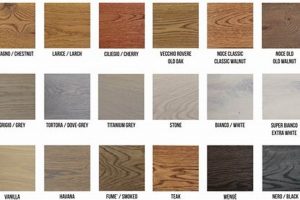
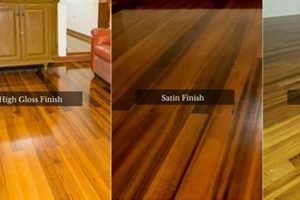
The process of restoring the protective coating on a wooden surface, commonly a table, is essential for maintaining its aesthetic appeal and structural integrity. This undertaking involves addressing imperfections such as scratches, watermarks, or discoloration through various methods, including cleaning, filling, and recoating. An example would be addressing a heat ring left by a mug on a dining table by carefully removing the damaged finish and applying a new protective layer.
Maintaining the integrity of a wooden table’s coating is crucial for its longevity. A well-maintained finish protects the wood from moisture, stains, and physical damage, preserving its value and appearance over time. Historically, methods for wood finish repair have evolved from simple waxes and oils to sophisticated lacquers and polyurethane coatings, reflecting advancements in material science and woodworking techniques.
The subsequent sections will detail the different types of damage that can occur to a wood table’s protective layer, diagnostic procedures to determine the appropriate repair method, and step-by-step instructions for common repair techniques, focusing on achieving a professional and durable result.
Essential Considerations for Surface Restoration
The following guidelines offer crucial advice for effective and lasting restoration of a wood table’s protective layer.
Tip 1: Surface Preparation is Paramount. Thoroughly clean the table’s surface, removing all dirt, grease, and loose particles. Use appropriate cleaning solutions designed for wood finishes to avoid damaging the existing layer. A clean surface ensures proper adhesion of any repair materials.
Tip 2: Match the Existing Coating. Identifying the type of finishwhether lacquer, varnish, shellac, or polyurethaneis crucial. Test a small, inconspicuous area with appropriate solvents to determine the existing finish. Using a mismatched product can lead to incompatibility issues and an uneven appearance.
Tip 3: Employ a Gradual Approach. Start with the least aggressive repair method. Before resorting to harsh chemicals or sanding, attempt to address minor scratches or blemishes with appropriate touch-up markers or wax sticks that match the table’s color.
Tip 4: Practice Proper Sanding Techniques. When sanding is necessary, use progressively finer grits of sandpaper. Begin with a coarser grit to remove the damaged layer, then gradually move to finer grits to smooth the surface. Always sand in the direction of the wood grain to minimize visible scratches.
Tip 5: Apply Finish in Thin, Even Coats. Whether using a brush, spray, or rag, apply thin, even coats of the chosen finish. Multiple thin coats are preferable to a single thick coat, as they reduce the likelihood of runs, drips, and air bubbles. Allow each coat to dry completely before applying the next.
Tip 6: Control the Environment. Ensure the work area is well-ventilated and free from dust. Dust particles can settle into the wet finish, creating imperfections. Maintaining a stable temperature and humidity level can also improve the drying process.
Tip 7: Allow Adequate Drying Time. Follow the manufacturer’s recommendations for drying times between coats and before using the table. Rushing the drying process can lead to a soft, easily damaged finish.
Adhering to these guidelines maximizes the potential for achieving a seamless and long-lasting restoration, protecting the table from future damage and maintaining its aesthetic appeal.
The subsequent section will address common mistakes encountered during the restoration process, providing guidance on avoiding these pitfalls and ensuring a successful outcome.
1. Surface Preparation

Effective surface preparation is foundational to the successful execution of any wood table finish repair. The quality of the preparation directly influences the adhesion, appearance, and longevity of the repaired coating. Neglecting this crucial step can lead to premature failure of the repair, resulting in wasted time and resources.
- Removal of Contaminants
The presence of dirt, grease, wax, or existing loose finish particles impedes the bonding of the repair material to the wood substrate. Cleaning with appropriate solvents or detergents is necessary to eliminate these contaminants. For example, a table used for dining may have residual grease or food particles that must be removed prior to sanding or applying a new coat. Failure to remove these substances can result in poor adhesion and an uneven finish.
- Assessment of Existing Finish Condition
Careful examination of the existing finish is crucial to determine the extent of damage and the appropriate repair method. Scratches, watermarks, or discoloration require specific treatment. Lifting or peeling finishes necessitate complete removal before applying a new coating. For example, if the existing finish is cracking, it must be completely removed before applying a new finish. Ignoring this assessment can result in layering incompatible finishes, leading to cracking or peeling over time.
- Sanding and Smoothing
Sanding is often necessary to create a smooth and uniform surface for the new finish. The appropriate grit of sandpaper must be selected based on the severity of the imperfections. Coarse grit sandpaper removes substantial material, while fine grit sandpaper smooths the surface. For example, deep scratches may require initial sanding with 120-grit sandpaper, followed by progressively finer grits to achieve a smooth surface. Inadequate sanding can leave visible imperfections and affect the uniformity of the final finish.
- Dust Removal
After sanding, meticulous dust removal is critical. Residual dust particles can become embedded in the new finish, creating a textured surface and compromising the clarity and smoothness of the coating. Tack cloths or vacuum cleaners with soft brush attachments are commonly used for this purpose. For example, even microscopic dust particles can create visible imperfections in a high-gloss finish. Insufficient dust removal can detract from the final appearance and require additional sanding and refinishing.
In conclusion, proper surface preparation is not merely a preliminary step but an integral component of any effective wood table finish repair strategy. By diligently removing contaminants, assessing the existing finish, sanding appropriately, and eliminating dust, the foundation is laid for a durable, aesthetically pleasing, and long-lasting restoration.
2. Finish Identification

Accurate finish identification is paramount when considering methods for restoring wood table surfaces. The compatibility of repair materials and techniques is contingent upon understanding the original coating type. Incorrect identification can lead to finish failure, discoloration, or damage to the underlying wood.
- Solvent Testing for Finish Type
Solvent testing involves applying small amounts of different solvents (e.g., denatured alcohol, lacquer thinner) to an inconspicuous area of the finish to observe their effect. Shellac dissolves readily in denatured alcohol, while lacquer dissolves in lacquer thinner. Polyurethane and varnish exhibit resistance to both. Misidentifying a shellac finish as polyurethane and applying a polyurethane topcoat will likely result in poor adhesion and eventual peeling. Correct solvent testing informs the selection of compatible refinishing products.
- Visual Examination Under Magnification
Close inspection of the surface under magnification can reveal characteristics indicative of specific finish types. Lacquer often exhibits fine cracking (crazing) over time, while varnish may show brush marks. Polyurethane tends to form a thick, plastic-like layer. Applying a repair method suitable for crazed lacquer to a table with varnish will not address the underlying issue and may exacerbate the problem. Accurate visual examination guides the application of targeted repair strategies.
- Historical Context and Manufacturing Era
The era in which a wood table was manufactured often correlates with the types of finishes commonly used at that time. For example, shellac was prevalent in the late 19th and early 20th centuries, while lacquer became popular in the mid-20th century. Polyurethane finishes gained widespread use in the latter half of the 20th century. Attempting to repair an antique table finished with shellac using modern polyurethane would be historically inaccurate and potentially damaging. Understanding the manufacturing era provides clues to the likely finish type, aiding in appropriate repair choices.
- Consideration of Finish Characteristics
Different finish types possess distinct properties. Shellac is relatively soft and prone to water damage, while lacquer is more durable and resistant to solvents. Polyurethane offers high water resistance and abrasion resistance. Applying a water-based repair product to a table finished with an oil-based varnish may cause the finish to cloud or separate. Evaluating finish characteristics allows for the selection of repair materials that complement the existing coating’s properties.
In conclusion, accurate finish identification is not merely a preliminary step but an integral component of any effective strategy for restoring a wood table’s surface. It ensures the compatibility of repair materials, preserves the table’s aesthetic integrity, and prevents potential damage. Thoroughly understanding the existing coating’s characteristics is essential for achieving a successful and lasting restoration.
3. Appropriate Materials
The selection of appropriate materials exerts a direct influence on the success of any attempt to restore a wood table’s coating. Incompatible or substandard materials introduce the potential for finish failure, aesthetic imperfections, and compromised protection of the underlying wood. The relationship between material selection and the overall restoration is causal: the materials used directly dictate the quality and longevity of the repair. For instance, using a water-based stain on a table previously coated with an oil-based varnish will likely result in poor adhesion, uneven coloration, and eventual peeling. The correct application of materials designed for compatibility with the original finish is paramount.
Considering specific examples, the use of an epoxy-based wood filler for deep gouges, followed by a stain matched to the original table color, demonstrates the practical application of appropriate material selection. Subsequent application of a compatible topcoat, such as polyurethane for enhanced durability, ensures a cohesive and resilient finish. Conversely, opting for a generic wood filler or an improperly matched stain can create visible inconsistencies and compromise the structural integrity of the repair. The careful consideration of each material’s properties, including its chemical composition and intended use, is thus vital.
In summary, the use of appropriate materials forms a cornerstone of effective wood table finish restoration. Challenges arise in accurately identifying the existing finish and sourcing compatible repair products. However, understanding the properties and applications of various materials enables the execution of durable, aesthetically pleasing, and long-lasting repairs, preserving the integrity and value of the wood table. The adherence to these principles transcends mere aesthetic concerns, directly impacting the longevity and functionality of the restored surface.
4. Sanding Techniques

Sanding techniques play a crucial role in wood table finish repair. The proper application of these methods dictates the quality and longevity of the restored coating. Effective sanding prepares the surface for the new finish, ensuring adhesion and a smooth, uniform appearance. Inadequate or improper sanding, conversely, can result in visible imperfections and premature finish failure.
- Grit Progression
Grit progression involves the sequential use of sandpaper with increasingly finer grit sizes. This process begins with a coarser grit to remove the damaged finish or imperfections and concludes with a fine grit to smooth the surface for the new coating. Skipping grit levels or using an inappropriate grit can lead to scratches or an uneven surface. For example, starting with 80-grit sandpaper on a lightly scratched surface will create deeper scratches that are difficult to remove with subsequent finer grits. This technique ensures a smooth, even surface that is optimally prepared for the application of the new finish, enhancing adhesion and overall aesthetic quality.
- Sanding Direction
Sanding direction refers to the orientation of the sanding motion in relation to the wood grain. Sanding with the grain minimizes the appearance of scratches and creates a more uniform surface. Sanding against the grain can create visible cross-grain scratches that detract from the final appearance. For instance, sanding perpendicular to the grain on a mahogany table will create noticeable scratches that are difficult to conceal with the new finish. Consistent sanding with the grain contributes to a seamless and professional-looking repair.
- Sanding Pressure
Sanding pressure refers to the amount of force applied to the sandpaper during sanding. Excessive pressure can cause uneven sanding, gouges, or burnishing, while insufficient pressure may not effectively remove the damaged finish or imperfections. Maintaining consistent, moderate pressure is essential for achieving a uniform surface. For example, applying excessive pressure with a power sander can create swirl marks and unevenness. Balanced sanding pressure ensures consistent material removal and a smooth, even surface suitable for refinishing.
- Dust Removal Between Grits
Dust removal between grits involves removing sanding dust particles from the surface before progressing to the next finer grit. Residual dust particles can become embedded in the sandpaper or the wood surface, creating scratches or preventing the finer grit from effectively smoothing the surface. Tack cloths, vacuum cleaners, or compressed air are commonly used for dust removal. For instance, failing to remove dust particles before sanding with 320-grit sandpaper will result in scratches and an uneven surface. Thorough dust removal ensures a clean surface that is optimally prepared for the application of the new finish, improving clarity and adhesion.
These sanding techniques are integral to the process of wood table finish repair. Proper execution of these methods facilitates the creation of a smooth, clean, and uniform surface that is conducive to optimal finish adhesion and aesthetic appeal. Consistent application of appropriate sanding techniques enhances the durability, appearance, and overall quality of the restored wood table.
5. Application Methods
The specific methods employed to apply a finish during wood table restoration significantly influence the final outcome. These techniques determine the finish’s uniformity, durability, and overall aesthetic appeal. The selection and execution of appropriate methods are critical to achieving a successful repair.
- Brushing
Brushing involves applying the finish with a brush, typically made of natural or synthetic bristles. This method is suitable for smaller surfaces and allows for precise control over the finish application. A skilled brush application can result in a smooth, even coating. An example would be the use of a fine-tipped brush to apply varnish to intricate carvings on a wood table. However, improper brushing can lead to brush marks, uneven coverage, and the introduction of air bubbles, affecting the visual quality of the repaired surface. The choice of brush type and brushing technique directly influence the outcome of the finish repair.
- Spraying
Spraying involves using compressed air or a specialized sprayer to apply the finish in a fine mist. This method is often preferred for larger surfaces and can achieve a smooth, even coating with minimal brush marks. Spraying is exemplified by the application of lacquer to a large tabletop, resulting in a uniform and glossy finish. Potential drawbacks include overspray, which can waste material and require additional cleanup, and the risk of runs or drips if the finish is applied too thickly. The proper calibration of the sprayer and the operator’s technique are crucial for achieving a professional-looking repair.
- Wiping
Wiping involves applying the finish with a cloth or pad. This method is well-suited for applying penetrating oils, stains, and certain types of varnish. A typical example is the application of tung oil to a wood table to enhance its natural grain and provide a protective layer. Wiping allows for excellent control over the finish application and minimizes the risk of runs or drips. However, it may require multiple coats to achieve the desired level of protection and sheen. The evenness of the wiping motion and the absorbency of the cloth directly affect the uniformity of the finish.
- Padding
Padding, also known as French polishing, is a specialized technique that involves applying thin layers of shellac to the wood surface using a pad made of cloth and a core material, such as cotton or wool. This method is capable of producing a very high-gloss, lustrous finish. French polishing is demonstrated by the creation of a mirror-like finish on a mahogany dining table. The process is labor-intensive and requires significant skill and patience. Improper padding can result in streaks, haziness, or an uneven finish. Mastery of padding techniques yields exceptional results, but it is not a practical method for all finish repair situations.
The selection of appropriate application methods is thus intrinsically linked to the success of wood table finish repair. Each method presents unique advantages and challenges, and the choice should be based on the size and complexity of the surface, the type of finish being applied, and the desired aesthetic outcome. Mastery of these techniques enables the achievement of a durable, aesthetically pleasing, and long-lasting repair.
6. Drying Times

The duration required for a finish to properly cure is a critical factor in the restoration of a wood table’s protective coating. Insufficient adherence to recommended drying times can compromise the integrity, durability, and aesthetic quality of the repaired surface. The relationship between specified curing periods and the successful completion of a finish repair is direct and consequential.
- Impact on Finish Hardness and Durability
Premature use of a table before the finish has fully cured can result in scratches, dents, and other forms of damage. Finishes require adequate time to achieve their intended hardness and resistance to wear. For example, a polyurethane finish may feel dry to the touch within a few hours, but it may take several days to reach its maximum hardness. Using the table before this point can result in surface imperfections. Neglecting recommended drying times diminishes the protective properties of the finish and shortens the lifespan of the repair.
- Influence on Adhesion Between Coats
When applying multiple coats of finish, proper drying time between coats is essential for ensuring adequate adhesion. Applying a subsequent coat before the previous coat has fully dried can result in trapped solvents, leading to bubbling, clouding, or peeling. For example, if a second coat of varnish is applied before the first coat has properly dried, the solvents in the second coat can soften the first coat, causing adhesion problems. Adhering to specified drying times allows each coat to fully cure and bond effectively, creating a cohesive and durable finish system.
- Effect on Finish Clarity and Appearance
Insufficient drying time can affect the clarity and appearance of the finish. Trapped solvents or incomplete curing can result in a cloudy or hazy finish. In some cases, the finish may remain tacky or soft for an extended period. For example, applying a wax polish to a table before the underlying finish has fully cured can trap solvents and create a dull or uneven appearance. Allowing sufficient drying time ensures that the finish fully cures, resulting in a clear, glossy, and aesthetically pleasing surface.
- Consideration of Environmental Factors
Environmental factors, such as temperature and humidity, can significantly influence drying times. High humidity can slow down the drying process, while low humidity can accelerate it. Cold temperatures can also prolong drying times. For example, a finish that typically dries in 24 hours under normal conditions may take several days to fully cure in a cold, humid environment. Adjusting drying times to account for environmental conditions is essential for achieving optimal results in wood table finish repair. Consideration of these factors ensures proper curing and prevents finish defects.
In conclusion, drying times are not merely a procedural detail but an essential component of a successful wood table finish repair. Adhering to recommended drying times, accounting for environmental factors, and allowing each coat to fully cure are crucial for achieving a durable, aesthetically pleasing, and long-lasting restoration. Failure to prioritize drying times can compromise the integrity of the repair and necessitate costly rework.
Frequently Asked Questions Regarding Wood Table Finish Repair
The following addresses common inquiries concerning the processes and best practices associated with restoring the protective coating on wood tables.
Question 1: Is it necessary to completely strip the old finish before applying a new one?
The necessity of complete removal depends on the condition of the existing finish. If the coating exhibits extensive damage, such as peeling, cracking, or severe discoloration, complete stripping is generally recommended. However, if the damage is limited to minor scratches or blemishes, spot repairs or light sanding may suffice.
Question 2: How can the type of existing finish be identified?
Finish identification can be achieved through solvent testing. Applying small amounts of different solvents, such as denatured alcohol or lacquer thinner, to an inconspicuous area can reveal the finish type based on its reaction. Shellac readily dissolves in alcohol, while lacquer dissolves in lacquer thinner. Observation under magnification can also reveal characteristic features.
Question 3: What is the appropriate grit sandpaper to use when preparing the surface?
The selection of sandpaper grit depends on the severity of the surface imperfections. Coarser grits, such as 120-grit, are suitable for removing significant damage, while finer grits, such as 220-grit or higher, are used for smoothing the surface. A progression of grits is typically employed to achieve a uniform surface.
Question 4: What are the potential consequences of neglecting recommended drying times?
Failure to adhere to recommended drying times can result in a finish that is soft, tacky, or prone to scratching. Trapped solvents can cause bubbling, clouding, or peeling. Premature use of the table can lead to surface imperfections and reduced durability.
Question 5: How can brush marks be minimized when applying a finish by hand?
Brush marks can be minimized by using a high-quality brush, applying thin, even coats, and brushing in the direction of the wood grain. Lightly sanding between coats with fine-grit sandpaper can also help to smooth out any imperfections. Additionally, adding a retarder to the finish can slow down the drying process, allowing brush marks to level out.
Question 6: Is it possible to repair water rings on a wood table finish?
Minor water rings can sometimes be removed with gentle heat and a soft cloth. A hair dryer or iron set to a low setting can be used to apply heat to the affected area, which may help to evaporate the trapped moisture. However, more severe water rings may require refinishing the affected area or the entire tabletop.
Proper execution of surface refinishing demands patience, methodical preparation, and a commitment to the specified procedures.
The succeeding part of this article will present a synopsis, emphasizing crucial elements to bear in mind for efficacious surface refurbishment.
Conclusion
This discussion has elucidated the systematic approach required to address the complexities of how to repair finish on wood table. From meticulous surface preparation and accurate finish identification to the selection of appropriate materials, the implementation of proper sanding techniques, and the careful consideration of drying times, each stage is critical to achieving a durable and aesthetically pleasing restoration. The consequences of neglecting these protocols range from cosmetic imperfections to premature finish failure, underscoring the importance of adhering to established best practices.
Successful finish repair represents a commitment to preserving the integrity and longevity of valued wood furnishings. The knowledge and application of these principles will empower individuals to maintain and restore their wood tables, extending their lifespan and enhancing their aesthetic contribution to the environment. Consistent application of these strategies ensures the continued appreciation and functional utility of these pieces for years to come.