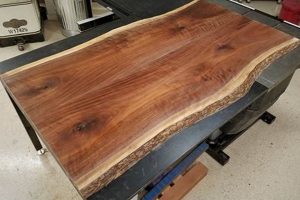
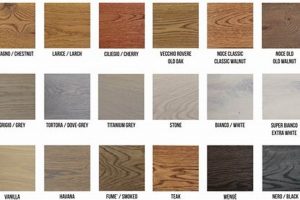
The most suitable protective coating applied to wooden surfaces intended for external use is paramount for longevity and aesthetic preservation. This coating shields the wood from detrimental environmental factors such as ultraviolet radiation, moisture, temperature fluctuations, and biological threats including fungi and insects. An example would be a marine-grade varnish applied to a wooden boat deck, protecting it from saltwater exposure and direct sunlight.
Selecting an appropriate protective layer is vital to prevent wood degradation, warping, cracking, and decay, thereby extending the lifespan of wooden structures and furniture. Historically, oils and natural resins were employed, while modern formulations offer enhanced durability and performance. The correct choice minimizes maintenance requirements, preserves the structural integrity, and enhances the visual appeal of outdoor wood projects.
The subsequent sections will delve into the various types of protective treatments available, detailing their respective properties, application techniques, and suitability for different wood species and environmental conditions. This will include an examination of oil-based, water-based, and hybrid products, as well as a consideration of factors such as UV resistance, water repellency, and ease of application.
Application Strategies for Exterior Wood Protection
The following recommendations provide guidance on achieving optimal results when applying protective coatings to outdoor wood surfaces. Adherence to these strategies enhances the lifespan and aesthetic quality of the treated wood.
Tip 1: Surface Preparation is Paramount: Thoroughly clean and sand the wood surface prior to application. Remove any existing coatings, dirt, or mildew. Proper preparation ensures optimal adhesion and prevents premature coating failure. For example, pressure washing followed by sanding with progressively finer grits is recommended for aged wood.
Tip 2: Select the Appropriate Product: Consider the wood species, climate, and desired aesthetic when selecting a protective coating. Different products offer varying degrees of UV protection, water repellency, and resistance to mildew. A high-solids alkyd formulation may be preferable for hardwoods in harsh climates, while a penetrating oil might suit softer woods in more moderate environments.
Tip 3: Apply Thin, Even Coats: Multiple thin coats are preferable to a single thick coat. Thin coats promote better penetration and drying, reducing the risk of blistering or cracking. Apply the product using a high-quality brush, roller, or sprayer, ensuring uniform coverage. For instance, brush strokes should follow the wood grain for a seamless finish.
Tip 4: Allow Adequate Drying Time: Adhere strictly to the manufacturer’s recommended drying times between coats and before exposing the treated wood to the elements. Insufficient drying can lead to adhesion problems and a compromised finish. Drying times may vary depending on temperature and humidity.
Tip 5: Consider Back-Priming: For exterior siding or decking, apply a coat of primer or finish to the back of the boards before installation. This helps to minimize moisture absorption and warping, extending the lifespan of the wood. Back-priming is especially important for woods that are prone to movement due to changes in moisture content.
Tip 6: Maintain the Finish Regularly: Inspect the coated wood surface periodically for signs of wear, such as fading, cracking, or peeling. Reapply a maintenance coat as needed to preserve the protective barrier. Regular maintenance is less costly than complete refinishing and helps to extend the life of the wood.
Tip 7: Proper Ventilation is Key: Ensure adequate ventilation during and after application. Many protective coatings contain volatile organic compounds (VOCs) that require proper ventilation to dissipate safely. Avoid applying coatings in enclosed spaces.
These application strategies contribute significantly to the long-term performance and aesthetic appeal of exterior wood finishes. Implementing these practices minimizes potential failures and maximizes the protective benefits of the chosen coating.
The subsequent section will address common problems encountered with exterior wood finishes and provide solutions for addressing them effectively.
1. UV Resistance

Ultraviolet (UV) radiation from sunlight represents a significant threat to wood surfaces exposed outdoors. Selecting a finish with robust UV resistance is therefore a critical determinant in achieving optimal long-term performance and maintaining the aesthetic integrity of exterior wood.
- Photodegradation Prevention
UV radiation causes photodegradation, a process where the lignin in wood breaks down, leading to surface discoloration, graying, and a loss of structural integrity. Finishes with UV absorbers or blockers mitigate this process by absorbing or reflecting harmful UV rays, thereby protecting the wood substrate. An example is the incorporation of hindered amine light stabilizers (HALS) into clear coatings to prevent degradation of the coating itself and the underlying wood.
- Color Retention and Stability
UV exposure fades and alters the pigments in many exterior wood finishes. Finishes with high UV resistance maintain their original color and appearance for longer periods, reducing the need for frequent re-application. Pigmented finishes, especially those containing iron oxide pigments, generally offer better UV protection than clear finishes due to the pigment’s ability to absorb UV radiation. This leads to finishes, that do not need to be touched as often.
- Finish Durability and Longevity
The breakdown of a finish due to UV radiation not only affects the aesthetic appearance but also compromises its protective properties, such as water repellency and resistance to abrasion. UV-resistant finishes maintain their structural integrity longer, providing continued protection against moisture, fungal growth, and physical damage. A UV-resistant coating on a deck, for instance, will better withstand foot traffic and weathering compared to one that degrades quickly.
- Reduced Maintenance Requirements
By effectively blocking UV radiation, finishes with high UV resistance extend the service life of the coating and the underlying wood. This translates to less frequent refinishing, lower maintenance costs, and a longer lifespan for exterior wood structures and furniture. The selection of a UV-resistant stain for a wooden fence, for example, can significantly reduce the need for annual re-staining, saving both time and resources.
The integration of UV-resistant properties into protective treatments directly influences the effectiveness of any option designed to protect wood in outdoor environments. Therefore, it is a necessary component in the consideration of selecting a treatment for wood that stands the test of time and the elements.
2. Water Repellency

Water repellency is a critical characteristic in protective wood coatings designed for outdoor use. Its presence directly influences the wood’s resistance to moisture-related damage, impacting structural integrity and aesthetic appeal.
- Minimizing Moisture Absorption
Water absorption by wood leads to swelling, warping, and cracking. Water-repellent finishes create a barrier that restricts water penetration, maintaining dimensional stability. A clear example is the application of a water-repellent sealant to a wooden deck, preventing rainwater from soaking into the wood fibers and causing expansion and contraction cycles.
- Preventing Fungal Decay
High moisture content promotes the growth of fungi and mold, resulting in wood rot and decay. Water-repellent coatings inhibit fungal growth by denying the necessary moisture for their survival. For instance, treating wooden fence posts with a preservative containing water-repellent additives can significantly extend their lifespan by preventing fungal attack.
- Reducing the Risk of Freeze-Thaw Damage
In cold climates, water absorbed into wood can freeze and expand, causing internal stress and structural damage. Water-repellent finishes minimize water absorption, reducing the likelihood of freeze-thaw damage. Consider a wooden window frame treated with a water-repellent stain, which protects the wood from cracking due to repeated freezing and thawing cycles.
- Enhancing Coating Durability
Excessive moisture can degrade and delaminate exterior wood coatings. Water repellency preserves the integrity of the finish itself, prolonging its protective lifespan. Applying a water-repellent topcoat to a painted wooden surface, for instance, prevents blistering and peeling of the paint film, thereby extending the overall durability of the coating system.
The role of water repellency cannot be overstated in the selection of the most suitable coating for outdoor wood. By mitigating the adverse effects of moisture, these finishes contribute significantly to the longevity, stability, and aesthetic preservation of exterior wood structures and components. Choosing a water repellent treatment is vital for increasing the lifespan of any wooden structure.
3. Flexibility

Flexibility in exterior wood coatings is a critical performance characteristic, particularly when considering the dynamic nature of wood exposed to environmental fluctuations. This trait enables the coating to withstand the continuous expansion and contraction cycles of wood without cracking or delaminating, thus preserving its protective properties.
- Accommodation of Wood Movement
Wood naturally expands when it absorbs moisture and contracts as it dries. A flexible coating stretches and compresses along with the wood, preventing the development of stress fractures. For instance, a deck finish that can accommodate the expansion and contraction of the wood during seasonal changes will last longer than a rigid finish that is prone to cracking.
- Resistance to Temperature-Induced Stress
Temperature variations also cause wood to expand and contract. A flexible coating maintains its integrity across a wide temperature range, preventing embrittlement and cracking in extreme conditions. A wooden window frame coated with a flexible paint is less likely to develop cracks around the joints as the temperature fluctuates between summer and winter.
- Prevention of Coating Failure
Rigid coatings are susceptible to cracking and peeling when applied to wood that undergoes dimensional changes. Flexibility in a finish ensures that it remains adhered to the wood surface, maintaining its protective barrier against moisture, UV radiation, and other environmental factors. A flexible stain on wooden siding will prevent moisture from penetrating behind the coating, which could lead to wood rot and structural damage.
- Enhanced Durability and Longevity
By resisting cracking and delamination, flexible coatings extend the service life of exterior wood finishes. This results in reduced maintenance requirements and lower long-term costs. A flexible varnish on a wooden boat will resist cracking and peeling caused by the constant flexing of the hull in response to wave action, ensuring the boat remains protected and seaworthy for longer periods.
The integration of flexibility into protective treatments directly influences their ability to withstand the rigors of outdoor exposure. The use of flexible oils ensures that the treatment lasts for extended periods of time and provides premium protection to wood. Therefore, it represents a crucial factor in the selection of any product intended to safeguard wood in external environments.
4. Durability

Durability, in the context of exterior wood coatings, signifies the finish’s capacity to withstand prolonged exposure to environmental stressors without significant degradation. A durable finish resists abrasion, impact, chemical exposure, and the effects of weather, maintaining its protective and aesthetic properties over an extended period. The selection of a durable option is crucial when seeking an optimal exterior wood finish due to the constant barrage of environmental factors that degrade less robust coatings. For instance, a durable marine varnish on a wooden handrail withstands saltwater spray and constant handling, resisting chipping and fading far longer than an interior-grade varnish.
The effects of compromised durability are multifaceted. Coatings that fail prematurely allow moisture penetration, leading to wood rot, fungal growth, and insect infestation. Furthermore, frequent reapplication of substandard finishes increases maintenance costs and labor. Conversely, a durable coating provides long-term protection, reduces maintenance frequency, and preserves the structural integrity of the wood. Consider a durable oil-based stain applied to a log cabin; its resistance to UV radiation and moisture prevents premature graying and decay, safeguarding the investment in the structure and extending its lifespan.
In conclusion, durability is not merely a desirable attribute but a fundamental requirement for any finish intended for exterior wood applications. It directly impacts the longevity, structural integrity, and maintenance costs associated with wooden structures and components. The selection of a durable finish is an economically prudent and environmentally responsible decision that ensures sustained performance and aesthetic appeal. Overlooking durability can result in rapid deterioration and significantly increased costs over the life of the wooden structure. Therefore, specifiers and consumers must prioritize durability when selecting the most suitable treatment for wood exposed to the elements.
5. Breathability
Breathability, in the context of exterior wood treatments, refers to the coating’s capacity to permit the passage of water vapor. This characteristic is significant because wood, being a hygroscopic material, naturally absorbs and releases moisture in response to environmental humidity. A breathable finish allows moisture vapor trapped within the wood to escape, preventing the build-up of internal pressure that can lead to blistering, cracking, and delamination of the coating. Conversely, a non-breathable finish traps moisture, fostering conditions conducive to wood rot and decay. An example illustrating the cause-and-effect relationship is observed in the use of oil-based stains on wood siding; these stains, typically formulated to be breathable, allow moisture from within the wall cavity to diffuse outwards, reducing the risk of moisture-related damage.
The importance of breathability is further underscored in regions with high humidity or significant temperature fluctuations. In such climates, the differential in vapor pressure between the inside and outside of the wood is often substantial, creating a driving force for moisture movement. A breathable finish minimizes moisture accumulation, thereby preserving the wood’s structural integrity and extending the lifespan of the coating. Practical application of this understanding involves selecting breathable finishes for wooden decks, which are exposed to both ground moisture and rainfall; these finishes permit the wood to dry out after being wetted, reducing the likelihood of fungal growth and decay. Conversely, using a non-breathable epoxy coating on a deck can trap moisture, leading to accelerated deterioration.
Understanding the practical significance of breathability challenges conventional wisdom that invariably favors completely impermeable coatings. While water repellency is a crucial attribute, it must be balanced with the need for breathability to allow moisture vapor to escape. Ignoring this balance can lead to more rapid deterioration than if no coating were applied at all. The selection of an optimal exterior wood finish, therefore, necessitates careful consideration of both water repellency and breathability, tailored to the specific environmental conditions and wood species. Achieving this balance presents an ongoing challenge, requiring continuous innovation in coating formulations and application techniques.
6. Ease of Application

Ease of application, while seemingly a practical consideration, significantly influences the efficacy and longevity of any exterior wood coating. The direct relationship between ease of application and overall performance stems from the increased likelihood of proper and consistent coverage. Coatings that are difficult to apply, whether due to complex mixing requirements, demanding surface preparation, or challenging application techniques, are more prone to human error. Inconsistent application leads to uneven protection, creating vulnerable points where environmental damage can initiate. For example, a two-part epoxy system requiring precise mixing ratios may fail prematurely if the components are not measured accurately, resulting in uncured or improperly cured areas that are susceptible to water intrusion and UV degradation.
The impact of ease of application extends beyond initial coverage. Coatings that are simple to apply are also more likely to receive timely maintenance. Property owners are more inclined to reapply or touch up a finish if the process is straightforward, ensuring continuous protection against weathering. Consider a penetrating oil finish that can be easily reapplied with minimal surface preparation. Its user-friendly nature encourages regular maintenance, preventing the wood from drying out and cracking. In contrast, a complex, multi-step finishing system may be neglected due to the time and effort involved, ultimately compromising the wood’s long-term preservation. This relationship highlights a critical distinction: the effectiveness of any exterior wood treatment is not solely determined by its inherent protective qualities but also by the likelihood of proper application and ongoing maintenance.
In summary, ease of application is an essential component in the selection of an optimal exterior wood finish. It directly impacts the consistency of coverage, the likelihood of timely maintenance, and ultimately, the long-term protection of the wood. Coatings that are difficult to apply are more prone to human error and neglect, negating their potential protective benefits. Therefore, specifiers and consumers should prioritize ease of application alongside other critical performance characteristics, such as UV resistance, water repellency, and durability, to ensure the sustained protection of exterior wood structures and components.
Frequently Asked Questions About Exterior Wood Finishes
The following questions and answers address common concerns regarding the selection and application of protective coatings for wood exposed to outdoor conditions. Understanding these factors is crucial for ensuring the longevity and aesthetic appeal of exterior wood structures.
Question 1: What is the primary purpose of an exterior wood finish?
The primary purpose is to protect wood from environmental factors such as ultraviolet radiation, moisture, temperature fluctuations, and biological attack from fungi and insects. The protective layer extends the lifespan of the wood and preserves its appearance.
Question 2: How does UV radiation damage wood, and how can it be prevented?
UV radiation degrades the lignin in wood, leading to discoloration, graying, and surface deterioration. The damage can be mitigated by using finishes containing UV absorbers or blockers. These compounds absorb or reflect harmful UV rays, protecting the wood substrate.
Question 3: Why is water repellency important in an exterior wood finish?
Water repellency minimizes moisture absorption, which can lead to swelling, warping, cracking, and fungal decay. Finishes with water-repellent properties create a barrier that restricts water penetration, maintaining dimensional stability and preventing biological attack.
Question 4: What is the significance of flexibility in an exterior wood coating?
Flexibility allows the coating to accommodate the natural expansion and contraction of wood due to changes in temperature and moisture content. The ability prevents the coating from cracking or delaminating, preserving its protective properties.
Question 5: How does breathability contribute to the performance of an exterior wood finish?
Breathability permits the passage of water vapor through the coating, allowing moisture trapped within the wood to escape. The characteristic prevents the build-up of internal pressure that can cause blistering, cracking, and delamination.
Question 6: What factors should be considered when choosing between oil-based and water-based exterior wood finishes?
Consider factors such as the wood species, climate, desired aesthetic, and environmental regulations. Oil-based finishes typically offer better penetration and durability, while water-based finishes are lower in VOCs and easier to clean up. Hybrid products combine the benefits of both.
Selecting the appropriate exterior wood finish requires careful consideration of these factors to ensure long-term protection and aesthetic appeal. Failure to address these concerns can result in premature coating failure and costly repairs.
The subsequent section will provide a comparison of specific product types and their suitability for various applications.
Conclusion
The preceding discussion underscores the multifaceted nature of selecting the best outdoor finish for wood. Factors such as UV resistance, water repellency, flexibility, durability, breathability, and ease of application each play a critical role in determining the long-term performance and aesthetic preservation of exterior wood surfaces. No single product universally excels in all categories; the optimal choice depends on the specific application, environmental conditions, and desired aesthetic.
The information presented serves as a foundation for informed decision-making. Continued research and adherence to industry best practices remain essential for maximizing the service life of exterior wood structures and components. The appropriate implementation of proven methodologies leads to significant economic and environmental benefits, contributing to the responsible stewardship of valuable resources.