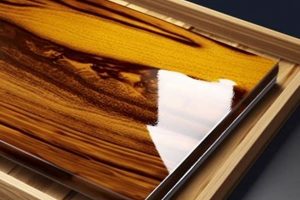
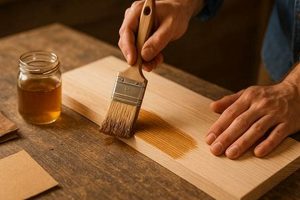
A product designed to add color to wood surfaces without concealing the grain, typically penetrating the wood pores rather than forming a surface film. For example, a furniture maker might apply a dark-colored formulation to accentuate the natural texture of oak.
The application of such products enhances the aesthetic appeal of wood by highlighting its inherent characteristics. Historically, these treatments have been utilized to emulate the appearance of more expensive wood species or to provide protection against ultraviolet light and moisture damage. These treatments offer an economical method of transforming the look of wooden objects and surfaces, from furniture to flooring.
The subsequent sections of this document will delve into the various types available, application techniques that yield optimal results, and considerations for selecting the appropriate product based on the specific wood species and desired aesthetic outcome.
Application Strategies
The following guidelines provide strategic recommendations for achieving a professional-quality result when using a coloring agent on wood. Adherence to these principles will contribute to a uniform and visually appealing outcome.
Tip 1: Surface Preparation is Paramount. Thoroughly sand the wood surface to a smooth, even texture using progressively finer grits of sandpaper. Remove all dust and debris prior to application to ensure proper penetration and adhesion.
Tip 2: Conduct a Test Application. Prior to treating the entire piece, apply the coloring agent to a discrete, inconspicuous area of the wood. This allows for assessment of the color and penetration rate and provides an opportunity to adjust the application technique if needed.
Tip 3: Apply Evenly with Proper Tools. Use a high-quality brush, foam applicator, or rag to apply the coloring agent in a consistent manner. Avoid applying excessive amounts, which can lead to blotching or uneven color distribution.
Tip 4: Control Penetration Time. Allow the coloring agent to penetrate the wood for the recommended time specified by the manufacturer. Wipe away excess with a clean cloth to achieve the desired color intensity.
Tip 5: Consider Wood Type. Different wood species absorb coloring agents differently. Porous woods like pine may require a pre-treatment with a wood conditioner to prevent uneven absorption, while dense hardwoods may require a longer penetration time.
Tip 6: Apply Multiple Coats Sparingly. If a deeper color is desired, apply multiple thin coats of the coloring agent, allowing each coat to dry completely before applying the next. This approach provides greater control over the final color intensity.
Tip 7: Ensure Proper Ventilation. Work in a well-ventilated area to minimize exposure to fumes from the coloring agent. Use appropriate respiratory protection if necessary.
By implementing these techniques, one can maximize the aesthetic potential of wood surfaces and achieve a professional, long-lasting result. Proper application techniques are essential for highlighting the natural beauty of the wood grain and ensuring a uniform and durable finish.
The subsequent section will discuss specific product selection criteria and maintenance procedures to prolong the life and beauty of treated wood surfaces.
1. Color Penetration
Color penetration is a crucial factor in determining the final aesthetic and protective qualities achieved with a wood treatment. It refers to the depth to which the coloring agents permeate the wood’s cellular structure. Incomplete or uneven penetration results in a blotchy or inconsistent appearance, detracting from the wood’s natural beauty. Conversely, optimal saturation yields a rich, uniform color that accentuates the grain pattern. For example, when staining a pine table, a pre-treatment with wood conditioner is often necessary to control absorption and ensure even saturation, preventing the appearance of dark, concentrated spots.
The degree of saturation is directly influenced by the product formulation, the wood species, and the application technique. Oil-based products generally penetrate deeper than water-based formulations due to their lower surface tension. Denser woods like maple resist product absorption compared to more porous varieties such as ash. The method of application, whether brushed, sprayed, or wiped, also significantly impacts saturation. For instance, a sprayed application, followed by immediate wiping, allows for controlled saturation and prevents pooling, minimizing the risk of unevenness.
Understanding the relationship between saturation and wood treatment is essential for achieving professional-quality results. Poor saturation leads to aesthetic flaws and compromised protection against environmental factors like moisture and ultraviolet radiation. Conversely, controlled saturation enhances the wood’s visual appeal and extends its longevity. Choosing the appropriate product and employing proper application techniques are critical for maximizing the benefits of a wood coloring agent.
2. Wood Species

The inherent characteristics of different wood species exert a significant influence on the final outcome of any wood finishing process. The species’ density, porosity, grain pattern, and natural color all interact with the coloring agent, dictating its absorption rate, color saturation, and overall aesthetic appeal.
- Density and Porosity
Wood density directly impacts how readily a wood species absorbs coloring agents. Denser hardwoods, such as maple and walnut, possess tighter cellular structures, limiting product penetration. This often necessitates longer application times or specialized products designed for hardwoods. In contrast, softer, more porous woods like pine and fir absorb quickly, requiring careful application to prevent over-saturation and blotching. A conditioner prior to application is often recommended for these softer woods.
- Grain Pattern
The grain pattern affects how the coloring agent accentuates the wood’s natural texture. Open-grained woods, like oak and ash, exhibit prominent pores that readily accept coloring, emphasizing the grain pattern. Closed-grained woods, such as cherry and birch, have finer, less visible pores, resulting in a smoother, more uniform color distribution. The desired aesthetic – whether to highlight or minimize the grain – dictates the appropriate wood species and application technique.
- Natural Color
The underlying color of the wood species will influence the final color achieved after application. A light-colored wood, such as maple, will accept the applied color with minimal alteration. However, a darker wood, such as mahogany, will impart its own undertones, potentially altering the intended color. Understanding the wood’s natural color is crucial for selecting a product that complements or neutralizes the existing hue to achieve the desired result.
- Resin Content
Certain wood species, particularly softwoods like pine, contain higher levels of resin. Resin can interfere with the product’s absorption, leading to uneven coloring and adhesion problems. Thoroughly cleaning the wood surface with a solvent to remove excess resin before application is essential for ensuring a consistent and durable finish. Knotty regions may also exhibit differential absorption due to concentrated resin deposits.
The selection of a particular wood species is therefore a fundamental decision that precedes the choice of the treatment itself. Understanding the inherent characteristics of each species and how they interact with the applied product is critical for achieving the desired color, texture, and durability in the final finish. The compatibility between the wood’s natural properties and the selected product will determine the long-term success and aesthetic appeal of the treated wood surface.
3. Application Technique

The method by which a coloring agent is applied to wood is not merely a procedural step, but a critical determinant of the final aesthetic outcome and longevity of the treatment. The chosen approach significantly impacts color uniformity, depth of penetration, and the overall visual appeal of the finished wood surface. Therefore, a thorough understanding of various application techniques is essential for achieving professional-quality results.
- Surface Preparation
Prior to the introduction of any product, meticulous surface preparation is paramount. This involves sanding to achieve a smooth, even texture, removing all dust and debris, and, in some cases, applying a wood conditioner. Failure to adequately prepare the surface will result in uneven absorption and compromised adhesion, leading to blotching and premature finish failure. For example, leaving sanding residue on the surface will prevent uniform penetration, creating a mottled appearance.
- Brush Application
Brush application, a traditional technique, offers a high degree of control, particularly for intricate surfaces and detailed work. The choice of brush materialnatural or syntheticis crucial. Natural bristles are best suited for oil-based products, while synthetic bristles are preferred for water-based formulations. Proper brush loading and even strokes are essential to prevent brush marks and ensure uniform distribution of the coloring agent. Overlapping strokes should be minimized to avoid creating darker areas.
- Wiping Application
Wiping applications are particularly effective for accentuating wood grain and achieving a consistent color tone. This technique involves applying a generous amount of the coloring agent and then wiping away the excess with a clean cloth. The wiping process removes surface residue, allowing the product to penetrate the wood pores more effectively. The type of cloth used is also significant; lint-free cloths are recommended to avoid leaving behind fibers that can compromise the finish.
- Spray Application
Spray application offers speed and efficiency, particularly for large surfaces. This technique requires specialized equipment, such as an airless sprayer or HVLP (High Volume Low Pressure) system. Proper spray gun settings and technique are critical to prevent runs, drips, and uneven coverage. Multiple thin coats are preferable to a single heavy coat, allowing for better control over color intensity and minimizing the risk of solvent entrapment. Moreover, consistent spray distance and overlapping passes are necessary to guarantee a uniform finish.
In conclusion, the selection of the appropriate application technique is inextricably linked to the desired aesthetic outcome and the long-term performance of the treated wood. The choice should be informed by the wood species, the product formulation, and the specific characteristics of the surface being treated. Each technique demands a particular skill set and attention to detail, underscoring the importance of proper training and experience for achieving professional-quality results in wood finishing.
4. Protective Qualities
The protective qualities inherent in a stain wood finish are integral to its long-term performance and preservation of the underlying material. A stain formulation, beyond simply adding color, functions as a barrier against various environmental stressors, thereby mitigating potential damage to the wood. Specifically, ultraviolet (UV) radiation from sunlight can degrade lignin, the polymer that provides rigidity to wood, leading to discoloration, cracking, and structural weakening. Pigments within a wood stain absorb and scatter UV light, reducing its penetration into the wood and slowing this degradation process. Additionally, moisture is a primary threat to wood, causing swelling, shrinking, and providing an environment conducive to fungal growth and decay. Certain stains incorporate water-repellent additives, such as waxes or oils, that reduce moisture absorption, thus minimizing dimensional changes and inhibiting microbial activity. For instance, the application of a semi-transparent stain with UV inhibitors to exterior cedar siding significantly reduces fading and warping compared to untreated siding.
Moreover, the binding agents in the stain, typically resins or polymers, form a protective film on the wood surface. This film provides a degree of resistance against abrasion, scratches, and everyday wear and tear. The durability of this protective layer depends on the type and quality of the resin used, as well as the application technique. For example, a stain formulated with polyurethane resins offers superior abrasion resistance compared to a stain containing only drying oils. In practice, this enhanced protection translates to reduced maintenance requirements and a longer lifespan for stained wooden objects, such as furniture or flooring. However, it’s important to recognize that the level of protection provided by a stain is generally less robust than that offered by a dedicated topcoat, such as varnish or lacquer. Therefore, in high-wear applications, a stain is often used as a colorant followed by a clear protective topcoat.
In summary, while the primary purpose of a stain is often aesthetic enhancement, its protective qualities are a critical and often overlooked aspect of its value. By mitigating the harmful effects of UV radiation, moisture, and physical abrasion, a quality stain prolongs the life and maintains the appearance of wood surfaces. The understanding of these protective mechanisms is fundamental to selecting the appropriate product for a specific application and ensuring its long-term effectiveness. Challenges remain in balancing the desired color, level of protection, and ease of application, leading to a wide variety of stain formulations tailored to different needs and environmental conditions.
5. Long-Term Maintenance

Sustaining the aesthetic appeal and protective capabilities of a wood surface treated with a coloring agent necessitates diligent long-term maintenance. The durability and longevity of the finish depend not only on the quality of the product and application technique but also on the implementation of regular maintenance practices. Neglecting these practices inevitably leads to deterioration, necessitating costly repairs or complete refinishing.
- Regular Cleaning Procedures
Routine cleaning is paramount to removing surface contaminants such as dust, dirt, and grime that can dull the finish and compromise its protective barrier. The frequency and intensity of cleaning should be tailored to the environment; exterior surfaces exposed to harsher conditions require more frequent attention. Gentle cleaning agents specifically designed for wood finishes are recommended to avoid damaging the stain layer. Harsh chemicals or abrasive cleaners should be strictly avoided. For example, a deck treated with a semi-transparent coloring agent should be swept regularly and washed with a mild detergent and water solution at least twice a year.
- Inspection for Damage and Wear
Periodic inspections should be conducted to identify early signs of damage or wear, such as scratches, cracks, or areas of fading or discoloration. Addressing these issues promptly prevents them from escalating into more significant problems. Damaged areas should be cleaned and touched up with a matching product to restore the finish’s integrity. For instance, small scratches on a stained wood table can be concealed with a touch-up marker designed for wood finishes. Failure to address minor damage can lead to moisture penetration and subsequent wood rot.
- Reapplication Schedule
The lifespan of a wood finish is finite, and periodic reapplication is necessary to maintain its protective qualities and aesthetic appeal. The frequency of reapplication depends on several factors, including the type of stain used, the level of exposure to environmental elements, and the amount of wear and tear the surface experiences. Exterior surfaces typically require more frequent reapplication than interior surfaces. As a general guideline, exterior wood surfaces treated with a semi-transparent coloring agent should be reapplied every two to three years, while interior surfaces may only require reapplication every five to ten years. Prior to reapplication, the surface should be thoroughly cleaned and lightly sanded to promote adhesion of the new finish.
- Environmental Considerations
The surrounding environment significantly impacts the maintenance requirements of a wood finish. Surfaces exposed to direct sunlight, extreme temperatures, or high humidity levels require more frequent maintenance than those in sheltered environments. Proper ventilation and drainage are essential to prevent moisture buildup, which can lead to fungal growth and wood rot. Furthermore, protecting the wood from physical damage, such as impact from objects or abrasion from foot traffic, is crucial to extending the life of the finish. For example, placing mats at entryways can reduce the amount of dirt and debris tracked onto stained wood floors, minimizing wear and tear.
These facets of long-term maintenance are critical to realizing the full potential of a wood coloring agent. Consistent application of these principles ensures that the treated surface remains aesthetically pleasing and functionally sound for years to come. Long-term savings on costly repairs and replacements can be directly attributed to a proactive approach to maintaining the protective layer applied.
Frequently Asked Questions
The following addresses common inquiries regarding coloring agents for wood, providing clarity on application, selection, and maintenance.
Question 1: How does the type of wood affect the outcome of a coloring agent application?
Different wood species possess varying densities and porosities, influencing product absorption. Softwoods, such as pine, absorb more readily than hardwoods like oak. Preparatory steps, such as the application of a wood conditioner, are often necessary to ensure even color distribution.
Question 2: What are the key differences between oil-based and water-based products?
Oil-based products generally offer deeper penetration and enhanced durability, but they emit stronger odors and require mineral spirits for cleanup. Water-based products are lower in odor, environmentally friendly, and cleaned with water; however, they may not penetrate as deeply and may raise the wood grain.
Question 3: How can one prevent blotching during application on porous wood species?
Blotching, or uneven color absorption, can be mitigated by applying a wood conditioner prior to staining. This sealer partially fills the wood pores, promoting a more uniform product absorption.
Question 4: Is it necessary to apply a topcoat after staining?
While not always mandatory, a topcoat provides an additional layer of protection against scratches, moisture, and UV damage. It enhances the finish’s durability, particularly for high-traffic surfaces. The selection of a topcoat should be compatible with the underlying coloring agent.
Question 5: How does one properly dispose of used applicators and cloths containing coloring agents?
Used applicators and cloths saturated with oil-based products pose a fire hazard due to spontaneous combustion. These materials should be placed in a sealed metal container filled with water and properly disposed of in accordance with local regulations. Water-based products can be safely rinsed down the drain with copious amounts of water.
Question 6: How often should a wood finish be reapplied to maintain its protective qualities?
The frequency of reapplication depends on factors such as the type of stain, the level of exposure to sunlight and moisture, and the amount of wear the surface endures. Exterior surfaces typically require reapplication every 2-3 years, while interior surfaces can last 5-10 years. Inspecting the finish annually for signs of wear is recommended.
Proper selection, application, and maintenance are crucial for achieving optimal results and prolonging the lifespan of a stained wood surface.
The subsequent section will delve into advanced techniques and specialized applications for wood finishing.
Conclusion
This document has provided a comprehensive examination of coloring agents for wood, encompassing product selection, application methodologies, protective characteristics, and long-term maintenance strategies. Key factors influencing the outcome, such as wood species, product type (oil-based vs. water-based), and application technique, were thoroughly addressed. Emphasis was placed on the importance of meticulous surface preparation, proper application methods, and regular maintenance to ensure the longevity and aesthetic appeal of treated wood surfaces.
The informed application of a “stain wood finish”, therefore, extends beyond mere aesthetic enhancement; it represents a commitment to preserving and protecting a valuable material. Continued adherence to best practices and a thorough understanding of the principles outlined herein will maximize the benefits derived from these wood treatments, ensuring both enduring beauty and structural integrity.
![Buy Quality Finished Shelf Wood - [Your Brand] | Best Final Touch: Elevate Your Projects with Professional Finishing](https://bestfinaltouch.com/wp-content/uploads/2026/05/th-447-300x200.jpg "Buy Quality Finished Shelf Wood - [Your Brand] Best Final Touch: Elevate Your Projects with Professional Finishing")
![Buy Premium Walnut Finished Wood [Deals Inside] | Best Final Touch: Elevate Your Projects with Professional Finishing](https://bestfinaltouch.com/wp-content/uploads/2026/05/th-405-300x200.jpg "Buy Premium Walnut Finished Wood [Deals Inside] Best Final Touch: Elevate Your Projects with Professional Finishing")