The selection of an appropriate protective coating for wooden surfaces intended for food preparation and general use is critical. This choice directly impacts the surface’s longevity, resistance to moisture and staining, and overall aesthetic appeal. An effective coating will safeguard the wood from daily wear and tear, preserving its structural integrity and appearance.
Proper surface treatment extends the life of wooden installations in kitchens and other areas prone to spills and frequent cleaning. A well-protected surface resists water damage, prevents the growth of bacteria, and simplifies maintenance. Historically, various oils and waxes have been used for this purpose, but modern formulations offer enhanced durability and ease of application.
The following sections will explore different options for surface treatments, detailing their specific properties, advantages, disadvantages, and suitability for various types of wood and usage scenarios. The information will enable informed decisions regarding surface protection, balancing practical needs with aesthetic preferences.
Surface Protection Guidelines for Wooden Counters
These guidelines offer considerations for achieving optimal protection for wooden counters, maximizing their lifespan and preserving their aesthetic qualities.
Tip 1: Prioritize Food-Safe Formulations: When selecting a protective layer, ensure the product is certified as food-safe after curing. This certification indicates that the finish will not leach harmful chemicals into food prepared on the surface.
Tip 2: Evaluate Water Resistance: Wooden counters are susceptible to water damage. A protective layer should possess robust water resistance to prevent warping, staining, and the development of mold or mildew.
Tip 3: Consider the Wood Species: Different wood species possess varying levels of density and porosity. The selected finish should be compatible with the specific wood type to ensure proper adhesion and penetration.
Tip 4: Test Before Application: Prior to applying any finish to the entire surface, test a small, inconspicuous area. This allows for assessment of the finish’s appearance and compatibility with the wood.
Tip 5: Apply Multiple Coats: Multiple thin coats of finish generally provide better protection than a single thick coat. This layering technique enhances durability and resistance to scratches and abrasions.
Tip 6: Maintain Regular Cleaning: Implement a regular cleaning schedule using mild, non-abrasive cleaners. Avoid harsh chemicals that can damage the protective layer.
Tip 7: Re-application Schedule: Regularly inspect the counter’s surface for signs of wear or damage. Re-application of the finish is necessary to maintain optimal protection, the frequency of which depends on usage and the specific product employed.
Implementing these guidelines will significantly extend the service life of wooden counters and maintain their aesthetic appeal, while adhering to safety standards.
The subsequent sections will delve into a comparative analysis of various finishing options, offering detailed information to guide selection.
1. Durability

The longevity of a wood countertop is inextricably linked to the durability of its protective surface. A surface treatment’s ability to withstand daily use, resist scratches and abrasions, and maintain its integrity under varying environmental conditions directly influences the countertop’s lifespan and aesthetic appeal. Inadequate durability leads to premature wear, necessitating frequent repairs or eventual replacement, thus increasing long-term costs.
For example, a countertop treated with a low-durability oil finish may require monthly reapplication to maintain its protective properties, whereas a more durable polyurethane finish could provide years of protection with minimal upkeep. Countertops in high-traffic areas or those exposed to frequent use of sharp objects benefit significantly from surfaces with enhanced scratch resistance. Restaurants and commercial kitchens, where countertops endure rigorous activity, invariably choose highly durable options to minimize downtime for maintenance and replacement.
Ultimately, selecting a surface with appropriate durability is paramount for ensuring the lasting value of a wood countertop. This consideration must balance the initial cost of the surface with its projected lifespan and maintenance requirements, leading to the selection of an option that provides optimal protection and aesthetic preservation over the long term.
2. Food Safety

The direct contact between wooden surfaces and foodstuffs necessitates stringent adherence to food safety standards. A wood countertop’s protective finish plays a critical role in preventing bacterial contamination and ensuring the hygienic preparation of meals. Certain surface treatments are inherently porous or contain volatile organic compounds (VOCs) that can leach into food, posing potential health risks. Therefore, the selection of a finish certified as food-safe is paramount.
Unsuitable finishes can harbor bacteria within the wood’s grain, leading to cross-contamination. Examples include improperly cured varnishes or oil-based treatments not designed for food contact. Conversely, finishes like polymerized tung oil, certain water-based polyurethanes, and specific waxes, when fully cured, create a barrier that resists bacterial growth and prevents the transfer of harmful substances. For instance, a butcher block countertop finished with unapproved oil may promote bacterial colonization, while a properly sealed surface with a food-grade finish inhibits such growth. Regular cleaning with appropriate sanitizing agents further mitigates risks.
Prioritizing food safety in the selection of a wood countertop finish safeguards public health and minimizes potential liability. The practical implication is a reduction in foodborne illnesses and enhanced consumer confidence. While aesthetic preferences and durability are important considerations, food safety remains the non-negotiable cornerstone in achieving an optimal balance of functionality and hygiene. Continued research and development in food-safe surface treatments are essential to advancing the safety and sustainability of wooden kitchen surfaces.
3. Water Resistance
Water resistance is a critical attribute of any protective coating applied to wooden countertops. In the kitchen environment, wooden surfaces are routinely exposed to moisture, spills, and high humidity levels. The effectiveness of a finish in repelling water directly influences the countertop’s longevity, structural integrity, and resistance to microbial growth.
- Prevention of Warping and Swelling
Water absorption causes wood to swell and contract, potentially leading to warping, cracking, and joint failure. A highly water-resistant finish minimizes moisture penetration, maintaining the wood’s dimensional stability. For example, film-forming finishes like epoxy resins create a nearly impermeable barrier, preventing water from reaching the wood fibers and significantly reducing the risk of warping, particularly in high-humidity environments.
- Inhibition of Mold and Mildew Growth
Damp wood provides an ideal environment for mold and mildew proliferation. These microorganisms can compromise the structural integrity of the wood and pose health hazards. Water-resistant finishes, particularly those with antimicrobial additives, prevent moisture accumulation, thereby inhibiting fungal growth. A countertop with a properly applied waterproof finish is far less susceptible to mold and mildew compared to one treated with a simple oil finish.
- Resistance to Staining and Discoloration
Water can carry staining agents, such as coffee, wine, and food dyes, which can permanently discolor unprotected wood. A water-resistant finish creates a barrier that prevents these substances from penetrating the wood’s surface. A countertop finished with a water-resistant polyurethane coating will resist staining from spills, whereas an unfinished or poorly sealed surface will readily absorb stains, requiring extensive cleaning or refinishing.
- Protection Against Glue Line Failure
Many wood countertops are constructed from multiple boards joined together with glue. Prolonged exposure to moisture can weaken these glue lines, leading to separation and structural failure. Water-resistant finishes protect these joints by preventing water from reaching and degrading the adhesive. A properly sealed butcher block countertop, for instance, maintains its structural integrity far longer than an unsealed one, particularly in areas around the sink.
The level of water resistance required for a wooden countertop finish depends on the specific wood species, the intended use, and the environmental conditions. However, regardless of these factors, prioritizing water resistance is essential for preserving the beauty and functionality of wooden countertops, contributing significantly to their long-term performance and aesthetic appeal. Comparing different types of finishes in terms of water resistance allows one to make informed decisions based on expected use and environment.
4. Ease of application

The practicability of a protective coating for wooden countertops is significantly influenced by its ease of application. The complexity involved in the application process affects labor costs, time expenditure, and the potential for user error, ultimately impacting the overall feasibility and long-term maintenance of the countertop.
- Viscosity and Spreadability
The viscosity of a finish determines its spreadability and leveling characteristics. Low-viscosity finishes, such as some penetrating oils, are easily applied with a simple cloth or brush, requiring minimal skill. High-viscosity finishes, like certain epoxy resins, demand precise mixing and application techniques to avoid air bubbles and uneven coating. The choice depends on the user’s experience and available tools.
- Drying Time and Curing Process
The duration required for a finish to dry and fully cure is a crucial factor. Fast-drying finishes, like water-based acrylics, allow for multiple coats to be applied within a single day, reducing project completion time. Slow-curing finishes, such as some oil-based polyurethanes, require extended periods between coats and can prolong the disruption of kitchen use. Environmental conditions, like humidity and temperature, can also affect drying times.
- Surface Preparation Requirements
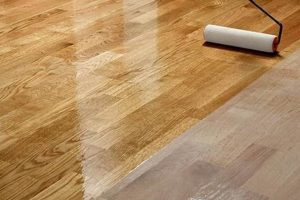
The degree of surface preparation necessary before applying a finish impacts the overall labor involved. Some finishes, like penetrating oils, require minimal sanding and cleaning, while others, like film-forming varnishes, demand extensive sanding to create a smooth, even surface for proper adhesion. Inadequate preparation can lead to finish failure, necessitating complete removal and reapplication.
- Tooling and Equipment Needs
Certain finishes necessitate specialized tools and equipment for proper application. Simple finishes, such as waxes, can be applied with readily available materials, while others, like spray-applied lacquers, require professional-grade spray guns and ventilation systems. The cost and availability of these tools must be considered when evaluating the overall feasibility of a particular surface treatment.
In summary, the ease of application is an integral aspect in the selection of a protective finish for wooden countertops. Balancing the desired performance characteristics with the practicalities of application ensures both a durable and aesthetically pleasing result, while also minimizing costs and labor.
5. Maintenance
The long-term performance and aesthetic appeal of a wooden countertop are intrinsically linked to the maintenance regimen it receives. The selection of an appropriate surface treatment directly dictates the required maintenance procedures, influencing both the frequency and complexity of upkeep. Failure to adhere to proper maintenance protocols can negate the benefits of even the most robust surface, leading to premature degradation and necessitating costly repairs or replacement.
Different protective surfaces necessitate varying maintenance strategies. For instance, countertops finished with penetrating oils, such as mineral oil or tung oil, require regular reapplication to replenish the protective barrier and prevent the wood from drying out. This often involves monthly or quarterly applications, depending on usage and environmental conditions. In contrast, film-forming finishes like polyurethane or epoxy, while offering superior durability, may necessitate less frequent attention, primarily consisting of cleaning with mild detergents and occasional scratch repair. Ignoring the reapplication schedule for oil finishes leads to wood cracking and staining, while neglecting regular cleaning of polyurethane surfaces results in the accumulation of grime and diminished luster.
In conclusion, an understanding of maintenance requirements is paramount in selecting an appropriate surface for a wooden countertop. The “best finish” is not solely defined by its initial characteristics but also by its compatibility with the anticipated level of care. Balancing the desired aesthetic, durability, and ease of maintenance ensures the longevity and sustained beauty of the wooden surface. The practical implication is that a lower-cost finish requiring more frequent maintenance may ultimately prove more expensive than a higher-cost, low-maintenance alternative, when factoring in the long-term costs of materials and labor.
6. Aesthetics
Aesthetic considerations are integral when determining the optimal surface for wooden countertops. The chosen finish significantly influences the wood’s visual characteristics, including its color, grain definition, and sheen. The desired aesthetic outcome directly impacts the perceived value and integration of the countertop within the overall design scheme. A finish that enhances the wood’s natural beauty aligns with the broader design objectives, while an unsuitable finish detracts from the countertop’s visual appeal, regardless of its functional attributes. For example, a dark stain applied to a naturally light wood can either create a striking contrast or an incongruous appearance, depending on the surrounding dcor. Similarly, a high-gloss finish can accentuate the wood’s texture or appear overly artificial, depending on the light and viewing angle.
The selection process necessitates careful evaluation of various finish options, considering factors such as the wood species, the desired level of gloss, and the presence of any colorants or pigments. Film-forming finishes, such as varnishes and lacquers, offer a wide range of sheen levels and color options, allowing for precise control over the final aesthetic. Penetrating oils, on the other hand, typically enhance the wood’s natural color and grain, providing a more subtle and organic aesthetic. In practical applications, the choice might depend on the desired style; modern kitchens often utilize sleek, high-gloss finishes, while rustic kitchens favor matte, natural-looking surfaces. Careful consideration should also be given to how the finish will age over time, as some finishes can yellow or fade with prolonged exposure to sunlight.
Ultimately, the “best finish” from an aesthetic perspective balances visual appeal with functional performance. A finish that enhances the wood’s natural beauty while providing adequate protection and durability represents an optimal choice. While objective measures of durability and food safety remain paramount, the subjective element of aesthetic preference cannot be disregarded. Successfully integrating aesthetic considerations into the selection process ensures that the wooden countertop serves not only as a functional work surface but also as a visually appealing element within the overall design, contributing to the kitchen’s or workspace’s aesthetic value. Therefore, one must aim to harmonize appearance with practicality.
7. Cost

The determination of a surface treatment requires a thorough evaluation of associated costs, encompassing initial material expenditures, labor expenses, and projected maintenance requirements over the countertop’s lifespan. While a lower initial price point may appear attractive, it is essential to consider the potential for increased long-term costs arising from frequent reapplication, specialized cleaning products, or premature surface degradation. For instance, penetrating oil finishes often present a lower upfront investment compared to film-forming polymers such as epoxy or polyurethane. However, the necessity for periodic reapplication of oil-based finishes, often at intervals of several months, results in recurring material and labor expenses, potentially exceeding the total cost associated with a more durable, albeit initially pricier, alternative. Real-world examples include commercial establishments where the labor costs associated with frequent re-oiling outweigh the economic benefits of the cheaper material. An informed decision necessitates a holistic cost analysis encompassing all stages of the countertop’s service life.
A crucial consideration within the cost framework is the potential for hidden expenses related to surface preparation and application. Certain protective layers necessitate extensive sanding, leveling, and specialized application techniques, adding to the overall project budget. For instance, achieving a flawless finish with a catalyzed lacquer requires professional-grade spraying equipment and a controlled environment, necessitating the engagement of skilled technicians. DIY applications, while ostensibly cost-saving, carry the risk of suboptimal results, potentially leading to the need for professional intervention and rectification, thus increasing the overall expense. Surface treatments that offer straightforward application protocols and require minimal preparation can represent a cost-effective alternative, particularly for smaller-scale projects or situations where DIY capabilities are preferred.
In summation, the economic implications are not merely confined to the initial purchase price of the chosen treatment. Instead, a comprehensive cost-benefit analysis encompassing material costs, labor expenses, application requirements, and projected maintenance demands is essential for effective decision-making. This approach allows for an informed determination of the “best finish,” balancing economic constraints with the desired performance characteristics and long-term aesthetic preservation of the wooden countertop. Ultimately, the optimal choice maximizes value within the available budgetary framework, ensuring both initial affordability and sustained cost-effectiveness throughout the countertop’s operational life.
Frequently Asked Questions
This section addresses common inquiries regarding the selection, application, and maintenance of surface treatments for wooden countertops. The information provided aims to clarify misconceptions and offer practical guidance for informed decision-making.
Question 1: What constitutes a “food-safe” surface for food preparation areas?
A surface is deemed food-safe when it has been tested and certified to not leach harmful chemicals into food prepared on it. Certifications from recognized organizations provide assurance that the surface meets established safety standards. The presence of such certification should be a primary consideration when selecting a finish.
Question 2: How frequently should an oil-based finish be reapplied to a wooden countertop?
The reapplication frequency for oil-based finishes varies depending on usage, environmental conditions, and the specific product employed. Countertops subjected to frequent use or located in high-humidity environments typically require more frequent reapplication. Visual inspection for dryness or water absorption provides an indication of when reapplication is necessary, generally ranging from monthly to quarterly.
Question 3: What are the potential consequences of using a non-water-resistant finish on a wooden countertop?
The use of a non-water-resistant finish can lead to water absorption, causing warping, swelling, and cracking of the wood. Prolonged exposure to moisture also promotes the growth of mold and mildew, potentially compromising the structural integrity and hygiene of the countertop.
Question 4: Can a damaged surface be repaired, or is complete refinishing always necessary?
The feasibility of repairing a damaged surface depends on the extent of the damage and the type of finish applied. Minor scratches and blemishes can often be repaired with spot treatments, while more extensive damage may necessitate complete refinishing to ensure a uniform and durable surface.
Question 5: What is the impact of finish selection on the long-term maintenance requirements?
The selected finish directly influences the maintenance regimen. Film-forming finishes generally require less frequent maintenance compared to penetrating oils, but may necessitate specialized cleaning products. Understanding these differences is critical for developing a sustainable maintenance plan.
Question 6: Are there environmentally friendly options available for wooden countertop finishes?
Yes, various environmentally friendly options exist, including water-based finishes, natural oils, and waxes. These finishes typically contain lower levels of VOCs and are derived from sustainable sources, minimizing their environmental impact.
The answers to these questions highlight the importance of careful planning and research in selecting a suitable surface. Prioritizing food safety, water resistance, and ease of maintenance will contribute to the longevity and functionality of wooden countertops.
The following section will delve into specific product recommendations, offering detailed information to guide the selection process.
Determining the Optimal Surface Treatment for Wooden Countertops
The preceding analysis underscores the multifaceted nature of selecting the most appropriate surface for wooden countertops. Factors such as durability, food safety, water resistance, ease of application, maintenance requirements, aesthetics, and cost each exert a significant influence on the ultimate suitability of a given treatment. A comprehensive evaluation, weighing these competing priorities, is essential to achieving a balanced outcome.
The long-term performance and utility of wooden countertops depend on informed decision-making. Continued research and development in surface technologies will likely yield further advancements in protective coatings. Prudent selection and consistent maintenance practices will ensure the lasting value and aesthetic appeal of wooden countertops in diverse settings. Individuals are encouraged to consult with experienced professionals to tailor surface treatment solutions to their unique requirements and circumstances, securing a high-quality, durable, and safe countertop surface.