![Top Coat: Best Finish for Mahogany Wood [Guide]](data:image/svg+xml;base64,PHN2ZyB4bWxucz0iaHR0cDovL3d3dy53My5vcmcvMjAwMC9zdmciIHdpZHRoPSI0NzQiIGhlaWdodD0iNjUiIHZpZXdCb3g9IjAgMCA0NzQgNjUiPjxyZWN0IHdpZHRoPSIxMDAlIiBoZWlnaHQ9IjEwMCUiIHN0eWxlPSJmaWxsOiNjZmQ0ZGI7ZmlsbC1vcGFjaXR5OiAwLjE7Ii8+PC9zdmc+ "Top Coat: Best Finish for Mahogany Wood [Guide] Best Final Touch: Elevate Your Projects with Professional Finishing")
The optimal coating applied to mahogany, a prized hardwood, significantly impacts its aesthetic appeal and longevity. This protective layer enhances the wood’s natural grain, provides resistance against environmental factors such as moisture and ultraviolet radiation, and contributes to the overall durability of the finished piece. For example, a carefully selected varnish can accentuate the deep reddish-brown hues of mahogany while simultaneously shielding it from scratches and water damage.
Selection of an appropriate surface treatment is crucial for preserving the intrinsic beauty and value of mahogany. A well-chosen sealant not only safeguards against potential degradation but also elevates the wood’s inherent elegance, thereby maximizing its potential for creating heirloom-quality furniture and architectural details. Historically, careful surface preparation and treatment have been essential in maintaining the rich character of mahogany in both domestic and commercial applications, demonstrating the ongoing importance of this process.
Understanding the properties of different sealants and their suitability for mahogany is essential for achieving the desired outcome. Subsequent sections will delve into a comparison of various coating types, examining their application techniques, levels of protection, and final visual impact, ultimately guiding the reader toward selecting the most appropriate option for their specific mahogany project.
Expert Advice for Mahogany Surface Treatment
Achieving a superior outcome when working with mahogany necessitates careful attention to detail and the application of proven techniques. The following guidelines provide valuable insights for enhancing the beauty and longevity of mahogany through proper surface preparation and finishing.
Tip 1: Proper Surface Preparation is Paramount: Mahogany’s close grain structure requires thorough sanding prior to any coating application. Start with a coarser grit sandpaper (e.g., 120-grit) to remove imperfections, gradually progressing to finer grits (e.g., 220-grit or higher) to achieve a smooth, uniform surface. This ensures optimal adhesion and a flawless final appearance.
Tip 2: Grain Filling Enhances Smoothness: Open-pore mahogany may benefit from the application of a grain filler. This fills the pores, creating a level surface that results in a smoother, glass-like finish. Select a grain filler compatible with the intended topcoat and apply according to the manufacturer’s instructions.
Tip 3: Consider the Color Enhancement of Oil-Based Finishes: Oil-based finishes, such as tung oil or linseed oil, impart a warm, rich tone to mahogany, accentuating its natural reddish-brown hues. However, they may require multiple coats and longer drying times compared to other options. Evaluate this characteristic based on the desired aesthetic and project timeline.
Tip 4: Varnish Offers Superior Protection: Varnish provides a durable, protective barrier against moisture, scratches, and UV radiation. Choose a high-quality varnish formulated for wood and apply thin, even coats, allowing each coat to dry completely before lightly sanding and applying the next.
Tip 5: Lacquer Provides a Fast-Drying, Durable Finish: Lacquer offers a quick-drying alternative with excellent durability. It is typically applied with a spray gun, which allows for a smooth, even coat. However, proper ventilation and safety precautions are essential when working with lacquer due to its solvent content.
Tip 6: Test Finishes on a Hidden Area: Before applying any coating to the entire piece, test it on a small, inconspicuous area to ensure compatibility and achieve the desired color and sheen. This prevents potential issues and ensures satisfaction with the final outcome.
Tip 7: Allow Adequate Drying Time Between Coats: Proper drying time is crucial for achieving a durable, long-lasting finish. Adhere to the manufacturer’s recommended drying times between coats and avoid rushing the process. Insufficient drying can lead to adhesion problems and a compromised finish.
Following these guidelines can significantly enhance the beauty and longevity of mahogany. The application of appropriate techniques and high-quality materials will result in a surface treatment that both protects and elevates the wood’s inherent elegance.
The subsequent conclusion will summarize the key considerations and offer final recommendations for achieving optimal results with mahogany surface treatments.
1. Protection against elements

The capacity of a coating to defend against environmental stressors is a critical determinant in selecting the most suitable treatment for mahogany wood. Effective protection safeguards the wood’s structural integrity and aesthetic qualities, prolonging its lifespan and preserving its value.
- Ultraviolet Radiation Resistance
Exposure to ultraviolet (UV) radiation causes fading, discoloration, and degradation of wood surfaces. Coatings formulated with UV absorbers or inhibitors mitigate these effects by blocking or attenuating harmful rays. Spar varnishes, often used in marine applications, exemplify finishes designed for exceptional UV resistance, making them suitable for mahogany exposed to direct sunlight. This aspect is crucial for preserving the rich color and preventing premature aging of the wood.
- Moisture Barrier Properties
Moisture penetration leads to swelling, warping, cracking, and fungal growth within wood. Sealants with strong water-repellent characteristics create a barrier that prevents moisture absorption. Polyurethane coatings, known for their exceptional moisture resistance, are frequently employed on mahogany furniture and cabinetry to protect against humidity and spills. The ability to effectively block moisture is essential in maintaining the dimensional stability and preventing structural damage to mahogany.
- Resistance to Temperature Fluctuations
Repeated expansion and contraction due to temperature variations induce stress within wood, leading to surface cracks and finish delamination. Finishes with high elasticity and flexibility can accommodate these movements, preventing premature failure. Oil-based finishes, such as tung oil, penetrate the wood and provide some flexibility, allowing the wood to expand and contract without causing the finish to crack. Selecting a finish that can withstand temperature fluctuations is particularly important for mahogany used in exterior applications.
- Protection Against Physical Damage
Scratches, abrasions, and impacts can compromise the surface and expose the wood to further damage. Durable coatings provide a protective layer that resists these types of physical stresses. Conversion varnishes and catalyzed lacquers offer enhanced scratch and abrasion resistance compared to softer finishes. Choosing a finish with appropriate hardness and durability is vital for preserving the aesthetic appeal and structural integrity of mahogany in high-traffic areas or applications subject to frequent use.
The effectiveness of these protective measures directly influences the long-term preservation of mahogany. Selecting a treatment that addresses the specific environmental challenges posed by the intended application ensures that the wood remains beautiful and structurally sound for many years. Understanding the interplay between environmental factors and coating properties is fundamental to making an informed decision.
2. Aesthetic enhancement achieved

The visual appeal of mahogany is a significant factor in its selection for fine furniture, cabinetry, and architectural details. The surface treatment chosen directly impacts the wood’s inherent beauty, either accentuating or detracting from its natural characteristics. Thus, achieving optimal aesthetic enhancement is paramount when selecting the most suitable surface treatment.
- Color Enrichment and Tone
Certain treatments enhance the wood’s natural color, deepening the reddish-brown hues characteristic of mahogany. Oil-based finishes, such as tung oil, penetrate the wood fibers, creating a warm, rich tone that accentuates the grain pattern. Conversely, some water-based treatments may result in a cooler, more neutral tone. The choice depends on the desired visual effect, with careful consideration given to how the finish complements the wood’s inherent color.
- Grain Definition and Clarity
The application of a clear finish can enhance the visibility and clarity of the mahogany’s grain. Treatments that penetrate the wood and harden, such as varnish or lacquer, create a smooth, transparent surface that allows the grain pattern to be fully appreciated. Conversely, opaque finishes obscure the grain, diminishing the wood’s natural beauty. The selection of a finish that highlights the grain is crucial for showcasing the wood’s unique character.
- Sheen Level and Light Reflectance
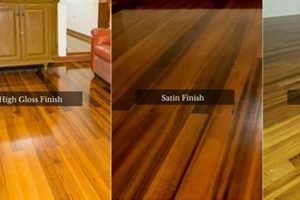
The sheen level of a treatment influences how light interacts with the surface, impacting the overall visual perception. Gloss finishes reflect more light, creating a shiny appearance that can highlight details and imperfections. Matte or satin finishes diffuse light, resulting in a softer, more subdued look. The optimal sheen level depends on the desired aesthetic and the intended use of the mahogany piece. A low-sheen finish may be preferred for furniture in a well-lit room to minimize glare, while a gloss finish may be chosen to accentuate decorative elements.
- Surface Texture and Smoothness
The smoothness of the treated surface contributes significantly to its tactile and visual appeal. Properly applied finishes create a seamless, uniform surface that is pleasing to the touch. Grain fillers are often used to fill the pores of mahogany, creating a perfectly smooth base for subsequent coatings. The achievement of a smooth, even texture is essential for creating a refined and luxurious appearance.
These factors collectively determine the aesthetic enhancement achieved through surface treatment. Selecting a finish that effectively addresses these elements is critical for maximizing the beauty and value of mahogany wood. The chosen treatment should complement the wood’s natural characteristics, enhance its visual appeal, and create a lasting impression of quality and craftsmanship. Ultimately, the optimal finish elevates the inherent elegance of the wood.
3. Application method

The method employed to apply a surface treatment significantly influences the final quality and performance on mahogany wood. The selection of an appropriate application technique is as critical as the type of finish chosen, as it directly affects the coating’s adhesion, uniformity, and overall protective capabilities.
- Spraying Techniques (HVLP, Airless)
Spraying, using High Volume Low Pressure (HVLP) or airless sprayers, enables the consistent application of thin, even coats, particularly advantageous for lacquer and varnish. HVLP systems minimize overspray, reducing waste and promoting a smoother finish, essential for highlighting mahogany’s grain without obscuring it. Airless sprayers, while efficient for larger surfaces, demand skilled operation to prevent uneven application and potential runs, which could detract from the aesthetic appeal. The choice between these methods depends on project size, finish viscosity, and the operator’s expertise.
- Brushing Methods (Natural vs. Synthetic Bristles)
Brushing remains a viable option, particularly for oil-based finishes and smaller projects. Natural bristle brushes are typically favored for oil-based treatments due to their ability to distribute the finish evenly and minimize brush marks. Synthetic brushes are better suited for water-based coatings, as they do not absorb water and swell like natural bristles. Proper brush loading and application technique are vital to avoid uneven coverage and visible brushstrokes, which can compromise the desired aesthetic of the mahogany.
- Wiping Techniques (Cloth Application)
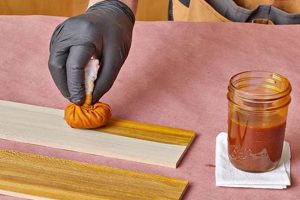
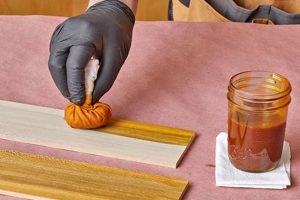
Wiping is suitable for applying penetrating oils and stains, allowing for controlled color saturation and even distribution. This method involves applying a thin layer of finish with a cloth and then wiping away any excess, preventing buildup and promoting a natural look. The choice of cloth material is important; lint-free cloths are essential to avoid leaving fibers embedded in the finish. Proper wiping technique ensures that the finish penetrates the wood evenly, enhancing the grain without creating a thick, glossy layer.
- Surface Preparation and Inter-Coat Sanding
Regardless of the application method, proper surface preparation is paramount. Mahogany must be thoroughly sanded to create a smooth, uniform surface that promotes optimal adhesion. Inter-coat sanding, using fine-grit sandpaper between coats, removes imperfections and ensures a smooth, level finish. This step is crucial for achieving a professional-quality result and maximizing the protective capabilities of the surface treatment. Neglecting surface preparation or inter-coat sanding can lead to adhesion problems, uneven coverage, and a compromised final appearance.
The selected application method directly impacts the final appearance and durability of the treatment on mahogany. Each technique presents its advantages and disadvantages, necessitating careful consideration of the finish type, project size, and the operator’s skill level. Mastery of the chosen application method is essential for unlocking the inherent beauty of mahogany and ensuring its long-term protection.
4. Durability and longevity

The correlation between a coatings inherent resilience and the prolonged preservation of mahogany’s structural and aesthetic integrity forms a cornerstone in the selection of an optimal surface treatment. The long-term value and functionality of mahogany depend significantly on the finish’s capacity to withstand environmental stressors and physical wear.
- Resistance to Abrasion and Impact
Coatings designed for durability exhibit a high resistance to scratches, abrasions, and impacts, mitigating the risk of surface damage that can compromise the wood’s appearance and structural integrity. Polyurethane and conversion varnishes are examples of finishes that provide a robust protective layer, ideal for mahogany furniture subjected to frequent use. The selection of a finish with superior abrasion resistance is particularly important for high-traffic areas or pieces exposed to potential physical damage.
- Chemical Resistance and Cleanability
Coatings with resistance to household chemicals, solvents, and staining agents contribute significantly to longevity by preventing irreversible damage and facilitating easy maintenance. Finishes formulated with cross-linking polymers, such as catalyzed lacquers, offer enhanced chemical resistance, making them suitable for kitchen cabinetry and dining tables. Easy cleanability ensures that spills and stains can be removed without damaging the surface, preserving the finish’s appearance over time.
- Flexibility and Crack Resistance
Coatings with sufficient flexibility can accommodate the natural expansion and contraction of wood due to temperature and humidity fluctuations, preventing the development of cracks and delamination. Oil-based finishes, such as tung oil and linseed oil, penetrate the wood and provide some flexibility, allowing it to move without stressing the finish. Selecting a finish with adequate flexibility is crucial for mahogany used in environments with varying climate conditions.
- UV Protection and Color Stability
Coatings formulated with UV absorbers or inhibitors protect mahogany from the harmful effects of ultraviolet radiation, preventing fading, discoloration, and degradation of the finish itself. Spar varnishes, often used in marine applications, provide excellent UV protection, making them suitable for mahogany exposed to direct sunlight. Maintaining color stability ensures that the finish retains its original appearance over time, preserving the aesthetic value of the wood.
The selection of a surface treatment with appropriate durability characteristics is essential for maximizing the long-term value and functionality of mahogany wood. By considering factors such as abrasion resistance, chemical resistance, flexibility, and UV protection, one can choose a finish that effectively preserves the wood’s structural integrity and aesthetic appeal for many years. The investment in a durable, long-lasting finish is a worthwhile endeavor that ensures the enduring beauty of mahogany.
5. Cost considerations

The selection of a surface treatment for mahogany wood necessitates a careful evaluation of cost implications alongside performance characteristics. Cost considerations encompass not only the initial purchase price of the finish but also the long-term expenses associated with application, maintenance, and potential repairs. The correlation between cost and performance is not always linear; a more expensive finish may offer superior durability and longevity, resulting in lower lifetime costs compared to a less expensive alternative that requires frequent reapplication or repairs. For example, a high-quality marine-grade varnish, while initially pricier, provides exceptional UV and moisture protection, potentially preventing costly wood damage and extending the lifespan of mahogany outdoor furniture, thereby proving more economical in the long run.
The economic impact of the chosen finish extends beyond the material cost itself. Application costs, including labor and equipment, can significantly influence the overall expense. Finishes requiring specialized application techniques or equipment, such as spray-applied lacquers, may incur higher labor costs compared to simpler brush-on finishes like oil-based varnishes. Maintenance requirements also play a crucial role. Finishes demanding frequent cleaning or reapplication contribute to ongoing expenses. Furthermore, the cost of repairs or complete refinishing due to finish failure must be factored into the equation. Selecting a finish that aligns with the project’s budget and long-term financial goals is essential for maximizing the return on investment in mahogany wood.
In conclusion, cost considerations are an integral component of selecting the optimal surface treatment for mahogany. A comprehensive evaluation of initial material costs, application expenses, maintenance requirements, and potential repair costs is necessary to make an informed decision. While the allure of a lower upfront cost may be tempting, a thorough assessment of long-term value and performance is crucial to ensuring the economic viability of the chosen finish. Balancing cost considerations with performance requirements enables the selection of a surface treatment that protects and enhances the beauty of mahogany wood while remaining financially responsible.
Frequently Asked Questions
The following addresses common inquiries regarding the optimal protection and enhancement of mahogany wood surfaces.
Question 1: What factors determine the selection of a surface treatment for mahogany?
Selection is governed by a synthesis of considerations including desired aesthetic, environmental exposure, application technique, projected durability, and budgetary constraints. These factors interact to influence the overall performance and longevity of the coating.
Question 2: How does surface preparation influence the final outcome?
Thorough surface preparation, involving sanding to progressively finer grits, is paramount. Adequate preparation ensures proper adhesion, smooths imperfections, and enhances the overall appearance of the applied treatment.
Question 3: What are the benefits of using a grain filler on mahogany?
Grain filler fills the open pores inherent in some mahogany varieties, creating a level surface. This results in a smoother finish, particularly beneficial when applying coatings that require a uniform base.
Question 4: How do oil-based and water-based surface treatments differ in their effect on mahogany?
Oil-based finishes tend to enrich the wood’s natural color, imparting a warm tone. Water-based finishes typically exhibit less color enhancement and may require specialized application techniques to prevent raising the grain.
Question 5: What are the advantages of varnish and lacquer as protective coatings?
Varnish provides a durable, protective barrier against moisture, scratches, and UV radiation. Lacquer offers a faster-drying alternative with excellent durability, often applied via spraying for a smooth, even coat.
Question 6: Is testing the finish on a concealed area necessary?
Testing a finish on an inconspicuous area before full application is highly advisable. This allows for verification of compatibility, assessment of color and sheen, and mitigation of potential issues before irreversible application.
Careful consideration of these factors and adherence to recommended application techniques are essential for achieving optimal results. Selecting appropriate materials and methods contributes to the long-term preservation and aesthetic enhancement of mahogany.
The following conclusion summarizes the key aspects of mahogany wood surface treatment.
Conclusion
The preceding sections have outlined the key considerations for selecting the best finish for mahogany wood. Determining the optimal treatment involves a synthesis of factors including environmental exposure, desired aesthetic, application method, and budgetary constraints. Prioritizing protection against UV radiation and moisture is paramount for preserving the wood’s integrity. The selection of appropriate coatings and diligent application techniques are foundational to achieving both aesthetic enhancement and long-term durability.
Mahogany’s inherent elegance merits careful consideration in surface treatment. The application of informed decision-making ensures the longevity and beauty of mahogany pieces, safeguarding their value for generations. Ongoing research and development will likely introduce novel coatings offering enhanced performance characteristics, warranting continuous evaluation of available options to maintain the wood’s optimal condition.