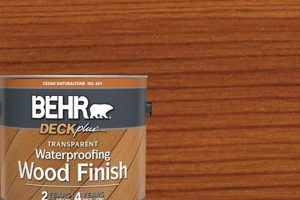
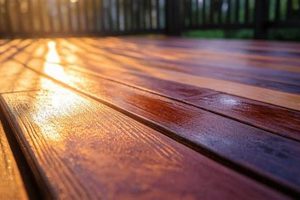
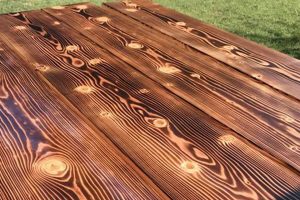
Coatings designed to protect and enhance wooden surfaces exposed to the elements are essential for maintaining the material’s integrity and aesthetic appeal. These treatments shield against moisture, ultraviolet radiation, temperature fluctuations, and biological threats such as mold and insects. An example includes a penetrating oil applied to a cedar deck, safeguarding it from weathering and decay.
The implementation of appropriate protective measures extends the lifespan of wooden structures and components, reducing the need for frequent repairs or replacements. Historically, natural oils and resins were employed for this purpose; contemporary formulations offer advanced protection and a broader range of aesthetic options. The selection of a suitable treatment directly impacts the long-term performance and appearance of the wood.
The following discussion will delve into the different types available, application techniques, and considerations for choosing the optimal solution based on wood species, environmental factors, and desired aesthetic outcomes. An overview of preparation methods and maintenance practices will also be provided, ensuring a comprehensive understanding of wood preservation strategies.
Considerations for Protecting Exterior Wood
Proper application and selection are critical for ensuring the longevity and aesthetic appeal of wood surfaces exposed to outdoor conditions. Adhering to best practices will maximize protection against weathering and biological degradation.
Tip 1: Surface Preparation is Paramount. Thoroughly clean and sand the wood surface to remove dirt, mildew, and existing coatings. A clean, smooth surface promotes optimal adhesion and penetration, enhancing the effectiveness of the treatment.
Tip 2: Select Appropriate Products Based on Wood Species. Different wood types possess varying levels of density and natural resistance to decay. Choose a product specifically formulated for the species being treated to ensure compatibility and optimal performance.
Tip 3: Consider Environmental Factors. Exposure to intense sunlight, high humidity, or frequent rainfall necessitates selecting a formulation with enhanced UV protection and water resistance. Analyze the specific environmental conditions of the application site.
Tip 4: Apply Multiple Coats. Multiple thin coats provide superior protection compared to a single thick coat. Follow the manufacturer’s recommendations regarding the number of coats and drying times to achieve the desired level of protection and appearance.
Tip 5: Back-Brushing for Optimal Penetration. When applying penetrating oils or stains, back-brushing helps work the product into the wood grain, promoting even distribution and maximizing absorption. This technique improves protection and enhances the wood’s natural beauty.
Tip 6: Maintain Adequate Ventilation. Ensure proper ventilation during and after application to facilitate drying and prevent the accumulation of harmful vapors. This is particularly important when working with oil-based products.
Tip 7: Regularly Inspect and Maintain. Conduct periodic inspections to identify signs of wear, damage, or mildew growth. Address any issues promptly to prevent further deterioration and extend the life of the treatment.
Tip 8: Consider Tinted Options for Enhanced UV Protection. Tinted or pigmented options offer superior UV protection compared to clear formulations. The pigments help block harmful UV rays, minimizing fading and degradation of the wood.
These considerations emphasize the importance of careful preparation, product selection, and application techniques in achieving long-lasting protection and preserving the aesthetic qualities of exterior wood surfaces.
Following these guidelines will contribute significantly to the overall performance and longevity of exterior wood projects, minimizing maintenance and maximizing the return on investment.
1. Protection

Protection is a paramount consideration when selecting coatings for wood exposed to the outdoors. These treatments act as a primary defense against environmental stressors that can degrade wood, compromising its structural integrity and aesthetic appeal. The level and type of protection offered directly influence the longevity and performance of wooden structures and surfaces.
- Moisture Resistance
Water penetration is a significant threat to wood, leading to swelling, rot, and decay. Finishes designed to repel water, such as water-repellent sealers and some film-forming coatings, create a barrier that minimizes moisture absorption. For example, a boat dock treated with a marine-grade sealant will withstand constant exposure to water, preventing premature deterioration. The efficacy of moisture resistance directly impacts the wood’s susceptibility to biological attacks and structural weakening.
- Ultraviolet (UV) Radiation Shielding
Prolonged exposure to sunlight can cause the lignin in wood to break down, leading to discoloration, surface checking, and weakening of the wood fibers. Finishes containing UV absorbers or pigments reflect or absorb harmful UV rays, mitigating these effects. Stained decks and siding retain their color and structural integrity longer than those left untreated or finished with clear, non-UV-resistant coatings. Adequate UV protection prevents premature aging and maintains the wood’s aesthetic qualities.
- Resistance to Biological Degradation
Mold, mildew, and wood-boring insects can inflict significant damage on exterior wood. Finishes containing biocides or preservatives inhibit the growth of these organisms, preventing rot and infestation. Timber used in ground contact benefits from treatment with preservatives that deter fungal decay and insect attack. This protection is crucial for ensuring the long-term structural soundness of wooden elements.
- Physical Abrasion Resistance
Exterior wood surfaces, especially decks and railings, are subject to wear and tear from foot traffic, furniture, and other physical impacts. Durable coatings provide a protective layer that resists scratching, scuffing, and chipping, maintaining the surface’s appearance and preventing damage to the underlying wood. Polyurethane finishes, for instance, offer enhanced abrasion resistance compared to softer oil-based coatings. Selecting a finish with adequate abrasion resistance is essential for high-traffic areas.
These facets of protection are integral to the performance of solutions. By addressing moisture, UV radiation, biological threats, and physical abrasion, solutions significantly extend the lifespan of wood structures and surfaces. The choice of protection should align with the specific environmental conditions and the intended use of the wood to maximize its durability and aesthetic appeal.
2. Durability

The durability of is directly contingent upon the protective qualities of the finish applied. The ability of a coating to withstand environmental stressors, physical abrasion, and biological attacks dictates its longevity and the extent to which it preserves the substrate. Premature failure of a finish necessitates costly repairs and compromises the integrity of the underlying wood. Consider, for example, a log cabin in a region with harsh winters; the chosen finish must endure freeze-thaw cycles without cracking or peeling, thereby preventing moisture ingress and subsequent rot. A finish lacking this inherent durability would lead to accelerated deterioration of the logs, impacting the cabin’s structural stability.
The selection of a appropriate treatment involves careful consideration of the specific challenges posed by the environment and the intended use of the wooden element. A deck, frequently subjected to foot traffic and exposure to the elements, requires a finish with high abrasion resistance and UV protection. Film-forming finishes, such as polyurethanes, offer enhanced durability in such scenarios, although their application necessitates meticulous surface preparation to ensure proper adhesion. Alternatively, penetrating oils, while offering less surface durability, can provide excellent moisture resistance and allow for easier maintenance, particularly in situations where a more natural appearance is desired. The trade-offs between different types of solutions must be carefully weighed to optimize durability.
In conclusion, durability represents a critical performance metric for treatments. Its significance extends beyond mere aesthetics, encompassing the long-term structural integrity and resistance to degradation of the treated wood. The investment in high-quality, durable coatings, coupled with proper application and maintenance practices, translates to reduced lifecycle costs and prolonged service life for exterior wood structures. While challenges remain in balancing durability with aesthetic considerations and environmental impact, a thorough understanding of the factors influencing durability is essential for informed decision-making and effective wood preservation.
3. Appearance

The aesthetic outcome is inextricably linked to the selection and application of treatments for wood exteriors. The coating material significantly shapes the visible characteristics of the wood, impacting color, sheen, and the visibility of the underlying grain. A clear sealant, for example, may enhance the natural tone of cedar siding, while a solid-color stain completely obscures the wood grain, providing a uniform hue and potentially concealing imperfections. The desired visual effect thus becomes a crucial factor in determining the appropriate product.
The relationship between appearance and surface treatment extends beyond simple aesthetics, influencing perceived value and contributing to architectural style. A meticulously finished front door, showcasing the wood’s natural beauty through a transparent coating, conveys a sense of quality and craftsmanship. Conversely, a poorly maintained or inappropriately finished surface can detract from a building’s overall appeal. The selection process should therefore account for the desired architectural expression and the surrounding environment. Consider, for instance, a rustic cabin where a matte finish might complement the natural setting, whereas a glossy finish could appear incongruous.
Ultimately, the appearance achieved through treatments is a direct consequence of careful product selection and skillful application. Understanding the interplay between various coating properties, wood characteristics, and environmental influences is essential for achieving a desired aesthetic outcome that enhances both the visual appeal and the long-term value of the structure. Balancing aesthetic goals with practical considerations, such as durability and maintenance requirements, represents a fundamental aspect of responsible design and construction.
4. Application
The manner in which protective coatings are applied to wood surfaces directly impacts the longevity, performance, and aesthetic outcome. Proper application techniques are essential to realize the full potential of any wood finishing product. Deviations from recommended procedures can lead to premature failure, compromised protection, and an unsatisfactory appearance.
- Surface Preparation
Adequate surface preparation is paramount. Wood must be clean, dry, and free of contaminants such as dirt, mildew, or previous coatings. Sanding creates a profile that promotes adhesion. Failure to properly prepare the surface can result in poor bonding, peeling, and blistering. For example, applying a stain over an existing coat of varnish without sanding will likely lead to inadequate penetration and subsequent peeling of the stain layer.
- Environmental Conditions
Ambient temperature, humidity, and direct sunlight influence the application process. Most products have specified temperature ranges for optimal performance. High humidity can prolong drying times and affect the curing process. Direct sunlight can cause rapid drying, leading to lap marks and uneven color. Applying oil-based paint on a very hot day may cause the paint to dry too quickly on the surface, trapping solvents underneath and leading to blistering. Attention to these environmental factors is crucial for achieving a satisfactory outcome.
- Application Method
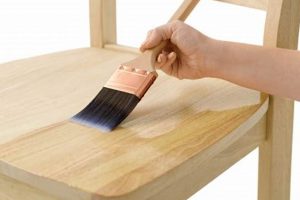
The choice of application method, whether brush, roller, or sprayer, impacts the uniformity and thickness of the coating. Brushing is suitable for smaller areas and allows for better control. Rolling is efficient for larger surfaces, but can leave a stippled texture. Spraying provides a smooth, even finish but requires careful masking and ventilation. Applying varnish with an inadequate brush can result in brush marks and an uneven sheen. Selection of the appropriate method is dependent on the product type, surface area, and desired finish.
- Number of Coats
The number of coats applied directly affects the level of protection and the final appearance. Multiple thin coats are generally superior to a single thick coat. Each coat should be allowed to dry thoroughly before the next is applied. Insufficient coats may compromise protection, while excessive coats can lead to cracking and peeling. For instance, applying only one coat of a UV-protective stain to a deck may leave the wood vulnerable to sun damage, resulting in fading and degradation. Adherence to the manufacturer’s recommendations regarding the number of coats is critical for optimal performance.
These facets underscore the importance of skill and precision in the application of protective treatments. Attention to surface preparation, environmental conditions, application method, and the number of coats will contribute significantly to the longevity and aesthetic quality of wood surfaces.
5. Maintenance
The long-term performance of surfaces treated with exterior wood solutions is inextricably linked to consistent maintenance practices. These treatments, while providing an initial barrier against environmental stressors, are not inherently permanent. Without regular upkeep, the protective properties of the finish diminish, leaving the wood susceptible to moisture damage, UV degradation, and biological attack. A failure to clean and reapply a protective coating on a deck, for instance, will eventually result in graying, cracking, and rot, necessitating costly repairs or replacement. Therefore, integrating maintenance into the life cycle of exterior wood is not merely an option, but a crucial component of its long-term preservation.
Maintenance routines should be tailored to the specific finish, wood species, and environmental conditions. Regular cleaning with mild detergents removes dirt, mildew, and other surface contaminants that can compromise the coating’s integrity. Periodic inspections identify areas where the finish is wearing thin or has been damaged, allowing for timely repairs. Reapplication of a topcoat or a complete refinishing may be required every few years, depending on the product and the level of exposure. A house with stained wood siding, for example, may require restaining every 5-7 years to maintain its color and water repellency, whereas a fence treated with a penetrating oil may only need a maintenance coat every 2-3 years.
In summary, diligent maintenance practices are paramount to maximizing the lifespan and aesthetic appeal of surfaces treated with wood solutions. By understanding the interplay between the initial finish, the external environment, and the wood itself, effective maintenance strategies can be implemented. Neglecting these responsibilities will inevitably lead to premature deterioration and increased long-term costs. The practical significance of integrating maintenance into the lifecycle of exterior wood cannot be overstated, as it ensures both the longevity and enduring beauty of these structures.
6. Wood Species

The inherent properties of different wood species exert a significant influence on the selection and performance of coatings designed for exterior applications. Understanding these characteristics is crucial for ensuring the longevity and aesthetic quality of treated surfaces. The compatibility between the wood and the protective coating is a key determinant of success.
- Density and Porosity
Wood density and porosity dictate the absorption rate and penetration depth of various finishes. Dense hardwoods, such as teak or mahogany, exhibit lower absorption rates compared to softwoods like cedar or pine. Penetrating oils may be well-suited for softwoods, providing deep saturation and protection from within, while film-forming finishes might be necessary for hardwoods to achieve adequate surface coverage and durability. Applying a thick, film-forming finish to a porous softwood without proper preparation can lead to blistering and peeling due to trapped moisture.
- Natural Oil Content
Some wood species, such as redwood and cedar, contain natural oils that contribute to their inherent resistance to decay and insects. These oils can also interfere with the adhesion of certain coatings. Selecting products specifically formulated for oily woods or allowing the wood to weather for a period before application can improve adhesion and prevent premature failure. Applying an oil-based stain to redwood without proper weathering or the use of a compatible primer can result in uneven color absorption and poor long-term performance.
- Grain Pattern and Texture
The grain pattern and texture of wood influence the aesthetic outcome of a finish. Open-grained woods, such as oak, can benefit from the application of grain fillers to create a smooth surface before applying a topcoat. Clear finishes enhance the natural grain, while solid-color stains obscure it. Choosing a clear finish for a knotty pine may highlight imperfections, while a solid stain can provide a more uniform appearance. Understanding how the wood’s natural features will interact with the finish is essential for achieving the desired aesthetic.
- Dimensional Stability
Dimensional stability refers to a wood’s tendency to shrink or swell with changes in moisture content. Wood species with high dimensional stability, such as mahogany, are less prone to warping and cracking, making them suitable for applications where dimensional accuracy is critical. Coatings that provide a flexible barrier can help accommodate minor dimensional changes, preventing stress fractures and maintaining the integrity of the finish. Applying a rigid, inflexible finish to a wood species with high dimensional instability can lead to cracking and peeling as the wood expands and contracts.
These considerations underscore the critical link between wood species and the selection of a compatible protective system. A thorough understanding of these interactions is essential for achieving long-lasting protection and preserving the aesthetic qualities of wood surfaces.
Frequently Asked Questions
The following section addresses common inquiries and misconceptions regarding treatments for wood exposed to outdoor conditions. The information presented aims to provide clarity and guidance for informed decision-making.
Question 1: What distinguishes a finish intended for exterior use from one designed for interior applications?
Solutions formulated for exterior use are specifically engineered to withstand environmental stressors such as ultraviolet radiation, moisture fluctuations, and temperature variations. These products typically contain UV absorbers, mildewcides, and water-repellent additives that are not commonly found in interior formulations. Consequently, interior products are generally unsuitable for exterior applications.
Question 2: How frequently should wood receive a new application of protective finishes?
The frequency of reapplication depends on several factors, including the type of finish, the wood species, the level of exposure to the elements, and the desired aesthetic outcome. As a general guideline, surfaces should be inspected annually for signs of wear, such as fading, cracking, or peeling. Reapplication may be necessary every two to five years, depending on the specific circumstances.
Question 3: Is surface preparation truly necessary prior to applying protective treatments?
Surface preparation is a critical step that significantly impacts the adhesion and performance of finishes. Proper preparation involves cleaning the wood to remove dirt, mildew, and loose debris. Sanding creates a profile that enhances bonding. Failure to prepare the surface adequately can lead to premature failure of the finish.
Question 4: Can a clear finish provide adequate protection against sunlight?
Clear finishes offer limited protection against ultraviolet radiation. While they may provide some degree of water repellency, they lack the pigments or UV absorbers necessary to effectively block harmful UV rays. Tinted or pigmented finishes are generally recommended for exterior applications to minimize fading and degradation of the wood.
Question 5: What are the key differences between oil-based and water-based exterior treatments?
Oil-based finishes typically offer superior penetration and water repellency compared to water-based formulations. However, they tend to dry slower and may release higher levels of volatile organic compounds (VOCs). Water-based finishes dry quickly, are easier to clean up, and generally have lower VOC content. The choice between the two depends on the specific project requirements and environmental considerations.
Question 6: Is it possible to apply a protective solution over an existing finish?
Applying a new finish over an existing one is generally not recommended unless the existing finish is in sound condition and compatible with the new product. In most cases, it is preferable to remove the old finish completely before applying a new one. This ensures proper adhesion and optimal performance.
These answers provide a foundational understanding of key considerations related to surface treatments. It’s important to consult with professionals and manufacturers to address unique project specific needs.
The following section will delve into specific product types and their recommended uses, providing further insights into selecting the most suitable options for various exterior wood applications.
Conclusion
The preceding exploration of exterior wood finishes has underscored the multifaceted nature of protecting and enhancing wood exposed to the elements. From understanding the properties of different wood species to selecting appropriate protective measures, the informed application of these solutions is critical for preserving structural integrity and aesthetic appeal. Key considerations include meticulous surface preparation, appropriate product selection, and ongoing maintenance.
The effective utilization of exterior wood finishes represents a significant investment in the longevity and value of wooden structures. While challenges remain in balancing performance, cost, and environmental impact, a continued commitment to research, innovation, and best practices will ensure the enduring beauty and functionality of wood in exterior environments. Diligence in material selection and application, coupled with informed maintenance, is paramount to realizing the full potential of these essential protective systems.