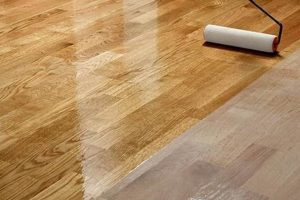
A treatment employing nanotechnology to enhance wood surfaces offers improved protection and aesthetics. This involves the application of nanoscale particles, typically oxides or polymers, to penetrate and bond with the wood fibers. For instance, titanium dioxide nanoparticles can be used to impart ultraviolet resistance and self-cleaning properties to exterior wood structures.
The application of this advanced surface technology provides several advantages, including increased durability, water repellency, and resistance to scratches and wear. Historically, traditional wood finishes have been susceptible to environmental degradation, requiring frequent maintenance. This innovation mitigates these issues, extending the lifespan of wooden materials and reducing the need for costly repairs.
Understanding the specific types of nanoparticles used, the application methods, and the long-term performance characteristics are crucial for evaluating the efficacy and suitability of this treatment for various wood-based applications. Subsequent sections will delve into these aspects, providing a detailed examination of the technology’s capabilities and limitations.
Optimizing Wood Surfaces with Nanotechnology
The integration of nanotechnology into wood finishing processes offers enhanced protection and aesthetic improvements. The following recommendations aim to maximize the benefits derived from such applications.
Tip 1: Surface Preparation is Paramount: Prior to application, ensure the wood surface is clean, dry, and free of any existing coatings or contaminants. Improper preparation can hinder the penetration and bonding of the nanoparticles, reducing their effectiveness.
Tip 2: Select Appropriate Nanoparticles: The choice of nanoparticles should be based on the specific requirements of the application. For exterior applications, ultraviolet-resistant nanoparticles, such as titanium dioxide, are recommended. For interior applications, nanoparticles that enhance scratch resistance and ease of cleaning may be more suitable.
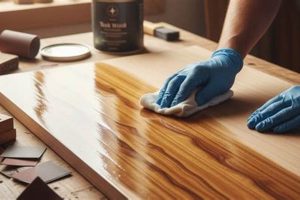
Tip 3: Application Technique is Crucial: Follow the manufacturer’s guidelines regarding application methods, including the number of coats and drying times. Even distribution of the treatment is essential for uniform performance and aesthetic appearance.
Tip 4: Consider the Wood Species: Different wood species exhibit varying levels of porosity and absorbency. This can influence the penetration and effectiveness of the nanoscale treatment. Conduct preliminary testing on a small, inconspicuous area to assess compatibility and optimize application parameters.
Tip 5: Safety Precautions are Necessary: When handling materials containing nanoparticles, adhere to all recommended safety precautions, including wearing appropriate personal protective equipment, such as gloves and respirators. Consult the Safety Data Sheet (SDS) for specific hazard information and handling guidelines.
Tip 6: Evaluate Long-Term Performance: Implement a monitoring program to assess the long-term performance of the treated wood surfaces. This may involve periodic visual inspections, as well as more sophisticated analytical techniques to evaluate changes in surface properties and resistance to environmental degradation.
Tip 7: Compatibility with Existing Finishes: If applying the treatment over an existing finish, ensure compatibility through testing. Incompatibility can lead to adhesion problems, discoloration, or other undesirable effects.
Adhering to these guidelines will optimize the protective and aesthetic benefits of nanotechnology on wood surfaces, extending the lifespan of wooden materials and reducing maintenance requirements.
The subsequent sections will delve into specific application scenarios and case studies, providing further insights into the practical aspects of this advanced technology.
1. Enhanced Durability
The application of nanotechnology to wood finishing directly contributes to enhanced durability, impacting the material’s lifespan and resistance to environmental stressors. The introduction of nanoparticles into the wood matrix, or onto its surface, creates a protective barrier. This barrier resists abrasion, impact, and the ingress of moisture and degrading biological agents. Consequently, wood treated with these advanced finishes exhibits a significant increase in structural integrity and aesthetic longevity compared to untreated wood or wood treated with conventional finishes. Consider, for example, exterior decking subject to continuous weathering. Wood treated with a nano-based finish demonstrates reduced cracking, warping, and decay, extending its service life and reducing the frequency of replacement.
Further enhancing durability is the improved resistance to chemical attack. Nanoparticles can impart a degree of inertness to the wood surface, mitigating damage from acidic rain, cleaning agents, and other corrosive substances. In high-traffic interior environments, such as flooring or furniture, the increased scratch and mar resistance conferred by a nano wood finish maintains the material’s appearance over extended periods. Moreover, the protective layer provided by these treatments reduces the likelihood of staining and discoloration, preserving the original aesthetic qualities of the wood.
In summary, the link between nanotechnology in wood finishing and enhanced durability stems from the creation of a protective shield at the nanoscale level. This shield defends against a range of physical, chemical, and biological threats, thereby extending the service life and maintaining the appearance of treated wood. While the initial cost of nano wood finishes may be higher than conventional options, the long-term benefits associated with reduced maintenance, fewer replacements, and improved aesthetics represent a significant return on investment. Future research should focus on optimizing the nanoparticle composition and application methods to further maximize the durability gains.
2. UV Resistance

Ultraviolet (UV) radiation is a significant factor in the degradation of wood finishes. Prolonged exposure to UV light causes discoloration, fading, and eventual breakdown of the wood’s surface, weakening its structural integrity. Incorporating UV resistance into a wood finish, particularly through nanotechnology, mitigates these effects. Nano wood finishes containing UV-absorbing or UV-reflecting nanoparticles, such as titanium dioxide or zinc oxide, act as a barrier, reducing the amount of UV radiation reaching the underlying wood. This protection mechanism delays or prevents the photochemical reactions that lead to the deterioration of the finish and the wood itself. For instance, exterior wooden furniture or siding treated with a nano wood finish exhibiting high UV resistance will retain its color and structural stability for a longer period compared to untreated or conventionally treated wood.
The effectiveness of UV resistance in nano wood finishes depends on several factors, including the concentration and dispersion of the nanoparticles, the type of polymer matrix used, and the application method. Higher concentrations of UV-absorbing nanoparticles generally provide better protection, but excessive amounts can affect the transparency and aesthetics of the finish. Proper dispersion of the nanoparticles is crucial to ensure uniform UV protection across the entire surface. The choice of polymer matrix influences the durability and weatherability of the finish, as well as its ability to bind and retain the nanoparticles. Furthermore, the application technique, such as spraying or brushing, affects the thickness and uniformity of the coating, which in turn impacts UV resistance. Testing and certification, following standards such as ASTM G154, are often employed to quantify the UV protection afforded by different nano wood finishes, providing consumers and manufacturers with objective data on product performance. These standards involve exposing treated samples to simulated sunlight and measuring changes in color, gloss, and other properties over time.
In conclusion, UV resistance is a critical component of nano wood finishes, providing essential protection against the damaging effects of sunlight. By incorporating UV-absorbing or UV-reflecting nanoparticles, these finishes extend the lifespan and maintain the appearance of wood products exposed to the elements. While the effectiveness of UV resistance depends on several factors related to the composition and application of the finish, proper formulation and quality control are essential to achieving optimal performance. The benefits of UV-resistant nano wood finishes are particularly evident in outdoor applications, where prolonged exposure to sunlight is unavoidable. Future advancements in nanotechnology may lead to even more effective and durable UV-resistant wood finishes, further enhancing the sustainability and longevity of wood as a building material.
3. Water Repellency

Water repellency, as an attribute imparted by specific nano wood finishes, stems from the manipulation of surface energy at the nanoscale. The application of hydrophobic nanoparticles, typically composed of modified silanes or fluoropolymers, alters the wood’s surface tension. This modification prevents water molecules from easily wetting the surface, causing them to bead up and roll off, rather than being absorbed into the wood structure. The importance of this feature lies in its ability to protect wood from moisture-related damage, such as swelling, warping, decay, and the growth of mold and mildew. For example, wooden decks treated with a water-repellent finish demonstrate a reduced susceptibility to water damage, extending their lifespan and maintaining their structural integrity despite repeated exposure to rain and humidity.
The effectiveness of water repellency in nano wood finishes is dependent on several factors, including the type and concentration of nanoparticles used, the uniformity of the application, and the characteristics of the wood itself. Certain wood species are naturally more porous and absorbent than others, requiring a higher concentration of nanoparticles or multiple coats to achieve optimal water repellency. Furthermore, the long-term durability of the water-repellent effect can be affected by abrasion, UV exposure, and cleaning agents. Therefore, regular maintenance and reapplication of the finish may be necessary to maintain its performance. In practical applications, water-repellent nano wood finishes are utilized to protect a wide range of wooden products, including exterior siding, furniture, fences, and marine structures. The ability to resist water absorption not only prevents structural damage but also reduces the risk of staining and discoloration, preserving the aesthetic appearance of the wood.
In summary, water repellency is a crucial benefit conferred by many nano wood finishes, providing protection against moisture-related degradation and extending the service life of wooden materials. The ability to engineer water repellency at the nanoscale allows for the creation of highly effective and durable finishes that can withstand harsh environmental conditions. However, challenges remain in optimizing the formulation, application, and long-term performance of these finishes to ensure their widespread adoption and effectiveness. Continued research and development are essential to overcome these challenges and unlock the full potential of water-repellent nano wood finishes.
4. Scratch Protection
The integration of scratch protection into wood finishes through nanotechnology addresses a primary concern regarding the longevity and aesthetic appeal of wooden surfaces. Conventional finishes often lack sufficient resistance to abrasion and impact, leading to visible scratches and marring that detract from the material’s appearance. Nano wood finishes, in contrast, leverage the unique properties of nanoparticles to enhance surface hardness and resilience. The incorporation of materials such as alumina or silica nanoparticles into the finish matrix creates a dense, cross-linked structure that resists deformation and displacement upon contact with abrasive materials. For instance, a table coated with a nano wood finish exhibiting enhanced scratch resistance will withstand the daily wear and tear of objects being placed upon it without developing unsightly scratches.
The mechanism by which nano wood finishes provide superior scratch protection involves both physical and chemical processes. The nanoparticles act as a reinforcing agent, increasing the overall hardness and stiffness of the finish. They also fill microscopic voids and irregularities on the wood surface, creating a smoother and more uniform plane that reduces friction and minimizes the likelihood of scratching. Moreover, certain nanoparticles can form chemical bonds with the wood fibers, further strengthening the bond between the finish and the substrate. The practical significance of this improved scratch protection is evident in various applications, including flooring, furniture, and cabinetry. In high-traffic areas or environments where wooden surfaces are frequently subjected to contact, the use of nano wood finishes can significantly extend the lifespan of the material and reduce the need for costly repairs or replacements.
In summary, scratch protection is a critical component of nano wood finishes, contributing directly to the durability and visual appeal of treated surfaces. By incorporating nanoparticles that enhance surface hardness, reduce friction, and improve bonding, these finishes offer a significant improvement over conventional coatings. While challenges remain in optimizing the nanoparticle composition, dispersion, and application methods, the benefits of enhanced scratch protection are well-documented in a range of practical applications. Continued research and development are essential to further refine these technologies and expand their use in various industries.
5. Penetration Depth
Penetration depth, referring to the extent to which the nanoscale particles of a wood finish permeate the wood substrate, constitutes a critical parameter influencing the overall effectiveness of a nano wood finish. A sufficient depth of penetration allows the nanoparticles to anchor themselves within the wood’s cellular structure, establishing a durable bond and providing enhanced protection against environmental factors. The degree of penetration directly affects the finish’s resistance to abrasion, moisture, and ultraviolet radiation. For instance, a nano wood finish intended for exterior decking requires a deeper penetration to withstand the constant exposure to weather elements, preventing premature degradation and extending the material’s lifespan.
The characteristics of both the wood species and the formulation of the nano wood finish significantly impact penetration depth. Denser wood species with tighter grain patterns may impede penetration compared to more porous varieties. Similarly, the size, shape, and surface chemistry of the nanoparticles influence their ability to infiltrate the wood structure. A finish formulated with smaller, well-dispersed nanoparticles in a suitable carrier solvent will generally exhibit greater penetration. Application techniques also play a crucial role. Methods such as vacuum impregnation or pressure treatment can enhance penetration by forcing the finish deeper into the wood. Furthermore, the presence of existing coatings or surface contaminants can hinder penetration, emphasizing the importance of proper surface preparation prior to application. Failure to achieve adequate penetration can result in a finish that is merely surface-bound, rendering it susceptible to peeling, chipping, and reduced overall performance. In interior applications, such as furniture, adequate penetration is crucial for safeguarding against the impact from moisture.
Ultimately, understanding and controlling penetration depth is essential for optimizing the performance of nano wood finishes. While deeper penetration generally correlates with improved durability, excessive penetration can lead to waste and potentially alter the wood’s natural properties. Achieving the ideal penetration depth requires careful consideration of the wood species, finish formulation, application method, and intended use. Future research should focus on developing techniques for precisely controlling penetration depth to tailor finishes to specific applications and maximize their effectiveness.
6. Surface Adhesion

Surface adhesion is a critical determinant of the long-term performance and efficacy of any applied coating, including nano wood finishes. The strength of the bond between the finish and the wood substrate directly impacts the durability, resistance to wear, and overall protective qualities of the treatment. Insufficient adhesion results in premature failure of the finish, manifested as peeling, cracking, or blistering, thereby negating the intended benefits of the nanotechnology. For instance, a nano wood finish applied to exterior siding must exhibit strong surface adhesion to withstand the cyclical expansion and contraction caused by temperature fluctuations and moisture changes; otherwise, the finish will detach, leaving the wood vulnerable to environmental degradation.
The achievement of robust surface adhesion in nano wood finishes involves a complex interplay of factors, including the chemical compatibility between the finish and the wood, the surface preparation methods employed, and the application techniques utilized. Surface contaminants, such as oils or waxes, impede adhesion and must be thoroughly removed prior to application. The finish itself must be formulated to establish strong chemical or physical bonds with the wood fibers. This often involves the use of specific adhesion promoters or coupling agents that facilitate interfacial bonding. In the realm of furniture restoration, the value of quality and adhesion are always be prioritize. Furthermore, the nano-scale structure of the finish can contribute to improved adhesion by increasing the surface area available for bonding and by facilitating the penetration of the finish into the wood pores. Application techniques, such as proper spraying or brushing, are essential to ensure uniform coverage and intimate contact between the finish and the wood surface.
In summary, surface adhesion represents a cornerstone of nano wood finish performance. Adequate adhesion is not merely desirable; it is essential for realizing the intended benefits of the technology, including enhanced durability, water repellency, and UV resistance. By carefully controlling the factors that influence adhesion, manufacturers and applicators can maximize the service life of nano wood finishes and ensure the long-term protection and aesthetic appeal of treated wood surfaces. Future research should focus on developing novel adhesion-promoting strategies and evaluating the long-term adhesion performance of nano wood finishes under various environmental conditions.
Frequently Asked Questions Regarding Nano Wood Finish
The following addresses common inquiries concerning the application, benefits, and limitations of this advanced wood treatment.
Question 1: What constitutes a “nano wood finish”?
It refers to a wood coating that incorporates nanoparticles to enhance its properties, such as durability, water resistance, and UV protection. These nanoparticles are typically metal oxides or polymers engineered at the nanoscale.
Question 2: How does it differ from traditional wood finishes?
Traditional finishes primarily rely on polymers and resins, offering limited protection against abrasion, moisture, and UV degradation. In contrast, nano wood finishes leverage the unique properties of nanoparticles to provide superior performance in these areas.
Question 3: Are there potential environmental or health concerns associated with nano wood finishes?
While generally considered safe when properly applied and cured, concerns exist regarding the potential release of nanoparticles during manufacturing, application, or disposal. It is imperative to adhere to safety guidelines and utilize appropriate personal protective equipment during application.
Question 4: What is the expected lifespan of a nano wood finish?
The lifespan varies depending on factors such as the specific formulation, application method, environmental conditions, and wood species. However, in general, nano wood finishes exhibit greater longevity compared to traditional finishes, potentially extending the service life of the treated wood.
Question 5: Is it suitable for all types of wood?
It is generally applicable to a wide range of wood species. However, certain species with particularly dense or oily characteristics may require specific surface preparation or modified application techniques to ensure adequate adhesion and penetration.
Question 6: Can it be applied over existing wood finishes?
Application over existing finishes is generally not recommended, as it can compromise adhesion and performance. Proper surface preparation, including the removal of old finishes, is essential for optimal results.
In summary, nano wood finish represents a significant advancement in wood protection technology, offering enhanced durability, water resistance, and UV protection. However, responsible use and adherence to safety guidelines are essential to mitigate potential risks.
Subsequent sections will explore specific application scenarios and case studies, providing further insights into the practical aspects of this advanced technology.
Nano Wood Finish
This exploration of nano wood finish technology reveals its multifaceted impact on wood preservation. The incorporation of nanoparticles yields improvements in durability, UV resistance, water repellency, and scratch protection, extending the lifespan and maintaining the aesthetic integrity of treated wood products. Precise control over penetration depth and ensuring robust surface adhesion are critical factors that determine the overall effectiveness of these advanced finishes. Careful consideration must be given to wood species, finish formulation, and application techniques to optimize performance.
The adoption of nano wood finish represents a strategic investment in long-term wood protection, offering a sustainable approach to minimizing maintenance and replacement costs. Continued research and development are essential to refine nanoparticle composition, application methodologies, and to comprehensively assess potential environmental and health implications. A commitment to rigorous testing and adherence to safety protocols will facilitate the responsible and effective utilization of nano wood finish technology, ensuring its lasting contribution to the field of wood preservation.