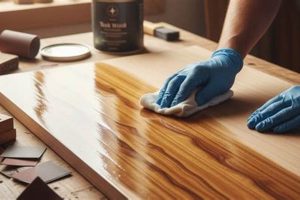
A surface treatment applied to timber results in a highly reflective, smooth appearance. This effect is achieved through multiple layers of sealant and polishing, creating a durable and visually striking sheen. Furniture, flooring, and cabinetry are common applications of this aesthetic.
The primary advantage of this type of surface lies in its ability to enhance the perception of light and space within an environment. Its reflective qualities can brighten a room and make it appear larger. Furthermore, the robust nature of the finish provides a level of protection against scratches and moisture, contributing to the longevity of the treated material. Historically, this technique has been associated with luxury and sophistication, often employed in high-end interiors and bespoke pieces.
The subsequent discussion will delve into the specific methods of achieving this particular aesthetic, explore the various types of coatings used, and examine the maintenance requirements necessary to preserve the integrity and luster of the resultant surface. Furthermore, considerations regarding environmental impact and sustainable sourcing of materials will be addressed.
Tips for Maintaining a Highly Reflective Wooden Surface
Proper care is essential to preserve the aesthetic and integrity of a surface treated for high reflectivity. Consistent maintenance prevents damage and prolongs the lifespan of the finish.
Tip 1: Dust Regularly: Implement a routine dusting schedule using a soft, lint-free cloth. This prevents the accumulation of abrasive particles that can scratch the surface over time.
Tip 2: Utilize Appropriate Cleaning Solutions: Employ cleaning agents specifically designed for treated wood. Avoid harsh chemicals, ammonia-based cleaners, and abrasive materials, as these can degrade the finish.
Tip 3: Control Humidity Levels: Maintain stable humidity levels within the environment. Excessive humidity can cause the wood to swell, leading to cracking or peeling of the finish. Conversely, excessively dry conditions can cause shrinkage.
Tip 4: Protect from Direct Sunlight: Minimize exposure to direct sunlight. Ultraviolet radiation can cause fading and discoloration of the finish over prolonged periods.
Tip 5: Use Protective Mats and Coasters: Employ protective mats under objects that may scratch or damage the surface, such as vases, lamps, or electronics. Use coasters under beverages to prevent water rings.
Tip 6: Address Spills Immediately: Clean up spills promptly to prevent staining or damage to the underlying wood. Use a soft cloth to blot the spill, avoiding rubbing, which can spread the liquid and damage the finish.
Tip 7: Consider Professional Refinishing: For significant damage or wear, consider professional refinishing. This ensures proper restoration and prevents further deterioration of the wood.
Adhering to these preventative measures will ensure the longevity and visual appeal of the reflective wooden surface, preserving its value and aesthetic qualities for years to come.
The following section will cover the potential challenges and troubleshooting methods related to maintaining this particular finish.
1. Reflectivity

Reflectivity is an inherent characteristic of a surface treatment applied to wood. It results directly from the smoothness and uniformity achieved through multiple layers of sealant, often combined with polishing techniques. The level of reflectivity is a primary determinant of its perceived “gloss.” The smoother the surface, the higher the degree of specular reflection, leading to a brighter, more mirror-like appearance. This heightened reflectivity enhances the visual impact of the wood grain and color, creating a sense of depth and luminosity. For example, a grand piano with a black finish showcases this effect, its surface reflecting light to a significant degree.
The degree of reflectivity is controlled through the selection of the coating material and the application process. Polyurethane and lacquer are frequently used to achieve high reflectivity due to their ability to create a durable and smooth film. Proper sanding between coats is essential for eliminating imperfections and maximizing light reflection. Furthermore, the type of wood itself can influence the final reflectivity. Close-grained hardwoods, such as maple or cherry, generally yield a smoother surface compared to open-grained woods like oak, resulting in a more pronounced reflective quality. The practical application extends to interior design, where it is used to amplify light in darker spaces and create a sense of spaciousness.
In summary, reflectivity is an indispensable element of the surface treatment, contributing significantly to its aesthetic appeal and functional benefits. Its effective management requires careful consideration of material selection, application techniques, and the underlying wood substrate. While a high degree of reflectivity enhances visual appeal, it also requires meticulous maintenance to preserve its luster and prevent the visibility of scratches or imperfections.
2. Durability

Durability, in the context of surfaces applied to wood, directly influences its longevity and suitability for various applications. The resistance of a finish to wear, abrasion, and environmental factors is paramount in maintaining its aesthetic appeal and protecting the underlying wood structure.
- Abrasion Resistance
This facet pertains to the ability of a treatment to withstand physical contact and friction without scratching or losing its luster. High-traffic areas, such as flooring or tabletops, require finishes with exceptional abrasion resistance. Polyurethane and catalyzed lacquers are commonly employed for these applications due to their inherent hardness and resistance to scratching. Failure to utilize an abrasion-resistant surface treatment results in visible wear and necessitates frequent refinishing.
- Moisture Resistance
Water intrusion can cause swelling, warping, and ultimately, degradation of wood. Surface treatments formulated for moisture resistance act as a barrier, preventing water from penetrating the wood fibers. Marine-grade varnishes are an example of finishes designed for extreme moisture exposure, commonly used on boats and outdoor furniture. Insufficient moisture protection leads to structural damage and diminished aesthetic appeal.
- Chemical Resistance
Resistance to household chemicals, such as cleaning agents and solvents, is crucial for maintaining the integrity of a finished surface. Exposure to harsh chemicals can cause discoloration, softening, or even complete removal of the finish. Epoxy-based finishes exhibit excellent chemical resistance and are often used in laboratory settings or on surfaces that are frequently exposed to potentially damaging substances. Inadequate chemical resistance leads to unsightly stains and potential damage to the wood beneath.
- UV Resistance
Prolonged exposure to ultraviolet (UV) radiation from sunlight can cause fading and discoloration of both the finish and the underlying wood. Finishes with UV inhibitors or stabilizers help mitigate this effect, preserving the color and appearance of the surface over time. Spar varnish, commonly used on exterior woodwork, contains UV absorbers to protect against sun damage. Lack of UV protection results in premature aging and fading of the finish, reducing its aesthetic value and potentially compromising its protective properties.
These facets of durability are intrinsically linked to the overall performance and lifespan of surfaces on wood. Selecting a finish that aligns with the intended use and environmental conditions is crucial for ensuring long-term protection and aesthetic preservation. The specific formulation and application techniques significantly influence the durability characteristics of surface treatments, ultimately determining its resilience against various forms of wear and degradation.
3. Application Method
The method employed to apply a surface treatment directly influences the final aesthetic and performance characteristics of a high-reflectivity wood surface. The selection of an appropriate method, coupled with meticulous execution, is critical to achieving a uniform, durable, and visually appealing result.
- Spraying Techniques
Spraying, encompassing both airless and conventional methods, allows for the application of thin, even coats, minimizing the potential for brush strokes or roller marks. This is particularly advantageous for achieving the smooth, flawless surface required for high reflectivity. The use of specialized spray equipment, coupled with precise control of pressure and flow rate, ensures consistent film thickness and minimizes imperfections. However, spraying necessitates a controlled environment to prevent dust contamination and overspray.
- Brushing Techniques
Brushing, while potentially introducing brush strokes, offers precise control over the application in intricate areas or on smaller surfaces. Employing high-quality brushes with fine bristles and using proper brushing techniques, such as maintaining a wet edge and avoiding excessive pressure, minimizes surface imperfections. Brushing is often used for applying sealers or primers before subsequent spraying of the topcoat, contributing to overall finish quality.
- Rolling Techniques
Rolling can provide a cost-effective and efficient method for covering large surfaces, such as flooring or tabletops. The use of foam rollers with a fine nap minimizes the appearance of roller stipple. Proper rolling technique involves overlapping each pass and maintaining a consistent pressure to achieve a uniform film thickness. Rolling is typically used for applying base coats or sealers, with subsequent coats applied via spraying for optimal smoothness.
- Curing and Drying Processes
The curing and drying processes are integral to the application method, impacting the final hardness, clarity, and durability of the surface. Proper environmental control, including temperature and humidity, is essential for achieving optimal curing. Adhering to the manufacturer’s recommended drying times between coats is crucial for preventing adhesion problems and ensuring the development of a robust finish. Forced air drying or UV curing techniques accelerate the drying process and enhance the overall performance characteristics of the surface treatment.
The choice of application method is contingent upon factors such as the size and complexity of the surface, the type of coating material, and the desired aesthetic outcome. Regardless of the method selected, meticulous preparation, proper technique, and controlled environmental conditions are paramount for achieving a durable and visually stunning high-reflectivity wood surface.
4. Underlying Material

The substrate, or underlying material, exerts a significant influence on the final appearance and performance of a high-reflectivity finish applied to wood. The wood species, grain pattern, and surface preparation all contribute to the overall outcome, making the selection of an appropriate substrate a critical factor in achieving the desired aesthetic and durability.
- Wood Species
Different wood species exhibit varying densities, pore structures, and natural oil contents, which directly impact the absorption and adhesion of the finish. Hardwoods, such as maple or cherry, generally provide a smoother, more uniform surface compared to softwoods like pine or fir. Close-grained hardwoods tend to yield a higher degree of reflectivity, while open-grained woods may require additional filling or leveling to achieve a similar result. The natural color of the wood also influences the final appearance, requiring adjustments in the tint or pigment of the finish to achieve the desired hue. For instance, applying a clear surface treatment to a dark wood like walnut results in a significantly different aesthetic compared to a light wood such as ash.
- Grain Pattern
The grain pattern of wood contributes to its visual texture and can either enhance or detract from the reflectivity of the finish. A straight, consistent grain pattern provides a more uniform surface for light reflection, while a wild or figured grain pattern introduces visual complexity. The orientation of the grain also affects the way light is reflected, with tangential grain (flat-sawn) exhibiting a more diffused reflection compared to radial grain (quarter-sawn). Skilled woodworkers carefully consider the grain pattern when selecting wood for high-reflectivity applications, often opting for pieces with a consistent and visually appealing grain orientation.
- Surface Preparation
Proper surface preparation is paramount for achieving a flawless finish. This includes sanding to a progressively finer grit, removing dust and debris, and filling any imperfections or voids in the wood surface. The smoothness of the substrate directly correlates with the reflectivity of the finish, as any imperfections will be magnified by the glossy surface. Inadequate surface preparation can result in uneven gloss levels, visible scratches, or adhesion problems. For open-grained woods, grain fillers are often used to create a smooth, level surface prior to applying the finish. Thorough sanding and preparation are essential steps in creating a high-quality, reflective wood surface.
- Moisture Content
The moisture content of the wood at the time of finishing plays a critical role in the long-term stability and adhesion of the surface treatment. Wood expands and contracts with changes in moisture content, which can lead to cracking, peeling, or delamination of the finish if the wood is not properly seasoned. Ideally, wood should be kiln-dried to a stable moisture content before applying any finish. Failure to control the moisture content can result in premature failure of the surface treatment, necessitating costly repairs or refinishing.
In conclusion, the underlying material forms the foundation upon which a surface treatment is built. Careful selection of wood species, consideration of grain pattern, meticulous surface preparation, and control of moisture content are essential for achieving a durable and visually stunning high-reflectivity surface. These factors interrelate to dictate the final quality and longevity of the finished product, underscoring the importance of a holistic approach to wood finishing.
5. Maintenance Regimen

The longevity and aesthetic appeal of a surface treatment for wood are inextricably linked to the implementation of a consistent maintenance regimen. This regimen is not merely a series of tasks but a strategic approach designed to mitigate the effects of environmental factors, usage patterns, and time on the integrity of the finish.
- Regular Dusting and Cleaning
The accumulation of dust and particulate matter on a surface can lead to microscopic abrasions, gradually dulling the finish’s reflective properties. Routine dusting with a soft, lint-free cloth removes these particles before they cause damage. Similarly, periodic cleaning with appropriate, pH-neutral cleaning solutions removes surface contaminants, such as oils and fingerprints, that can compromise the finish’s clarity. For example, untreated fingerprints on a grand piano could potentially etch over time. This facet ensures the surface remains free from elements that diminish its sheen.
- Humidity and Temperature Control
Fluctuations in humidity and temperature can cause wood to expand and contract, potentially leading to cracking, peeling, or delamination of the coating. Maintaining a stable environment minimizes these stresses on the finish. Humidifiers and dehumidifiers, alongside climate control systems, become essential tools in preserving a surface treatment, especially in climates with extreme seasonal variations. The effectiveness of a carefully applied finish can be undermined by inconsistent temperature control causing the materials to react differently.
- Protection from Physical Damage
Preventing scratches, dents, and other forms of physical damage is crucial for maintaining the surfaces integrity. The use of protective pads under objects, coasters for beverages, and careful handling of items placed on surfaces minimize the risk of accidental damage. In high-traffic areas, the application of protective films or coatings may be considered. For example, a dining table can be covered and protected to avoid damage. This proactive approach safeguards the reflective qualities of the surface and prevents costly repairs.
- Periodic Inspection and Repair
Regular inspection of the surface allows for early detection of minor damage or wear. Addressing these issues promptly prevents them from escalating into more significant problems. Minor scratches can often be repaired with touch-up kits, while more extensive damage may require professional refinishing. Failing to address minor imperfections allows the surface to deteriorate to a point where complete restoration is necessary, increasing the overall cost and effort involved in maintaining the finish.
These interconnected facets of a maintenance regimen constitute a holistic strategy for preserving the aesthetic and structural integrity of a surface on wood. Consistent implementation of these practices ensures that the finish retains its reflective properties and protective capabilities, maximizing its lifespan and visual appeal. Ultimately, the investment in a thorough maintenance regimen is an investment in the long-term value and beauty of the wood itself.
Frequently Asked Questions
The following addresses common inquiries regarding surfaces treated for a high-reflectivity appearance on wood. The information provided is intended to clarify understanding and assist in informed decision-making.
Question 1: What distinguishes a high-reflectivity surface treatment from other wood finishes?
High-reflectivity finishes are characterized by their ability to produce a mirror-like sheen, achieved through multiple layers of sealant and meticulous polishing. This differs from matte or satin finishes, which offer lower levels of light reflection and a more subdued appearance.
Question 2: What wood types are most suitable for a surface treatment designed for high reflectivity?
Close-grained hardwoods, such as maple, cherry, and birch, are generally preferred due to their smooth surface, which minimizes imperfections and maximizes light reflection. Open-grained woods, like oak or ash, can be used, but typically require additional filling to achieve a comparable result.
Question 3: What are the primary advantages of a surface treatment designed for high reflectivity?
The primary advantages include enhanced aesthetic appeal, increased perceived brightness and spaciousness in interior environments, and improved resistance to moisture and minor scratches, provided the finish is properly maintained.
Question 4: What are the potential drawbacks of a surface treatment designed for high reflectivity?
Potential drawbacks include a higher susceptibility to visible fingerprints and smudges, a more demanding maintenance regimen, and the potential for scratches and imperfections to be more noticeable than on less reflective surfaces.
Question 5: How does humidity impact the integrity of a high-reflectivity surface treatment?
Excessive humidity can cause wood to swell, potentially leading to cracking, peeling, or delamination of the finish. Conversely, low humidity can cause shrinkage. Maintaining stable humidity levels is crucial for preserving the integrity of the finish.
Question 6: What are the recommended cleaning practices for maintaining a high-reflectivity surface treatment?
Regular dusting with a soft, lint-free cloth is essential. For cleaning, use pH-neutral cleaning solutions specifically designed for wood. Avoid abrasive cleaners, ammonia-based products, and excessive moisture. Always blot spills immediately to prevent staining or damage.
In summary, surfaces treated for a high-reflectivity finish offer a distinct aesthetic, but require careful consideration of wood selection, application techniques, and ongoing maintenance to ensure lasting beauty and performance.
The subsequent section will provide insights into the cost considerations and potential return on investment associated with surfaces treated for high reflectivity.
Conclusion
This exposition has detailed the characteristics, application, maintenance, and considerations surrounding surfaces treated for a high-reflectivity aesthetic. The exploration encompassed the impact of wood species, the nuances of application methods, the critical importance of a consistent maintenance regimen, and potential challenges. Specific focus was placed on reflectivity, durability, the underlying material, and the control of environmental factors that influence the longevity and visual appeal of these surfaces. Furthermore, frequently asked questions were addressed to provide clarity on common points of inquiry.
The successful implementation and long-term preservation of surfaces treated for a high-reflectivity appearance necessitates a comprehensive understanding of the interdependencies between material selection, application technique, environmental control, and diligent maintenance. Further research into sustainable coating materials and advanced application methods will undoubtedly shape the future of wood finishing, driving innovation and enhancing the durability and aesthetic properties of these surfaces. A commitment to informed decision-making and proactive care is essential for realizing the full potential and enduring value of this sophisticated surface treatment.