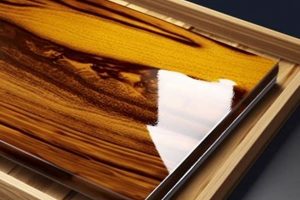
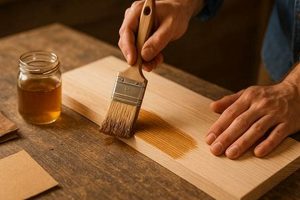
Protective coatings and treatments applied to wooden surfaces to enhance their appearance and durability are essential in woodworking and construction. These applications range from transparent sealants that highlight the natural grain to pigmented stains that alter the wood’s color. An example includes applying a clear polyurethane to a hardwood floor to protect it from scratches and moisture.
The selection of a suitable treatment is crucial for preserving wood integrity and extending its lifespan. These treatments shield the underlying material from environmental factors such as sunlight, moisture, and abrasion. Historically, natural oils and waxes were employed, but modern formulations offer improved resistance and longevity, contributing significantly to the aesthetic and functional value of wood products.
The following sections will delve into various types of surface treatments, examining their specific properties, application techniques, and suitability for different wood species and end-use applications. Considerations for surface preparation, application methods, and appropriate safety precautions will also be addressed.
Enhancing Wood Surfaces
Achieving a professional-quality result requires careful planning and execution. The following guidelines offer valuable insights for successful wood surface treatment.
Tip 1: Prioritize Surface Preparation: Thoroughly sand the wood surface, progressing through increasingly finer grits of sandpaper. Remove all dust and debris before applying any treatment. For example, unfinished furniture must be sanded smooth before staining to ensure even color absorption.
Tip 2: Select the Appropriate Treatment: Match the protective coating to the wood species and intended use. Water-based acrylics are suitable for interior applications, while oil-based polyurethanes offer superior durability for exterior projects. Consider the specific requirements of the project, such as UV resistance for outdoor furniture.
Tip 3: Perform a Test Application: Before applying a surface treatment to the entire project, test it on a small, inconspicuous area. This allows for verifying the color and sheen, as well as compatibility with the wood. Observe the treated area in various lighting conditions to accurately assess the final appearance.
Tip 4: Apply Thin, Even Coats: Multiple thin coats of product are preferable to a single thick coat. This prevents runs, drips, and uneven drying. Employ a high-quality brush or sprayer to ensure uniform application. Allow each coat to dry completely before applying the next.
Tip 5: Consider the Ambient Conditions: Temperature and humidity can significantly impact the drying time and overall finish quality. Avoid applying coatings in direct sunlight or excessively humid environments. Follow the manufacturer’s recommendations regarding optimal application conditions.
Tip 6: Use Proper Safety Measures: Wear appropriate personal protective equipment, including gloves, a respirator, and eye protection. Ensure adequate ventilation when working with solvent-based products. Refer to the product’s safety data sheet for specific hazard information.
Tip 7: Allow Adequate Curing Time: Even after a coating appears dry to the touch, it may not be fully cured. Allow sufficient time for the treatment to harden completely before subjecting the wood surface to heavy use. Consult the manufacturer’s guidelines for recommended curing times.
Adhering to these suggestions will result in a durable and aesthetically pleasing outcome, enhancing both the appearance and longevity of the wood. Careful consideration of these points translates to a professional-quality finish.
The subsequent sections will provide information on maintaining treated wood surfaces and addressing common issues.
1. Protection

The primary function of any wood finish is to protect the underlying wood from environmental damage. This protective barrier mitigates the effects of moisture, ultraviolet radiation, physical abrasion, and chemical exposure. Without adequate surface protection, wood is susceptible to warping, cracking, rot, discoloration, and degradation. The selection of an appropriate surface treatment is therefore critical for preserving the integrity and longevity of wooden structures and objects. Consider exterior doors; without a protective coating, they are vulnerable to swelling and distortion due to moisture absorption, ultimately compromising their functionality and structural soundness.
The level of protection required is dependent on the intended use and environmental conditions. Exterior applications necessitate treatments with UV inhibitors and water repellents, while interior applications may prioritize abrasion resistance and chemical resistance. For example, a kitchen countertop requires a finish that is resistant to spills and cleaning agents, while a bookshelf may only require protection from dust and scratches. Failure to select a treatment appropriate for the intended use can lead to premature failure of the finish and subsequent damage to the wood. Furthermore, certain treatments offer specific protection against biological threats such as fungal growth or insect infestation.
Ultimately, effective wood surface treatments represent an investment in the long-term preservation of wooden assets. The initial cost of applying a high-quality surface treatment is often significantly less than the cost of repairing or replacing damaged wood. Therefore, prioritizing protection is a fundamental aspect of achieving a functional and lasting result. The challenge lies in selecting a finish that not only provides adequate protection but also enhances the natural beauty of the wood and meets aesthetic requirements.
2. Durability

Durability, in the context of wood surface treatments, refers to the ability of a coating to withstand wear, tear, and degradation over an extended period. It is a critical factor in determining the long-term performance and aesthetic appeal of wood products.
- Resistance to Abrasion
Abrasion resistance signifies a finish’s capacity to withstand scratching, scuffing, and rubbing from everyday use. For example, a durable floor finish must resist damage from foot traffic and furniture movement. A lack of abrasion resistance leads to surface imperfections, diminishing the aesthetic value and protective properties of the coating. Durable finishes, like those incorporating ceramic particles, offer enhanced protection in high-traffic areas.
- Resistance to Moisture
Moisture resistance indicates a finish’s ability to repel water and prevent water absorption into the underlying wood. Water absorption can cause swelling, warping, cracking, and ultimately, rot. A durable exterior finish, such as marine-grade varnish, protects wooden boats from constant exposure to water. The inclusion of water-repellent additives improves the finish’s ability to shield wood from moisture damage, prolonging its lifespan.
- Resistance to Chemical Exposure
Chemical resistance defines a finish’s capacity to withstand exposure to cleaning agents, solvents, and other potentially damaging chemicals. Kitchen countertops and laboratory surfaces require finishes that resist staining and degradation from spills. Epoxy coatings, known for their chemical inertness, provide excellent protection in these environments. Inadequate chemical resistance leads to discoloration, softening, or complete removal of the finish, exposing the wood to damage.
- Resistance to UV Degradation
UV resistance denotes the finish’s capability to withstand the degrading effects of ultraviolet radiation from sunlight. Prolonged exposure to UV rays can cause finishes to fade, chalk, or crack, reducing their protective properties. Exterior wood surfaces, such as siding and decks, benefit from finishes with UV absorbers or stabilizers. These additives minimize the damage caused by sunlight, extending the life and maintaining the appearance of the surface treatment.
The integration of these durable properties into wood surface treatments is essential for ensuring the longevity and sustained beauty of wood products. Selecting a finish that effectively addresses these challenges significantly enhances the overall value and performance of the treated wood.
3. Aesthetics

The aesthetic properties of wood finishes are a critical component of their overall value, directly influencing the perceived quality and desirability of the finished product. The choice of a particular surface treatment can dramatically alter the visual characteristics of the wood, affecting its color, sheen, and the visibility of its natural grain. This aesthetic impact extends beyond mere decoration; it shapes the emotional response and functional suitability of the wood for its intended purpose. For example, a high-gloss finish on a dining table may convey formality and elegance, whereas a matte finish on a rustic bookshelf might evoke a sense of warmth and authenticity. The absence of an appropriate aesthetic consideration can lead to a finished product that, while functionally sound, fails to meet the desired visual expectations.
The application of a specific surface treatment initiates a cause-and-effect relationship between the finish and the wood’s inherent characteristics. A transparent finish, for instance, allows the wood’s natural color and grain patterns to remain prominent, enhancing its inherent beauty. Conversely, opaque stains or paints can completely obscure the wood’s natural features, providing an opportunity to introduce entirely new colors or textures. In practical application, the selection of a finish is often driven by the need to match existing design elements or to achieve a specific aesthetic effect. A dark stain applied to oak flooring can create a sense of depth and sophistication, while a light, whitewashed finish can brighten a room and create a more casual atmosphere. The ability to manipulate these aesthetic variables is a key advantage of employing surface treatments in woodworking.
In summary, aesthetic considerations are inextricably linked to the concept of effective wood surface treatments. The selection of an appropriate finish involves balancing functional requirements with the desired visual outcome. Challenges arise when attempting to reconcile conflicting goals, such as achieving maximum durability while maintaining a natural appearance. Ultimately, a successful wood surface treatment is one that not only protects and preserves the wood but also enhances its aesthetic qualities, contributing to the overall value and appeal of the finished product. This integration of function and aesthetics represents a key aspect of quality in wood finishing.
4. Adhesion
Adhesion, in the context of wood surface treatments, represents the strength of the bond between the coating and the wood substrate. It is a fundamental requirement for effective and long-lasting performance. Inadequate adhesion leads to premature failure of the finish, manifesting as peeling, flaking, or blistering. The consequences of poor adhesion extend beyond aesthetic degradation; it compromises the protective function of the coating, leaving the wood vulnerable to environmental damage. For example, if the paint on exterior siding lacks proper adhesion, moisture can penetrate beneath the paint film, leading to wood rot and structural damage. The relationship between substrate and coating is, therefore, paramount.
Effective adhesion relies on several factors, including surface preparation, coating chemistry, and application technique. Proper surface preparation involves removing contaminants such as dirt, grease, and loose wood fibers, as well as creating a slightly roughened surface to promote mechanical interlocking. The choice of coating must be compatible with the wood species and its intended use. Some wood species, like oily hardwoods, require specific primers or surface treatments to enhance adhesion. The application technique must ensure uniform coverage and proper wetting of the wood surface, facilitating a strong bond. Inadequate surface preparation or incompatible coatings results in a weak adhesive bond, regardless of the product’s inherent quality. As a tangible example, consider the application of varnish to a freshly sanded wooden boat hull. If the hull is not thoroughly cleaned and de-greased, the varnish may not adhere properly, leading to premature peeling and requiring costly repairs.
In conclusion, adhesion is an indispensable component of effective wood surface treatments. It directly impacts the durability, protective qualities, and aesthetic appeal of the finished product. Addressing adhesion challenges requires a thorough understanding of surface preparation techniques, coating chemistry, and application best practices. Recognizing the importance of a strong and lasting bond between the coating and the wood substrate is crucial for ensuring the long-term performance and preservation of wooden structures and objects.
5. Application

The successful realization of wood surface treatments hinges significantly on the application process. Adherence to established best practices and an understanding of the material properties directly influence the outcome. Incorrect application techniques undermine the protective and aesthetic qualities of even the highest-quality coatings. This necessitates careful consideration of methods and environmental factors.
- Surface Preparation Techniques
Effective surface preparation is paramount for ensuring adequate adhesion and a uniform finish. Sanding, cleaning, and priming are essential steps that directly influence the final outcome. For instance, failure to properly sand a wooden surface can result in uneven stain absorption and a blotchy appearance. Proper execution of these techniques ensures optimal bonding between the coating and the wood substrate, contributing to the longevity of the treatment.
- Application Method Selection
The choice of application method, whether brushing, spraying, or wiping, is dictated by the type of coating, the size and complexity of the project, and the desired finish quality. Brushing is often suitable for smaller projects and intricate details, while spraying provides a more uniform finish on larger surfaces. Incorrect selection can result in brush marks, runs, or an uneven coating thickness. Selecting the appropriate method optimizes efficiency and enhances the final appearance.
- Environmental Condition Management
Ambient temperature, humidity, and air circulation significantly impact the drying time and overall finish quality. Applying coatings in excessively humid or cold conditions can lead to prolonged drying times, clouding, or poor adhesion. Controlling these environmental factors is crucial for achieving optimal results. For example, adequate ventilation is necessary when applying solvent-based finishes to prevent the accumulation of hazardous vapors and to facilitate proper drying.
- Number of Coats and Drying Time Adherence
Applying the correct number of coats, with adequate drying time between each coat, is essential for achieving the desired level of protection and aesthetic appeal. Insufficient coats may compromise the protective barrier, while excessive coats can lead to runs or an overly thick, plastic-like appearance. Strict adherence to the manufacturer’s recommended drying times ensures proper curing and maximizes the durability of the finish. This discipline in application is key to a superior outcome.
These facets demonstrate the vital role of application in achieving successful and long-lasting wood surface treatments. By mastering these techniques and considering the influencing factors, one can significantly enhance the performance and visual appeal of finished wood products. The integration of knowledge, skill, and careful execution is essential for maximizing the benefits of any surface treatment.
6. Maintenance
Sustaining the integrity and aesthetic appeal of surface treatments necessitates consistent and appropriate maintenance protocols. Regular attention and preventative measures extend the lifespan and enhance the performance of finishes, ensuring that the protective barrier remains effective and visually appealing. Neglecting maintenance leads to premature degradation, necessitating costly repairs or complete refinishing.
- Regular Cleaning Practices
Routine cleaning removes accumulated dirt, dust, and debris, preventing the build-up of contaminants that can scratch or dull the finish. For example, hardwood floors benefit from regular sweeping and damp mopping with a pH-neutral cleaner. Ignoring these practices allows abrasive particles to damage the surface, reducing its sheen and protective capabilities. Appropriate cleaning prevents the need for more aggressive restoration methods.
- Protective Measures Against Wear
Employing protective measures, such as furniture pads, coasters, and mats, minimizes physical wear and tear on treated surfaces. These precautions reduce the risk of scratches, dents, and water rings, preserving the finish’s integrity. For example, placing felt pads under chair legs prevents scratches on hardwood floors. The implementation of these protective strategies significantly extends the life of the finish.
- Periodic Reapplication of Protective Coatings
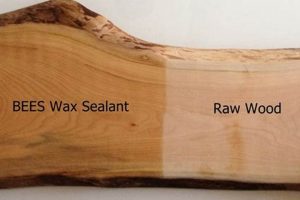
Certain finishes, such as wax or oil-based treatments, require periodic reapplication to maintain their protective properties and aesthetic qualities. Reapplication replenishes the protective barrier, compensating for wear and tear caused by environmental factors and daily use. Wooden furniture, for example, may benefit from regular waxing to maintain its sheen and protect it from moisture. Timely reapplication prevents the finish from becoming brittle or worn, avoiding the need for more extensive restoration.
- Prompt Repair of Damage
Addressing minor damage, such as scratches or chips, promptly prevents further degradation of the finish and the underlying wood. Timely repairs limit the extent of the damage and prevent the development of more significant problems. For example, filling small scratches in a varnished surface with a touch-up pen prevents moisture from penetrating the wood. This proactive approach minimizes the need for extensive repairs or complete refinishing.
These maintenance practices represent a crucial investment in preserving the quality and longevity of wood surface treatments. The adherence to these protocols ensures that the protective and aesthetic properties of finishes are maintained over time, maximizing the value and extending the lifespan of treated wood products. Consistent attention and proactive measures are essential components of ensuring the continued success of any surface treatment application.
Frequently Asked Questions About Wood Surface Treatments
This section addresses common inquiries and clarifies misconceptions regarding the selection, application, and maintenance of wood surface treatments. The aim is to provide concise and authoritative answers to ensure informed decision-making.
Question 1: What factors determine the most suitable wood surface treatment for a given project?
The selection of a treatment depends on the wood species, intended use (interior or exterior), desired aesthetic, and expected level of wear. Exterior applications require UV protection and water resistance, while interior applications may prioritize abrasion resistance. The wood species affects the finish’s absorption rate and color.
Question 2: How does surface preparation affect the longevity of wood surface treatments?
Proper surface preparation, including sanding, cleaning, and priming, is critical for adhesion. Contaminants and loose wood fibers impede bonding, leading to premature failure. A smooth, clean surface promotes uniform absorption and enhances the durability of the finish.
Question 3: What are the key differences between oil-based and water-based wood surface treatments?
Oil-based treatments offer enhanced durability, penetration, and resistance to water damage but typically have higher VOC content and longer drying times. Water-based treatments have lower VOCs, faster drying times, and easier cleanup but may not provide the same level of durability as oil-based options.
Question 4: How can one prevent common application problems, such as brush marks, runs, and uneven coverage?
Applying thin, even coats with a high-quality brush or sprayer, maintaining proper viscosity, and working in a well-ventilated area are crucial. Overlapping strokes, avoiding excessive pressure, and allowing sufficient drying time between coats minimize application imperfections.
Question 5: What maintenance practices are recommended for preserving wood surface treatments?
Regular cleaning with pH-neutral cleaners, protection from physical damage (furniture pads, coasters), and periodic reapplication of protective coatings (wax, oil) are essential. Promptly repairing minor damage, such as scratches or chips, prevents further degradation.
Question 6: How does one address common problems, such as peeling, flaking, or blistering of wood surface treatments?
These issues typically indicate poor adhesion, often due to inadequate surface preparation or incompatible coatings. Removing the existing finish, properly preparing the surface, and applying a compatible, high-quality finish are necessary for remediation.
Effective wood surface treatments demand careful consideration of factors ranging from material selection to application techniques and ongoing maintenance. Addressing these frequently asked questions provides a foundation for achieving successful and long-lasting results.
The following section will summarize the key principles discussed and provide concluding remarks regarding the importance of informed decision-making in wood finishing.
Conclusion
This exposition has detailed the multifaceted aspects of the application and selection processes involved in achieving effective surface treatments. The discussed parameters, encompassing protection, durability, aesthetics, adhesion, application techniques, and long-term maintenance, collectively contribute to the ultimate success or failure of any endeavor centered on wood preservation and enhancement. The attainment of an enduring and aesthetically pleasing outcome is predicated upon a comprehensive understanding and skillful implementation of these key principles.
The pursuit of quality in wood finishing demands a commitment to informed decision-making and meticulous execution. Continued diligence in the application of appropriate practices will ensure the sustained value and longevity of wood products. The implications of neglecting these considerations extend beyond mere aesthetics, impacting the structural integrity and long-term preservation of wood-based assets. Therefore, thoughtful consideration should be given to the methods and materials employed.
![Buy Quality Finished Shelf Wood - [Your Brand] | Best Final Touch: Elevate Your Projects with Professional Finishing](https://bestfinaltouch.com/wp-content/uploads/2026/05/th-447-300x200.jpg "Buy Quality Finished Shelf Wood - [Your Brand] Best Final Touch: Elevate Your Projects with Professional Finishing")
![Buy Premium Walnut Finished Wood [Deals Inside] | Best Final Touch: Elevate Your Projects with Professional Finishing](https://bestfinaltouch.com/wp-content/uploads/2026/05/th-405-300x200.jpg "Buy Premium Walnut Finished Wood [Deals Inside] Best Final Touch: Elevate Your Projects with Professional Finishing")