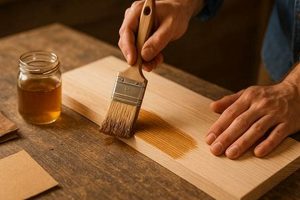
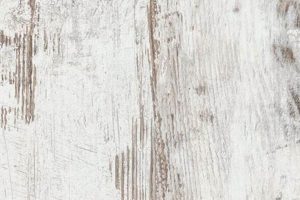
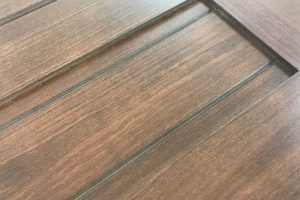
A coating cured by ultraviolet radiation offers a durable and aesthetically pleasing surface treatment for wooden materials. This process involves applying a specialized liquid formula that hardens almost instantly when exposed to specific wavelengths of light. The result is a robust layer that protects the wood beneath and enhances its visual appeal.
This method of surface treatment is valued for its speed, efficiency, and environmentally friendly aspects, such as low volatile organic compound (VOC) emissions. Historically, traditional wood finishes required lengthy drying times and often contained higher levels of solvents. This curing process provides a significantly faster and more sustainable alternative, improving production timelines and reducing environmental impact.
The subsequent sections will examine the application process, performance characteristics, different types available, and considerations for selecting the appropriate option for various wood products and applications. This will provide a thorough understanding of its uses and advantages within the wood finishing industry.
Essential Considerations for Ultraviolet-Cured Wood Coatings
Achieving optimal results with ultraviolet-cured coatings on wood requires careful attention to several key factors. Proper preparation and informed selection are critical for a successful outcome.
Tip 1: Substrate Preparation: Ensure the wood surface is clean, dry, and free of contaminants such as dust, grease, and previous coatings. Sanding the wood to a consistent smoothness is crucial for adhesion and even application.
Tip 2: Coating Selection: Choose a formulation specifically designed for the intended wood species and application. Consider factors like hardness, flexibility, gloss level, and resistance to chemicals and abrasion.
Tip 3: Application Method: Apply the coating using appropriate equipment such as sprayers or rollers, ensuring a uniform and controlled film thickness. Adhere to the manufacturer’s recommendations for application rates and techniques.
Tip 4: Curing Parameters: Precisely control the ultraviolet light source’s intensity, wavelength, and exposure duration to ensure complete and proper curing. Monitor temperature to prevent overheating and potential damage to the wood.
Tip 5: Safety Precautions: Employ appropriate personal protective equipment (PPE) during application and curing, including eye protection, gloves, and respirators, to minimize exposure to ultraviolet radiation and chemical vapors.
Tip 6: Maintenance Procedures: Implement routine cleaning and maintenance practices using approved products to prolong the coating’s lifespan and maintain its aesthetic qualities. Avoid harsh chemicals and abrasive cleaners.
Tip 7: Environmental Conditions: Control environmental factors such as humidity and temperature within the recommended range during application and curing. Extreme conditions can affect coating properties and curing rates.
Adhering to these considerations will contribute to a durable, visually appealing, and long-lasting finish, maximizing the benefits. These guidelines emphasize the importance of meticulous execution.
The subsequent sections will delve into common issues and troubleshooting techniques associated with ultraviolet-cured wood coatings. This will provide a thorough understanding of its uses and advantages within the wood finishing industry.
1. Durability

Durability represents a paramount attribute when evaluating ultraviolet-cured coatings for wooden materials. This characteristic directly impacts the longevity and performance of the finished product, determining its capacity to withstand various environmental and physical stresses.
- Abrasion Resistance
Abrasion resistance defines the coating’s ability to withstand surface wear from friction, impact, and contact with abrasive materials. Ultraviolet-cured coatings, known for their high cross-link density, typically exhibit superior abrasion resistance compared to traditional finishes. For instance, furniture surfaces subjected to frequent use benefit significantly from the enhanced protection against scratches and scuffs provided by a durable ultraviolet-cured layer. This trait ensures the maintained aesthetic appeal and structural integrity of the wood product over extended periods.
- Chemical Resistance
Chemical resistance denotes the coating’s ability to withstand exposure to various chemicals, including household cleaners, solvents, and acids. Ultraviolet-cured coatings often demonstrate excellent resistance to chemical degradation, preventing staining, discoloration, and softening of the finish. Kitchen cabinets, laboratory benchtops, and other surfaces prone to chemical contact require finishes with robust chemical resistance to maintain their appearance and functionality. This aspect contributes to a lower maintenance burden and prolonged service life.
- Moisture Resistance
Moisture resistance signifies the coating’s ability to resist water absorption and penetration, preventing swelling, warping, and decay of the wood substrate. Ultraviolet-cured coatings can provide a highly impermeable barrier against moisture, protecting the wood from environmental humidity, spills, and condensation. Outdoor furniture and flooring in damp environments benefit substantially from the moisture resistance offered by these coatings, as it safeguards against structural damage and fungal growth.
- UV Resistance
Beyond their method of curing, resistance to ultraviolet radiation is an aspect of durability. The ability of the finish itself to resist degradation from sunlight is essential to prevent yellowing, chalking, and loss of gloss. Additives incorporated into the formulation can significantly improve UV resistance, making them suitable for outdoor applications where constant sun exposure is expected.
In conclusion, the durability afforded by ultraviolet-cured coatings plays a critical role in preserving the quality and extending the service life of finished wood products. The combined effect of abrasion, chemical, and moisture resistance enhances the value proposition of these coatings, making them a desirable choice for a wide range of applications where longevity and performance are paramount.
2. Adhesion

Adhesion, the ability of a coating to bond firmly to the wood substrate, is a critical performance characteristic of ultraviolet (UV) cured wood finishes. Inadequate adhesion leads to premature failure, manifesting as peeling, chipping, or blistering, thereby compromising the protective and aesthetic functions of the finish. The bond strength between the coating and the wood surface is influenced by several factors, including the cleanliness and preparation of the wood, the chemical compatibility between the finish and the wood species, and the proper application and curing parameters. For example, oily wood species like teak require thorough degreasing before the application of a UV finish to ensure adequate adhesion. Similarly, improper sanding can leave a smooth, non-porous surface, preventing the finish from establishing a mechanical bond with the wood fibers.
The chemical composition of the UV finish itself plays a significant role in adhesion. Formulations often include adhesion promoters, which are specialized additives designed to enhance the interaction between the coating and the wood surface. These promoters may function by creating covalent bonds, hydrogen bonds, or electrostatic interactions that strengthen the interface. Furthermore, the application process directly affects adhesion. A uniform coating thickness, achieved through proper spraying techniques, ensures that the UV light adequately penetrates the finish, facilitating complete crosslinking and maximizing bond strength. Conversely, excessive coating thickness can hinder UV penetration, resulting in a partially cured layer with reduced adhesion. In real-world applications, the consequences of poor adhesion are evident in environments with high humidity or temperature fluctuations, where the differential expansion and contraction of the wood and the finish place additional stress on the bond.
Achieving optimal adhesion is paramount for realizing the full benefits of UV finishes on wood. Consistent surface preparation, careful selection of compatible finishes, and meticulous control over the application and curing processes are essential. Overcoming the challenges associated with adhesion requires a comprehensive understanding of the interactions between the wood substrate and the coating, coupled with adherence to industry best practices. The cost and effort associated with ensuring good adhesion upfront are justified by the increased durability, longevity, and overall performance of the finished wood product, reducing the need for frequent repairs or replacements.
3. Curing Speed
The defining characteristic of ultraviolet (UV) cured wood finishes is their exceptionally rapid curing speed, which distinguishes them from traditional finishing methods. This rapid curing process, often completed in seconds, is initiated by exposing the applied liquid coating to intense UV radiation. The UV light triggers a photochemical reaction, causing the liquid monomers and oligomers within the coating to polymerize and crosslink almost instantaneously. The resulting solid, durable film exhibits enhanced resistance to abrasion, chemicals, and moisture. In contrast to conventional finishes that require hours or even days to dry and cure, the accelerated curing of UV finishes drastically reduces production time and minimizes the potential for dust or other contaminants to settle on the surface during the drying process. The efficiency gains translate directly into increased throughput, reduced inventory holding costs, and faster order fulfillment.
The practical implications of curing speed are particularly evident in high-volume manufacturing environments. For example, furniture manufacturers employing UV finishing lines can significantly increase their daily output compared to those using traditional solvent-based finishes. The ability to immediately stack or package finished products after UV curing eliminates the need for extensive drying racks and reduces the floor space required for the finishing operation. Furthermore, the rapid curing process enables the application of multiple coats in quick succession, achieving desired film thickness and performance characteristics in a fraction of the time. In the automotive industry, UV-cured coatings are used on interior wood trim to provide a durable and aesthetically pleasing finish while meeting stringent production deadlines. The short curing cycle allows for seamless integration of the finishing process into the overall assembly line.
The significance of curing speed in ultraviolet cured wood finishes extends beyond mere production efficiency. The rapid transformation from liquid to solid minimizes the opportunity for solvents to evaporate, resulting in lower volatile organic compound (VOC) emissions and a more environmentally friendly finishing process. While the initial investment in UV curing equipment may be higher than that for traditional finishing systems, the long-term benefits of increased productivity, reduced VOC emissions, and enhanced product quality often justify the expenditure. Challenges remain in optimizing the curing parameters for different wood species and coating formulations to ensure complete and uniform curing without compromising the structural integrity of the wood. Continuous advancements in UV lamp technology and coating chemistry are further refining the process, expanding the application possibilities, and solidifying the position of UV cured finishes as a preferred choice for wood finishing applications.
4. VOC Emission

Volatile Organic Compound (VOC) emission is a crucial consideration in the context of wood finishes, with ultraviolet (UV) cured options presenting a significant advantage. Traditional wood finishes often rely on solvents that evaporate during the drying process, releasing VOCs into the atmosphere. These compounds contribute to air pollution, pose health risks, and are subject to increasingly stringent environmental regulations. The shift towards UV finishes is largely driven by their inherent ability to minimize or eliminate solvent use.
UV-curable formulations consist primarily of reactive monomers and oligomers that polymerize upon exposure to UV light. This curing mechanism bypasses the need for significant solvent content, resulting in finishes with substantially reduced VOC emissions. The practical implications are considerable. Industries adopting UV finishes can achieve compliance with environmental standards, reduce their carbon footprint, and create healthier working environments for employees. For example, furniture manufacturers transitioning to UV coatings experience a marked decrease in VOC emissions compared to traditional solvent-based systems. This transition often translates into cost savings through reduced regulatory burdens and improved worker safety, highlighting the direct correlation between VOC emission and the adoption of UV finishes.
Understanding the reduced VOC emission profile of UV-cured wood finishes is essential for making informed decisions regarding material selection and environmental responsibility. The technology offers a compelling pathway for minimizing air pollution and promoting sustainability within the wood finishing industry. The ongoing development of low-VOC UV formulations further underscores the commitment to environmental stewardship and provides a viable alternative for applications where traditional finishes pose significant environmental concerns.
5. Appearance

Appearance is a critical factor when considering the application of ultraviolet (UV) finishes to wood, significantly influencing the perceived value and marketability of the finished product. The selection of a UV finish directly impacts various aspects of visual appeal, ranging from the clarity and depth of the coating to its ability to enhance or alter the natural characteristics of the wood grain.
- Gloss Level
Gloss level, ranging from matte to high gloss, dictates the amount of light reflected from the surface of the UV-finished wood. A high-gloss finish creates a reflective, mirror-like surface, often used to accentuate the vibrancy of colors and create a sense of luxury. Matte finishes, on the other hand, reduce glare and provide a more subdued, natural look, often preferred for applications where subtlety and texture are desired. The choice of gloss level is a key design decision, influencing the overall aesthetic impression and suitability for specific applications, such as furniture, cabinetry, or flooring.
- Clarity and Transparency
The clarity and transparency of the UV finish determine the extent to which the underlying wood grain and color are visible. High-clarity finishes allow the natural beauty of the wood to shine through, enhancing the grain patterns and preserving the authenticity of the material. In contrast, tinted or opaque UV finishes can be used to modify the wood’s color, create uniform appearances, or conceal imperfections. The degree of clarity is crucial for highlighting the inherent characteristics of the wood while also providing the desired protective and aesthetic properties.
- Color Retention
The ability of the UV finish to resist yellowing or discoloration over time is essential for maintaining the long-term appearance of the wood product. UV finishes with superior color retention properties protect the wood from the harmful effects of ultraviolet radiation, preventing fading, chalking, and other forms of degradation. This is particularly important for light-colored woods or finishes where color consistency is paramount. Enhanced color retention contributes to the longevity and aesthetic appeal of the finished product, ensuring that it retains its original beauty for years to come.
- Surface Smoothness
The smoothness of the UV finish directly impacts the tactile feel and visual quality of the surface. A smooth, defect-free finish enhances the overall user experience and conveys a sense of quality and craftsmanship. Proper application techniques, including meticulous surface preparation and controlled curing, are essential for achieving a smooth finish that is free from imperfections such as orange peel, pinholes, or runs. The surface smoothness contributes to the overall aesthetic appeal and is often a key factor in determining the perceived value of the finished product.
In conclusion, appearance is inextricably linked to the selection and application of UV finishes for wood. The interplay between gloss level, clarity, color retention, and surface smoothness dictates the overall visual impact and desirability of the finished product. Careful consideration of these factors ensures that the chosen UV finish not only provides protection and durability but also enhances the inherent beauty of the wood, creating a product that is both functional and aesthetically pleasing. The ability to manipulate these aspects of appearance is central to the widespread adoption of UV finishing across various wood product industries.
6. Wood Species
The selection of wood species is a foundational consideration when employing ultraviolet (UV) cured finishes. The inherent properties of different wood types significantly influence the adhesion, appearance, and long-term performance of the applied finish. Understanding these interactions is critical for achieving optimal results and avoiding potential issues such as delamination, discoloration, or premature failure.
- Density and Porosity
Wood density and porosity affect finish absorption and adhesion. Dense hardwoods, like maple or oak, often require surface preparation to enhance adhesion, while porous softwoods, like pine, may absorb excessive amounts of finish, necessitating sealers. For instance, applying a UV finish to open-grained oak without proper filling can result in an uneven surface. The correct approach involves selecting a finish formulation and application method that account for the wood’s inherent porosity.
- Oil and Resin Content
The presence of natural oils and resins in certain wood species, such as teak or rosewood, can interfere with the curing and adhesion of UV finishes. These substances may migrate to the surface, preventing proper bonding and leading to finish defects. It is often necessary to pretreat oily woods with solvents to remove surface oils before applying the UV finish. Skipping this step can compromise the integrity of the finish, resulting in premature failure.
- Color and Grain Pattern
The natural color and grain pattern of wood impact the aesthetic outcome of the UV finish. Transparent UV finishes enhance the natural beauty of wood, while tinted finishes can alter or mask the underlying color. The choice depends on the desired visual effect. For example, a clear UV finish on cherry wood highlights its rich, reddish hue, while a pigmented finish can transform it to a different color entirely. The selection must align with the intended design and aesthetic goals.
- Dimensional Stability
Dimensional stability refers to the wood’s tendency to expand or contract with changes in moisture content. Woods with high dimensional instability can place stress on the UV finish, leading to cracking or peeling. It is crucial to select a UV finish that offers flexibility and elasticity to accommodate these movements. For example, using a rigid UV finish on a dimensionally unstable wood like beech could result in premature failure of the coating. Therefore, the choice of finish must consider the wood’s propensity to expand and contract.
These facets underscore the importance of aligning the selection of wood species with the appropriate UV finish formulation and application techniques. Considering density, oil content, color, and stability allows for the creation of durable and aesthetically pleasing wood products. This comprehensive approach ensures that the chosen UV finish complements the inherent characteristics of the wood, resulting in a high-quality, long-lasting result.
Frequently Asked Questions about Ultraviolet (UV) Finishes for Wood
This section addresses common inquiries regarding the application, performance, and properties of UV finishes for wood, offering clarity on key aspects of this technology.
Question 1: What distinguishes UV finishes from traditional wood finishes?
UV finishes cure rapidly upon exposure to ultraviolet light, forming a durable, chemically resistant surface. Traditional finishes typically rely on air drying or heat curing, processes that can take significantly longer and may involve higher VOC emissions.
Question 2: Are UV finishes environmentally friendly?
UV finishes generally contain lower levels of volatile organic compounds (VOCs) compared to many traditional finishes, making them a more environmentally conscious choice. This reduction in VOCs contributes to improved air quality and reduced environmental impact.
Question 3: What types of wood are suitable for UV finishing?
While UV finishes can be applied to a wide range of wood species, preparation may vary depending on the wood’s density, oil content, and porosity. Hardwoods and softwoods alike can benefit from UV finishing, provided appropriate surface preparation and finish selection are implemented.
Question 4: How durable are UV finishes compared to other options?
UV finishes are known for their exceptional durability, exhibiting high resistance to abrasion, chemicals, and moisture. This durability makes them suitable for high-traffic areas and surfaces subjected to frequent use.
Question 5: Can UV finishes be repaired if damaged?
Repairing UV finishes can be challenging due to their unique curing properties. Minor scratches may be addressed with specialized touch-up products, but more extensive damage may necessitate refinishing the entire surface.
Question 6: What safety precautions are necessary when applying UV finishes?
Appropriate personal protective equipment (PPE), including eye protection and gloves, should be worn to minimize exposure to UV radiation and chemical vapors. Adequate ventilation is also crucial to ensure a safe working environment.
UV finishes offer a compelling combination of durability, environmental benefits, and aesthetic versatility, making them a preferred choice for numerous wood finishing applications.
The subsequent sections will delve into common issues and troubleshooting techniques associated with ultraviolet-cured wood coatings. This will provide a thorough understanding of its uses and advantages within the wood finishing industry.
Conclusion
The preceding exploration of ultraviolet (UV) finish for wood elucidates its multifaceted nature, encompassing considerations from substrate preparation and coating selection to curing parameters and long-term performance. The analysis emphasizes the importance of understanding both the advantages and limitations of this technology to ensure its effective application.
Continued advancements in UV-curable formulations and application techniques promise further refinements in wood finishing, offering improved durability, reduced environmental impact, and enhanced aesthetic possibilities. A commitment to informed decision-making and adherence to best practices remains paramount in realizing the full potential of UV finish for wood across diverse industries.