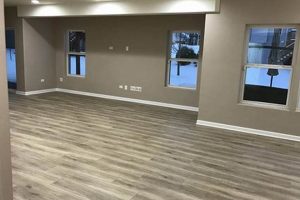
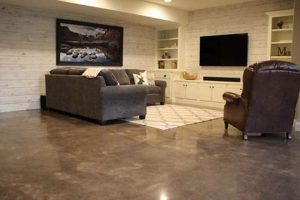
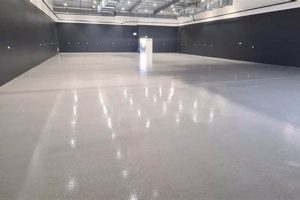
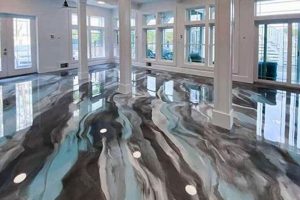
Treating the lower level subfloor with a topcoat transforms a rough, gray surface into a durable, aesthetically pleasing foundation for a livable space. This process typically involves cleaning, repairing imperfections, and applying a sealant or coating for protection and visual appeal. Common examples include epoxy coatings, paints designed for concrete, or even overlay systems that mimic other flooring materials.
This enhancement offers numerous advantages. It increases the value of the property by making the basement more functional and attractive. It provides a moisture barrier, preventing water damage and mold growth, thereby improving air quality. Furthermore, a properly treated surface is easier to clean and maintain than bare concrete, contributing to a healthier living environment. Historically, such surface treatments were primarily utilitarian, but modern techniques allow for a wide range of decorative options, transforming a basic foundation into an integral part of the home’s design.
The following sections will delve into the specifics of surface preparation, different types of coating options available, and the long-term maintenance required to ensure the longevity and beauty of this essential home improvement project. We will also explore cost considerations and best practices for both professional installation and do-it-yourself applications.
Essential Considerations for Basement Subfloor Surface Treatment
Attention to detail during the subfloor surface treatment process is crucial for achieving a durable and aesthetically pleasing result. The following points offer guidance for ensuring success.
Tip 1: Moisture Assessment: Prior to any surface treatment, thoroughly assess the concrete’s moisture content. Excessive moisture can compromise the adhesion of coatings and lead to long-term failures. Conduct a calcium chloride test or utilize an electronic moisture meter to obtain accurate readings.
Tip 2: Surface Preparation is Paramount: Proper preparation is essential. This includes removing any existing coatings, adhesives, or contaminants through methods such as grinding, shot blasting, or acid etching. The surface must be clean, dry, and porous to ensure adequate bonding.
Tip 3: Repair Imperfections Before Coating: Address cracks, holes, and other surface irregularities with a suitable concrete patching compound. Allow the patching compound to fully cure and grind it flush with the surrounding surface before applying any coatings.
Tip 4: Choose the Right Coating: Select a coating system designed specifically for concrete basement floors. Epoxy coatings offer excellent durability and chemical resistance, while acrylic sealers provide a more breathable option. Consider the intended use of the space and the desired aesthetic when making the selection.
Tip 5: Apply Multiple Thin Coats: Instead of applying a single thick coat, apply multiple thin coats of the chosen coating. This allows for better curing, reduces the risk of bubbling or cracking, and provides a more uniform finish.
Tip 6: Ensure Adequate Ventilation: Adequate ventilation during the application and curing process is vital, especially when using solvent-based coatings. Open windows and use fans to promote airflow and prevent the accumulation of harmful fumes.
Tip 7: Allow Sufficient Curing Time: Adhere to the manufacturer’s recommended curing time before subjecting the treated surface to heavy traffic or furniture. Premature use can damage the coating and compromise its longevity.
Tip 8: Consider a Professional Application: For complex projects or when dealing with significant surface imperfections, consider hiring a professional contractor experienced in concrete floor coatings. Proper surface preparation and application techniques are critical for long-term performance.
By carefully considering these tips, property owners can ensure a successful subfloor surface treatment that enhances the value, functionality, and aesthetics of their basement space.
The following section will explore common problems encountered during basement subfloor treatments and provide solutions for addressing them effectively.
1. Preparation

The initial stage of surface enhancement, encompassing thorough cleaning and repair, serves as the foundational component for a successful project. Improper preparation directly undermines the integrity and longevity of any subsequent coatings or treatments. Cleaning eliminates contaminants such as dust, oil, and previous adhesive residues that impede proper adhesion. Repairing cracks, holes, and other surface imperfections creates a uniform substrate, preventing structural weaknesses from propagating and compromising the integrity of the applied finish.
Consider a basement where prior water damage led to efflorescence on the original concrete surface. If this efflorescence is not completely removed through cleaning and the surface is not properly neutralized, any applied coating will likely fail prematurely, exhibiting blistering or peeling. Similarly, neglecting to repair existing cracks can result in these cracks telegraphing through the new surface, ultimately requiring costly rework. These examples underscore that inadequate preliminary measures are not merely cosmetic oversights, but fundamental flaws that compromise the entire undertaking.
In summary, diligent cleaning and effective repair are not optional add-ons, but prerequisites for achieving a durable and aesthetically pleasing result. A properly prepared surface ensures optimal adhesion, structural stability, and longevity, safeguarding the investment in materials and labor. Addressing these aspects with due care is crucial to preventing costly issues and ensuring the long-term success of the treated surface.
2. Moisture

Basement subfloors are inherently susceptible to moisture intrusion from various sources, including groundwater, hydrostatic pressure, and condensation. Effectively managing this moisture is paramount to the successful application and long-term performance of any coating or surfacing material. Without adequate moisture control, the integrity and appearance of the treated surface are compromised, leading to potential structural damage and unhealthy living conditions.
- Hydrostatic Pressure Resistance
Groundwater exerts upward pressure on the subfloor. Applying a waterproof membrane or coating with high hydrostatic pressure resistance is crucial. Failure to address this can result in water seeping through the concrete, causing delamination of the applied surface and potential mold growth. An example is the use of epoxy coatings specifically formulated with moisture-mitigating properties to withstand continuous exposure to damp conditions.
- Vapor Barrier Installation
A vapor barrier beneath the concrete slab is essential to prevent moisture migration from the ground. If no vapor barrier exists, applying a topical vapor retarder can significantly reduce moisture transmission. Without this, moisture vapor can permeate the concrete, leading to bubbling or peeling of surface coatings. A typical scenario involves applying a multi-layer epoxy system with an integral vapor retarder component to effectively block moisture.
- Surface Preparation Techniques
Surface preparation techniques should include moisture testing to determine the concrete’s moisture content before application. If moisture levels exceed acceptable limits, remediation steps such as drying or the application of a moisture-tolerant primer are necessary. Ignoring this step often results in poor adhesion and premature coating failure. This might involve conducting a calcium chloride test to quantify moisture vapor emission rates prior to applying a urethane coating.
- Dehumidification and Ventilation
Controlling humidity levels in the basement environment is crucial. Adequate dehumidification and ventilation help prevent condensation on the subfloor surface, which can lead to moisture-related problems. Neglecting this can result in mold and mildew growth beneath the finished surface, creating an unhealthy indoor environment. Installing a dehumidifier and ensuring proper air circulation can maintain optimal humidity levels and protect the treated surface.
These multifaceted approaches to moisture management are not merely preventative measures; they are integral to safeguarding the investment in a professionally treated basement subfloor. A proactive strategy addresses potential moisture issues at the source, ensuring the longevity, functionality, and healthfulness of the finished space. Without diligent attention to moisture barrier and mitigation, the aesthetic and structural integrity of the treated surface is inevitably compromised, leading to costly repairs and potentially hazardous conditions.
3. Coatings
The effective treatment of a concrete basement subfloor hinges critically on the appropriate selection and meticulous application of coatings. These two aspects are inextricably linked, with the ultimate performance and longevity of the surface directly dependent on a judicious choice of materials and a skilled execution of application techniques. The basement environment presents unique challenges, including potential moisture exposure and temperature fluctuations, requiring a coating system specifically engineered to withstand these conditions.
- Coating Type and Basement Environment
The selection of a coating must align with the specific environmental conditions of the basement. Epoxy coatings, known for their durability and chemical resistance, are often favored in basements prone to moisture. Acrylic sealers, offering better breathability, might be suitable where moisture is less of a concern. Inadequate selection can lead to coating failure, manifesting as peeling, blistering, or cracking. An example is choosing a non-breathable epoxy in a basement with high moisture vapor transmission, which can trap moisture and cause delamination.
- Surface Preparation and Adhesion
Proper surface preparation is paramount for ensuring adequate coating adhesion. The subfloor must be thoroughly cleaned, free of contaminants, and properly profiled to create a mechanical bond with the coating. Failure to prepare the surface adequately can result in poor adhesion and premature coating failure. For instance, applying a coating over an oily or dusty surface prevents proper bonding, leading to the coating lifting over time.
- Application Techniques and Coverage
The method of application significantly influences the uniformity and durability of the coating. Applying multiple thin coats is generally preferable to a single thick coat, as it allows for better curing and reduces the risk of trapped solvents or air bubbles. Incorrect application techniques, such as improper mixing ratios or uneven spreading, can compromise the coating’s performance. Over-application can result in prolonged curing times and potential solvent entrapment, while under-application may lead to inadequate protection of the concrete.
- Curing Conditions and Performance
The curing environment plays a critical role in the coating’s final properties. Maintaining appropriate temperature and humidity levels during the curing process is essential for achieving optimal hardness, chemical resistance, and adhesion. Failure to control these conditions can result in a compromised finish with reduced durability. For example, allowing a coating to cure in excessively humid conditions can lead to a soft, tacky finish that is prone to damage.
In summation, the selection and application of coatings represent a critical nexus in the overall process of treating a concrete basement subfloor. Thoughtful consideration of environmental factors, meticulous surface preparation, precise application techniques, and controlled curing conditions are all essential for achieving a durable, aesthetically pleasing, and long-lasting surface. Overlooking any of these elements compromises the integrity of the treated surface, potentially leading to costly repairs and a less-than-satisfactory outcome.
4. Durability
Long-term resistance, characterized as the capacity of a finished surface to withstand wear, degradation, and environmental stressors over an extended period, is an indispensable attribute of any successful concrete basement subfloor treatment. The inherent conditions of a basement environment, including fluctuating humidity levels, potential for water intrusion, and susceptibility to physical impact, necessitate a surface treatment designed for sustained performance. The following points elucidate crucial facets of durability in this context.
- Abrasion Resistance and Traffic Loads
The chosen surface treatment must exhibit sufficient abrasion resistance to withstand the expected traffic load and potential physical impacts. Coatings lacking adequate abrasion resistance will degrade prematurely, resulting in unsightly wear patterns and reduced protection of the underlying concrete. An example is the selection of a polyurethane coating for high-traffic areas such as workshops or recreational spaces. Epoxy coatings, while durable, may be more susceptible to scratching in such applications if not formulated with abrasion-resistant additives. Choosing a material not suited for the expected use leads to premature wear and increased maintenance costs.
- Chemical Resistance and Spill Protection
Basement environments often serve as storage areas for household chemicals, paints, and cleaning supplies. Consequently, the surface treatment must offer robust chemical resistance to prevent staining, etching, or degradation upon exposure to spills. Surfaces lacking this resistance will experience permanent damage from even brief contact with common household substances. A realistic scenario involves spilled bleach or paint thinner causing irreversible discoloration or softening of the surface, necessitating costly repairs or replacement. Selecting a coating specifically formulated to resist a wide range of chemicals mitigates this risk.
- Moisture Resistance and Mold Prevention
The capacity to resist moisture penetration is critical for preventing mold growth and maintaining the structural integrity of the concrete. Surface treatments lacking sufficient moisture resistance will allow water to permeate the concrete, creating a breeding ground for mold and causing delamination of the coating. An example is the application of a porous sealant in a basement prone to water seepage, leading to mold proliferation beneath the sealant layer and subsequent health hazards. Employing a waterproof membrane or a moisture-mitigating epoxy system is crucial in such environments.
- UV Resistance and Color Stability
While direct sunlight exposure is typically limited in basements, artificial lighting can still contribute to UV degradation over time. Surface treatments lacking UV resistance will fade or discolor with prolonged exposure, diminishing the aesthetic appeal of the space. This is particularly relevant for colored or decorative coatings. The choice of a UV-stable coating prevents fading and ensures the color and appearance of the finished surface are maintained over its lifespan, enhancing the long-term visual appeal of the basement.
In summary, the long-term resistance of a treatment applied to a concrete basement subfloor is a multifaceted consideration, encompassing abrasion resistance, chemical resistance, moisture resistance, and UV resistance. Selecting a surface treatment that adequately addresses these factors is essential for ensuring the durability, functionality, and aesthetic appeal of the finished space, safeguarding the investment and providing a long-lasting solution for basement flooring needs. A comprehensive understanding of these elements is paramount for homeowners and contractors alike to achieve a truly durable and resilient basement floor.
5. Aesthetics

The application of aesthetic considerations to a surface treatment significantly transforms the functionality and perceived value of a space. A basement subfloor, often perceived as a purely utilitarian element, undergoes a metamorphosis when visual enhancements are prioritized. The selection of color, texture, and pattern directly influences the ambiance and perceived size of the room. For instance, a light-colored, glossy coating can reflect ambient light, making a small basement appear larger and brighter. Conversely, darker hues can create a cozier atmosphere in larger, more open basements. The texture of the surface, achieved through techniques such as staining, polishing, or the application of decorative overlays, contributes to the overall tactile and visual experience. Neglecting these aesthetic dimensions reduces the basement to a purely functional area, failing to capitalize on its potential to serve as a fully integrated living space.
Beyond basic color and texture choices, advanced techniques offer further opportunities for visual enrichment. Concrete staining allows for the creation of unique, variegated patterns that mimic natural materials such as stone or marble. Epoxy coatings can be combined with metallic pigments to produce shimmering, iridescent effects. Decorative overlays, such as micro-toppings or stamped concrete, can replicate the appearance of tile, wood, or other high-end flooring materials at a fraction of the cost. Furthermore, the use of stencils and templates allows for the incorporation of intricate designs and personalized motifs. These visual enhancements not only elevate the aesthetic appeal but also increase the property’s market value, transforming an otherwise unappealing area into a selling point. The successful integration of these techniques requires careful planning and execution to ensure a cohesive and visually harmonious result.
In conclusion, aesthetic visual enhancements represent a critical component in the successful transformation of a surface. These enhancements contribute significantly to the overall functionality, perceived value, and usability of the space. By thoughtfully considering color, texture, pattern, and advanced decorative techniques, property owners can elevate their basements from mere storage areas to fully integrated and visually appealing living spaces, maximizing the potential of their homes. Recognizing the importance of aesthetics is, therefore, not merely a matter of cosmetic preference but a strategic decision that impacts both the immediate enjoyment and the long-term value of the property.
6. Cost
The expenditure associated with a treated basement subfloor is directly influenced by the interplay between material selection and labor costs. The choice of materials, ranging from basic concrete sealers to high-end epoxy coatings or overlay systems, dictates a significant portion of the overall budget. Similarly, labor expenses fluctuate based on the complexity of the project, surface preparation requirements, and the skill level required for installation. For instance, a simple cleaning and sealing operation can be relatively inexpensive compared to a multi-layered epoxy application demanding specialized equipment and experienced personnel. The selection process must, therefore, balance budgetary constraints with performance expectations to achieve a cost-effective outcome.
Consider a scenario where a homeowner opts for a DIY approach to mitigate labor costs. While purchasing materials may initially appear more economical, improper surface preparation or application can lead to premature coating failure, necessitating costly rework by professionals. Conversely, a professional installation utilizing premium materials offers a higher upfront investment but provides increased durability and longevity, potentially reducing long-term maintenance expenses. Furthermore, complex decorative finishes, such as epoxy coatings with metallic pigments or intricate stencil patterns, significantly escalate both material and labor costs. These scenarios underscore the importance of a comprehensive cost-benefit analysis when considering surface treatment options, accounting for both immediate expenses and long-term performance implications.
In conclusion, the financial aspects of treating a basement subfloor are intrinsically linked to the selection of materials and the cost of labor. Careful consideration of these factors is essential for achieving a balance between budgetary constraints and desired performance characteristics. The optimal approach involves a thorough assessment of the basement environment, a realistic evaluation of DIY capabilities, and a comprehensive cost-benefit analysis of various material and installation options. This holistic perspective ensures informed decision-making and maximizes the value derived from the surface treatment investment.
7. Maintenance
The long-term integrity of a surface is inextricably linked to consistent maintenance practices. Cleaning and repair efforts directly influence the lifespan and aesthetic appeal of any treated area. Regular cleaning prevents the accumulation of dirt, grime, and other contaminants that can abrade or stain the surface. Prompt repairs of cracks, chips, or coating failures prevent minor issues from escalating into significant structural problems. For example, a spilled acidic substance, if left unattended, can etch the surface, necessitating costly repairs or replacement. Similarly, hairline cracks, if neglected, can widen over time due to freeze-thaw cycles or hydrostatic pressure, compromising the structural integrity of the slab. Effective maintenance, therefore, serves as a proactive strategy for preserving the investment in the initial surface treatment.
The specific cleaning and repair protocols are determined by the type of finish applied. Epoxy coatings, prized for their durability, typically require only routine sweeping and mopping with a mild detergent. Acrylic sealers, more susceptible to scratching and abrasion, may necessitate the use of specialized cleaning products and the periodic application of a protective wax coating. Concrete stains, while aesthetically pleasing, may require reapplication every few years to maintain their color intensity. The frequency and intensity of cleaning and repair efforts are also influenced by the use patterns of the basement. High-traffic areas, workshops, or playrooms require more frequent attention than infrequently used storage spaces. A failure to adhere to recommended maintenance protocols results in accelerated wear and tear, diminishing both the aesthetic appeal and protective functionality of the surface.
In summary, diligent maintenance, encompassing regular cleaning and timely repairs, is crucial for ensuring the longevity and sustained aesthetic quality of any treated surface. Neglecting these practices leads to accelerated deterioration, increased repair costs, and a diminished return on investment. Implementing a consistent maintenance plan, tailored to the specific finish and usage patterns, represents a proactive approach to preserving the integrity and visual appeal of the treated basement subfloor over time. This understanding underscores the practical significance of integrating maintenance considerations into the initial decision-making process when selecting a surface treatment option.
Frequently Asked Questions About Basement Subfloor Surface Treatments
The following questions address common concerns and misconceptions regarding treating a concrete subfloor, offering concise and informative answers.
Question 1: Is treating a concrete basement subfloor truly necessary, or is it merely a cosmetic upgrade?
While enhancing aesthetics, treating a concrete subfloor provides crucial protection against moisture intrusion, radon gas infiltration, and potential mold growth. Untreated surfaces are more susceptible to damage and can contribute to unhealthy indoor air quality.
Question 2: What constitutes adequate surface preparation before applying a coating to a concrete basement subfloor?
Proper surface preparation involves thoroughly cleaning the concrete to remove any dirt, oil, or existing coatings. It also requires repairing any cracks or imperfections and profiling the surface to ensure proper adhesion of the new coating.
Question 3: Which type of coating is most suitable for a concrete basement subfloor, and what are the key considerations?
Epoxy coatings are often favored for their durability and moisture resistance, but other options, such as acrylic sealers or urethane coatings, may be appropriate depending on specific needs and environmental conditions. Key considerations include moisture vapor transmission rates, expected traffic levels, and chemical resistance requirements.
Question 4: How does one effectively mitigate moisture issues when treating a concrete basement subfloor?
Mitigation strategies include ensuring proper drainage around the foundation, installing a vapor barrier beneath the slab, and applying moisture-resistant coatings or sealants. Addressing hydrostatic pressure and managing humidity levels are also crucial.
Question 5: What are the potential risks associated with DIY application of coatings to a concrete basement subfloor?
DIY applications can result in inadequate surface preparation, improper mixing of materials, uneven coating thickness, and insufficient curing times, leading to premature coating failure and costly rework. Professional installation is often recommended for complex projects.
Question 6: How can the long-term durability and aesthetic appeal of a treated concrete basement subfloor be maintained?
Regular cleaning with appropriate cleaning agents, prompt repair of any damage, and periodic reapplication of sealers or coatings, as needed, are essential for maintaining the integrity and appearance of the treated surface. Avoiding harsh chemicals and abrasive cleaning tools is also recommended.
These answers highlight the importance of careful planning, proper execution, and ongoing maintenance in achieving a successful surface treatment. Consulting with a qualified professional is advisable for complex projects or when dealing with specific environmental challenges.
The following section will provide a step-by-step guide for cleaning a surface.
Conclusion
The preceding exploration of “finish concrete basement floor” has illuminated essential aspects of preparation, coating selection, moisture mitigation, and long-term maintenance. A durable and aesthetically pleasing treated surface demands diligent execution of each stage, from thorough cleaning and repair to the application of appropriate coatings and the implementation of proactive maintenance protocols. Neglecting these critical considerations invariably leads to compromised results, necessitating costly remediation efforts.
The decision to treat a concrete basement subfloor represents a significant investment in property value, structural integrity, and indoor environmental quality. Property owners and contractors are encouraged to prioritize informed decision-making, embracing best practices and seeking professional guidance when necessary. A commitment to excellence in surface treatment ensures a lasting and beneficial transformation, enhancing the functionality and livability of the basement space for years to come.