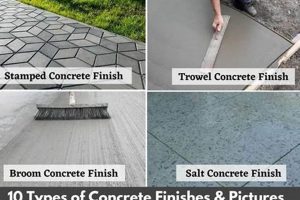
A textured surface achieved on concrete, created by dragging a stiff-bristled implement across the freshly poured material before it fully hardens. This technique imparts a series of parallel lines, resulting in a slip-resistant and aesthetically interesting appearance. Common applications include walkways, patios, and driveways where traction is essential.
The application of this texturing method is important due to its combination of functional and aesthetic advantages. The resulting texture improves safety by providing enhanced grip, especially in wet or icy conditions, minimizing slip and fall hazards. Historically, this texturing approach has been favored for its cost-effectiveness and ease of application, representing a practical solution for creating durable and visually appealing surfaces.
The subsequent sections will delve into the specific methods of achieving the desired surface texture, exploring the different types of implements used and their impact on the final appearance. Furthermore, considerations for optimal implementation, maintenance, and repair strategies will be discussed to ensure longevity and continued performance.
Tips for Achieving an Optimal Surface Texture
Achieving a satisfactory outcome requires careful planning and execution. The following recommendations are intended to guide practitioners in obtaining a durable and visually appealing surface.
Tip 1: Substrate Preparation: Ensure the concrete is properly mixed and placed. A consistent mix design is crucial for uniform curing and texturing. Avoid excessive bleed water on the surface before proceeding with texturing.
Tip 2: Timing is Critical: Initiate the texturing process when the concrete has reached the appropriate stage of plasticity. The surface should be firm enough to retain the texture but still pliable enough to allow for easy manipulation.
Tip 3: Implement Selection: Select the appropriate implement based on the desired texture. Stiffer bristles will produce a more aggressive texture, while softer bristles will result in a subtler effect. Experiment with different implements to determine the ideal choice for the specific application.
Tip 4: Consistent Technique: Maintain a consistent angle and pressure when dragging the implement across the surface. Overlapping strokes slightly will help to ensure uniform coverage and avoid gaps in the texture.
Tip 5: Proper Curing: Implement proper curing procedures immediately following texturing. This helps to retain moisture within the concrete, which allows for maximum hydration and strength development.
Tip 6: Avoid Overworking: Refrain from excessive manipulation of the surface texture. Overworking can lead to surface tearing or damage, compromising the integrity of the final result.
Tip 7: Consider Environmental Factors: Adjust techniques based on environmental conditions. High temperatures may accelerate setting, requiring faster execution. Cool temperatures may slow the process, requiring adjustments to timing.
Adhering to these tips will enhance the likelihood of achieving a durable, slip-resistant, and aesthetically pleasing surface. Careful attention to detail throughout the entire process is essential for optimal results.
The subsequent sections will address common issues encountered during application and offer strategies for mitigating these challenges, ensuring a successful outcome even under demanding circumstances.
1. Slip Resistance

Slip resistance is a paramount safety consideration in pedestrian and vehicular surfaces. The incorporation of a textured surface, such as that achieved through a texturing process, directly contributes to mitigating the risk of slips and falls, particularly in environments prone to moisture or other contaminants.
- Coefficient of Friction Enhancement
The primary function of a textured surface is to increase the coefficient of friction. The ridges and valleys created by brushing provide more points of contact between the surface and footwear or tires. This increased friction reduces the likelihood of slippage, especially when the surface is wet or oily. A smooth surface offers minimal resistance, making it hazardous under such conditions.
- Water Displacement
The grooves generated by the texturing process facilitate the rapid displacement of water. This prevents the formation of a thin film of water between the contact surface and the pavement, which significantly reduces traction. Effective water displacement is critical in areas exposed to rain, snow, or ice, as it maintains a safe level of grip.
- Surface Roughness and Micro-Interlock
The texture imparts a degree of surface roughness that promotes micro-interlock with footwear or tires. This interlocking effect further enhances grip, even in the presence of contaminants. The depth and spacing of the texture play a vital role in determining the effectiveness of this interlock. Deeper, more widely spaced grooves generally provide superior traction in demanding conditions.
- Compliance with Safety Standards
Many jurisdictions have established minimum slip resistance standards for pedestrian and vehicular surfaces. Applying a specific texture is a common method of ensuring compliance with these regulations. Failure to meet these standards can result in liability for accidents and injuries. Meeting or exceeding safety standards is imperative for public safety and risk management.
The interconnected elements of friction enhancement, water displacement, surface roughness, and regulatory compliance underscore the critical role it plays in creating safer environments. By understanding and optimizing these facets, practitioners can ensure that surfaces provide adequate grip and minimize the potential for slip-related incidents.
2. Aesthetic Appeal

The aesthetic appeal of concrete surfaces significantly benefits from the application of a textured finish. It transcends the utilitarian function of providing a durable surface, transforming the material into a visually engaging element. The deliberate pattern, imparted by the implement, introduces an element of design that raw concrete typically lacks. This textured quality becomes a fundamental component of its overall attractiveness.
Consider the example of a residential patio. A plain slab may appear cold and unwelcoming. However, a brushed finish adds subtle lines that soften the appearance and integrate with the surrounding landscape. Or, a commercial walkway uses it to convey a sense of quality and attention to detail. The patterns also serve a practical purpose by subtly masking minor imperfections that might otherwise detract from the visual impression. The understanding of this effect is important for architects and landscape designers seeking to achieve a balance between functionality and visual harmony.
In summary, the application transforms concrete from a purely functional material into a design element with inherent aesthetic value. This transformation offers practical benefits, enhancing the visual appeal of spaces while also providing a durable and safe surface. Understanding the relationship between the application and perceived aesthetics is crucial for optimizing design outcomes and achieving desired visual effects in various construction projects.
3. Application Technique

The success of achieving a consistent and durable textured surface is inextricably linked to the application technique employed. The method used directly impacts the aesthetic appeal, slip resistance, and longevity of the finished surface. Inconsistent or improper techniques can result in uneven texturing, reduced slip resistance, and premature deterioration, underscoring the critical role that correct application plays in the final outcome. For instance, varying the angle or pressure while dragging the implement across the surface can lead to visible inconsistencies in the pattern, detracting from the overall aesthetic.
Proper timing, in conjunction with correct technique, is also essential. Texturing at the appropriate stage of concrete plasticity ensures the implement can effectively create the desired pattern without tearing or damaging the surface. The selection of the implement itself is part of the broader application technique; different implements produce different textures, and the choice must align with the intended design and functional requirements. A real-world example would be selecting a stiff-bristled implement for achieving a highly slip-resistant surface in an area prone to wet conditions, versus a softer implement for a more subtle texture in a decorative patio setting.
In conclusion, the application technique is not merely a step in the process but a central determinant of the final quality and performance. A thorough understanding of the interplay between implement selection, timing, and consistent execution is crucial. Mastering these elements ensures the creation of a durable, aesthetically pleasing, and safe textured surface, emphasizing the practical significance of a refined and deliberate application strategy. Challenges such as varying environmental conditions necessitate adaptability in application, underscoring the need for experienced practitioners.
4. Durability

The inherent resistance to wear, abrasion, and environmental degradation is a critical performance characteristic, particularly in the context of textured concrete surfaces. The long-term performance and service life of a concrete installation are directly influenced by its capacity to withstand various forms of deterioration, highlighting the importance of durability considerations.
- Resistance to Abrasion and Wear
A textured surface can exhibit enhanced resistance to abrasion compared to a smooth surface. The texture provides a greater surface area for initial wear, distributing the abrasive forces and minimizing localized damage. High-traffic areas, such as walkways and driveways, benefit significantly from this enhanced wear resistance. Example: A heavily used commercial walkway that incorporates a specific texture will typically show less wear and maintain its aesthetic appeal for a longer period than a smooth surface subjected to the same traffic volume.
- Mitigation of Freeze-Thaw Damage
Properly executed texturing can improve a surface’s resistance to freeze-thaw cycles. The texture allows for slight expansion and contraction of the concrete during temperature fluctuations, reducing internal stresses that can lead to cracking and disintegration. This is particularly important in regions with significant temperature variations throughout the year. Example: A driveway in a cold climate that is properly textured will be less prone to surface cracking and spalling caused by repeated freezing and thawing of water absorbed into the concrete.
- Protection Against Surface Scaling
Texturing can help to protect against surface scaling caused by de-icing salts or other chemicals. The texture creates a barrier that reduces the direct contact between the concrete surface and the corrosive substances. This protective effect minimizes the potential for chemical attack and preserves the integrity of the surface. Example: A parking garage in a snowy climate that incorporates a texture will experience less surface scaling caused by de-icing salts used to melt ice and snow.
- Influence of Sealer Application
The application of a suitable sealer after texturing can further enhance its durability. The sealer provides an additional layer of protection against moisture penetration, chemical attack, and staining. The combination of texturing and sealing creates a robust and resilient surface. Example: A patio that is both textured and sealed will be more resistant to staining from spills and weathering, maintaining its appearance and structural integrity over time.
These factors significantly contribute to the longevity and overall performance of a textured concrete surface. By carefully considering these elements and implementing appropriate techniques, practitioners can ensure a durable and aesthetically pleasing outcome that withstands the challenges of various environmental conditions and usage patterns. Regular maintenance, including cleaning and resealing, is essential for preserving the enhanced durability achieved through texturing.
5. Cost-effectiveness
The implementation of a surface texture can represent a financially prudent choice in construction projects due to several factors. The primary cost benefit stems from the relatively simple application process. Compared to more elaborate finishing techniques, the application requires less specialized equipment and labor. For instance, a large expanse of sidewalk can be textured efficiently using basic implements and skilled labor, leading to lower overall project costs. The use of readily available materials further contributes to the cost-effectiveness of this finishing method.
Beyond the initial installation cost, the long-term maintenance requirements of this finishing method are often minimal. The inherent durability of a textured surface, as previously discussed, reduces the need for frequent repairs or replacements. This is especially relevant in high-traffic areas or environments subject to harsh weather conditions. A textured driveway, for example, exhibits greater resistance to wear and tear, resulting in reduced maintenance expenses over its lifespan. Furthermore, the slip-resistant properties can mitigate the risk of accidents, potentially lowering liability costs.
In summary, the financial attractiveness of a surface texture arises from its efficient application and reduced long-term maintenance needs. The use of standard tools and readily available expertise minimizes initial expenses, while the inherent durability of the texture decreases the frequency of repairs. Considering these economic advantages, the application of this method presents a viable and cost-effective solution for achieving durable and safe concrete surfaces across a range of construction applications.
6. Maintenance Needs

The textured surface created by the process inherently impacts maintenance requirements. The grooves and ridges, while providing slip resistance and aesthetic appeal, also create a larger surface area that can trap dirt, debris, and moisture. This increased surface area necessitates regular cleaning to prevent the accumulation of contaminants that can lead to staining, discoloration, and potential degradation of the concrete over time. Ignoring routine cleaning can result in a surface that appears unsightly and may compromise its intended functionality. For instance, a walkway in a park, finished with a texture, requires periodic power washing to remove accumulated dirt and leaf litter, ensuring both safety and visual appeal.
Sealing also plays a vital role in minimizing maintenance needs. A quality concrete sealer, applied after the texturing process, creates a protective barrier against moisture penetration and chemical attack. This barrier reduces the absorption of staining agents and prevents the intrusion of water that can cause freeze-thaw damage in colder climates. Resealing may be required periodically, depending on the type of sealer used and the level of exposure to environmental factors. Without sealing, the textured surface becomes more susceptible to staining from oil, grease, or other spills, requiring more aggressive cleaning methods and potentially leading to irreversible damage. Consider a service station forecourt; unsealed, it will quickly show stains from automotive fluids, necessitating costly and potentially ineffective cleaning efforts.
The connection between a textured surface and maintenance needs is undeniable. Regular cleaning and periodic sealing are essential practices to preserve its aesthetic appeal, slip resistance, and structural integrity. Neglecting these maintenance requirements can lead to accelerated deterioration, increased repair costs, and a diminished lifespan. Therefore, understanding and addressing these specific maintenance considerations are critical for realizing the full benefits of a textured surface in any application, whether residential, commercial, or public. Adhering to a consistent maintenance schedule will ensure long-term performance and minimize the need for more extensive and expensive interventions.
7. Surface Preparation
The creation of a durable and aesthetically pleasing texturing hinges critically on meticulous preparatory measures. Surface preparation directly influences the adherence of the textured layer, the uniformity of the resulting pattern, and the overall longevity of the concrete structure. Absent proper preparation, the textured surface may exhibit premature failure, uneven coloration, or reduced slip resistance, negating the intended benefits of the texturing process. For instance, an inadequately cleaned surface may contain contaminants that inhibit the bonding of the concrete, leading to delamination or cracking.
One crucial aspect of surface preparation involves the removal of any existing coatings, sealers, or contaminants. These materials can impede the proper adhesion and integration of the newly applied texture. Mechanical methods, such as grinding or abrasive blasting, are commonly employed to achieve a clean and porous surface profile. A properly prepared surface will exhibit a slightly roughened texture, providing a mechanical key for the concrete to bond effectively. Consider a scenario where an existing epoxy coating is not fully removed prior to texturing; the new texture may peel or flake off along with the underlying epoxy, resulting in a compromised finish and requiring costly rework. The cost-effectiveness of a surface texture application is directly related to a correct substrate prepartation to begin with.
The practical significance of thorough surface preparation lies in ensuring the long-term performance and visual appeal of the textured surface. Proper preparation minimizes the risk of premature failures, reduces maintenance requirements, and maximizes the return on investment. Neglecting this critical step can result in significant costs associated with repairs, replacements, and potential safety hazards. Therefore, a comprehensive understanding of surface preparation techniques and their impact on the final outcome is essential for any project involving concrete texturing. The relationship with application and longevity are extremely relevant.
Frequently Asked Questions About Concrete Brush Finish
The following addresses common inquiries regarding the application, properties, and maintenance of concrete surfaces treated with a textured finish.
Question 1: What dictates the appropriate timing for its application?
The optimal time for application is when the concrete has achieved sufficient firmness to retain the textured pattern, yet remains pliable enough to allow for effective manipulation. This typically occurs after bleed water has evaporated from the surface, but before the concrete has begun to harden significantly.
Question 2: Which implement types are suitable for achieving different texture grades?
Stiffer bristles generally yield a more aggressive, slip-resistant texture, while softer bristles produce a finer, more subtle pattern. Wire implements can create a coarser texture, while synthetic bristles offer greater control and uniformity. The selection depends on the desired aesthetic and functional requirements.
Question 3: How can uniformity in the applied texture be assured?
Maintaining a consistent angle and pressure throughout the application process is crucial. Overlapping strokes slightly help to prevent gaps or inconsistencies in the pattern. Regular inspection of the finished surface is essential to identify and correct any imperfections.
Question 4: What are the recommended maintenance practices for preserving texture and appearance?
Routine cleaning with a pressure washer or stiff-bristled brush removes dirt and debris that can accumulate in the textured surface. Periodic sealing with a quality concrete sealer helps to protect against staining, moisture penetration, and chemical attack.
Question 5: How does its application influence the slip resistance rating of the surface?
It enhances slip resistance by creating a more irregular surface profile, increasing the coefficient of friction. The depth and spacing of the textured lines directly impact the level of slip resistance achieved. Compliance with local safety standards should be verified.
Question 6: What are the common issues encountered during the application, and how can they be mitigated?
Common issues include uneven texturing, surface tearing, and rapid setting of the concrete. These can be mitigated by proper substrate preparation, careful timing of the application, and consistent technique. Adjustments to the mix design may also be necessary in certain circumstances.
Proper execution, appropriate material selection, and diligent maintenance are essential for achieving long-lasting and aesthetically pleasing results.
The subsequent section will explore case studies illustrating successful applications across diverse construction projects.
Conclusion
This exploration of concrete brush finish has underscored its multifaceted advantages, ranging from enhanced slip resistance and aesthetic versatility to cost-effectiveness and durability. The application’s success hinges on meticulous surface preparation, precise timing, appropriate implement selection, and consistent execution. While maintenance is essential for preserving the surface’s integrity, the long-term benefits often outweigh the required effort, making it a worthwhile consideration for a variety of construction projects.
The information presented herein serves to inform stakeholders involved in construction and design about the practicalities and potential of concrete brush finish. Further investigation and adherence to best practices will ensure its continued effective utilization, contributing to the safety, longevity, and visual appeal of built environments. A thorough understanding of its nuances is crucial for maximizing its value in both functional and aesthetic contexts.