



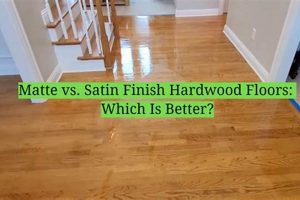
The selection of a sheen level is a critical decision in the installation or refinishing of wood flooring. Two popular choices are finishes that provide a low-gloss aesthetic. One appears virtually non-reflective, imparting a natural, unpolished look. The other offers a subtle radiance, reflecting light gently without producing a high shine. These options offer distinct visual and practical advantages for homeowners.
Opting for reduced reflectivity in wood floor coatings offers benefits that extend beyond mere aesthetics. Historically, higher-gloss finishes were favored for their perceived durability and ease of cleaning. However, modern formulations have enhanced the resilience of lower-sheen products. The reduced glare can also minimize the visibility of scratches, dust, and imperfections, resulting in a floor that maintains a cleaner appearance for a longer period. This is particularly advantageous in high-traffic areas or households with pets.
This article will explore the nuances between these two distinct finish types, examining their visual characteristics, durability, maintenance requirements, and suitability for various interior design styles. A detailed comparison will provide readers with the necessary information to make an informed decision when selecting the ideal sheen level for their wood floors.
Guidance on Selecting Wood Floor Sheen
The selection of an appropriate wood floor sheen level requires careful consideration of aesthetic preferences, lifestyle factors, and practical needs. The following recommendations offer guidance for making an informed decision.
Tip 1: Assess Room Lighting: Evaluate the amount of natural and artificial light in the room. Matte finishes excel in brightly lit spaces, minimizing glare. Satin finishes work well in spaces where a subtle reflection is desired to enhance ambient light.
Tip 2: Consider Lifestyle: High-traffic areas and households with pets benefit from the scratch-hiding properties of matte finishes. While satin finishes are more reflective, they can show scratches and imperfections more readily.
Tip 3: Evaluate Design Style: Matte finishes complement rustic, modern, and minimalist designs. Satin finishes are often a good fit for traditional, transitional, and contemporary aesthetics. Coordinate the sheen level with existing decor elements.
Tip 4: Examine Maintenance Needs: Both sheen levels require regular cleaning. Matte finishes may require slightly more aggressive cleaning to remove embedded dirt, while satin finishes may require more frequent cleaning to maintain their luster. Microfiber mops are suitable for general cleaning.
Tip 5: Test Samples: Obtain samples of both finishes and apply them to a small, inconspicuous area of the floor. Observe the appearance of each finish under different lighting conditions and at various times of day. This will provide a realistic representation of the final result.
Tip 6: Account for Floor Type: The species and grade of wood can influence the final appearance of the finish. Certain wood types may accentuate the inherent grain and texture differently depending on the selected sheen level. Consult with flooring professionals for specific recommendations.
Selecting the optimal sheen level for wood floors involves balancing aesthetic goals with practical considerations. By carefully evaluating the factors outlined above, it is possible to create a floor that is both visually appealing and functionally appropriate for the space.
The subsequent sections of this article will delve into the specific characteristics of each finish type, offering a detailed comparison of their performance and suitability for various applications.
1. Reflectivity

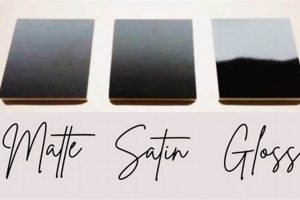
Reflectivity is the defining characteristic differentiating matte and satin wood floor coatings. Matte finishes exhibit minimal light reflection, absorbing nearly all incident light. This results in a surface that appears flat and non-glossy, similar to the appearance of unfinished wood. Conversely, satin finishes reflect a greater proportion of light. This creates a subtle sheen, imparting a gentle luster to the floor. The degree of reflectivity directly impacts the perceived color, texture, and overall ambiance of a room. For instance, a matte finish can soften the appearance of highly patterned wood grain, while a satin finish can enhance the natural warmth and depth of the wood.
The choice of reflectivity should align with the intended aesthetic and environmental conditions. A room with abundant natural light might benefit from a matte finish to minimize glare and create a calming effect. Conversely, a room with limited natural light might benefit from a satin finish to enhance brightness and create a more inviting atmosphere. The effect of reflectivity also influences the visibility of imperfections. Matte finishes tend to conceal scratches and dust more effectively than satin finishes, as the diffuse reflection minimizes contrast. This is particularly relevant in high-traffic areas or environments prone to dirt and abrasion. Conversely, satin finishes require more diligent cleaning to maintain their pristine appearance.
In summary, reflectivity is a key determinant in the selection of a floor’s coating, directly impacting its visual properties and maintenance requirements. Understanding the interaction between reflectivity, light conditions, and environmental factors is crucial for achieving a harmonious and functional flooring solution. Choosing between these finishes goes beyond mere aesthetics, impacting long-term maintenance and visual appeal.
2. Durability

The durability of wood flooring is inextricably linked to the chosen finish, with distinct implications for matte and satin options. The protective qualities of the finish directly influence the floor’s resistance to scratches, abrasion, and moisture penetration, thereby affecting its longevity and aesthetic appeal. While the inherent composition of the finish material itself (e.g., polyurethane, acrylic) plays a primary role, the sheen level can indirectly influence its performance. For instance, a finish formulated for matte appearance might include additives that slightly compromise its scratch resistance compared to a similar formulation optimized for satin’s increased reflectivity. In environments with heavy foot traffic, pets, or children, the inherent durability of the chosen finish becomes paramount, as scratches and scuffs are inevitable. A finish with superior scratch resistance will maintain its visual integrity for a longer period, reducing the need for frequent refinishing.
Real-world examples demonstrate this principle. Consider two identical hardwood floors, one finished with a matte polyurethane and the other with a satin polyurethane from the same manufacturer. In a busy household, the satin floor might exhibit visible scratches and wear patterns sooner than the matte floor. This is often attributed to the fact that imperfections are more noticeable on a reflective surface, even if the actual depth of the scratches is comparable. Conversely, in a commercial setting where routine maintenance involves frequent buffing and polishing, a satin finish might prove more durable. Regular maintenance can mitigate the accumulation of surface imperfections, preserving the floor’s luster and extending its lifespan. Therefore, a consideration of durability must involve not only the inherent qualities of the finish but also the specific environmental conditions and maintenance practices to which the floor will be subjected.
In summary, the perceived and actual durability of wood flooring is intimately connected to the finish selected. While the base material’s composition is crucial, the sheen levelmatte or satininfluences the visibility of wear and tear and impacts the floor’s response to different maintenance regimens. Informed decision-making requires a comprehensive evaluation of the intended use environment and the anticipated maintenance schedule to optimize the balance between aesthetic preferences and long-term performance.
3. Maintenance

The selection of a specific coating dictates, to a significant extent, the ongoing care required to preserve its appearance and integrity. Different sheen levels present distinct maintenance challenges and considerations.
- Cleaning Frequency and Methods
Matte coatings, due to their lower reflectivity, tend to conceal dust and minor imperfections more effectively than satin finishes. This often translates to a perceived need for less frequent cleaning. However, embedded dirt and grime can be more difficult to remove from a matte surface due to its texture. Satin floors, while requiring more frequent dust removal to maintain their sheen, typically respond well to gentle cleaning methods. The optimal cleaning frequency will depend on the level of foot traffic and environmental factors, but the chosen method should always prioritize avoiding harsh chemicals or abrasive materials that could damage the finish.
- Scratch Visibility and Repair
Scratches and scuffs are inevitable on any hardwood floor. However, their visibility is significantly affected by the coating’s sheen. Satin surfaces, with their higher reflectivity, tend to highlight imperfections, making even minor scratches readily apparent. Matte floors, in contrast, diffuse light, which minimizes the visual impact of surface damage. Repairing scratches also differs between the two. Small scratches on a satin floor may require buffing and reapplication of a top coat to restore the uniform sheen. Matte finishes, due to their non-reflective nature, may allow for spot repairs using specialized touch-up products that blend seamlessly with the existing finish.
- Product Selection and Compatibility
Maintaining the desired appearance of a specific floor finish requires careful selection of cleaning and maintenance products. Certain cleaning agents can leave a residue that dulls the sheen of a satin finish or creates streaks on a matte surface. It is essential to use products specifically formulated for hardwood floors and to verify their compatibility with the finish type. Many manufacturers provide guidelines on recommended cleaning agents and maintenance procedures to ensure the long-term preservation of their coatings.
- Long-Term Restoration and Refinishing
Over time, even with diligent maintenance, hardwood floors may require refinishing to restore their original appearance. The refinishing process involves sanding down the existing finish and applying a new coat. The ease and cost of refinishing can be influenced by the initial finish selection. While both matte and satin finishes can be refinished, matching the original sheen level during the refinishing process is crucial for maintaining a consistent aesthetic. A professional flooring contractor should be consulted to ensure proper surface preparation and application techniques, regardless of the chosen sheen level.
In conclusion, the choice between a satin or matte finish involves a trade-off between aesthetic preferences and practical maintenance considerations. Lower sheen may require specific methods, whereas increased sheen needs gentler product and frequent dusting, but both are very important factor in hardwood floor maintenance. Understanding the implications of each option allows homeowners to make informed decisions that align with their lifestyle and expectations regarding floor care.
4. Appearance
The visual presentation of hardwood flooring is directly and significantly influenced by the selected coating. A matte finish imparts a natural, subdued aesthetic, minimizing light reflection and creating a flat, uniform surface. This effect tends to mute the wood’s inherent grain pattern and color variations, resulting in a more understated and contemporary appearance. Conversely, a satin finish enhances the wood’s natural characteristics by reflecting light subtly. This accentuates the grain pattern, highlights color variations, and adds a touch of warmth and depth to the floor. The choice between these coatings profoundly impacts the overall ambiance of a room. For instance, a dark-stained hardwood floor with a matte finish can create a sophisticated, modern look, while the same wood with a satin finish might evoke a more traditional and inviting atmosphere.
Consider a real-life example of a homeowner renovating a mid-century modern home. They choose a light-colored maple hardwood floor and are deliberating between coatings. A matte finish aligns perfectly with the minimalist aesthetic of the home, providing a clean and uncluttered backdrop for the furniture and decor. In contrast, for a homeowner with a more eclectic style, a satin finish on the same maple floor might be preferable. The subtle sheen would complement the rich colors and textures of the furniture and artwork, adding visual interest to the space. The practical significance of understanding this connection lies in the ability to precisely tailor the floor’s appearance to the desired design scheme. Furthermore, the finish also affects how the floor interacts with light sources. A matte floor can help to control glare in brightly lit rooms, while a satin floor can enhance the perceived brightness of darker spaces.
In summary, the coatings selection is a pivotal decision that shapes the visual character of hardwood flooring. A matte finish offers a subtle, contemporary aesthetic, while a satin finish enhances the wood’s natural beauty. Understanding the nuanced connection between these options and their effect on overall appearance allows for informed design choices, enabling homeowners to achieve their desired aesthetic and create spaces that are both visually appealing and functionally harmonious. This connection becomes relevant especially when renovating, building a new house, or changing design theme.
5. Application

The method and conditions under which coatings are applied directly influence the final appearance and performance of surfaces, including matte and satin options. Improper preparation, incorrect application techniques, or unsuitable environmental conditions can lead to a finish that fails to meet expectations, regardless of the inherent qualities of the product. For example, applying coatings in high humidity can result in clouding or blistering, while insufficient surface preparation can cause poor adhesion and premature wear. The skill and experience of the applicator are therefore critical factors in achieving a successful outcome. Professional applicators possess the knowledge and equipment necessary to ensure proper surface preparation, precise mixing ratios, and uniform application, minimizing the risk of defects and maximizing the durability of the finish. The selection of application tools is also important. Using the wrong type of brush, roller, or sprayer can result in uneven coverage, streaks, or air bubbles, compromising the aesthetic appeal of the floor.
Specific coatings are designed to work with specific application techniques. Some formulations are best suited for spraying, which allows for a thin, even coat and minimizes brush marks. Others are designed for rolling or brushing, which can provide better penetration and adhesion on certain types of wood. For example, a water-based coating with a matte sheen might be best applied using a synthetic brush to minimize brush strokes and achieve a smooth, uniform surface. An oil-based coating with a satin sheen might be best applied using a natural-bristle brush to enhance penetration and create a rich, lustrous appearance. Furthermore, the number of coats applied also influences the final result. Insufficient coats can compromise the protective properties of the finish, while excessive coats can lead to a build-up that detracts from the wood’s natural beauty. Understanding the proper application techniques is paramount to achieving desired floor finish goals.
In summary, achieving the desired aesthetic and performance characteristics hinges not only on the selection of a coating with a certain sheen but also on meticulous preparation and skillful application. The proper use of tools, attention to environmental conditions, and adherence to manufacturer’s instructions are all essential components of a successful finishing project. Addressing challenges from these elements can prevent problems such as clouding and poor adhesion, which is particularly important when selecting either a matte or satin floor finish.
6. Light Exposure
Light exposure is a critical factor to consider when selecting coating. The interplay between natural and artificial light and the sheen level of the finish significantly impacts the perceived appearance, durability, and maintenance requirements of floors.
- Glare Reduction and Visual Comfort
High levels of natural light can cause excessive glare on floors, leading to visual discomfort. Matte finishes excel at minimizing glare by diffusing light, making them well-suited for rooms with large windows or expansive glass doors. In contrast, satin finishes, with their subtle sheen, can amplify glare, potentially creating an unpleasant visual experience. The intensity and direction of light should be carefully assessed when selecting the finish to ensure optimal visual comfort.
- Fading and Color Alteration
Prolonged exposure to ultraviolet (UV) radiation can cause fading and color alteration in wood flooring, regardless of the finish type. However, certain coatings offer greater UV protection than others. Consider a scenario where two identical hardwood floors are installed in adjacent rooms, one with a south-facing window and the other with minimal natural light. Over time, the floor in the sunlit room may exhibit noticeable fading and discoloration if the finish lacks adequate UV inhibitors. Selecting a finish with UV protection is particularly important for floors exposed to direct sunlight.
- Highlighting Imperfections and Wear Patterns
Light exposure can accentuate imperfections and wear patterns. Satin finishes, with their reflective properties, tend to highlight scratches, dents, and dust particles, requiring more frequent cleaning and maintenance to maintain a pristine appearance. Matte finishes, on the other hand, diffuse light, which minimizes the visibility of surface imperfections. In high-traffic areas or environments prone to dirt and abrasion, coatings may be a more practical choice.
- Enhancing or Subduing Wood Grain
The interaction between light and wood grain can be influenced by the chosen coating. Satin finishes enhance the natural grain pattern of wood by reflecting light at various angles, adding depth and dimension. Matte finishes tend to subdue the grain pattern, creating a more uniform and understated appearance. Consider a scenario where a homeowner wants to emphasize the unique character of a rustic oak floor. A satin finish would accentuate the grain, knots, and imperfections, enhancing its natural appeal. Conversely, a matte finish would create a smoother, more refined appearance, minimizing the visual impact of the wood’s texture.
In conclusion, light exposure is a critical consideration when choosing either a matte or satin coating. Factors such as glare reduction, UV protection, visibility of imperfections, and enhancement of wood grain all contribute to the overall suitability of the coating. Carefully evaluating these factors in relation to the specific lighting conditions of the room is essential for achieving a flooring solution that is both aesthetically pleasing and functionally durable.
7. Scratch Resistance
Scratch resistance is a pivotal characteristic influencing the long-term appearance and maintenance of hardwood floors. The relationship between scratch resistance and sheen level, specifically comparing a matte or satin coating, is complex. While the inherent scratch resistance is primarily determined by the chemical composition and hardness of the protective layer, the perceived scratch resistance is significantly affected by the finish’s reflective properties. A matte coating, due to its diffuse reflection, tends to conceal minor scratches more effectively than a satin finish. This is because the non-reflective surface scatters light, minimizing the contrast between the scratched area and the surrounding undamaged finish. Conversely, a satin finish, with its subtle sheen, reflects light more directly, thereby accentuating surface imperfections, including scratches. A seemingly identical scratch will therefore appear more prominent on a satin floor than on a matte floor. This difference in perceived scratch resistance directly impacts the frequency of maintenance and the overall visual satisfaction of the floor over time. Consider a household with pets; while both a matte and a satin floor will be subject to scratches from claws, the matte floor will likely maintain a cleaner, less-worn appearance for a longer period, simply because the scratches are less noticeable.
The selection of a finish requires a careful consideration of lifestyle factors and expected traffic levels. High-traffic areas, households with pets, or environments prone to abrasion will generally benefit from the scratch-hiding properties inherent to matte finishes. However, it is important to remember that perceived scratch resistance does not equate to actual scratch resistance. A harder, more durable satin finish may, in fact, withstand more abrasive forces than a softer matte finish, even though the scratches are more visible. Therefore, the decision should not be based solely on sheen level but should also take into account the composition and hardness of the finish itself. Furthermore, advancements in coating technology have led to the development of matte finishes with enhanced scratch resistance, blurring the traditional distinction between sheen and durability. Consulting with flooring professionals and reviewing product specifications is essential to making an informed decision that balances aesthetic preferences with practical performance requirements. This is important when thinking about home value, renovation or even for house flippers.
In summary, the connection between scratch resistance and coating is multifaceted. The perceived scratch resistance is inversely related to sheen level, with matte finishes generally concealing scratches more effectively than satin finishes. However, the actual scratch resistance is primarily determined by the composition and hardness of the protective layer. Selecting the optimal finish involves a trade-off between aesthetic preferences, lifestyle factors, and the inherent durability of the chosen product. The challenge lies in accurately assessing the relative importance of perceived versus actual scratch resistance and selecting a finish that best meets the specific needs of the environment.
Frequently Asked Questions
This section addresses common inquiries regarding the selection and performance characteristics of different sheen levels in hardwood floor coatings.
Question 1: Is one finish inherently more durable than the other?
The durability of a wood floor finish is primarily determined by its chemical composition and hardness, not its sheen level. While certain formulations may be optimized for a matte or satin appearance, the underlying protective qualities are independent of reflectivity. Therefore, it is inaccurate to assume that one sheen is automatically more resistant to scratches or wear than the other.
Question 2: Does the sheen level affect the cost of the finish?
The price of a floor finish is generally dictated by the type of material used (e.g., polyurethane, water-based acrylic) and its quality, rather than its sheen level. While specialized additives or formulations may influence the overall cost, the difference in price between a matte and satin finish of comparable quality is typically negligible.
Question 3: How does sheen level impact the visibility of dust and dirt?
Matte finishes tend to conceal dust and minor imperfections more effectively than satin finishes due to their diffuse reflection. The non-reflective surface scatters light, minimizing the contrast between dust particles and the surrounding clean area. Satin finishes, with their subtle sheen, reflect light more directly, thereby accentuating surface debris and requiring more frequent cleaning to maintain a pristine appearance.
Question 4: Can a floor be refinished with a different sheen level than the original?
Yes, it is possible to refinish a wood floor and alter the sheen level. The refinishing process involves sanding down the existing finish and applying new coats of the desired material. However, achieving a uniform and aesthetically pleasing result requires careful surface preparation and skillful application. Consulting a professional flooring contractor is recommended to ensure proper execution.
Question 5: Are there specific design styles that are better suited for one sheen level over the other?
Matte finishes often complement modern, minimalist, and rustic design styles due to their understated and natural appearance. Satin finishes are frequently favored in traditional, transitional, and contemporary designs, where a subtle sheen adds warmth and depth to the space. However, the ultimate choice depends on individual preferences and the specific characteristics of the room.
Question 6: Does the type of wood species affect the choice of sheen level?
The type of wood can influence the final appearance of the floor finish. Certain wood species with prominent grain patterns may benefit from a satin finish to enhance their natural beauty, while others may appear more refined with a matte finish that minimizes the visual impact of the grain. Considering the wood’s inherent color and texture is essential for achieving a harmonious and aesthetically pleasing result.
The key takeaways are that selecting a certain finish requires considering your preference, budget, style, maintenance and usage.
The following section will delve into practical application tips for different coatings.
Hardwood Floor Finishes
This exposition has illuminated the critical distinctions between these finishes, emphasizing that the optimal selection hinges on a nuanced understanding of aesthetic preferences, lifestyle demands, and environmental variables. Factors such as light exposure, traffic volume, and design sensibilities must be carefully weighed to determine the most suitable choice. Furthermore, the importance of proper application and diligent maintenance in preserving the integrity and appearance of either finish cannot be overstated.
The decision regarding surfaces represents a significant investment in a property’s value and aesthetic appeal. A considered approach, informed by the insights presented herein, will ensure a flooring solution that not only meets immediate needs but also provides lasting satisfaction. Seeking expert consultation remains a prudent step in navigating the complexities of coating selection and ensuring a successful outcome.

![Best Water Based Polyurethane Matte Finish [Guide] | Best Final Touch: Elevate Your Projects with Professional Finishing](https://bestfinaltouch.com/wp-content/uploads/2025/12/th-87-300x200.jpg "Best Water Based Polyurethane Matte Finish [Guide] Best Final Touch: Elevate Your Projects with Professional Finishing")