Protecting and enhancing the natural beauty of a wooden slab that retains its original outer layer, often referred to as its “live edge,” requires a specialized approach. This process focuses on preserving the bark while ensuring the longevity and aesthetic appeal of the wood. Successful completion involves careful cleaning, stabilization of the bark, and the application of protective finishes that accentuate the wood’s grain and character. This ensures the piece remains visually striking and durable for years to come.
Preserving the bark on a live edge piece is crucial for maintaining its rustic charm and highlighting its connection to the natural world. A well-preserved live edge enhances the value and uniqueness of the wood, making it a focal point in furniture design or artistic installations. Historically, the preservation of natural edges has been seen as a way to honor the tree’s origin and incorporate nature directly into crafted objects.
The following sections will detail specific techniques for cleaning, stabilizing, and applying finishes to live edge wood, with particular attention paid to the delicate nature of the bark. These methods are designed to provide long-lasting protection while showcasing the wood’s inherent qualities.
Essential Guidance for Live Edge Wood Finishing with Bark
Achieving a durable and aesthetically pleasing finish on live edge wood, particularly when retaining the bark, requires careful attention to detail. The following tips offer guidance on ensuring both the wood and its bark are properly treated for long-term preservation.
Tip 1: Bark Stabilization is Paramount: Prior to any finishing application, thoroughly stabilize the bark. Loose or flaking bark should be carefully adhered using specialized wood glues designed for porous surfaces. Cyanoacrylate adhesives can be effective for small repairs.
Tip 2: Gentle Cleaning Practices: Clean the wood and bark using soft brushes and minimal water. Avoid excessive moisture, which can lead to bark separation or fungal growth. Compressed air can assist in removing dust and debris from crevices.
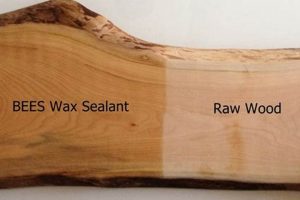
Tip 3: Select Appropriate Sealants: Choose sealants specifically formulated for wood with bark. These sealants should penetrate the wood fibers while forming a flexible barrier on the bark’s surface to prevent cracking. Test the sealant on a small, inconspicuous area first.
Tip 4: Employ Flexible Finishes: Rigid finishes are prone to cracking as the wood expands and contracts. Opt for flexible finishes, such as oil-based polyurethanes or specialized epoxy resins designed for live edge applications. These allow for natural movement without compromising the finish.
Tip 5: Consider a Multi-Coat Approach: Apply multiple thin coats of finish rather than a single thick coat. This ensures proper penetration and curing, resulting in a more durable and even finish. Allow each coat to dry completely before applying the next.
Tip 6: UV Protection is Essential: If the finished piece will be exposed to sunlight, incorporate a UV-resistant finish. Prolonged UV exposure can cause fading, discoloration, and degradation of both the wood and the bark. Exterior-grade finishes typically offer enhanced UV protection.
Tip 7: Monitor and Maintain: Regularly inspect the finished piece for signs of wear or damage. Address any issues promptly to prevent further deterioration. Reapplication of the finish may be necessary periodically to maintain optimal protection and appearance.
Implementing these tips will significantly enhance the longevity and beauty of live edge wood, ensuring the bark remains intact and the wood is protected from environmental factors.
The subsequent sections will delve into specific product recommendations and advanced techniques for achieving professional-quality results.
1. Bark Stabilization

Bark stabilization is an essential precursor to finishing live edge wood when the objective is to retain the bark. This process addresses the inherent instability of bark, which is prone to detachment, cracking, and insect infestation. Effective bark stabilization ensures the longevity and aesthetic integrity of the finished piece.
- Adhesive Selection
The selection of an appropriate adhesive is paramount. Cyanoacrylate adhesives, also known as super glues, offer rapid bonding for small, localized repairs. For larger areas, flexible wood glues designed for porous materials are preferred. The adhesive must be compatible with both the wood and the bark, and it should not discolor or alter the bark’s texture. In practice, applying a thin bead of adhesive along the edges of loose bark and clamping or weighting the area until cured prevents further separation.
- Consolidation Techniques
Consolidation aims to strengthen the bark’s structure, reducing its susceptibility to damage. Epoxy resins, when carefully applied, can penetrate the bark’s porous surface, providing a durable and water-resistant barrier. However, improper application can alter the bark’s appearance. A diluted epoxy mixture is typically brushed onto the bark surface, allowing it to soak in. Excess epoxy should be wiped away to avoid a glossy finish. This method is particularly useful for bark that is already showing signs of decay.
- Pest Management
Bark often harbors insects or insect larvae. Before stabilization, inspect the bark thoroughly for signs of infestation. Insecticides specifically formulated for wood can be applied to eliminate pests. Borate-based solutions are frequently used due to their low toxicity to humans. The insecticide should be applied according to the manufacturer’s instructions, ensuring complete penetration of the bark. Subsequent sealing helps to prevent future infestations.
- Environmental Considerations
The environment plays a significant role in bark stability. Fluctuations in humidity and temperature can cause bark to expand and contract, leading to cracking and detachment. Maintaining a stable indoor environment, if possible, helps to minimize these effects. Additionally, applying a sealant that provides a moisture barrier reduces the bark’s exposure to environmental stressors. Regular inspection and maintenance are crucial to identifying and addressing any issues before they escalate.
These stabilization techniques are interdependent and contribute to the overall success of finishing live edge wood with bark. Failure to adequately stabilize the bark will invariably result in a compromised finish and a shorter lifespan for the piece. Combining appropriate adhesive selection, consolidation methods, pest management, and environmental control are essential for preserving the natural character of the wood while ensuring its long-term durability.
2. Appropriate Sealant

The selection of an appropriate sealant is paramount to achieving a durable and aesthetically pleasing finish on live edge wood with bark. The sealant acts as a protective barrier against moisture, UV radiation, and physical damage, directly influencing the longevity and appearance of the wood and the bark.
- Moisture Resistance
Sealants formulated for wood must effectively resist moisture penetration. Excessive moisture can lead to wood rot, fungal growth, and bark detachment. Oil-based sealants and certain epoxy formulations provide a superior moisture barrier compared to water-based alternatives. For example, applying multiple coats of a marine-grade epoxy resin can significantly enhance moisture resistance, particularly in humid environments. The choice of sealant must balance protection with maintaining the natural appearance of the wood and bark.
- Bark Compatibility
The sealant must be compatible with the porous and often delicate nature of bark. Some sealants may cause discoloration, cracking, or complete deterioration of the bark. Flexible sealants, such as those containing natural oils, accommodate the natural expansion and contraction of the bark, minimizing the risk of damage. As an illustration, shellac, a natural resin, provides a flexible finish that adheres well to bark without significantly altering its texture or color. Testing the sealant on a small, inconspicuous area of the bark is essential before full application.
- UV Protection Properties
Exposure to ultraviolet (UV) radiation can cause fading, discoloration, and structural degradation of both the wood and the bark. Sealants containing UV inhibitors protect against these harmful effects. Exterior-grade sealants typically offer enhanced UV protection compared to interior-grade options. Consider a spar urethane varnish containing UV absorbers for outdoor applications; this type of sealant reflects UV radiation, thereby preventing damage. The degree of UV protection required depends on the level of sunlight exposure the finished piece will endure.
- Application Method and Finish
The application method of the sealant affects its effectiveness and the final appearance of the wood. Spraying, brushing, or wiping are common application techniques, each yielding different results. Thin, even coats are generally preferred to prevent drips and ensure proper penetration. The desired finish matte, satin, or gloss influences the choice of sealant. For instance, a matte finish sealant preserves the natural look of the wood and bark, while a gloss finish provides a more reflective surface. Careful application and adherence to the manufacturer’s instructions are crucial for achieving the desired result.
Ultimately, selecting the correct sealant involves considering several interdependent factors. Moisture resistance, bark compatibility, UV protection, and application method collectively determine the success of the finishing process. Failure to choose an appropriate sealant can compromise the integrity of the wood and bark, diminishing the piece’s aesthetic appeal and longevity.
3. Gentle Cleaning
Prior to any finishing process on live edge wood retaining its bark, gentle cleaning is paramount. The integrity of the bark is inherently fragile, necessitating cleaning methods that minimize the risk of damage or detachment. Proper preparation ensures optimal adhesion of subsequent finishes and preserves the natural aesthetic of the piece.
- Minimizing Moisture Exposure
Excessive moisture can weaken the bond between the bark and the wood, leading to separation. It also promotes the growth of mold and mildew, which can degrade both the wood and the bark. Gentle cleaning methods prioritize the use of dry or minimally damp techniques. For instance, using a soft-bristled brush to remove loose debris, followed by a tack cloth to capture remaining dust, effectively cleans the surface without introducing excessive moisture. Compressed air can also dislodge particles from crevices, further reducing the need for water.
- Appropriate Cleaning Agents
Harsh chemicals and abrasive cleaners can damage the bark’s delicate surface, altering its color, texture, or structural integrity. Gentle cleaning relies on mild, pH-neutral detergents diluted in water. A soft sponge or cloth dampened with the solution can be used to carefully wipe the surface, followed by immediate drying with a clean cloth. Avoid prolonged soaking or scrubbing, which can weaken the bark’s attachment. Solutions specifically formulated for wood are generally preferred to minimize potential harm.
- Assessing Bark Stability
Gentle cleaning provides an opportunity to assess the overall stability of the bark. During the cleaning process, note any areas where the bark is loose, cracked, or damaged. These areas require special attention during subsequent stabilization steps. For example, if sections of bark lift easily during cleaning, they indicate a need for adhesive reinforcement before applying any finish. This proactive assessment helps prevent further damage during the finishing process.
- Removing Biological Growth
Live edge wood, particularly if stored outdoors, may exhibit signs of biological growth, such as moss or lichen. Gentle cleaning aims to remove these organisms without damaging the underlying bark. A soft brush and a diluted solution of water and vinegar can effectively eliminate biological growth. The solution should be applied sparingly, and the area thoroughly dried to prevent recurrence. In cases of heavy infestation, a specialized biocide formulated for wood may be necessary, but it should be used with caution to avoid harming the bark.
These facets of gentle cleaning are inextricably linked to the successful finishing of live edge wood with bark. The cleaning process not only prepares the surface for finishing but also preserves the integrity of the bark, contributing to the overall aesthetic appeal and longevity of the finished piece. The choice of cleaning methods and agents directly impacts the final outcome, emphasizing the importance of a careful and deliberate approach.
4. Flexible Finish

The application of a flexible finish is a critical component of how to finish live edge wood with bark successfully. Live edge wood, by its nature, retains its natural edge, often including the bark layer. Unlike processed lumber, live edge slabs are more susceptible to movement due to changes in humidity and temperature. A rigid finish, which lacks elasticity, is prone to cracking and separation as the wood expands and contracts. The bark, being even more sensitive to environmental changes, exacerbates this issue. Therefore, a flexible finish becomes essential to accommodate the wood’s natural movement, preventing damage to both the wood and the bark.
Consider a live edge walnut coffee table finished with a conventional, inflexible polyurethane coating. Over time, seasonal humidity fluctuations cause the wood to subtly shift. The rigid polyurethane, unable to stretch or compress with the wood’s movement, develops hairline cracks. These cracks not only detract from the table’s aesthetic appeal but also allow moisture to penetrate, potentially leading to wood rot and bark detachment. Conversely, a similar table finished with a flexible oil-based varnish or a specialized epoxy resin formulated for live edge applications will better withstand these environmental stresses. The flexible finish expands and contracts with the wood, maintaining its integrity and protecting the bark from damage. The choice of finish directly affects the longevity and appearance of the finished piece, highlighting the practical significance of understanding this relationship.
In summary, the connection between flexible finish and how to finish live edge wood with bark is one of cause and effect: the natural movement of live edge wood necessitates a finish capable of adapting to that movement. The selection of a flexible finish is not merely a cosmetic choice but a crucial element in preserving the wood and its bark. Challenges may arise in selecting the appropriate flexible finish, as different products offer varying degrees of elasticity and protection. However, understanding the importance of flexibility in this context is paramount for achieving a durable and aesthetically pleasing result, thereby ensuring the long-term preservation of the natural beauty of the live edge wood.
5. UV Protection

The integration of ultraviolet (UV) protection measures is critical to the successful and enduring finishing of live edge wood, particularly when the bark is retained. Without adequate UV protection, both the wood and the bark are susceptible to degradation, discoloration, and structural weakening, diminishing the aesthetic appeal and lifespan of the finished piece.
- Surface Degradation Mitigation
UV radiation causes the breakdown of lignin, a complex polymer in wood that provides rigidity. This degradation leads to surface checking, cracking, and a gradual erosion of the wood’s structural integrity. Bark, being even more porous and less dense than the underlying wood, is exceptionally vulnerable to UV-induced degradation. For instance, a live edge walnut slab left unprotected outdoors will exhibit significant fading and cracking within a year, whereas a similar slab treated with a UV-resistant finish will retain its color and structural integrity for a considerably longer period. Implementing UV protection is essential for preserving the wood and bark’s physical properties.
- Color Stability Enhancement
UV radiation can cause the pigments in wood and bark to fade or change color. Darker woods, such as walnut or cherry, are particularly prone to lightening, while lighter woods may develop a yellow or gray cast. The bark, often possessing unique coloration and patterns, is equally susceptible to UV-induced fading. UV-resistant finishes contain additives that absorb or reflect UV radiation, mitigating these color changes. For example, applying a spar urethane varnish with UV absorbers can significantly reduce fading in a live edge maple table exposed to direct sunlight. Maintaining color stability is crucial for preserving the aesthetic value of the finished piece.
- Finish Integrity Preservation
UV radiation not only affects the wood and bark directly but also degrades the finish itself. Many common finishes, such as varnish or lacquer, become brittle and prone to cracking when exposed to prolonged UV radiation. These cracks allow moisture to penetrate, accelerating the degradation of the wood and bark. UV-resistant finishes are formulated to withstand UV exposure, maintaining their elasticity and protective properties. Utilizing a marine-grade varnish with UV inhibitors on a live edge bench intended for outdoor use ensures that the finish remains intact, providing long-term protection against the elements.
- Inhibition of Biological Growth
While not a direct effect of UV radiation, the degradation of wood and bark caused by UV exposure creates favorable conditions for biological growth, such as mold and mildew. These organisms thrive in weakened wood and bark, further accelerating their deterioration. UV-resistant finishes often contain biocides that inhibit the growth of these organisms. Furthermore, by maintaining the integrity of the finish, UV protection prevents moisture from penetrating the wood and bark, reducing the likelihood of biological growth. The combined effect of UV protection and biocide additives provides a comprehensive defense against degradation.
In conclusion, the strategic application of UV protection measures is an indispensable element of how to finish live edge wood with bark for long-term preservation and aesthetic appeal. By mitigating surface degradation, enhancing color stability, preserving finish integrity, and inhibiting biological growth, UV protection ensures that the finished piece retains its natural beauty and structural soundness for years to come.
6. Regular Maintenance
The sustained aesthetic appeal and structural integrity of live edge wood, particularly when finished with its bark intact, are intrinsically linked to consistent regular maintenance practices. The initial finishing process, however meticulous, provides only a foundation for long-term preservation. Environmental factors, usage patterns, and the inherent properties of wood and bark necessitate ongoing care to prevent degradation and ensure longevity. Neglecting regular maintenance undermines the initial investment in materials and labor, leading to premature deterioration and diminished value.
Consider a live edge desk subjected to daily use in a home office. Regular cleaning with a damp cloth and mild soap removes dust and spills, preventing the accumulation of grime that can etch into the finish over time. Application of a furniture polish containing UV inhibitors protects the surface from sunlight exposure, minimizing fading and discoloration. Periodically, the hardware securing the base is inspected and tightened to maintain stability. Addressing minor scratches or blemishes promptly with touch-up finish prevents further damage and preserves the desk’s visual appeal. Conversely, a similar desk left unattended would quickly accumulate dust, scratches, and water stains, leading to a dull, unattractive surface requiring costly restoration or replacement.
The connection between regular maintenance and how to finish live edge wood with bark is therefore one of continued action and preventative care. While appropriate finishing techniques provide initial protection, regular maintenance acts as a crucial defense against the inevitable wear and tear of daily use and environmental exposure. Addressing challenges such as product selection and balancing cleaning effectiveness with the bark’s delicate nature requires diligent attention and informed decision-making. Regular maintenance, in essence, is not an optional addendum but an indispensable element of how to finish live edge wood with bark successfully, ensuring its enduring beauty and value.
Frequently Asked Questions
The following questions address common concerns regarding the proper finishing techniques for live edge wood while preserving its bark. The answers provided are intended to offer clarity and guidance for achieving durable and aesthetically pleasing results.
Question 1: What is the primary purpose of finishing live edge wood with bark retained?
The primary purpose is to protect the wood and bark from environmental damage, enhance its natural beauty, and ensure longevity. Finishing helps to prevent moisture penetration, UV degradation, and insect infestation, while highlighting the wood’s unique grain and character.
Question 2: Why is stabilizing the bark a critical step in the finishing process?
Bark is inherently prone to detachment, cracking, and decay. Stabilizing the bark with appropriate adhesives and consolidants prevents these issues, ensuring that it remains securely attached to the wood and maintains its structural integrity throughout the finishing process.
Question 3: What types of finishes are best suited for live edge wood with bark?
Flexible finishes, such as oil-based polyurethanes, specialized epoxy resins, and penetrating oils, are generally preferred. These finishes accommodate the natural movement of the wood, preventing cracking and separation, while providing adequate protection against moisture and UV radiation.
Question 4: How often should live edge wood with bark be re-finished?
The frequency of re-finishing depends on several factors, including the type of finish used, the level of exposure to sunlight and moisture, and the amount of wear and tear the piece experiences. A thorough inspection should be conducted annually, and re-finishing should be considered when the finish shows signs of wear, such as scratches, dullness, or cracking.
Question 5: What are the potential consequences of neglecting proper maintenance on finished live edge wood with bark?
Neglecting proper maintenance can lead to a variety of problems, including wood rot, bark detachment, finish failure, insect infestation, and overall structural weakening. These issues can significantly diminish the aesthetic appeal and value of the piece, potentially requiring costly repairs or replacement.
Question 6: Is it necessary to hire a professional to finish live edge wood with bark?
While it is possible to finish live edge wood with bark as a do-it-yourself project, hiring a professional is often recommended, especially for valuable or complex pieces. Professionals possess the knowledge, skills, and equipment necessary to achieve a durable and aesthetically pleasing finish, minimizing the risk of costly mistakes.
Proper finishing of live edge wood with bark is an intricate process that requires careful attention to detail and a thorough understanding of the materials involved. Adhering to best practices and addressing potential challenges proactively is crucial for achieving long-lasting and visually appealing results.
The subsequent sections will delve into case studies illustrating successful finishing projects, offering practical examples and insights into real-world applications.
Conclusion
The preceding discussion has thoroughly examined how to finish live edge wood with bark, underscoring the critical steps necessary for achieving both aesthetic enhancement and long-term preservation. Bark stabilization, sealant selection, gentle cleaning, flexible finish application, UV protection measures, and consistent maintenance practices each play an indispensable role in ensuring the finished piece retains its natural beauty and structural integrity. Understanding and implementing these techniques are essential for anyone undertaking this specialized craft.
The successful finishing of live edge wood with bark represents a commitment to both artistry and conservation. Further research and experimentation with new materials and methods will undoubtedly refine these techniques. The dedication to preserving the natural characteristics of wood ensures these unique pieces will continue to be valued for generations. Continued diligence and meticulous execution are, therefore, paramount.
![Buy Premium Walnut Finished Wood [Deals Inside] | Best Final Touch: Elevate Your Projects with Professional Finishing](https://bestfinaltouch.com/wp-content/uploads/2026/05/th-405-300x200.jpg "Buy Premium Walnut Finished Wood [Deals Inside] Best Final Touch: Elevate Your Projects with Professional Finishing")