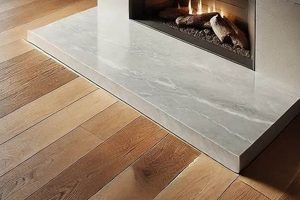
This architectural surface treatment, often applied to concrete, reveals a blend of the aggregate within the material. The process typically involves removing the top layer of cement paste, exposing the particles of sand and stone. This results in a speckled appearance, reminiscent of the common table condiments from which it derives its name. Examples of its application can be found in flooring, paving, and precast concrete elements where a durable and aesthetically pleasing surface is desired.
The appeal of this particular concrete finish lies in its durability and slip resistance, making it a practical choice for high-traffic areas. Furthermore, it offers a visual texture that can complement a range of design styles, from modern to traditional. Historically, similar techniques have been employed to enhance the visual interest and longevity of concrete structures, predating contemporary applications but sharing the common goal of exposing the aggregate.
The subsequent sections will delve into the specifics of achieving this aesthetic, covering aspects such as aggregate selection, application techniques, maintenance requirements, and design considerations for projects incorporating this versatile finish.
Achieving Optimal Results
The following guidelines are provided to ensure successful implementation and long-term performance of the specified surface treatment.
Tip 1: Aggregate Selection is Paramount: Carefully consider the size, color, and type of aggregate. The exposed aggregate defines the final aesthetic. Quartz, granite, and basalt offer diverse visual outcomes. Sample mixes should be evaluated prior to large-scale application.
Tip 2: Cement Paste Composition Matters: The color and consistency of the cement paste influence the contrast. A lighter paste accentuates darker aggregates, and vice versa. Proper mixing ratios and even distribution are crucial to prevent inconsistent exposure.
Tip 3: Controlled Exposure Techniques are Essential: Methods such as chemical retarders, abrasive blasting, or high-pressure washing are employed to remove the surface paste. The chosen technique impacts the degree of aggregate exposure and the resulting texture. Consistent application is necessary for uniform results.
Tip 4: Timing is Critical for Exposure: The optimal time for removing the surface paste depends on environmental conditions and the curing rate of the concrete. Premature or delayed removal can lead to uneven exposure or damage to the aggregate.
Tip 5: Sealing Enhances Durability and Aesthetics: Application of a penetrating concrete sealer protects the exposed aggregate from staining, weathering, and abrasion. Sealers can also enhance the color and depth of the finish. Proper sealer selection and application are vital.
Tip 6: Surface Preparation is Non-Negotiable: The concrete substrate must be clean, sound, and properly cured before the finishing process begins. Contaminants such as dirt, oil, or curing compounds will impede bonding and compromise the final result.
The preceding tips underscore the importance of careful planning, material selection, and execution when aiming for a high-quality and visually appealing outcome. Adherence to these principles will contribute to the longevity and aesthetic value of the finished surface.
The subsequent section will explore common challenges encountered during application and propose effective solutions to mitigate potential issues.
1. Aggregate Visual Properties

The aesthetic success of a “salt and pepper concrete finish” is inextricably linked to the visual properties of the aggregate. The size, color, shape, and distribution of aggregate particles directly dictate the final appearance. Using a consistent aggregate size yields a uniform texture, while a blend of sizes introduces visual complexity. Color contrast between the aggregate and the cement matrix is paramount; dark aggregates against a light matrix produce a more pronounced effect. For example, the use of black basalt chips in a grey cement creates a bold, high-contrast surface often seen in modern commercial spaces. Conversely, a light-colored quartz aggregate in white cement results in a more subtle, understated finish.
The shape of the aggregate also plays a crucial role. Rounded aggregates tend to polish smoothly and resist fracture, making them suitable for high-traffic areas. Angular aggregates, on the other hand, offer enhanced slip resistance due to their irregular surfaces. The distribution of aggregate is controlled through careful mixing and placement techniques. An even distribution ensures a consistent look across the entire surface, while intentional variations can create unique patterns and visual interest. This intentional variation can be seen on some exterior walls.
In conclusion, informed aggregate selection is fundamental to achieving the desired aesthetic outcome. A thorough understanding of aggregate visual properties empowers designers and contractors to create surfaces that are not only visually appealing but also durable and functional. Challenges such as inconsistent aggregate quality can be mitigated through sourcing from reputable suppliers and rigorous quality control measures. The integration of these considerations within the broader theme of concrete finishing underscores the importance of a holistic approach to concrete design and construction.
2. Cement Paste Consistency

Cement paste consistency is a critical factor in determining the final aesthetic and structural integrity of a concrete surface. Within the context of achieving a “salt and pepper concrete finish,” the paste acts as the binding agent that holds the aggregate in place prior to exposure. Inconsistent paste consistency can lead to uneven aggregate distribution, resulting in unsightly variations in the intended speckled pattern. A paste that is too fluid may allow the aggregate to settle unevenly during the curing process, while a paste that is too stiff may hinder proper aggregate embedment and subsequent exposure. Consider, for example, a large-scale paving project where inconsistencies in the paste mix resulted in noticeable patches with either excessive or insufficient aggregate exposure, detracting from the overall visual uniformity. This highlights the need for precise control over water-cement ratios and thorough mixing procedures.
The water-cement ratio directly influences the workability and strength of the paste. A lower ratio typically yields a stronger and more durable paste, but it can also make the mix more difficult to work with. Conversely, a higher ratio improves workability but compromises strength and increases the risk of shrinkage cracking. Achieving the right balance is crucial. Furthermore, the type of cement used can affect paste consistency. Some cements require more water than others to achieve the desired workability. Additives, such as plasticizers or superplasticizers, can be used to enhance workability without increasing the water content, thereby optimizing the paste’s characteristics. A practical application involves precast concrete panels, where precise control over paste consistency is vital to ensure consistent surface texture and prevent structural defects.
In summary, meticulous attention to cement paste consistency is paramount for achieving a high-quality “salt and pepper concrete finish.” This requires precise control over water-cement ratios, careful selection of cement type and additives, and rigorous adherence to mixing procedures. Challenges related to paste consistency can be mitigated through proper mix design, thorough quality control, and skilled workmanship. The link between cement paste consistency and finish quality underscores the importance of a comprehensive approach to concrete construction, where every aspect of the process is carefully considered and executed.
3. Exposure Depth Uniformity

Exposure depth uniformity is a critical determinant of the aesthetic quality and durability of a “salt and pepper concrete finish.” The process involves removing the surface layer of cement paste to reveal the aggregate. Achieving consistent exposure depth across the entire surface is paramount. Variations in depth result in an uneven appearance, compromising the intended visual effect. For instance, if some areas exhibit excessive aggregate protrusion while others remain obscured by a thicker layer of paste, the surface appears patchy and lacks the desired subtle, speckled texture. This inconsistency can arise from uneven application of the retarder, inconsistencies in the concrete mix, or variations in the surface removal technique. Areas with deeper exposure may also be more susceptible to wear and tear over time due to reduced paste protection of the aggregate.
The technique employed for surface removal significantly impacts exposure depth uniformity. Abrasive blasting, for example, can be challenging to control, potentially leading to localized over-exposure. Chemical retarders, when properly applied and washed off, offer a more controlled method. However, variations in the concentration of the retarder or the timing of the wash-off can still result in inconsistencies. Careful monitoring and adjustment of the removal process are essential. The skill of the applicator is also a major factor. Experienced professionals are better equipped to identify and address subtle variations in the surface, ensuring a more uniform exposure. Real-world applications in architectural precast panels demand a very high level of uniformity. If the exposure process is not carefully monitored, the final product can be deemed unsuitable for its intended purpose.
In conclusion, ensuring exposure depth uniformity is not merely an aesthetic concern; it directly impacts the long-term performance of the finish. Challenges in achieving uniformity can be mitigated through meticulous process control, skilled workmanship, and the use of appropriate materials and techniques. The importance of exposure depth uniformity underscores the broader theme of precision and quality control in concrete finishing, highlighting the need for a comprehensive approach that addresses all aspects of the construction process.
4. Sealer Type Effectiveness

Sealer type effectiveness is paramount to the long-term performance and aesthetic preservation of a surface. The exposed aggregate and cement matrix, characteristic of the finish, are inherently porous and susceptible to staining, moisture penetration, and abrasion. The primary function of a concrete sealer is to create a protective barrier, mitigating these detrimental effects. Inadequate sealer selection or application compromises this defense, leading to premature deterioration and diminished visual appeal. For example, the application of an inappropriate sealer on an exterior patio resulted in efflorescence and discoloration within a year, necessitating costly remediation. This underscores the cause-and-effect relationship between sealer selection and finish longevity.
Different types of sealers offer varying degrees of protection and aesthetic enhancement. Penetrating sealers, such as silanes and siloxanes, penetrate the concrete pores, creating a hydrophobic barrier that repels water and resists staining without significantly altering the surface appearance. Topical sealers, such as acrylics and urethanes, form a protective film on the surface, providing enhanced abrasion resistance and gloss. The choice between penetrating and topical sealers depends on the specific application requirements and desired aesthetic. For instance, a high-traffic commercial floor may benefit from the abrasion resistance of a urethane sealer, while an exterior wall may be better suited to a penetrating sealer that preserves the natural look of the concrete and allows it to breathe. Furthermore, the effectiveness of a sealer is contingent on proper surface preparation and application techniques. A contaminated or improperly prepared surface will impede sealer penetration and bonding, diminishing its protective capabilities.
In summary, sealer type effectiveness is an indispensable component of a durable and visually appealing outcome. Proper selection, based on the specific application and environmental conditions, coupled with meticulous surface preparation and application techniques, ensures long-term protection and aesthetic preservation. Challenges in sealer performance, such as premature failure or discoloration, can often be traced back to inadequate sealer selection or improper application. Understanding and addressing these challenges is essential for maximizing the lifespan and visual appeal of the finish, reinforcing the importance of a comprehensive approach to concrete finishing.
5. Substrate Surface Preparation

Substrate surface preparation is a non-negotiable prerequisite for a successful concrete finish. It lays the foundation for proper bonding, consistent aggregate exposure, and ultimately, the long-term performance of the applied finish. Neglecting or inadequately performing this step compromises the integrity of the final product.
- Removal of Contaminants
The presence of surface contaminants, such as oil, grease, dirt, or curing compounds, interferes with the bonding of the concrete topping or overlay material. These contaminants create a barrier that prevents proper adhesion, leading to delamination, cracking, and premature failure of the finish. Thorough cleaning methods, including pressure washing, chemical etching, or mechanical abrasion, are essential to eliminate these contaminants and ensure a clean, receptive surface. For example, if a previous coating has been applied, it must be completely removed to avoid visual defects or adhesion issues.
- Surface Profile Creation
Creating an appropriate surface profile, often referred to as surface roughening, enhances the mechanical keying between the existing substrate and the new concrete overlay. A rougher surface provides increased surface area for bonding, promoting a stronger and more durable connection. Techniques such as mechanical scarification, shot blasting, or acid etching are used to achieve the desired profile. The specific method and degree of roughening depend on the type of concrete mix used for the finish and the manufacturer’s recommendations. Without an adequate profile, the risk of the finish separating from the substrate increases significantly.
- Crack and Defect Repair
Pre-existing cracks, spalls, or other surface defects must be properly repaired before applying a concrete finish. These imperfections can propagate through the new finish, leading to unsightly blemishes and structural weaknesses. Cracks should be filled with a suitable repair mortar or epoxy, and spalled areas should be patched with a compatible concrete mix. Failure to address these defects not only compromises the aesthetic appeal of the surface but also accelerates its deterioration over time. Consider the impact of unrepaired cracks on freeze-thaw durability, where water ingress can lead to further damage.
- Moisture Content Management
Excessive moisture within the substrate can negatively affect the bond between the old and new concrete. High moisture levels can lead to blistering, delamination, and discoloration of the finished surface. Assessing and managing moisture content is crucial, particularly in environments with high humidity or groundwater levels. Moisture testing should be conducted to determine the substrate’s moisture content, and appropriate drying measures, such as ventilation or the application of a moisture barrier, should be implemented if necessary. Improper moisture control is a frequent cause of finish failures.
These four facets underscore the critical role of meticulous substrate surface preparation in realizing a durable and visually appealing salt and pepper concrete finish. Addressing these concerns ensures that the aesthetic intentions are realized and the finish performs optimally over time. Neglecting these steps undermines the entire process.
Frequently Asked Questions
The following addresses common queries concerning the characteristics, application, and maintenance of surfaces treated with a “salt and pepper concrete finish.”
Question 1: What constitutes the primary benefit of a salt and pepper concrete finish relative to other concrete treatments?
The primary benefit lies in the balance between aesthetics and functionality. This finish offers a visually appealing, textured surface while simultaneously providing enhanced slip resistance and durability, making it suitable for both interior and exterior applications.
Question 2: Are there specific aggregate types best suited for achieving this particular surface treatment?
While various aggregate types can be used, those with contrasting colors and textures relative to the cement matrix generally produce the most visually striking results. Quartz, granite, and basalt are frequently employed to achieve a pronounced, speckled effect.
Question 3: How does the aggregate size influence the appearance of a salt and pepper concrete finish?
Aggregate size directly affects the overall texture and density of the speckled appearance. Smaller aggregate sizes typically result in a finer, more uniform texture, while larger aggregate sizes create a bolder, more pronounced effect.
Question 4: What maintenance procedures are recommended to preserve the aesthetic quality and longevity of this finish?
Regular cleaning with a neutral pH cleanser is recommended to prevent staining and maintain the surface’s visual appeal. Periodic resealing with a suitable concrete sealer helps protect against moisture penetration, abrasion, and chemical damage.
Question 5: Can this type of finish be applied to existing concrete surfaces, or is it exclusively for new construction?
This finish can be applied to both new and existing concrete surfaces, provided the existing surface is properly prepared. Surface preparation typically involves cleaning, repairing any defects, and creating a suitable profile for bonding with the overlay material.
Question 6: Does the application process vary significantly depending on whether the finish is intended for interior or exterior use?
While the fundamental principles remain consistent, specific considerations may differ. Exterior applications often require sealers with enhanced UV resistance and freeze-thaw protection. Interior applications may prioritize ease of cleaning and stain resistance.
These answers provide a foundational understanding of core elements related to achieving a high-quality and long-lasting aesthetic. Proper execution will result in a durable and visually pleasing surface.
The concluding section synthesizes key insights and emphasizes the necessity of informed decision-making.
Salt and Pepper Concrete Finish
This exploration has highlighted the multifaceted nature of achieving a durable and aesthetically pleasing result when implementing a salt and pepper concrete finish. The selection of appropriate aggregates, meticulous control over cement paste consistency, ensuring uniform exposure depth, selecting an effective sealer, and diligently preparing the substrate are all critical elements. Compromising on any of these aspects inevitably diminishes the final outcome, leading to visual imperfections and reduced longevity.
The information presented underscores the importance of informed decision-making and rigorous execution throughout the entire process. Concrete professionals must prioritize quality control, employ skilled labor, and adhere to best practices to fully realize the potential of salt and pepper concrete finish. Understanding the intricacies of this technique allows for the creation of surfaces that are not only visually striking but also robust and enduring, contributing to the overall value and appeal of the built environment.