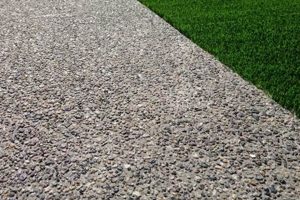
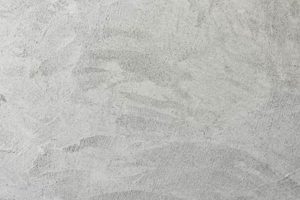
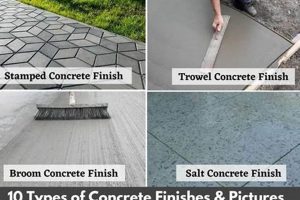
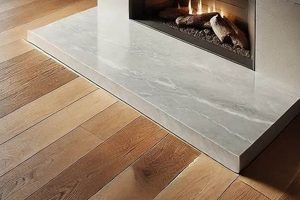
This architectural element involves creating a textured surface on concrete by applying a swirling motion during the finishing process. This technique results in a decorative, non-slip surface commonly used for walkways, patios, and driveways. The swirling pattern is typically achieved using specialized tools after the concrete has been poured and leveled but before it fully hardens. An example would be a residential patio where the homeowner desired a visually appealing and slip-resistant surface.
The benefits of this particular concrete treatment extend beyond aesthetics. It offers enhanced traction, making it safer for pedestrian traffic, especially in areas prone to moisture. The textured surface can also help to conceal minor imperfections in the concrete slab. Historically, variations of textured concrete finishes have been employed for centuries, although the specific swirling technique represents a more modern approach to achieving both functional and decorative goals. Its enduring appeal lies in its combination of practicality and visual interest.
Understanding this surface treatment provides a foundation for exploring various aspects of concrete work, including preparation techniques, the tools required for application, potential design variations, and best practices for maintenance and longevity. The following sections will delve deeper into these specific areas, providing a comprehensive overview of achieving a high-quality and durable concrete surface.
Tips for Achieving a Superior Swirl Concrete Finish
The following recommendations outline crucial considerations for achieving a high-quality outcome when implementing this finishing technique. Strict adherence to these guidelines will contribute significantly to the durability and aesthetic appeal of the finished surface.
Tip 1: Proper Concrete Mix Design: The concrete mixture should possess the correct slump and workability for optimal pattern application. A mix that is too dry will be difficult to swirl, while a mix that is too wet may slump and lose definition. A typical slump range of 4-6 inches is generally recommended.
Tip 2: Timing is Crucial: The swirling process must commence at the precise moment when the concrete has begun to set but remains pliable. Initiating the process too early will result in pattern distortion, while delaying the process will make swirling excessively difficult. A test area should be used to ascertain the ideal working time.
Tip 3: Consistent Application Technique: Maintaining a consistent speed and pressure during the swirling motion is paramount. Irregularities in the application will result in an uneven and unprofessional appearance. Overlapping swirls should be minimized to avoid a cluttered look.
Tip 4: Tool Selection and Maintenance: Employ appropriate tools designed for achieving the desired swirl pattern. Ensure the tools are clean and well-maintained throughout the process. Accumulation of concrete on the tools can impede the smooth creation of the pattern.
Tip 5: Adequate Curing: Proper curing is essential for concrete strength and durability. The concrete surface must be kept moist for a minimum of seven days after the swirling process. This can be achieved through methods such as water spraying, covering with wet burlap, or using a curing compound.
Tip 6: Protection From the Elements: During the initial curing stages, protecting the newly finished surface from extreme weather conditions is advisable. Direct sunlight, heavy rain, and freezing temperatures can negatively impact the concrete’s hydration process and lead to cracking or scaling.
These guidelines, when diligently followed, will enhance the likelihood of achieving a durable, aesthetically pleasing, and long-lasting result. Prioritizing these steps will contribute significantly to the overall success of the concrete project.
By incorporating these key considerations into the execution phase, the final result will be a testament to meticulous planning and careful implementation, setting the stage for exploring advanced techniques and addressing potential challenges in this area of concrete finishing.
1. Tool selection

The selection of appropriate tools is paramount to achieving the desired aesthetic and functional properties of a concrete surface. The efficacy of the swirling technique is directly contingent upon the characteristics of the implements employed.
- Float Material and Texture
The material composition and texture of the float significantly affect the resulting swirl pattern. Magnesium floats produce a smoother, more refined texture, while wooden floats yield a coarser, more rustic appearance. The choice depends on the desired aesthetic. For example, a magnesium float might be preferred for a modern, minimalist patio, while a wooden float could be chosen for a farmhouse-style walkway.
- Float Size and Shape
The dimensions and form factor of the float influence the scale and definition of the swirls. Larger floats cover more surface area per pass, leading to broader, less defined patterns. Smaller, more specialized floats allow for intricate, detailed swirls. Consider the size of the project area and the desired level of detail when selecting the appropriate float size and shape. A small, rounded float might be suitable for creating tight, overlapping swirls on a small patio, whereas a larger rectangular float would be more efficient for covering a large driveway with a more uniform pattern.
- Trowel Type
Trowels may be utilized following the initial float work to refine the surface or accentuate the swirl pattern. A steel trowel, for instance, can be used to burnish the high points of the swirls, creating a subtle contrast and enhancing durability. The choice of trowel should align with the desired level of surface smoothness and the overall aesthetic goal.
- Power Trowels
In certain large-scale applications, power trowels equipped with specialized blades can expedite the swirling process and achieve a uniform finish. These tools require considerable skill and experience to operate effectively, as improper use can easily damage the concrete surface. While efficient, their use should be reserved for experienced professionals and carefully considered based on the specific project requirements.
Ultimately, the successful implementation of the swirling concrete finish hinges on a thoughtful selection of tools aligned with the desired aesthetic, the scale of the project, and the skill level of the applicator. Careful consideration of these factors ensures a durable and visually appealing concrete surface. These tools are key to the Mixture consistency and application timing.
2. Mixture consistency

The consistency of the concrete mixture is a critical determinant in achieving a successful surface texture. Its influence permeates every stage of the process, from initial placement to the final finishing touches. Deviation from optimal consistency can lead to structural deficiencies and aesthetic imperfections.
- Workability and Slump
Workability refers to the ease with which concrete can be placed, consolidated, and finished. Slump, a measurable indicator of workability, provides a quantifiable assessment of the mixture’s consistency. Concrete with inadequate slump is difficult to manipulate and may result in a poorly defined texture. Conversely, excessive slump can cause segregation and bleeding, weakening the structural integrity and marring the surface finish. The target slump for projects typically ranges between 4 and 6 inches, but adjustments may be necessary based on environmental factors and specific project requirements.
- Water-Cement Ratio
The water-cement ratio (w/c ratio) is a fundamental parameter dictating the strength and durability of concrete. A higher w/c ratio increases workability but compromises strength and increases permeability, potentially leading to premature deterioration. A lower w/c ratio enhances strength but reduces workability, making texturing difficult. Maintaining an optimal w/c ratio is paramount for balancing workability and long-term performance. Typical w/c ratios for residential concrete range from 0.45 to 0.55, but specific project requirements may necessitate adjustments.
- Aggregate Gradation and Type
The size distribution (gradation) and type of aggregates significantly influence the mixture’s workability and finishing characteristics. Well-graded aggregates, containing a balanced distribution of sizes, tend to produce a more cohesive and workable mixture. The type of aggregate (e.g., crushed stone, gravel, sand) also affects the mixture’s texture and density. For example, angular aggregates may enhance traction in the finished surface, while rounded aggregates promote smoother finishing. Careful selection of aggregate gradation and type is essential for achieving the desired texture and performance characteristics.
- Admixtures and Their Effects
Admixtures are chemical compounds added to concrete to modify its properties, such as workability, setting time, and durability. Air-entraining agents improve resistance to freeze-thaw damage, while water reducers enhance workability without increasing the w/c ratio. Retarders can slow down the setting process, allowing for more time to apply the desired texture, particularly in hot weather. The judicious use of admixtures can fine-tune the mixture’s properties to optimize its performance and enhance its finishing characteristics.
These aspects underscore the importance of the mixture’s characteristics in facilitating the creation of intricate patterns and textures. Achieving the desired outcome necessitates a thorough understanding of the interplay between concrete composition, environmental conditions, and finishing techniques.
3. Application timing
The successful execution of a textured concrete surface is critically dependent on precise application timing. This parameter dictates the ability to impart a discernible and lasting pattern. The window of opportunity for achieving the desired result is narrow, contingent on the concrete’s hydration process. Premature manipulation of the surface leads to pattern distortion, while delayed intervention results in a hardened substrate incapable of accepting the intended texture. A residential driveway project serves as a practical example: if the swirling is initiated too early, the tool drags and smears the concrete, obliterating any semblance of a defined design. Conversely, if delayed, the tool encounters significant resistance, producing a faint or nonexistent impression. The practical significance lies in the direct correlation between timing and the aesthetic and functional qualities of the finished surface.
Further, environmental conditions exert a significant influence on the optimal timing. Elevated temperatures accelerate the setting process, necessitating expedited application, while cooler conditions prolong the workable period. The selection of concrete admixtures, such as retarders or accelerators, directly modifies the hydration rate and, consequently, the ideal application timeframe. For instance, in hot weather, a retarder might be incorporated into the concrete mix to extend the working time, allowing for a more deliberate and controlled application of the texture. Conversely, in colder conditions, an accelerator may be used to shorten the setting time and facilitate the texturing process before the concrete becomes unworkable. The expertise of the concrete finisher is critical in judging the interplay between environmental factors, admixture effects, and the concrete’s hydration state to determine the precise moment for initiating texturing.
In summation, achieving the desired textural outcome necessitates meticulous attention to application timing. The ability to accurately assess the concrete’s state of hydration and adjust application techniques in response to environmental variables is paramount. Challenges arise from the inherent variability of concrete mixes and the dynamic nature of environmental conditions. However, a thorough understanding of the underlying principles and adherence to best practices significantly increases the likelihood of success. Accurate judgment of timing, underpinned by practical experience, constitutes a core competency in concrete finishing, directly impacting the longevity and aesthetic appeal of textured concrete surfaces.
4. Swirl pattern

The swirling pattern is the defining characteristic of a swirl concrete finish. It is the visual element that differentiates this finish from other concrete treatments, influencing both aesthetic appeal and functional properties.
- Pattern Density and Spacing
The density and spacing of the swirls directly impact the slip resistance of the surface. A higher density of swirls, with closer spacing, creates a more textured surface that enhances traction. Conversely, a lower density of swirls results in a smoother surface with reduced slip resistance. For instance, a public walkway intended for heavy foot traffic would benefit from a high-density swirl pattern to minimize the risk of slips and falls, while a decorative patio might utilize a lower density pattern for a more subtle aesthetic.
- Swirl Shape and Depth
The shape and depth of the swirls contribute to the visual character of the concrete finish. Shallow, rounded swirls create a softer, more organic appearance, while deeper, more angular swirls produce a bolder, more pronounced texture. The selection of the swirl shape and depth should align with the overall design aesthetic. A garden path, for example, might feature shallow, organic swirls to complement the natural surroundings, whereas a modern architectural feature might incorporate deep, angular swirls to create a dramatic statement.
- Pattern Uniformity
The uniformity of the swirl pattern influences the overall visual appeal of the surface. A consistent and evenly distributed pattern creates a sense of order and harmony, while a more irregular or randomized pattern can add visual interest and a more naturalistic feel. The degree of pattern uniformity depends on the desired aesthetic effect. A formal courtyard might benefit from a highly uniform swirl pattern, whereas a rustic patio could embrace a more irregular pattern to enhance its character.
- Color and Contrast
The application of color and contrast can accentuate the swirl pattern, enhancing its visual impact. Integral color additives can be incorporated into the concrete mix to create a subtle background tone, while stains or dyes can be applied to highlight the swirls themselves. The use of contrasting colors can further emphasize the pattern, creating a striking visual effect. For example, a light-colored concrete base with darker stained swirls can create a visually dynamic surface, while a monochromatic palette can provide a more understated and elegant appearance.
These four facetspattern density and spacing, swirl shape and depth, pattern uniformity, and color and contrastare integral components of achieving a successful swirl concrete finish. By carefully considering and controlling these elements, it is possible to create a concrete surface that is both aesthetically pleasing and functionally appropriate for its intended use. The choice of swirl pattern fundamentally defines the final outcome.
5. Curing process

The curing process is an indispensable stage in achieving the desired properties of any concrete installation, and its significance is amplified when dealing with a swirl concrete finish. Proper curing directly impacts the strength, durability, and aesthetic longevity of the textured surface. Without adequate curing, the benefits of the swirl pattern are diminished, and the concrete structure itself is compromised.
- Hydration Rate and Strength Development
Hydration is the chemical reaction between cement and water that leads to concrete hardening and strength gain. The curing process ensures sufficient moisture is available for continuous hydration. Inadequate moisture leads to incomplete hydration, resulting in reduced compressive strength and increased permeability. A swirl concrete finish, with its increased surface area due to the texture, is particularly susceptible to moisture loss. For example, if a newly swirled driveway is allowed to dry out rapidly, it will be weaker and more prone to cracking than if it were properly cured. Proper curing, such as covering the surface with wet burlap, mitigates this risk and promotes optimal strength development.
- Minimizing Cracking and Shrinkage
Concrete undergoes shrinkage as it dries, and uncontrolled drying can lead to cracking, especially in exposed surfaces like those with a swirl finish. The curing process slows the rate of moisture loss, reducing the stress caused by shrinkage and minimizing the risk of crack formation. For instance, applying a curing compound to a newly swirled patio creates a membrane that retains moisture, preventing rapid evaporation and reducing the likelihood of shrinkage cracks. This is especially critical in hot or windy conditions that accelerate drying.
- Surface Hardness and Abrasion Resistance
Proper curing enhances the surface hardness and abrasion resistance of concrete, making it more durable and resistant to wear and tear. This is particularly important for swirl concrete finishes, which are often used in high-traffic areas. Inadequate curing results in a softer surface that is more susceptible to scratching and erosion. For example, a swirled concrete floor in a commercial building will exhibit premature wear and tear if it is not properly cured, leading to a diminished aesthetic appearance and increased maintenance costs. Consistent moisture during the curing phase promotes a harder, more durable surface that withstands abrasion and maintains its textured appearance.
- Enhancing Aesthetic Appearance
The curing process contributes to the overall aesthetic appeal of a swirl concrete finish by promoting uniform color development and minimizing surface blemishes. Inconsistent curing can result in variations in color and texture, detracting from the intended visual effect. Maintaining consistent moisture levels during curing ensures that the concrete hydrates evenly, resulting in a more uniform and aesthetically pleasing surface. For example, uneven curing of a swirled concrete countertop can lead to unsightly color variations and blemishes, compromising its visual appeal. Proper curing practices, such as consistent misting or covering with plastic sheeting, help to maintain a uniform moisture environment and enhance the final aesthetic outcome.
In essence, the curing process is not merely an afterthought but an integral component in realizing the full potential of a swirl concrete finish. By ensuring adequate hydration, minimizing cracking, enhancing surface hardness, and promoting a uniform appearance, proper curing practices safeguard the longevity and aesthetic appeal of the textured concrete surface. The interplay between swirl pattern and curing process is inextricably linked, emphasizing the need for meticulous attention to both aspects for optimal results.
6. Surface preparation

Surface preparation is a foundational element directly influencing the success of a swirl concrete finish. It constitutes the initial phase, establishing the groundwork for the subsequent application of the swirling pattern. Insufficient or inadequate surface preparation invariably leads to diminished aesthetic appeal, reduced durability, and potential structural compromise of the finished concrete surface. Proper preparation ensures optimal adhesion of the swirl pattern and uniform hydration of the concrete, crucial for long-term performance. For instance, if an existing concrete slab is not properly cleaned and leveled before applying a swirl finish, the resulting pattern may exhibit unevenness, and delamination may occur over time. This is because contaminants prevent proper bonding between the new swirl finish layer and the existing substrate. The practical significance lies in preventing costly repairs and premature deterioration by diligently executing the surface preparation phase.
Surface preparation encompasses several critical steps: cleaning, profiling, and leveling. Cleaning involves removing any debris, oil, grease, or existing coatings that could impede adhesion. Profiling refers to creating a slightly roughened surface to enhance the mechanical bond between the existing concrete and the new finish layer. This is commonly achieved through methods such as shot blasting or acid etching. Leveling addresses any existing irregularities or imperfections in the concrete surface, ensuring a smooth and uniform base for the swirl pattern. For example, on a newly poured concrete slab intended for a swirl finish, the surface must be properly screeded and floated to eliminate any high or low spots. Failure to do so will result in a distorted and uneven swirl pattern. Each step contributes to a stable and receptive surface, allowing the swirl pattern to be applied consistently and effectively.
In conclusion, surface preparation is not merely a preliminary step but an integral component of a swirl concrete finish. It establishes the foundation for achieving a durable, aesthetically pleasing, and structurally sound outcome. Challenges often arise from unforeseen conditions, such as hidden contaminants or existing surface damage. However, a thorough assessment, coupled with meticulous execution of cleaning, profiling, and leveling techniques, significantly mitigates these risks. The overall success of the project hinges on recognizing the critical role of surface preparation and investing the necessary time and resources to ensure its proper execution. Neglecting this stage invariably leads to compromised results, underscoring its irrefutable importance.
7. Environmental conditions

Environmental conditions exert a profound and multifaceted influence on the application and long-term performance of a swirl concrete finish. These factors dictate the rate of hydration, the development of surface stresses, and the overall durability of the finished surface. Understanding and mitigating the impact of these conditions is crucial for achieving a successful and lasting result.
- Temperature
Ambient temperature significantly affects the rate of concrete hydration. High temperatures accelerate the setting process, reducing the workable timeframe for achieving the swirl pattern. This necessitates rapid application and may require the use of retarding admixtures to extend the workability period. Conversely, low temperatures retard hydration, increasing the setting time and potentially leading to extended curing periods. In extremely cold conditions, precautions must be taken to prevent freezing, which can severely damage the concrete structure. For example, in desert climates, concrete may need to be poured during cooler evening hours and carefully shaded to prevent premature drying and cracking. Cold climates may require insulated blankets or heating to maintain proper hydration.
- Humidity
Humidity levels directly influence the rate of moisture loss from the concrete surface. Low humidity accelerates evaporation, increasing the risk of surface cracking and compromising strength development. Conversely, high humidity can slow down the setting process and potentially lead to surface scaling or discoloration. Controlling humidity levels is essential for proper curing. In arid environments, frequent misting or covering the concrete with wet burlap is necessary to maintain adequate moisture. In humid environments, adequate ventilation may be required to prevent excessive surface moisture.
- Wind
Wind amplifies the effects of temperature and humidity, accelerating moisture loss from the concrete surface. Even a moderate breeze can significantly increase the rate of evaporation, leading to surface cracking and reduced strength. Protecting the newly finished surface from wind is crucial, especially during the initial curing stages. Windbreaks, such as temporary barriers or tarpaulins, can be employed to minimize the impact of wind. The effect of wind is particularly pronounced on large, exposed surfaces, requiring careful planning and execution.
- Direct Sunlight
Direct sunlight intensifies the effects of temperature and can cause differential heating across the concrete surface. This can lead to thermal stresses and cracking, particularly in freshly poured concrete. Shading the concrete surface from direct sunlight is essential during the initial curing stages. This can be achieved using shade cloth, tarpaulins, or other shading devices. In addition to preventing thermal stresses, shading also helps to maintain a more uniform moisture content across the surface, promoting even hydration and minimizing the risk of surface blemishes.
These interconnected environmental factors collectively impact the success and longevity of a swirl concrete finish. Effective mitigation strategies involve careful monitoring of weather conditions, judicious use of concrete admixtures, and implementation of appropriate curing techniques. Recognizing and responding to these environmental challenges is essential for achieving a durable and aesthetically pleasing concrete surface. The interplay of these conditions necessitates a proactive approach to concrete placement and curing, ensuring that the environment does not compromise the integrity or appearance of the final swirl finish.
Frequently Asked Questions
The following addresses common inquiries regarding the application, properties, and maintenance of this specific type of concrete surface. The information provided aims to clarify misconceptions and offer guidance for achieving optimal results.
Question 1: What is the typical lifespan of a swirl concrete finish?
The longevity of a surface treated in this manner is contingent upon several factors, including the quality of materials used, the expertise of the installer, the prevailing environmental conditions, and the adherence to proper maintenance protocols. Under optimal circumstances, a well-executed application can last for several decades. However, neglecting maintenance or exposing the surface to harsh conditions can significantly reduce its lifespan.
Question 2: Is a swirl concrete finish suitable for high-traffic areas?
This particular finish can be appropriate for high-traffic areas, provided that the concrete mix design and application techniques are carefully considered. The density and depth of the swirl pattern can be adjusted to enhance traction and slip resistance. Furthermore, the application of a durable sealant can protect the surface from abrasion and wear. However, alternative surface treatments may be more suitable for extremely high-traffic areas subject to heavy loads or abrasive materials.
Question 3: What maintenance is required to preserve a swirl concrete finish?
Routine maintenance typically involves regular cleaning to remove dirt, debris, and stains. The use of mild detergents and gentle scrubbing is generally recommended. Periodic resealing may be necessary to maintain the surface’s protective barrier and prevent water penetration. Avoid the use of harsh chemicals, abrasive cleaners, or pressure washers, as these can damage the finish.
Question 4: Can a swirl concrete finish be applied over existing concrete?
Applying this finish over existing concrete is feasible, but thorough surface preparation is essential. The existing concrete must be clean, structurally sound, and free of any contaminants that could impede adhesion. Profiling the surface to create a mechanical bond is also crucial. In some cases, a bonding agent may be necessary to ensure proper adhesion. A professional assessment of the existing concrete’s condition is recommended before proceeding.
Question 5: Does a swirl concrete finish increase the cost of a concrete project?
This finish typically increases the cost of a concrete project compared to a standard smooth finish. The added expense is attributable to the specialized tools and techniques required for application, as well as the increased labor involved. However, the aesthetic benefits and enhanced slip resistance may justify the additional cost for many applications.
Question 6: What are the potential drawbacks of a swirl concrete finish?
Potential drawbacks include the increased difficulty of cleaning compared to a smooth surface, the possibility of uneven pattern application if not properly executed, and the potential for increased maintenance requirements in harsh environments. Furthermore, the textured surface may be more susceptible to staining from certain substances. Careful consideration of these potential drawbacks is essential before selecting this finish.
These responses serve as a starting point for understanding various aspects related to this particular concrete finish. Consulting with a qualified concrete contractor is highly recommended for specific project requirements and site conditions.
The subsequent sections will delve into advanced techniques and address potential challenges in the application and maintenance of this surface treatment.
Conclusion
This exploration has detailed the multifaceted nature of the concrete surface treatment, encompassing mixture consistency, application timing, swirl pattern characteristics, curing protocols, surface preparation imperatives, and environmental influences. Each element plays a critical role in determining the final outcome, necessitating meticulous planning and execution for a durable and aesthetically pleasing result. The inherent variability of concrete materials and environmental factors demands a thorough understanding of the principles governing concrete behavior and a commitment to best practices.
As the built environment continues to evolve, the demand for both functional and visually appealing surfaces will persist. Therefore, a comprehensive understanding of “swirl concrete finish,” encompassing its inherent complexities and potential challenges, is imperative for architects, engineers, and contractors alike. Continued research and refinement of application techniques will further enhance the reliability and longevity of this versatile surface treatment, ensuring its continued relevance in the construction industry.