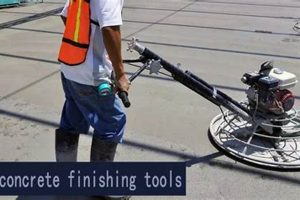
Devices employed to refine the surface of freshly placed cementitious mixtures are essential for achieving desired aesthetics and functional properties. These implements manipulate the material to create smooth, textured, or otherwise treated surfaces. Examples include hand floats, power trowels, edgers, groovers, and various texturing devices.
Proper surface refinement is paramount in concrete construction. It enhances durability by consolidating the surface, reducing permeability and minimizing the risk of cracking or spalling. Furthermore, the process provides a safe and aesthetically pleasing walking or working surface. Historically, these procedures were performed entirely by hand, a labor-intensive endeavor that has evolved with the advent of mechanized equipment.
The subsequent sections will detail specific categories of implements, discuss their applications, and outline techniques for their effective use in achieving optimal results when working with concrete.
Guidance for Optimizing Concrete Surface Treatment
The following recommendations aim to provide insight into achieving superior concrete surface refinement, focusing on technique and material compatibility.
Tip 1: Timing is Crucial: Begin surface work only when the bleed water has evaporated, and the concrete can support the finisher’s weight without indentation. Premature or delayed operation compromises the final result.
Tip 2: Select Appropriate Implements: The choice of implement should correspond to the desired finish. Bull floats are suitable for initial leveling, while hand floats refine the surface. Edgers create smooth edges, and groovers form control joints.
Tip 3: Maintain Equipment: Ensuring implements are clean and in good working order is essential. Worn or damaged blades on power implements cause uneven surfaces. Clean implements prevent contamination and staining.
Tip 4: Overlap Each Pass: When using floats or trowels, overlap each pass by approximately 50%. This technique ensures consistent coverage and minimizes the appearance of lines or ridges.
Tip 5: Minimize Water Addition: Avoid adding excessive water to the surface to facilitate the process. Water weakens the surface layer, increasing the risk of scaling and dusting.
Tip 6: Utilize Proper Protective Measures: Employ appropriate personal protective equipment, including gloves, eye protection, and knee pads, to safeguard against injury and exposure to cementitious materials.
Tip 7: Curing is Essential: Following surface treatment, implement proper curing techniques to maintain moisture and promote hydration. Proper curing enhances the concrete’s strength, durability, and resistance to cracking.
Adhering to these guidelines contributes to durable, aesthetically pleasing, and structurally sound concrete surfaces.
The subsequent sections will explore advanced surface treatment methods and emerging technologies in concrete refinement.
1. Surface Texture

Surface texture in concrete finishing is not merely an aesthetic choice, but a critical determinant of functional properties, impacting slip resistance, water runoff, and aesthetic appeal. The desired surface profile directly influences the selection and application of implements employed during the finishing process.
- Smooth Troweled Finish
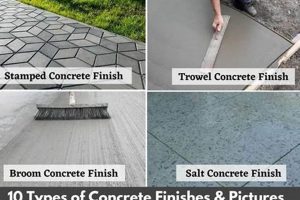
A smooth, dense surface is achieved through repeated passes with steel trowels. This process closes the surface pores, resulting in a sleek appearance. Implements for this finish include hand trowels, power trowels, and occasionally, specialized floats. Smooth surfaces are suitable for indoor applications where ease of cleaning and aesthetics are prioritized. However, they can become slippery when wet, limiting their suitability for outdoor areas.
- Broom Finish
A broom finish imparts a textured surface created by dragging a stiff-bristled broom across the freshly floated concrete. The resulting ridges provide enhanced slip resistance, making it ideal for sidewalks, driveways, and other outdoor applications. The coarseness of the texture can be adjusted by varying the stiffness of the bristles and the angle of the broom. Brooms of varying materials and sizes are the primary implements for this finish.
- Exposed Aggregate Finish
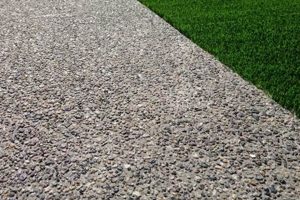
This decorative finish involves removing the surface layer of cement paste to reveal the underlying aggregate. Techniques for achieving this include washing the surface shortly after placement or using chemical retarders to delay the set of the surface layer. The revealed aggregate provides a visually appealing and durable surface. Implements used here involve surface retardants, power washers and sometimes hand tools for detailed exposure.
- Swirl Finish
A swirl finish is achieved using a float, typically a magnesium float, to create overlapping circular or arc-shaped patterns on the surface. The patterns are often random and impart a unique visual texture. This technique is commonly used on patios, walkways, and other decorative applications. The primary implement required is a float, and the technique relies on the skill of the finisher to create consistent and aesthetically pleasing patterns.
These varied surface textures demonstrate the adaptability of cementitious materials and the crucial role of implement selection in achieving desired functional and aesthetic outcomes. The choice depends not only on aesthetic preferences but also on practical considerations such as safety, durability, and environmental conditions.
2. Material Compatibility

The interaction between surface refinement devices and cementitious mixtures hinges on material compatibility. Incompatible materials lead to surface defects, reduced durability, and compromised aesthetics. The composition of the concrete, including aggregate type, cement chemistry, and admixture usage, dictates the selection of appropriate devices. For instance, concretes with high silica content may exhibit increased abrasiveness, accelerating the wear of steel finishing blades. Conversely, excessively soft aggregates risk displacement and surface pitting when subjected to aggressive power floating.
The timing of surface operations is intrinsically linked to material characteristics. Premature deployment of implements on a mixture with excessive bleed water results in dilution of the surface paste, leading to dusting and reduced strength. Conversely, delayed deployment on a rapidly setting mixture necessitates more aggressive devices, potentially causing tearing or surface cracking. Polymer-modified concretes require specialized devices and techniques to prevent delamination or surface blemishes. Fiber-reinforced concretes demand careful implement selection to avoid fiber pullout and uneven surface textures. Proper material compatibility ensures the efficient and effective use of tools, maximizing the quality and longevity of the cementitious surface.
Understanding the nuanced relationship between material composition and devices is paramount. Neglecting material compatibility leads to costly rework, compromised structural integrity, and premature degradation. Proper planning, informed selection of finishing implements, and adherence to recommended practices are essential for achieving durable, aesthetically pleasing, and functionally sound surfaces.
3. User Skill
Proficiency in the deployment of implements for cementitious surface refinement is critical. The effectiveness of these devices is directly proportional to the operator’s experience, knowledge, and technique. Suboptimal operator skill negates the potential benefits of even the most advanced technology.
- Equipment Selection Expertise
The ability to select the appropriate device for a given task is paramount. Experienced operators understand the nuanced differences between various floats, trowels, and other implements, allowing them to choose the tool best suited to the material, environmental conditions, and desired surface finish. Misapplication of equipment leads to inefficient operation and compromised results.
- Mastery of Technique
Proper technique is essential for achieving consistent and high-quality surfaces. Skilled operators possess the dexterity and coordination required to manipulate implements effectively, applying the correct pressure, angle, and speed to achieve the desired effect. Inconsistent or incorrect technique results in uneven surfaces, surface defects, and reduced durability.
- Problem-Solving Abilities
Experienced operators can identify and address potential problems before they escalate. They understand the factors that influence cementitious materials setting time, moisture levels, and environmental conditions and can adjust their techniques accordingly. This proactive approach minimizes the risk of surface defects and ensures a successful outcome.
- Safety Consciousness
Operating mechanized devices requires adherence to safety protocols. Skilled operators are cognizant of the potential hazards associated with power trowels, grinders, and other equipment, and they take the necessary precautions to protect themselves and others. A commitment to safety minimizes the risk of accidents and injuries.
The successful application of cementitious surface refinement relies heavily on operator skill. Investment in training and development is essential for maximizing the potential of the devices and achieving durable, aesthetically pleasing, and functionally sound surfaces. Continued education ensures users can maintain an understanding of the latest techniques and safety guidelines, while mastering the intricacies of this trade.
4. Equipment Maintenance
Cementitious surface refinement relies heavily on the condition of implements employed in the process. Equipment maintenance directly impacts the quality of the finished surface and the lifespan of the implements. A poorly maintained power trowel, for example, may leave uneven surfaces or chatter marks due to worn blades. Hand tools, if not cleaned regularly, can accumulate hardened cement residue, affecting their effectiveness and creating imperfections on the finished concrete.
Consider the case of an edger used to create rounded edges on concrete slabs. If the blade is nicked or bent, it will produce an irregular edge, requiring rework. Similarly, a bull float with a damaged blade will not effectively level the concrete surface, resulting in inconsistencies. Power equipment, such as concrete grinders, require regular inspection and replacement of grinding heads to maintain optimal performance. Neglecting maintenance leads to reduced efficiency, increased labor costs, and compromised surface quality. Proper cleaning and lubrication of equipment prevent premature wear and corrosion, extending the service life of implements and maximizing return on investment.
In conclusion, regular and thorough equipment maintenance is an integral component of cementitious surface refinement. It directly influences the achievable surface quality, operational efficiency, and overall cost-effectiveness of the construction process. Neglecting maintenance introduces avoidable risks, jeopardizing the final outcome and potentially leading to costly remediation efforts. A proactive maintenance schedule is essential for ensuring that implements perform optimally and contribute to durable, aesthetically pleasing, and structurally sound concrete surfaces.
5. Timing Implications

The selection and deployment of cementitious surface refinement implements are fundamentally governed by timing considerations. These considerations represent a critical factor influencing the quality, durability, and aesthetic characteristics of the final concrete surface. The hydration process, ambient temperature, humidity, and admixture effects collectively dictate the workable timeframe for effective utilization of various devices. Premature intervention with implements, before the surface has sufficiently hardened, results in surface tearing, displacement of aggregate, and the creation of undesirable surface textures. Conversely, delayed intervention, beyond the point of initial set, demands more aggressive implements, increasing the risk of cold joints, surface cracking, and compromised structural integrity. For example, deploying a power trowel too early results in a weakened surface paste prone to dusting, while attempting to float a surface after it has begun to set necessitates excessive force, potentially damaging the concrete.
The practical significance of understanding these timing implications is considerable. Concrete finishers must continuously assess the surface conditions to determine the optimal moment for each step in the finishing process. This requires a nuanced understanding of the concrete mix design, environmental factors, and the specific capabilities of each implement. Consider the application of chemical retarders to achieve exposed aggregate finishes. Precise timing is crucial for washing away the surface paste to reveal the aggregate without dislodging it. Similarly, the application of curing compounds must occur within a specific timeframe to prevent moisture loss and promote proper hydration. Incorrect timing leads to inconsistent aggregate exposure or ineffective curing, resulting in surface defects and reduced longevity.
Mastering the timing implications in cementitious surface refinement presents a significant challenge. It demands continuous observation, adaptation to changing conditions, and a comprehensive understanding of material science. However, the benefits of accurate timing are substantial: increased durability, improved aesthetics, reduced maintenance requirements, and enhanced overall performance of concrete structures. A failure to recognize and respond to these temporal constraints leads to compromised quality and potentially costly remediation efforts.
Frequently Asked Questions Regarding Cementitious Surface Refinement
The following section addresses common inquiries concerning implements utilized in cementitious surface refinement. These questions aim to clarify prevalent misconceptions and provide practical guidance on their selection and utilization.
Question 1: What constitutes the most crucial consideration when selecting implements for surface refinement?
The selection process is primarily dictated by the desired surface texture, the concrete mix design, and prevailing environmental conditions. Compatibility between the cementitious mixture and the implements is paramount to prevent surface defects and ensure optimal performance.
Question 2: At what juncture should surface refinement operations commence following concrete placement?
Surface refinement must commence only after the bleed water has evaporated and the concrete can support the finisher’s weight without exhibiting significant indentation. Premature intervention compromises the integrity and aesthetic quality of the surface.
Question 3: What distinguishes a bull float from a hand float, and when is each appropriately utilized?
A bull float, typically constructed of magnesium or aluminum and equipped with a long handle, is employed for initial leveling and consolidating of freshly placed concrete. A hand float, smaller in size and manipulated directly by the operator, serves to refine the surface further, removing minor imperfections and preparing it for subsequent troweling.
Question 4: What precautions should be observed when employing power implements for surface refinement?
Power implements require strict adherence to safety protocols. Operators must utilize appropriate personal protective equipment, ensure the equipment is properly maintained, and receive adequate training to prevent accidents and injuries. Overlapping each pass is crucial to ensure consistent coverage and minimize the appearance of lines or ridges.
Question 5: How does improper curing impact the quality of a refined concrete surface?
Inadequate curing leads to moisture loss, resulting in cracking, dusting, and reduced strength. Proper curing techniques, such as the application of curing compounds or the maintenance of a moist environment, are essential for promoting hydration and achieving durable, aesthetically pleasing surfaces.
Question 6: What are the consequences of adding excessive water to the surface during refinement?
The addition of excessive water weakens the surface paste, increasing the risk of scaling, dusting, and reduced durability. The practice should be avoided, and alternative techniques employed to facilitate surface refinement.
This FAQ section provides fundamental knowledge regarding the correct selection and application of implements in cementitious surface refinement. Adherence to these principles contributes to durable, aesthetically pleasing, and structurally sound results.
The following section will delve into advanced techniques and emerging technologies within the realm of cementitious surface refinement.
Conclusion
The proper selection, maintenance, and skillful employment of implements designed for refining cementitious surfaces are paramount to achieving durable, aesthetically pleasing, and structurally sound results. This exploration has underscored the significance of material compatibility, operator expertise, and adherence to optimal timing windows in maximizing the effectiveness of these devices.
Mastery of these implements and techniques remains critical for the advancement of concrete construction practices. Continued research, development, and training are necessary to ensure that future generations of construction professionals possess the skills and knowledge to effectively utilize these essential devices for the benefit of infrastructure development and structural integrity.