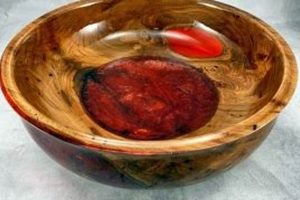
The practice encompasses specialized surface treatments and protective coatings applied to wooden objects or structures, tailored to meet specific aesthetic and functional requirements. This may involve techniques such as staining, sealing, painting, or texturing, with the ultimate goal of enhancing the wood’s appearance and prolonging its lifespan. For instance, an antique table might undergo a meticulous restoration process to revive its original luster, while a newly constructed cabinet might receive a protective layer to withstand daily use.
The application of specialized treatments to wood surfaces provides numerous advantages. Beyond mere decoration, such treatments offer enhanced durability, resistance to moisture and ultraviolet radiation, and protection against wear and tear. Historically, the meticulous care given to wood surfaces reflected its value as a building material and an indicator of status. The preservation of antique furniture and architectural details is often dependent upon the integrity of the initial and subsequent surface treatments.
The following discussion will delve into the various techniques and materials used, explore the selection criteria for choosing appropriate treatments, and examine the factors that influence the long-term performance of finished wood surfaces.
Essential Considerations for Achieving Superior Results
Achieving a high-quality, durable, and aesthetically pleasing result necessitates careful planning and execution. The following tips highlight critical aspects that contribute to success.
Tip 1: Surface Preparation is Paramount: Proper sanding, cleaning, and repair of imperfections are essential. Failure to adequately prepare the substrate will result in an uneven or flawed result, undermining the integrity of the entire process. Remove all traces of dust, grease, or previous coatings before proceeding.
Tip 2: Select Compatible Products: Ensure compatibility between all materials used, including stains, sealers, and topcoats. Incompatible products can lead to adhesion failures, discoloration, or premature degradation. Consult product data sheets and perform compatibility tests on inconspicuous areas.
Tip 3: Environmental Control is Crucial: Maintain consistent temperature and humidity levels throughout the application and drying process. Extreme fluctuations can negatively impact the curing process and lead to defects such as cracking or blistering. A controlled environment minimizes these risks.
Tip 4: Application Techniques Matter: Employ appropriate application techniques for each product. Over-application or uneven distribution can result in runs, sags, or inconsistent color. Practice proper spray gun techniques, brush strokes, or wiping methods, depending on the specific finish being applied.
Tip 5: Multiple Thin Coats are Preferable: Apply several thin coats rather than one thick coat. Thin coats promote better adhesion, reduce the risk of drips or runs, and allow for more even distribution of color and protection. Allow each coat to dry completely before applying the next.
Tip 6: Proper Curing Time is Essential: Adhere to the manufacturer’s recommended curing times before exposing the finished surface to stress or moisture. Premature exposure can compromise the integrity of the finish and lead to long-term problems. Allow ample time for the finish to fully harden and cross-link.
Tip 7: Invest in Quality Equipment: Utilize high-quality brushes, spray guns, and other tools to ensure consistent and professional results. Inferior equipment can lead to uneven application, overspray, or other defects that detract from the overall finish.
These considerations are fundamental to realizing the full potential of the process and achieving a lasting, visually appealing result. By adhering to these principles, optimal outcomes can be consistently achieved.
The subsequent sections will explore specific techniques and material options in greater detail.
1. Surface Preparation

Surface preparation is not merely a preliminary step; it is the foundational element upon which the success of any specialized wood surface treatment rests. The quality of the preparation directly influences the adhesion, appearance, and longevity of the applied finish. Compromising this stage inevitably leads to compromised results.
- Cleaning and Degreasing
The removal of surface contaminants, such as oils, waxes, and dust, is critical for proper adhesion. Residues prevent the finish from bonding directly with the wood fibers, leading to peeling, blistering, or uneven coloring. Solvents, detergents, or specialized cleaning agents are employed, followed by thorough rinsing and drying. The type of wood and intended finish dictate the appropriate cleaning method. For example, a solvent-based cleaner might be suitable for removing wax from hardwoods but could damage softer woods.
- Sanding and Smoothing
Sanding serves to create a uniformly smooth surface, free from imperfections such as scratches, dents, and raised grain. The selection of appropriate grit sandpaper and sanding techniques is crucial. Progressing through a series of progressively finer grits ensures a consistent and refined surface. Improper sanding can result in swirl marks, uneven coloring, and reduced finish durability. Power sanders are often used for larger surfaces, while hand sanding is preferred for intricate details and delicate areas.
- Repairing Imperfections
Addressing defects such as cracks, knots, and gouges is essential for achieving a flawless finish. Wood fillers, putties, or epoxy resins are used to fill these imperfections, creating a smooth, uniform surface for finishing. The choice of repair material depends on the size and nature of the defect, as well as the type of wood being treated. Color-matching the repair material to the surrounding wood is critical for a seamless appearance.
- Raising the Grain
Raising the grain involves wetting the wood surface with water or a solvent to cause the wood fibers to swell. After drying, the raised grain is lightly sanded off, resulting in a smoother, more receptive surface for finishing. This technique is particularly important for water-based finishes, which can cause the grain to rise naturally during the application process. Skipping this step can lead to a rough or uneven finish after the first coat is applied.
The meticulous execution of each surface preparation stage is not merely a matter of craftsmanship but a fundamental requirement for achieving optimal results. Ignoring these details undermines the potential of even the most sophisticated finishing techniques and materials. Proper preparation lays the groundwork for a durable, aesthetically pleasing, and long-lasting surface treatment.
2. Material Selection
The judicious selection of materials forms the cornerstone of successful specialized wood surface treatment. The characteristics of the chosen substances directly influence the aesthetic outcome, protective capabilities, and longevity of the finished article. A thorough understanding of material properties and their interaction with wood substrates is paramount.
- Stain Composition and Wood Species
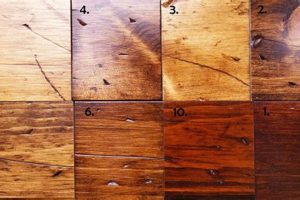
The chemical composition of stains, whether oil-based, water-based, or gel-based, dictates their penetration depth and color saturation. Different wood species exhibit varying degrees of porosity, influencing stain absorption and final coloration. For instance, a dark oil-based stain applied to a porous oak will yield a dramatically different result compared to its application on a dense maple. Careful consideration of these interactions is crucial for achieving the desired hue and uniformity.
- Sealants and Their Protective Qualities
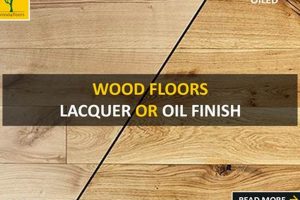
Sealants, such as varnishes, lacquers, and polyurethanes, serve as a protective barrier against moisture, abrasion, and ultraviolet radiation. Each type offers distinct advantages and disadvantages. Varnishes provide excellent durability and a traditional aesthetic, while lacquers offer fast drying times and a smooth finish. Polyurethanes are known for their exceptional resistance to chemicals and wear. The selection of an appropriate sealant depends on the intended use of the finished item and the desired level of protection.
- Adhesives and Their Structural Impact
Adhesives play a vital role in bonding wood components during construction and repair. The choice of adhesive impacts the structural integrity and longevity of the finished piece. Polyvinyl acetate (PVA) glues are commonly used for general woodworking, while epoxy resins offer superior strength and water resistance for demanding applications. Understanding the load-bearing requirements and environmental conditions is essential for selecting the appropriate adhesive.
- Topcoats and Aesthetic Enhancement
Topcoats provide the final layer of protection and contribute significantly to the overall aesthetic appeal. Options range from matte finishes to high-gloss sheens. The selection of a topcoat influences the perceived depth, clarity, and durability of the surface. For example, a matte topcoat can minimize glare and provide a subtle, natural look, while a high-gloss topcoat enhances reflectivity and creates a more dramatic effect.
The interplay between these materials and their influence on the ultimate outcome underscores the importance of informed decision-making in the specialized wood surface treatment field. A comprehensive understanding of material properties and their interactions with wood allows for the creation of finishes that are both aesthetically pleasing and functionally durable, ensuring the long-term preservation and enhancement of wooden objects.
3. Application Technique
The success of surface treatments on wood is inextricably linked to the methods employed during application. Irrespective of the quality of materials utilized, improper application techniques will invariably result in substandard results, detracting from both the aesthetic appeal and functional integrity of the finished product. The selection of an appropriate method, coupled with skilled execution, is therefore paramount in achieving the desired outcome.
- Spraying Methods: Precision and Uniformity
Spraying techniques, encompassing airless, HVLP (High Volume Low Pressure), and conventional methods, offer the potential for achieving exceptionally smooth and uniform coatings. The atomization of the finish material allows for consistent distribution across the surface, minimizing brush strokes and leveling issues. However, proper equipment calibration and operator skill are crucial. Factors such as spray pattern, fluid pressure, and nozzle selection must be carefully controlled to avoid runs, sags, and orange peel textures. Examples include applying lacquer to fine furniture and applying conversion varnish to kitchen cabinets, where a flawless finish is paramount.
- Brushing Techniques: Traditional Craftsmanship and Control
Brushing remains a viable application method, particularly for smaller projects, intricate details, and situations where spray equipment is impractical. The selection of an appropriate brush, based on bristle type and size, is critical. Natural bristle brushes are generally preferred for oil-based finishes, while synthetic brushes are better suited for water-based coatings. Proper brush loading and stroke technique are essential to avoid brush marks, air bubbles, and uneven film thickness. An example includes the application of varnish to wooden trim and moldings, where precise control and detail work are required.
- Wiping Stains: Enhancing Grain and Color Depth
The application of stains often involves a wiping technique, where the stain is applied liberally and then wiped away with a clean cloth. This method allows for controlled penetration of the stain into the wood pores, accentuating the grain pattern and achieving the desired color depth. The timing of the wiping process is critical; wiping too soon can result in insufficient color saturation, while wiping too late can lead to uneven blotching. This technique is commonly used to enhance the grain of oak furniture or to create a distressed look on painted surfaces.
- Roller Application: Efficiency for Larger Surfaces
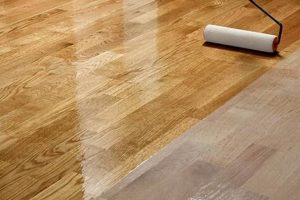
Roller application is an efficient method for coating larger, flat surfaces, such as doors and panels. The selection of an appropriate roller cover, based on nap length and material, is important to achieve a smooth and uniform finish. Foam rollers are often preferred for applying smooth finishes, while microfiber rollers offer excellent paint pickup and release. Proper roller loading and technique are essential to avoid roller marks, stippling, and uneven coverage. This method is commonly used in interior finishing such as application of paint or clear coat.
These various application techniques, each with its own nuances and requirements, underscore the importance of skilled craftsmanship in achieving superior specialized wood surface treatments. The mastery of these methods enables the realization of finishes that are not only aesthetically pleasing but also durable and long-lasting, ensuring the preservation and enhancement of wooden objects.
4. Environmental Control

The conditions under which surface treatments are applied and cured significantly influence the final outcome. Temperature, humidity, and air quality are not merely background factors but active agents that dictate the success or failure of specialized wood finishing processes.
- Temperature Regulation and Curing Rates
The ambient temperature directly affects the viscosity of finishing materials and the rate at which they cure. Elevated temperatures accelerate curing, potentially leading to uneven drying, blistering, or cracking. Conversely, low temperatures retard curing, prolonging drying times and increasing the risk of dust contamination. Maintaining a consistent temperature within the manufacturer’s recommended range is critical for optimal film formation and adhesion. For example, applying a polyurethane finish in a workshop below 60F (15C) may result in a soft, tacky film that remains susceptible to damage for an extended period.
- Humidity Levels and Moisture Content
Relative humidity influences the moisture content of the wood and the drying characteristics of water-based finishes. High humidity can cause wood to swell, leading to dimensional instability and potential adhesion failures. Low humidity can cause rapid evaporation, resulting in surface checking or uneven sheen. Water-based finishes are particularly sensitive to humidity fluctuations, as they rely on evaporation for proper curing. Controlling humidity within a specific range, typically between 40% and 60%, is essential for preventing these issues. Pre-heating wood in lower humidity environments can accelerate water based finishing process.
- Air Quality and Contamination Prevention
Airborne contaminants, such as dust, lint, and overspray, can compromise the quality of specialized wood surface treatments. These particles can become embedded in the finish, creating a textured or uneven surface. Maintaining a clean and well-ventilated workspace is crucial for preventing contamination. Air filtration systems, tack cloths, and dedicated spray booths are often employed to minimize the presence of airborne particles. Proper ventilation also helps to remove solvent vapors, improving worker safety and promoting proper curing of solvent-based finishes.
- Light Exposure and Finish Degradation
Prolonged exposure to ultraviolet (UV) radiation can degrade certain specialized wood surface treatments, leading to discoloration, cracking, and loss of gloss. UV-resistant finishes are often used to protect wood surfaces from the harmful effects of sunlight. However, even UV-resistant finishes can be affected by prolonged exposure. Controlling light exposure during the application and curing process, as well as in the finished environment, can help to prolong the lifespan of the finish. This can involve using tinted windows, UV-filtering films, or indirect lighting.
These environmental factors, when meticulously controlled, contribute significantly to the durability, appearance, and overall success of specialized wood surface treatments. Ignoring these considerations risks compromising the integrity of the finish and diminishing the long-term value of the treated object. A comprehensive approach to finishing includes strict environmental management protocols.
5. Durability Expectations

The relationship between anticipated longevity and specialized surface treatments is a critical determinant in selecting appropriate techniques and materials. The intended use and environmental conditions to which a wooden object or structure will be exposed directly influence the choice of finish. For example, a high-traffic floor necessitates a more robust and abrasion-resistant coating compared to a decorative wall panel. Failure to adequately consider potential wear and tear can result in premature degradation, necessitating costly repairs or replacement. Conversely, employing overly durable finishes in low-impact scenarios can represent an unnecessary expenditure and potentially compromise aesthetic qualities. Thus, aligning anticipated lifespan with appropriate surface treatments is paramount. Example: A restaurant tabletop requires a finish with high resistance to scratches, spills, and heat.
The evaluation of anticipated wear should consider both mechanical abrasion and environmental factors. Mechanical abrasion encompasses physical contact, such as foot traffic, impacts, and cleaning processes. Environmental factors include exposure to moisture, ultraviolet radiation, temperature fluctuations, and chemical substances. The selected finish must provide adequate protection against these specific threats. For instance, exterior woodwork demands a finish capable of withstanding prolonged exposure to sunlight and moisture, while laboratory furniture requires resistance to corrosive chemicals. Precise identification of potential stressors is vital for ensuring the long-term integrity and aesthetic appeal of the finished surface. As example, outdoor furniture that is located at the beach, needs better durability than other regular outdoor furniture.
In summary, durability expectations form an integral component of surface treatment protocols. Accurate assessment of potential wear and tear, coupled with the selection of appropriate materials and techniques, is essential for achieving a balance between aesthetic appeal, functional performance, and cost-effectiveness. The application of unsuitable finishes, whether through underestimation or overestimation of durability requirements, can lead to both financial and aesthetic consequences. Therefore, a holistic understanding of durability demands within the broader context of surface treatments is critical for informed decision-making and optimal results. One of the challenges is the unpredictable condition of the user of certain finished product which can impact expected durability.
Frequently Asked Questions Regarding Custom Wood Finishing
The subsequent questions address common inquiries concerning specialized surface treatments for wood. The information provided aims to clarify misconceptions and offer practical guidance.
Question 1: What constitutes “custom” in specialized wood surface treatments?
The term “custom” denotes the tailoring of surface treatment processes to meet specific client requirements. This encompasses the selection of materials, application techniques, and finishing styles to achieve a desired aesthetic outcome and functional performance that aligns with individual preferences and the intended use of the wood object or structure.
Question 2: How does specialized wood surface treatment affect the value of wooden items?
When executed properly, such treatments can significantly enhance the value of wooden objects. High-quality surface treatments improve appearance, protect against wear and tear, and extend the lifespan of the wood. These factors collectively contribute to an increase in both aesthetic and functional value. Improper or poorly executed surface treatments, conversely, can diminish value.
Question 3: What are the primary factors influencing the cost of specialized wood surface treatments?
The cost is influenced by several key variables. These include the size and complexity of the project, the type and quantity of materials used, the level of skill and expertise required for application, and the time involved in completing the treatment. Complex projects involving rare or specialized materials naturally incur higher costs.
Question 4: How does one determine the appropriate surface treatment for a specific wood species?
Determining the appropriate treatment requires careful consideration of the wood’s inherent properties, such as porosity, grain pattern, and hardness. Consultation with experienced wood finishing professionals is advisable. These professionals can assess the wood species, evaluate the intended use of the object, and recommend suitable treatments that optimize both aesthetic appeal and functional performance.
Question 5: What are the common pitfalls to avoid when undertaking specialized wood surface treatments?
Common pitfalls include inadequate surface preparation, the use of incompatible materials, improper application techniques, and failure to control environmental conditions. Thorough planning, meticulous execution, and adherence to manufacturer’s recommendations are essential for avoiding these pitfalls.
Question 6: How can the lifespan of a professionally surface-treated wood object be maximized?
Maximizing lifespan involves regular maintenance, including cleaning, dusting, and periodic reapplication of protective coatings as needed. Avoiding harsh chemicals and extreme environmental conditions is also crucial. Following the recommendations of the finishing professional regarding care and maintenance will contribute significantly to the long-term preservation of the treated wood.
These answers provide a foundation for understanding key aspects of specialized surface treatments. Further research and consultation with experts can offer more detailed insights specific to individual projects.
The following section will delve into case studies that illustrate the practical application of surface treatment principles.
Conclusion
The preceding exploration has illuminated the critical aspects of custom wood finishing, from meticulous surface preparation to the careful selection and application of appropriate materials. The significance of environmental control and the establishment of realistic durability expectations have also been underscored. A thorough understanding of these principles is paramount for achieving optimal and lasting results.
The pursuit of excellence in custom wood finishing demands a commitment to precision, expertise, and ongoing learning. As both aesthetic preferences and functional requirements continue to evolve, the importance of informed decision-making and skilled execution will only increase. The long-term value and aesthetic appeal of wooden objects are directly contingent upon the informed application of these specialized treatments. Consider engaging qualified professionals to ensure the successful execution of future projects.