![Protect Wood: PPG ProLuxe SRD Wood Finish - [Reviews & Guide]](data:image/svg+xml;base64,PHN2ZyB4bWxucz0iaHR0cDovL3d3dy53My5vcmcvMjAwMC9zdmciIHdpZHRoPSI0MDAiIGhlaWdodD0iMTAwIiB2aWV3Qm94PSIwIDAgNDAwIDEwMCI+PHJlY3Qgd2lkdGg9IjEwMCUiIGhlaWdodD0iMTAwJSIgc3R5bGU9ImZpbGw6I2NmZDRkYjtmaWxsLW9wYWNpdHk6IDAuMTsiLz48L3N2Zz4= "Protect Wood: PPG ProLuxe SRD Wood Finish - [Reviews & Guide] Best Final Touch: Elevate Your Projects with Professional Finishing")
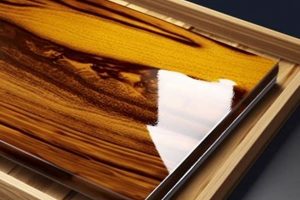
This product represents a high-performance, translucent wood finish designed to enhance and protect exterior wood surfaces. It employs alkyd resin technology, offering exceptional durability and resistance to weathering. A key feature is its ability to penetrate deeply into the wood, providing a robust barrier against moisture and UV damage. For example, it can be applied to siding, doors, windows, and trim to maintain their aesthetic appeal and structural integrity.
The utilization of such a finish is crucial for preserving the natural beauty and extending the lifespan of wooden structures. Historically, protecting wood from environmental degradation has been a significant challenge, with various treatments employed over time. This particular product offers a modern solution, combining advanced chemistry with ease of application, which leads to reduced maintenance and long-term cost savings. The improved resistance to cracking, peeling, and blistering contributes significantly to its value.
The following sections will delve into specific aspects of this exterior wood coating, including its application techniques, performance characteristics, and comparisons with alternative wood protection methods. The discussion will also address factors to consider when selecting this type of treatment for various wood types and environmental conditions.
Application and Maintenance Tips
Optimal performance necessitates careful attention to surface preparation and application techniques. Following these guidelines will maximize the lifespan and aesthetic appeal of the treated wood.
Tip 1: Surface Preparation is Paramount. Prior to application, ensure the wood is clean, dry, and free from any existing coatings, dirt, or mildew. Proper sanding is crucial for adhesion and a uniform finish. Failure to properly prepare the surface will compromise the product’s performance.
Tip 2: Temperature Considerations. Avoid application in direct sunlight or when temperatures are below 50F (10C) or above 90F (32C). Extremes in temperature can negatively impact the drying and curing process, leading to an uneven or compromised finish.
Tip 3: Stir, Do Not Shake. Thoroughly stir the product before use to ensure even pigment distribution. Shaking can introduce air bubbles, which may result in imperfections in the final finish.
Tip 4: Apply Thin, Even Coats. Multiple thin coats are preferable to a single thick coat. This allows for better penetration into the wood and reduces the risk of runs, sags, or blistering. Follow the manufacturer’s recommended spread rate.
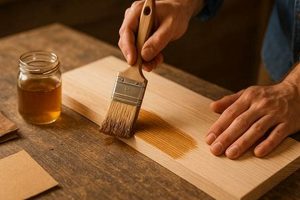
Tip 5: Back-Brushing Technique. When applying with a brush, employ a back-brushing technique to work the finish into the wood grain. This ensures proper adhesion and a uniform appearance.
Tip 6: Regular Inspection and Maintenance. Periodically inspect the coated wood for signs of wear or damage. Address any issues promptly with spot repairs or a maintenance coat to prevent further deterioration.
Tip 7: Proper Storage. Store unused product in a tightly sealed container in a cool, dry place. Avoid freezing temperatures, which can damage the product and render it unusable.
Adhering to these guidelines ensures the wood receives the intended protection, preserving its beauty and extending its service life. The outcome will be a durable, aesthetically pleasing finish that enhances the wood’s natural character.
The subsequent discussion will address common issues encountered during application and troubleshooting strategies to achieve professional-quality results.
1. Translucent Beauty

The “translucent beauty” characteristic is integral to the appeal and functionality of this particular wood finish. Rather than obscuring the wood’s natural grain and texture, this finish is designed to enhance and highlight these features. This translucency allows the inherent character of the wood to remain visible, preserving its aesthetic value while simultaneously providing a protective layer. The cause is the careful selection of pigments and resins, formulated to maximize light transmission through the coating. For example, when applied to a knotty pine door, the knots and grain patterns remain prominent, contributing to the door’s rustic charm, unlike opaque paints that would completely conceal these details.
The importance of this translucency extends beyond mere aesthetics. By allowing the wood’s structure to remain visible, it facilitates easier inspection for signs of damage or deterioration. Early detection of problems, such as rot or insect infestation, is crucial for preventing extensive structural damage. Consider a wooden deck treated with this finish. Homeowners can easily observe the condition of the wood and promptly address any issues, thereby extending the deck’s lifespan and minimizing repair costs. Furthermore, the translucent nature of the finish contributes to a more natural and less artificial appearance, blending seamlessly with the surrounding environment.
In conclusion, the emphasis on “translucent beauty” within the formulation of this wood finish reflects a deliberate design choice to balance aesthetic appeal with practical considerations. This characteristic not only enhances the visual impact of the wood but also facilitates easier maintenance and inspection. Challenges in achieving optimal translucency include ensuring uniform pigment distribution and minimizing cloudiness, which require careful formulation and application techniques. The practical significance of this attribute lies in its contribution to the overall value and longevity of the treated wood, aligning with the broader goal of sustainable and aesthetically pleasing wood protection.
2. Weather Resistance

Weather resistance is a critical performance characteristic directly influencing the longevity and appearance of exterior wood surfaces treated with this coating. The finish’s formulation is engineered to withstand the detrimental effects of moisture, sunlight, temperature fluctuations, and other environmental stressors. The capacity to resist these elements mitigates common issues like cracking, peeling, blistering, and discoloration, which compromise the structural integrity and aesthetic appeal of wood. For example, without adequate weather resistance, a wooden fence exposed to frequent rain and intense sunlight would rapidly degrade, requiring frequent repairs or replacement. The inclusion of UV absorbers and water-repellent additives directly causes the coating to maintain its protective qualities under harsh conditions.
The incorporation of weather-resistant properties enhances the practical applicability of this product across diverse climates. From coastal regions with high humidity and salt spray to mountainous areas with extreme temperature variations, the finish provides a durable barrier against the elements. This durability translates into reduced maintenance requirements and extended service life for wooden structures. The significance of this is evident in applications such as exterior doors, where dimensional stability and resistance to warping are essential. In such cases, the finish’s ability to withstand repeated cycles of wetting and drying prevents the door from sticking or becoming difficult to operate, ensuring continued functionality and preventing costly repairs.
In summary, weather resistance is a fundamental attribute that defines the value and effectiveness of this product. The product’s formulation directly addresses the challenges posed by environmental factors, resulting in a protective coating that preserves the beauty and integrity of exterior wood surfaces. The practical significance of understanding this connection lies in informed selection and application of the product, optimizing its performance in specific environmental conditions. Ongoing research and development focuses on further enhancing weather resistance to address evolving environmental challenges and ensure the continued protection of wood structures.
3. Wood penetration

Wood penetration, a fundamental characteristic, dictates the protective capabilities and longevity of this particular wood finish. This refers to the degree to which the finish permeates the wood substrate, creating a durable bond and a robust barrier against environmental stressors. Effective wood penetration is not merely a surface-level application; rather, it ensures the finish becomes an integral part of the wood structure. The cause of this penetration lies in the product’s formulation, specifically the molecular size and properties of its alkyd resins and solvents. This feature is crucial because it anchors the finish, preventing it from simply sitting atop the wood, vulnerable to peeling, cracking, and the ingress of moisture. For instance, consider a log home: its long-term protection significantly depends on deep penetration to protect it from rot.
The effectiveness of this deep penetration can be seen in applications such as siding and trim where the wood is constantly exposed to the elements. In those scenarios, proper penetration greatly reduces the chance of water infiltration, safeguarding wood from rot and degradation. This principle of wood penetration in the finish, makes it a great candidate for all exterior wooden surfaces. This contrasts with film-forming coatings that are prone to chipping and create a barrier that, once breached, allow moisture to become trapped underneath, accelerating decay.
In conclusion, the depth of wood penetration achieved by this finish constitutes a primary factor in its overall performance and durability. The challenges associated with achieving this involve ensuring the wood surface is properly prepared to receive the finish and selecting application techniques that facilitate penetration, such as brushing or wiping. By understanding the connection between penetration and long-term protection, users can make informed decisions regarding application and maintenance, maximizing the lifespan and beauty of their wood surfaces. This is especially critical where structural integrity and appearance are paramount.
4. UV Protection

The provision of ultraviolet (UV) protection is a critical attribute influencing the performance and longevity of wood finishes used in exterior applications. Regarding this particular coating, UV protection serves as a primary defense mechanism against sunlight-induced degradation, thereby preserving both the aesthetic appeal and structural integrity of treated wood surfaces.
- Inhibition of Lignin Degradation
The incorporation of UV absorbers within the finish formulation effectively mitigates the degradation of lignin, a key component of wood structure responsible for its rigidity. UV radiation causes lignin to break down, resulting in surface discoloration, graying, and eventual weakening of the wood. UV absorbers function by selectively absorbing UV radiation and dissipating it as heat, thereby preventing it from reaching and damaging the lignin. For example, a deck exposed to intense sunlight without adequate UV protection would exhibit significant graying and surface checking within a short period, necessitating costly repairs or replacement.
- Prevention of Coating Breakdown
Exposure to UV radiation not only degrades the wood itself but also accelerates the breakdown of the finish. UV radiation can cause the alkyd resins within the finish to become brittle and crack, leading to loss of adhesion and subsequent peeling or blistering. The inclusion of UV stabilizers helps to protect the finish from this photodegradation, extending its lifespan and maintaining its protective properties. Consider a wooden window frame: without UV protection, the finish would quickly deteriorate, leaving the wood vulnerable to moisture and rot.
- Color Retention and Aesthetics
UV radiation contributes significantly to the fading and discoloration of wood finishes, altering their intended aesthetic appearance. UV absorbers and stabilizers help to maintain the original color and clarity of the finish, preserving the wood’s natural beauty and preventing unsightly fading or yellowing. For example, a brightly colored wooden door treated with a UV-protected finish will retain its vibrancy for a longer period compared to one without such protection.
- Reduction of Maintenance Requirements
By mitigating the damaging effects of UV radiation, the finish reduces the frequency of maintenance required to keep wood surfaces protected. Reduced fading, cracking, and peeling translate into less frequent re-coating or repair work, saving time and resources. A properly protected wooden fence, for instance, will require significantly less maintenance over its lifespan, providing long-term cost savings to the homeowner.
These interconnected facets highlight the indispensable role of UV protection in enhancing the overall performance and value. By safeguarding against the harmful effects of sunlight, this coating offers a robust and durable solution for protecting exterior wood surfaces, ensuring long-lasting beauty and structural integrity. Failure to adequately address UV exposure can lead to premature failure of the finish and accelerated degradation of the underlying wood, emphasizing the importance of selecting a product with proven UV protection capabilities.
5. Alkyd durability
Alkyd durability constitutes a cornerstone in the performance profile of this wood finish. The longevity and protective capabilities of the coating are intrinsically linked to the inherent properties of the alkyd resins used in its formulation. This section elucidates the key facets of alkyd durability as they pertain to this specific product.
- Resistance to Abrasion and Impact
Alkyd resins, by nature, exhibit a notable degree of hardness and flexibility. This combination translates into a surface that can withstand minor abrasions and impacts without readily chipping or cracking. On exterior doors, for instance, this resistance minimizes damage from daily use, maintaining the aesthetic appearance and preventing the exposure of underlying wood to moisture. This contrasts with less durable finishes that may quickly show wear and tear in high-traffic areas.
- Dimensional Stability in Fluctuating Conditions
Alkyd-based coatings demonstrate a capacity to accommodate the natural expansion and contraction of wood due to changes in temperature and humidity. This dimensional stability prevents the finish from becoming brittle and cracking as the wood substrate shifts. The alkyd’s inherent flexibility allows it to move with the wood, ensuring a lasting protective seal. Consider wood siding; its expansion and contraction is a lot and alkyds is necessary for the longevity of its wood panel.
- Adhesion and Cohesion Strength
The strength of the bond between the finish and the wood surface, as well as the internal cohesion of the finish itself, directly impacts its resistance to peeling and blistering. Alkyd resins are engineered to provide strong adhesion to wood, creating a durable interface that withstands environmental stresses. This inherent property minimizes the risk of failure, even under prolonged exposure to sunlight and moisture. For example, window frames and trims that expansion and contraction due to weather requires this feature for the longevity.
- Chemical Resistance
Alkyd finishes offer a degree of resistance to various chemicals, including household cleaners and mild solvents. This property helps protect the wood surface from staining and damage caused by accidental spills or cleaning activities. While not impervious to all chemicals, the alkyd component provides a safeguard against common substances encountered in residential and commercial environments. This feature is appreciated in deck application. Although alkyd is not best at this feature, it is one of the feature provided.
These facets collectively contribute to the robust performance profile that defines this wood finish. The alkyd component, acting as the backbone of the coating, provides the necessary durability to withstand the challenges of exterior exposure, thereby preserving the beauty and integrity of treated wood surfaces for an extended period.
Frequently Asked Questions
This section addresses common inquiries regarding the application, performance, and maintenance aspects of this exterior wood coating. The information provided aims to offer clarity and support informed decision-making.
Question 1: What constitutes proper surface preparation prior to application?
Optimal adhesion and finish quality necessitate a clean, dry, and sound substrate. Any existing coatings must be completely removed through sanding or chemical stripping. The wood surface should be free of dirt, mildew, and loose fibers. A light sanding to create a profile enhances the mechanical bond. Proper surface preparation is non-negotiable for achieving the intended results.
Question 2: Under what environmental conditions should this product not be applied?
Application should be avoided in direct sunlight, during periods of high humidity, or when temperatures are below 50F (10C) or above 90F (32C). These conditions can adversely affect the drying and curing process, potentially leading to defects such as blistering, sagging, or uneven sheen. Optimal results are achieved when application occurs under stable, moderate weather conditions.
Question 3: How many coats are recommended for optimal protection and appearance?
A minimum of two coats is generally recommended for optimal protection and aesthetic appeal. The first coat serves as a primer, penetrating the wood and providing a foundation for subsequent coats. The second coat enhances the finish and provides additional UV protection. In some instances, a third coat may be warranted, particularly on surfaces exposed to severe weather conditions.
Question 4: What is the expected lifespan of this finish under typical exterior conditions?
The expected lifespan varies depending on factors such as climate, wood type, and exposure to sunlight and moisture. However, under typical conditions, this finish is expected to provide protection for several years. Regular inspection and maintenance, including periodic cleaning and re-coating, can significantly extend the lifespan of the finish.
Question 5: What cleaning agents are suitable for maintaining surfaces coated with this product?
Surfaces coated with this product should be cleaned with mild soap and water. Harsh chemicals or abrasive cleaners should be avoided, as they can damage the finish. Regular cleaning helps remove dirt and mildew, preserving the aesthetic appearance and preventing premature degradation.
Question 6: Can this product be applied over existing coatings?
Application over existing coatings is generally not recommended unless the existing coating is fully compatible and in sound condition. In most cases, it is best to remove the existing coating completely to ensure proper adhesion and performance of this product. Compatibility testing is advisable if complete removal is not feasible.
In summary, adherence to recommended application procedures, consideration of environmental factors, and regular maintenance are crucial for maximizing the performance and longevity. The information provided serves as a guide for achieving professional-quality results.
The subsequent section will present a comparative analysis against alternative wood finishing solutions, highlighting the unique advantages and disadvantages.
Conclusion
The preceding analysis has detailed the attributes of ppg proluxe srd wood finish, underscoring its performance characteristics, application considerations, and maintenance requirements. The evaluation encompasses aspects such as translucency, weather resistance, wood penetration, UV protection, and alkyd durability. Proper application, consistent with manufacturer guidelines, is essential to optimize these qualities.
Ultimately, ppg proluxe srd wood finish presents a viable option for exterior wood protection, contingent on informed selection, proper application, and diligent upkeep. Continued research and development will likely further enhance its performance and longevity, reinforcing its role in preserving wooden structures. Further study of its long-term performance in diverse environments is warranted.
![Buy Premium Walnut Finished Wood [Deals Inside] | Best Final Touch: Elevate Your Projects with Professional Finishing](https://bestfinaltouch.com/wp-content/uploads/2026/05/th-405-300x200.jpg "Buy Premium Walnut Finished Wood [Deals Inside] Best Final Touch: Elevate Your Projects with Professional Finishing")