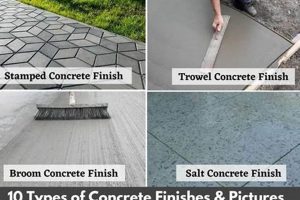
A surface treatment applied to freshly poured concrete, achieved by dragging a broom across the surface before it fully hardens, provides a textured, slip-resistant finish. This technique is commonly used for exterior applications like sidewalks, driveways, and patios where traction is crucial. The resulting pattern varies depending on the stiffness of the bristles, the angle of the broom, and the consistency of the concrete mix, allowing for customizable aesthetic outcomes.
The popularity of this finishing method stems from its practicality, cost-effectiveness, and ease of application. The textured surface significantly enhances safety by minimizing the risk of slipping, particularly in wet or icy conditions. Historically, it has been a standard choice for residential and commercial projects due to its durability and low maintenance requirements, offering a functional yet visually appealing solution for large-scale concrete surfaces. This surface offers a blend of safety, durability, and aesthetic flexibility.
Understanding the characteristics of this texturing method is fundamental when selecting appropriate concrete finishes for diverse applications. Subsequent sections will delve into specific techniques, design considerations, and best practices for achieving optimal results, ensuring both functionality and visual appeal for various concrete projects.
Surface Texturing Guidance
The following recommendations are crucial for achieving a high-quality concrete surface, focusing on optimal techniques and best practices for maximizing both aesthetic appeal and functional performance.
Tip 1: Preparation of the Concrete Mixture: A consistent concrete mix is vital. Variations in aggregate size or water content directly impact the uniformity of the resulting texture. Ensure thorough mixing and proper slump for consistent results.
Tip 2: Timing of the Application: Execute the texturing process at the precise moment the bleed water has evaporated but before the concrete hardens significantly. Delaying too long will impede the broom’s effectiveness and create an uneven finish.
Tip 3: Broom Selection and Technique: Employ a broom with bristles appropriate for the desired texture. Softer bristles produce a subtle texture, while stiffer bristles yield a more pronounced effect. Maintain a consistent angle and pressure throughout each stroke to guarantee uniformity.
Tip 4: Overlapping Strokes: Overlap each pass of the broom slightly, approximately one to two inches, to eliminate gaps and ensure a seamless pattern. Inconsistent overlapping creates visual imperfections.
Tip 5: Cleanliness of Tools: Routinely clean the broom bristles during the process to prevent the accumulation of concrete, which can lead to drag marks and inconsistencies in the texture. A clean broom is essential for a clean finish.
Tip 6: Environmental Considerations: Wind and direct sunlight accelerate the setting of concrete, impacting the optimal window for achieving the desired texture. Implement measures to mitigate these environmental effects, such as using windbreaks or applying evaporation retardants.
Tip 7: Consistent Direction: Maintain a consistent direction for each pass of the broom across the surface. Altering the direction mid-pour can create an unprofessional, patchwork appearance.
Adhering to these guidelines ensures a durable and aesthetically pleasing concrete surface, enhancing safety and visual appeal. Careful attention to detail in material preparation, timing, and execution is paramount for a successful outcome.
The concluding sections of this article will explore advanced surface finishing techniques and long-term maintenance strategies, further refining the understanding and application of concrete finishing principles.
1. Slip Resistance

Slip resistance is a critical performance characteristic of concrete surfaces, particularly in environments prone to moisture or where pedestrian traffic is frequent. A specific texturing method plays a vital role in enhancing this safety feature, thereby reducing the risk of slips and falls.
- Texture Depth and Friction
The depth of the ridges created during the finishing process directly correlates with the surface’s coefficient of friction. Deeper textures provide a greater mechanical interlock, increasing resistance to slipping even when the surface is wet. The aggregate exposure created during the process also contributes to increased friction.
- Water Displacement Capacity
Textured surfaces effectively channel water away from the contact point between a shoe and the concrete, preventing the formation of a thin film of water that can drastically reduce friction. This water displacement capability is especially important in outdoor applications such as sidewalks and pool decks.
- Influence of Broom Type
The type of broom used, whether stiff-bristled or soft-bristled, dictates the aggressiveness of the texture and, consequently, the level of slip resistance. Stiffer bristles yield a more pronounced texture, offering superior slip resistance compared to the smoother finish achieved with softer bristles. The choice of broom should be tailored to the specific safety requirements of the application.
- Long-Term Performance and Maintenance
Over time, wear and tear can reduce the effectiveness of the texturing. Periodic cleaning to remove accumulated dirt and debris is essential to maintain the original level of slip resistance. In high-traffic areas, reapplication of a surface treatment or even re-texturing may be necessary to ensure continued safety.
The implementation of a texturing method is a strategic choice for ensuring pedestrian safety on concrete surfaces. The careful selection of materials, application techniques, and ongoing maintenance protocols are crucial for maximizing the long-term slip resistance and minimizing the potential for accidents.
2. Texture Consistency

Texture consistency is paramount in concrete finishing, particularly when employing a specific surface treatment. Uniformity in the applied pattern directly impacts the overall aesthetic appeal and functional performance of the finished concrete surface.
- Mix Consistency and Slump
Variations in the concrete mix itself are primary contributors to inconsistencies in the final texture. Fluctuations in aggregate size, water content, or cement distribution result in uneven consolidation and hydration, directly affecting the impression left by the broom. Maintaining a consistent slump, a measure of concrete’s workability, is crucial for ensuring uniform application and texture.
- Application Technique and Pressure
The technique employed during the texturing process significantly influences the uniformity of the finish. Consistent angle and pressure applied to the broom are essential for achieving a uniform pattern. Variations in pressure or angle will result in visible discrepancies across the surface. The skill and experience of the applicator are, therefore, critical factors in achieving consistent texture.
- Timing and Environmental Factors
The timing of the texturing relative to the concrete’s setting process profoundly affects the consistency of the final result. Applying the treatment too early, when the concrete is excessively wet, leads to smearing and indistinct patterns. Conversely, delaying the process until the surface begins to harden reduces the broom’s effectiveness and results in an uneven or incomplete texture. Environmental factors such as temperature, humidity, and wind speed also affect the concrete’s setting rate, necessitating adjustments in the application timing to maintain texture consistency.
- Broom Condition and Maintenance
The condition of the broom itself plays a significant role in texture consistency. Worn, damaged, or dirty bristles produce inconsistent and unpredictable patterns. Regular cleaning and maintenance of the broom, including the replacement of worn bristles, are essential for ensuring a consistent and uniform finish.
Achieving texture consistency requires meticulous attention to detail throughout the entire concrete placement and finishing process. From the initial concrete mix design to the final application of the finishing treatment, each step must be carefully controlled to minimize variations and ensure a uniform and aesthetically pleasing result. The specific surface treatment, while seemingly straightforward, demands precision and skill to achieve optimal consistency and overall quality.
3. Application timing

The success of achieving a desirable surface when using a broom finish depends significantly on the timing of its application. The window of opportunity for effective texturing is narrow, dictated by the concrete’s hydration process. Applying the broom at the incorrect time yields unsatisfactory results, impacting both aesthetics and functionality.
- Initial Set and Workability
The optimal time for application occurs after the concrete has undergone its initial set, a point where excess bleed water has evaporated from the surface, but the concrete remains sufficiently plastic. Texturing the surface prematurely, while bleed water is present, results in a smeared, inconsistent finish, compromising the clarity of the texture. Conversely, delaying the process past the point of plasticity renders the concrete too hard for effective texturing, leading to a shallow, uneven pattern.
- Impact of Environmental Conditions
Environmental factors, such as temperature, humidity, and wind speed, significantly influence the concrete’s setting rate. In hot, dry conditions, the concrete sets more rapidly, shortening the application window. Conversely, in cooler, humid conditions, the setting process is prolonged. Applicators must constantly monitor the concrete’s condition and adjust their timing accordingly. Techniques like using evaporation retardants may be necessary in adverse conditions to extend the workable period.
- Visual Indicators and Tactile Assessment
Determining the correct application time relies on both visual and tactile assessment. The absence of a sheen from bleed water indicates surface readiness. A light touch should leave a slight indentation but not cause excessive displacement of the concrete paste. Experienced finishers develop a keen sense for these subtle cues, enabling them to consistently apply the broom finish at the ideal moment.
- Consequences of Improper Timing
The consequences of improper timing are twofold. Aesthetically, the resulting surface may exhibit inconsistencies, patchiness, and a lack of well-defined texture. Functionally, premature or delayed application compromises the slip resistance of the surface, reducing its safety and effectiveness, especially in wet conditions. Remedial actions for improperly applied broom finishes are often costly and may involve complete surface replacement.
Application timing is therefore not merely a procedural step but a critical element in the overall success of surface finishing. Understanding the interplay between the concrete’s hydration process, environmental factors, and proper assessment techniques is essential for achieving a durable, aesthetically pleasing, and functionally effective result with a broom finish.
4. Broom Selection
The selection of the appropriate broom directly determines the resultant characteristics of the concrete surface, influencing texture depth, pattern uniformity, and overall aesthetic. The broom’s bristle material, stiffness, and configuration are causal factors in the final appearance. Stiffer bristles create deeper, more aggressive textures, while softer bristles produce subtler, smoother finishes. This choice is not arbitrary; it must align with the intended function and aesthetic of the concrete installation. For instance, a driveway or walkway, requiring enhanced slip resistance, benefits from a stiff-bristled broom, while a decorative patio may warrant a softer broom for a more refined look. Without careful broom selection, the desired texture is unachievable, compromising both the surface’s safety and visual appeal.
The configuration of the broom also plays a vital role. Brooms with angled bristles create a different texture than those with straight bristles. Furthermore, the density of the bristles affects the spacing and definition of the grooves. In practical application, a contractor working on a large commercial project might utilize a power broom with adjustable settings to maintain consistency over a wide area, while a smaller, hand-held broom may be preferred for detailed residential projects. Understanding these nuances allows for precise control over the texture, enabling the creation of custom finishes tailored to specific architectural requirements.
In conclusion, broom selection is an indispensable component of surface finishing. The characteristics of the chosen broom have a direct and predictable effect on the final texture. Challenges arise when the selection is made without adequate consideration of the project’s needs, leading to unsatisfactory results. Therefore, a comprehensive understanding of broom types and their respective effects on concrete surfaces is essential for achieving both functional and aesthetic objectives in concrete construction.
5. Aesthetic Flexibility

The term “aesthetic flexibility,” when applied to surfaces treated with a broom finish, describes the capacity to achieve a diverse range of visual outcomes through controlled variations in technique and materials. This texturing method, while seemingly basic, is capable of producing surfaces that range from subtly textured to aggressively patterned, directly influencing the overall visual character of the concrete installation. The choice of bristle stiffness, the angle of the broom, and the timing of the application all contribute to this range. This capability offers design professionals the opportunity to tailor the concrete surface to complement diverse architectural styles and functional requirements.
Consider, for example, two contrasting applications. A modern, minimalist residence might utilize a broom finish with a soft-bristled broom, applied at a shallow angle, to create a subtle, understated texture that blends seamlessly with the clean lines of the architecture. Conversely, a rustic, outdoor patio might employ a stiff-bristled broom, applied with a more aggressive stroke, to produce a deep, pronounced texture that evokes a sense of ruggedness and naturalness. Both scenarios demonstrate the method’s adaptability. Furthermore, the addition of integral color to the concrete mix expands the palette, allowing for further customization. Stamped patterns can also be combined with the surface texture to enhance its visual complexity. This level of customization makes the surface a versatile choice for a wide array of projects.
In summary, “aesthetic flexibility” is not merely a superficial attribute but an intrinsic characteristic. The ability to manipulate the texture through variations in technique provides design professionals with a powerful tool for shaping the visual identity of concrete surfaces. Challenges in achieving the desired aesthetic lie primarily in controlling the variables and maintaining consistency throughout the application process. Accurate specification of materials and methods, coupled with skilled workmanship, are crucial for realizing the full potential of the surface and ensuring that it seamlessly integrates with the overall design vision.
Frequently Asked Questions About Broom Finish Concrete Texture
The following questions address common concerns and misconceptions regarding surfaces achieved through the application of a broom finish to concrete. The answers provided aim to offer clarity and practical guidance.
Question 1: Is a broom finish suitable for interior applications?
While primarily utilized for exterior surfaces due to its slip-resistant properties, a lightly textured finish is adaptable for interior spaces where traction is a concern, such as commercial kitchens or entryways. However, considerations regarding cleanability and aesthetic appropriateness should be carefully evaluated prior to implementation.
Question 2: How does the aggregate type affect the final texture?
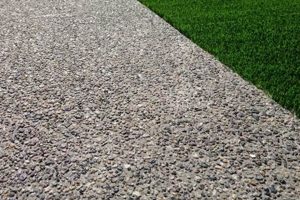
The size, shape, and hardness of the aggregate present in the concrete mix influences the prominence of the surface texture. Larger aggregate particles may become exposed during the finishing process, adding visual interest and increasing slip resistance. Careful selection of aggregate is therefore critical for achieving the desired texture and aesthetic.
Question 3: What maintenance is required to preserve the finish?
Routine cleaning with water and a mild detergent is generally sufficient for maintaining its appearance and performance. In high-traffic areas, periodic resealing may be necessary to protect the surface from staining and abrasion. Prompt removal of spills and debris will also contribute to its longevity.
Question 4: Can a broom finish be applied to existing concrete?
It is primarily applied to freshly poured concrete. Applying it to existing concrete is generally impractical and cost-prohibitive, often necessitating a complete resurfacing or overlay to achieve a similar effect. Surface preparation, such as grinding, is also required.
Question 5: How does the color of the concrete affect the visual appearance?
Integral color, added directly to the concrete mix, significantly influences the aesthetic outcome. Darker colors tend to accentuate the texture, while lighter colors create a more subtle effect. The choice of color should be carefully considered in relation to the surrounding environment and architectural style.
Question 6: What are the common mistakes to avoid during application?
Common errors include improper timing of the application, inconsistent broom strokes, and using a dirty or worn broom. Failing to adequately prepare the subgrade or using an unsuitable concrete mix can also lead to unsatisfactory results. Careful attention to detail and adherence to best practices are essential for avoiding these pitfalls.
In summary, a comprehensive understanding of material properties, application techniques, and maintenance requirements is critical for maximizing the benefits and minimizing the potential drawbacks of this concrete surface.
The subsequent section will explore advanced surface finishing techniques and long-term maintenance strategies.
Conclusion
This exploration of surfaces highlights several crucial aspects: slip resistance, application timing, broom selection, and aesthetic flexibility. These elements are not isolated; they are interdependent factors affecting the final result. Precise control over each aspect is paramount for achieving a durable, safe, and visually appropriate concrete surface. The information presented serves as a foundational resource for professionals involved in concrete design and construction.
Continued adherence to established best practices, coupled with ongoing innovation in materials and techniques, will ensure that this texturing method remains a relevant and reliable choice for a wide range of applications. Further research and development should focus on enhancing its long-term performance and expanding its aesthetic possibilities, solidifying its role in both functional and design-driven concrete projects.