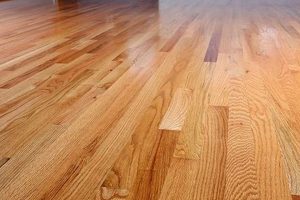
The process of applying a new protective layer to timber flooring without removing the existing finish through abrasion offers an alternative approach to traditional refurbishment. This method focuses on cleaning, preparing, and applying specialized coatings designed to bond with the existing surface. For example, a homeowner might opt for this technique to refresh the sheen of their floors without the dust and disruption associated with conventional sanding.
This approach provides multiple advantages, including reduced labor costs, quicker completion times, and the elimination of airborne dust particles. Historically, intensive sanding was the primary means of rejuvenating wooden floors. However, modern chemical advancements have produced durable, aesthetically pleasing finishes that can adhere effectively without the need for complete surface removal, offering a less invasive solution for maintaining the integrity and appearance of wood flooring.
The following sections will delve into the specific preparation techniques, product selections, application methodologies, and long-term maintenance considerations crucial for successfully achieving a revitalized timber floor surface utilizing this method.
Guidance for Coating Hardwood Flooring Without Abrasive Techniques
The following recommendations provide insights into effectively applying a new finish to hardwood floors without sanding, ensuring a durable and aesthetically pleasing outcome.
Tip 1: Thoroughly Clean the Surface. The existing floor must be meticulously cleaned to remove all traces of dirt, wax, grease, and other contaminants. Utilize a residue-free cleaner specifically designed for hardwood floors, ensuring complete removal of any substances that could impede adhesion.
Tip 2: Assess Existing Finish Compatibility. Determine the type of existing finish (e.g., polyurethane, oil-based) to ensure compatibility with the new coating. Incompatibility can lead to peeling, bubbling, or inadequate adhesion. Conduct a small test area to verify compatibility before proceeding with the entire floor.
Tip 3: Employ a Bonding Agent. The application of a bonding agent is crucial for creating a strong, durable connection between the old and new finishes. Select a bonding agent specifically formulated for hardwood floors and follow the manufacturer’s instructions meticulously.
Tip 4: Apply Thin, Even Coats. Apply the new finish in thin, even coats to prevent drips, runs, and pooling. Multiple thin coats are preferable to a single thick coat, as they promote better drying and a more uniform appearance.
Tip 5: Allow Adequate Drying Time. Adhere strictly to the manufacturer’s recommended drying times between coats and before allowing foot traffic. Insufficient drying time can compromise the finish’s durability and appearance.
Tip 6: Consider a Buffing Step. Lightly buffing the floor between coats with a fine-grit abrasive pad can help to smooth the surface and improve adhesion of subsequent coats. Ensure the buffing pad is clean and free of debris to prevent scratching.
Tip 7: Maintain Proper Ventilation. Adequate ventilation is essential during application and drying to facilitate the evaporation of solvents and promote proper curing of the finish. Open windows and utilize fans to ensure sufficient airflow.
Following these guidelines enhances the likelihood of a successful floor refinishing project, resulting in a durable and aesthetically pleasing outcome while minimizing the disruption associated with traditional sanding methods.
The subsequent sections will address common challenges and troubleshooting strategies associated with this refinishing approach.
1. Surface Preparation

Surface preparation is paramount when applying a new finish to hardwood floors without sanding. The existing surface must be rendered receptive to the new coating, ensuring proper adhesion and a durable, aesthetically pleasing result. Neglecting thorough preparation can lead to premature failure of the new finish, negating the benefits of avoiding sanding.
- Cleaning and Degreasing
This stage involves the removal of all surface contaminants, including dirt, dust, wax, grease, and previously applied cleaning products. Specialized hardwood floor cleaners are employed to avoid leaving residues that could interfere with adhesion. For instance, a floor previously treated with oil-based polish requires thorough degreasing to ensure the new finish bonds correctly. Inadequate cleaning is a primary cause of finish failure in these applications.
- Removal of Loose Material
Any loose or flaking finish must be carefully removed before applying the new coating. This can be achieved through gentle scraping or light abrasion using fine-grit sandpaper. Addressing these imperfections prevents them from becoming embedded within the new finish, which can compromise its integrity and appearance. For example, existing polyurethane coatings that are beginning to crack or peel must be carefully addressed. Ignoring these issues causes the new finish to appear uneven and possibly fail soon after application.
- Etching or Profiling (Optional)
Some products benefit from a slight etching or profiling of the existing surface to enhance mechanical adhesion. This involves using a specialized chemical etcher or a very fine abrasive pad to create microscopic irregularities on the surface. These irregularities provide a greater surface area for the new finish to grip, leading to a stronger and more durable bond. The use of etching depends on the type of new coating selected and the manufacturer’s recommendations. This step is not always necessary but can improve performance in specific circumstances.
- Rinsing and Drying
After cleaning and any etching or profiling, the floor must be thoroughly rinsed with clean water to remove any residual cleaning agents or etching solutions. Complete drying is essential before proceeding with the new finish. Moisture trapped beneath the new coating can lead to blistering, peeling, or discoloration. Adequate drying time, typically several hours or overnight, is critical for a successful outcome.
Effective surface preparation lays the foundation for a successful finish application without sanding. Each of these steps contributes to creating a clean, stable, and receptive surface that promotes optimal adhesion and long-term durability. Therefore, thoroughness in surface preparation directly correlates to the longevity and aesthetic appeal of the refinished floor.
2. Product Compatibility

The achievement of a durable and aesthetically pleasing surface when coating timber flooring without abrasive techniques hinges critically on product compatibility. The existing finish, whether polyurethane, varnish, shellac, or wax, dictates the appropriate selection of the new coating. Introducing an incompatible product can lead to a cascade of adverse effects, including delamination, bubbling, uneven sheen, and compromised durability. For instance, applying a water-based polyurethane over an oil-based finish without proper preparation and bonding agents frequently results in poor adhesion and subsequent peeling.
Conversely, selecting compatible products, often from the same manufacturer or product line, ensures a chemical bond that withstands normal wear and tear. An example is using a specially formulated bonding agent designed to bridge oil-based and water-based coatings. Success in such scenarios requires a meticulous understanding of the chemical properties of both the existing and the new finishes, as well as adherence to the manufacturer’s guidelines regarding surface preparation and application techniques. Moreover, some finishes may require a complete removal, despite aiming to avoid sanding, using chemical stripping agents if compatibility cannot be assured otherwise.
In summary, product compatibility is not merely a desirable feature but an indispensable prerequisite for successful hardwood floor finishing without sanding. The failure to prioritize compatibility invariably leads to costly repairs and the need for more invasive restoration methods. Therefore, thorough research and, when possible, testing in an inconspicuous area are essential to validate the compatibility before proceeding with the entire project. The consequence of neglecting compatibility is a finish that fails to meet expectations and potentially damages the underlying flooring.
3. Adhesion Promotion

When pursuing the refinishing of hardwood flooring without sanding, adhesion promotion constitutes a critical procedural element. It addresses the fundamental challenge of ensuring a robust and lasting bond between the existing finish and the newly applied coating. Without adequate adhesion, the new finish is susceptible to premature failure, manifesting as peeling, cracking, or blistering. The process of applying a new finish without sanding inherently bypasses the mechanical keying effect achieved through abrasion. Therefore, chemical bonding becomes paramount. For instance, the application of a bonding agent, specifically formulated to create a chemical link between dissimilar materials, serves as a practical example of adhesion promotion. These agents contain compounds designed to penetrate both the existing finish and the new coating, forming a molecular bridge.
Effective adhesion promotion encompasses several key considerations. First, the thorough cleaning of the existing surface to remove contaminants that could interfere with bonding is essential. Second, the selection of a bonding agent compatible with both the existing and new finishes is crucial. Third, the application technique must be meticulously controlled to ensure uniform coverage and avoid introducing air pockets that could weaken the bond. A real-world example involves refinishing floors previously coated with oil-based polyurethane using a water-based finish. Without a compatible bonding agent, the water-based finish will likely fail to adhere properly. The success of such a project depends on the careful selection and application of a bonding agent designed to bridge this incompatibility.
In summary, adhesion promotion is an indispensable component of any successful effort to refinish hardwood flooring without sanding. It addresses the inherent limitations of bypassing mechanical abrasion by relying on chemical bonding to create a durable and long-lasting finish. Failure to prioritize adhesion promotion negates the benefits of avoiding sanding and ultimately leads to a compromised result. Understanding the principles of adhesion promotion and implementing appropriate techniques is essential for achieving a professionally finished hardwood floor. Addressing this aspect properly links directly to the long-term performance and aesthetic integrity of the flooring.
4. Application Technique
The application technique assumes a heightened importance when refinishing timber flooring without the use of sanding. Traditional sanding methods create a mechanical bond through surface abrasion; without this, the application becomes the primary determinant of the new finish’s adhesion, uniformity, and overall durability.
- Coat Thickness Control
Maintaining consistent and thin layers is critical. Excessive thickness hinders proper curing, potentially trapping solvents and resulting in a soft, easily damaged finish. Conversely, insufficient coating thickness may compromise protection and necessitate more frequent reapplication. Real-world examples include observing pooling along baseboards or uneven sheen levels across the floor, both indicative of poor coat thickness control. Correct application typically involves multiple thin coats, each allowed to dry thoroughly before the next application.
- Overlap Management
Consistent overlap of each brushstroke or applicator pass prevents streaking and ensures uniform coverage. Inadequate overlap creates visible lines and uneven gloss, while excessive overlap can lead to build-up and inconsistencies in the finish. Consider a scenario where a homeowner applies polyurethane with insufficient overlap, leading to a “striped” appearance on the floor. A skilled applicator uses a methodical approach, maintaining a consistent overlap of approximately 50% to achieve a seamless result.
- Environmental Control
Ambient temperature and humidity significantly impact the curing process. High humidity levels can slow drying, while excessively high or low temperatures may compromise the finish’s integrity. For instance, attempting to apply a water-based finish in a poorly ventilated room with high humidity may result in a cloudy or tacky finish. Ideally, application should occur within the temperature and humidity ranges specified by the product manufacturer, typically between 65F and 75F with moderate humidity.
- Equipment Selection
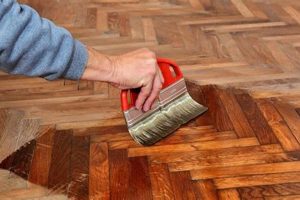
The choice of applicator (brush, roller, pad) directly influences the final result. A high-quality brush with fine bristles minimizes brush marks, while a lint-free roller ensures a smooth, even coating. Using an inappropriate applicator, such as a low-quality brush that sheds bristles, can introduce imperfections into the finish, necessitating rework. Professional applications often utilize microfiber applicators specifically designed for smooth, even distribution of the coating material.
These facets of application technique are inextricably linked when refinishing hardwood floors without sanding. Each plays a crucial role in compensating for the lack of mechanical adhesion typically achieved through sanding. Mastering these techniques is therefore essential for achieving a durable, aesthetically pleasing, and long-lasting finish, demonstrating that surface preparation and product compatibility is key to the success.
5. Cure Time

Cure time is a critical parameter in the context of floor refinishing, particularly when employing methods that bypass sanding. It dictates the duration required for the applied finish to achieve its optimal hardness, durability, and resistance to wear. Proper adherence to specified cure times is essential for a successful and long-lasting result. Failure to respect these timelines can lead to a range of issues, compromising the integrity and appearance of the finished surface.
- Solvent Evaporation and Polymerization
The curing process involves the evaporation of solvents and the subsequent polymerization of resins within the finish. Insufficient cure time prevents complete solvent evaporation, leaving the finish soft and susceptible to damage. Polymerization, the chemical process of linking monomers into polymers, ensures the finish achieves its intended hardness and durability. For example, premature foot traffic on a floor coated with polyurethane before full polymerization can result in indentations and scratches. Therefore, strictly adhering to the manufacturer’s recommended cure time is crucial for achieving optimal performance.
- Environmental Factors Influence
Environmental conditions such as temperature and humidity exert a significant influence on the curing process. Elevated humidity levels can impede solvent evaporation, prolonging the cure time. Conversely, excessively low temperatures can slow down polymerization. For instance, a floor finished during the winter months in a poorly heated environment may require extended cure times compared to a floor finished in warmer conditions. Therefore, monitoring and controlling environmental factors are essential for ensuring proper curing.
- Impact on Finish Durability
The degree to which a finish is cured directly impacts its long-term durability and resistance to wear. An incompletely cured finish is more susceptible to scratching, scuffing, and chemical damage. For example, a floor prematurely exposed to cleaning agents before full curing may exhibit discoloration or loss of sheen. Consequently, respecting the recommended cure time is essential for maximizing the lifespan and aesthetic appeal of the finished floor. Ensuring the surface can withstand the stresses of normal usage is dependent on following guidelines.
- Multi-Coat Systems
Many floor finishing systems involve the application of multiple coats, each requiring a specific cure time before the subsequent coat is applied. Premature application of subsequent coats can trap solvents and disrupt the polymerization process, leading to adhesion problems and compromised durability. For example, applying a second coat of polyurethane before the first coat is fully cured can result in a cloudy or uneven finish. Therefore, adhering to the recommended inter-coat cure times is critical for achieving a seamless and durable multi-coat finish. This ensures each layer bonds correctly to its predecessor.
These factors highlight the significant role cure time plays in the success of any floor finishing project, especially when foregoing sanding. A thorough understanding of the chemical processes involved and careful consideration of environmental factors are essential for achieving a durable, aesthetically pleasing, and long-lasting result. Allowing sufficient cure time maximizes the benefits of the chosen refinishing method and protects the investment in materials and labor.
Frequently Asked Questions
This section addresses common inquiries regarding the process of refinishing hardwood floors without resorting to sanding, providing clarity on its feasibility, limitations, and best practices.
Question 1: Is it truly possible to apply a new finish to hardwood floors without sanding?
Indeed, it is possible. The process relies on meticulous cleaning, surface preparation, and the application of specialized bonding agents to ensure the new finish adheres properly to the existing surface. However, this method is best suited for floors with minor wear and an existing finish that is still largely intact.
Question 2: What are the limitations of refinishing hardwood floors without sanding?
This approach is not suitable for floors with significant damage, deep scratches, or extensive wear. Furthermore, it may not be effective if the existing finish is incompatible with the new coating or if the floor has been previously treated with wax or other substances that hinder adhesion.
Question 3: What type of preparation is required before applying a new finish without sanding?
Thorough cleaning to remove all dirt, wax, grease, and contaminants is essential. This may involve using specialized hardwood floor cleaners and degreasers. Additionally, any loose or flaking finish must be removed to ensure a smooth and stable surface.
Question 4: Are specific products or bonding agents required for this process?
Yes, specialized bonding agents designed to promote adhesion between the old and new finishes are crucial. The selection of these agents should be based on the type of existing finish and the new coating being applied. Consulting with a flooring professional or the product manufacturer is advisable.
Question 5: How does the durability of a finish applied without sanding compare to a traditional sanding and refinishing?
The durability can be comparable if the floor is properly prepared, compatible products are used, and the application technique is meticulous. However, it is generally accepted that sanding provides the most durable and long-lasting finish, as it creates a mechanical bond by smoothing out the surface properly.
Question 6: What are the potential risks or drawbacks of attempting to refinish hardwood floors without sanding?
Potential risks include poor adhesion, peeling, bubbling, uneven sheen, and a finish that is less durable than expected. Additionally, if the process is not executed correctly, it may necessitate sanding and refinishing as a corrective measure, resulting in added expense and effort.
In summary, refinishing hardwood floors without sanding presents a viable alternative to traditional methods under specific conditions. However, careful consideration of the floor’s condition, product compatibility, and application technique is essential for achieving a satisfactory outcome.
The subsequent sections will delve into case studies and real-world examples of refinishing hardwood floors without sanding, illustrating both successful applications and potential pitfalls.
Conclusion
This examination has elucidated the nuances of applying a new surface layer to timber flooring absent the traditional abrasive processes. Success hinges on meticulous surface preparation, stringent product compatibility assessments, and precise application techniques. While offering advantages in terms of time and reduced dust, this methodology presents limitations, particularly concerning floors with extensive damage or incompatible existing finishes. Therefore, a thorough evaluation of the floor’s condition and careful selection of materials are paramount.
The decision to finish hardwood floors without sanding necessitates a balanced consideration of potential benefits and inherent limitations. While a viable alternative for certain situations, it should not be viewed as a universal solution. The long-term performance and aesthetic outcome depend heavily on adherence to best practices and a realistic assessment of the floor’s suitability for this method. Proceeding with this approach requires a commitment to detail and a clear understanding of the factors that contribute to a successful result.