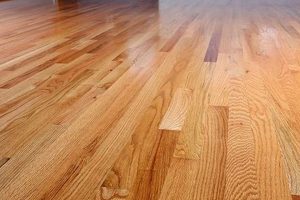
The appearance of raised imperfections within the protective layer on wood flooring presents a common concern for homeowners. These formations, typically small and circular, detract from the floor’s aesthetic appeal and can potentially compromise the integrity of the finish over time. Factors contributing to this phenomenon include moisture entrapment, improper application techniques during the finishing process, and incompatibility between different coating products. A single imperfection or a widespread cluster can manifest, demanding attention to prevent further degradation.
Addressing these flaws promptly is important for maintaining the long-term value and beauty of the floor. Left unaddressed, the blemishes can expand, leading to cracking, peeling, and eventual damage to the wood itself. Historically, achieving a flawless finish on wood floors has been a hallmark of quality craftsmanship, demanding meticulous preparation and careful application. The evolution of finishing products and techniques has aimed to minimize these surface defects, improving durability and aesthetic outcomes.
Understanding the causes behind these imperfections, the proper methods for diagnosis, and the available repair options are crucial for effective management. This article will delve into these topics, providing homeowners and professionals with the knowledge necessary to address these common floor-related issues and restore the floor to its optimal condition.
Preventative Measures and Corrective Actions
The following guidance offers insights into preventing and addressing finish imperfections on wood flooring, aiming to maintain its integrity and appearance.
Tip 1: Moisture Control: Ensure the subfloor and wood flooring have acclimated to the environment’s humidity levels prior to finishing. Employ a moisture meter to verify appropriate moisture content, minimizing potential entrapment.
Tip 2: Proper Surface Preparation: Thoroughly sand and clean the floor before applying any finish. Remove all dust, debris, and contaminants to promote proper adhesion and prevent the formation of flaws.
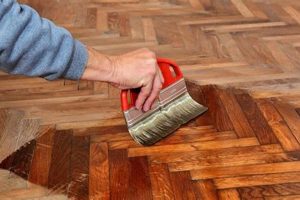
Tip 3: Application Technique: Apply finish in thin, even coats, following the manufacturer’s recommendations for spread rate and drying time. Avoid over-application, which can lead to solvent entrapment and subsequent blemishes.
Tip 4: Product Compatibility: Ensure all finishing products used are compatible with each other and the underlying wood species. Incompatible products can react, causing lifting and imperfection.
Tip 5: Adequate Ventilation: Maintain proper ventilation during the application and drying process to facilitate solvent evaporation. Poor ventilation can prolong drying times and increase the risk of flaws.
Tip 6: Addressing Existing Imperfections: For minor imperfections, lightly sand the affected area and apply a thin coat of finish. For severe cases, complete sanding and refinishing may be necessary.
Tip 7: Consider Professional Assistance: Complex or widespread occurrences may require the expertise of a qualified flooring contractor. Professional assessment and repair can ensure a durable and aesthetically pleasing result.
Adhering to these recommendations will enhance the longevity and visual appeal of wood floors, minimizing the occurrence of surface defects.
The subsequent sections will provide more in-depth information about specific repair techniques and long-term maintenance strategies.
1. Moisture Content

Excessive moisture content is a primary contributor to the formation of blemishes in hardwood floor finishes. When wood flooring or the applied coating contains elevated levels of moisture, a phenomenon of vapor pressure arises. This pressure, exerted by the trapped moisture as it attempts to evaporate, causes the finish to lift and separate from the wood substrate, resulting in the raised, unsightly appearance of these imperfections. The relationship is a direct cause and effect: higher moisture levels directly correlate with an increased likelihood of finish defects.
The significance of managing moisture content lies in preventing adhesion failure between the finish and the wood. For example, if newly installed wood flooring is finished before it has properly acclimated to the building’s environment, the wood will subsequently release moisture, creating internal pressure beneath the finish. Similarly, applying a finish too quickly after cleaning a floor with a water-based solution can trap moisture. These scenarios underscore the practical importance of using moisture meters to assess both the wood and the finish, ensuring compliance with recommended moisture levels before and during application.
In summary, controlling moisture content is paramount in preventing the occurrence of imperfections. The challenges lie in accurately assessing moisture levels and implementing proper acclimation procedures. By understanding and addressing the critical role of moisture, one can significantly reduce the risk of finish failure and maintain the long-term integrity and appearance of hardwood floors.
2. Application Errors

Application errors during the finishing process are a significant contributor to the formation of imperfections on wood flooring. Deviations from recommended procedures introduce defects that compromise both the aesthetic appearance and the protective function of the finish. Understanding these errors is crucial for preventing their occurrence and ensuring a durable, flawless floor surface.
- Excessive Coating Thickness
Applying finish coats that are too thick impedes proper solvent evaporation. This trapped solvent creates pressure under the curing surface, leading to the formation of imperfections. The appearance of imperfections often becomes apparent after the finish has partially dried, revealing small, raised areas that detract from the floor’s uniformity.
- Improper Mixing of Components
Two-part or multi-component finishes require precise mixing ratios to ensure proper curing and adhesion. Errors in mixing, such as incorrect proportions or inadequate blending, can result in a finish that does not fully harden, leading to the formation of imperfections. These improperly cured areas may appear as soft spots or areas prone to separation.
- Contaminated Application Tools
Using brushes, rollers, or spray equipment that are not clean introduces contaminants into the finish. These contaminants can react with the finish, disrupt its uniformity, or create points of weakness that lead to imperfection formation. Even small particles of dried finish or dust can disrupt the smooth surface of the wet coating, leading to observable defects after drying.
- Insufficient Drying Time Between Coats
Applying subsequent coats of finish before the previous coat has fully dried traps solvents and inhibits proper bonding between layers. This can result in an uneven surface and an increased risk of finish separation. The trapped solvents can eventually create pressure, leading to the formation of surface imperfections after the final coat has dried.
The careful execution of application techniques is essential for preventing finish defects. Diligence in following manufacturer’s instructions, using appropriate tools, and ensuring proper drying conditions significantly reduces the likelihood of these imperfections and contributes to a high-quality, long-lasting floor finish.
3. Product Incompatibility

Product incompatibility stands as a significant causal factor in the occurrence of surface imperfections on finished wood floors. When dissimilar finishing products are layered, their differing chemical compositions can induce adverse reactions that compromise the integrity of the applied system. This manifests as a weakened bond between coats, ultimately leading to delamination and the formation of surface irregularities. Examples of incompatibility include applying a water-based polyurethane over an oil-based stain without proper preparation or using a topcoat that is not chemically compatible with the sealant. In such cases, the solvents in one product may dissolve or soften the previous layer, resulting in the entrapment of gases and the subsequent manifestation of unsightly imperfections. Understanding product compatibility is therefore paramount in preventing premature finish failure and maintaining the aesthetic quality of the floor.
The practical significance of addressing product incompatibility extends beyond aesthetic concerns. A weakened finish system is more susceptible to wear and tear, reducing the floor’s lifespan and increasing the frequency of maintenance. Correct application necessitates a thorough understanding of the chemical properties of each product and the recommended application procedures for multi-layer systems. For instance, certain oil-based stains require a specific drying period and surface preparation before the application of a water-based topcoat to ensure proper adhesion. Failing to adhere to these guidelines increases the likelihood of adverse reactions and the subsequent appearance of imperfections. Therefore, careful selection of compatible products and adherence to manufacturer instructions are crucial for achieving a durable and visually appealing finish.
In summary, product incompatibility is a critical consideration in wood floor finishing, directly influencing the propensity for surface defects. The challenge lies in identifying compatible systems and adhering to proper application protocols. Overcoming this challenge requires a comprehensive understanding of product chemistry and a commitment to best practices, ensuring a robust and aesthetically pleasing wood floor finish. Attention to detail, in this aspect, translates directly into long-term performance and customer satisfaction.
4. Substrate Preparation

Inadequate substrate preparation is a primary contributor to the formation of imperfections in hardwood floor finishes. The substrate, or the surface onto which the finish is applied, must be properly prepared to ensure adequate adhesion and prevent subsequent finish failures. Failure to properly prepare the substrate creates conditions that promote the development of surface flaws, undermining the finish’s integrity and aesthetic quality. Specifically, contaminants, uneven surfaces, and residual sanding dust present on the substrate interfere with the finish’s ability to bond securely to the wood, creating pockets that can trap air or moisture and eventually manifest as imperfections. For example, applying a polyurethane finish over a floor that hasn’t been thoroughly sanded to remove previous coatings will likely result in the new finish peeling or developing imperfections due to poor adhesion. The effectiveness of a hardwood floor finish is therefore directly linked to the quality of the substrate preparation.
Proper substrate preparation involves a multi-step process that typically includes thorough cleaning, sanding, and sometimes, the application of a compatible primer. Cleaning removes any surface contaminants, such as dirt, grease, or wax, which could interfere with adhesion. Sanding levels the surface, removes old finishes, and creates a profile that enhances the mechanical bond between the wood and the new finish. The grit sequence used during sanding is critical; starting with a coarse grit to remove imperfections and progressively moving to finer grits to create a smooth surface. Vacuuming after each sanding stage is essential to remove sanding dust, as residual dust can create air pockets under the finish and lead to blemishes. In cases where the wood species is particularly porous, a compatible primer may be applied to seal the wood surface, preventing excessive absorption of the finish and promoting a more uniform appearance. A real-world application involves preparing a previously waxed floor; simply applying a new finish over the wax will inevitably lead to failure. The wax must be completely removed through chemical stripping and thorough sanding to provide a suitable substrate.
In conclusion, substrate preparation is a critical determinant of the long-term performance and appearance of hardwood floor finishes. The challenges lie in identifying and addressing all potential contaminants and imperfections present on the substrate and in employing appropriate preparation techniques to ensure a sound surface for finishing. By rigorously adhering to best practices in substrate preparation, the likelihood of finish imperfections can be significantly reduced, resulting in a durable and aesthetically pleasing hardwood floor. Ignoring this crucial step often leads to costly rework and premature finish failure, emphasizing the importance of thorough and meticulous substrate preparation.
5. Environmental Conditions
Environmental conditions exert a significant influence on the formation of imperfections in hardwood floor finishes. Temperature and humidity, in particular, affect the drying and curing rates of finishes, and deviations from ideal conditions can lead to the entrapment of solvents, resulting in surface defects. Elevated humidity levels slow the evaporation process, prolonging the drying time and increasing the likelihood of solvent retention within the finish film. Conversely, excessively high temperatures can cause the surface of the finish to dry too quickly, forming a skin that traps solvents beneath. These trapped solvents then create pressure as they attempt to escape, leading to the appearance of imperfections. For instance, applying a polyurethane finish in a room with inadequate ventilation and high humidity can result in the finish exhibiting a cloudy appearance due to trapped moisture, or displaying imperfections as the solvents try to evaporate through the partially cured surface. The severity of these effects is contingent upon the specific type of finish used and the degree of deviation from recommended environmental parameters.
The practical implications of environmental control are substantial in wood floor finishing. Maintaining consistent temperature and humidity levels within the recommended ranges promotes uniform drying and curing, thereby reducing the risk of surface imperfections. For example, during the application of water-based finishes, increased ventilation can aid in the evaporation process, preventing the retention of moisture within the finish film. In colder climates, temporary heating may be necessary to maintain an optimal temperature for proper curing. Moreover, monitoring dew point is critical, as applying a finish when the dew point is near the surface temperature can lead to moisture condensation, which will inevitably cause imperfections. Therefore, a proactive approach to environmental management is essential in mitigating the risk of finish defects and ensuring a durable, aesthetically pleasing result. Proper site preparation should involve evaluating existing environmental parameters and implementing measures to regulate them, where necessary.
In summary, environmental conditions are a critical determinant in the successful application and curing of hardwood floor finishes. The primary challenge lies in maintaining consistent temperature and humidity levels within the recommended ranges for the specific type of finish being used. By understanding the influence of these factors and implementing appropriate control measures, the incidence of surface imperfections can be significantly reduced, contributing to the long-term durability and visual appeal of hardwood floors. Neglecting environmental considerations often results in compromised finish quality and increased maintenance costs, underscoring the importance of integrating environmental management into the wood floor finishing process.
Frequently Asked Questions
The following addresses common inquiries regarding surface imperfections on wood flooring, providing objective and factual responses.
Question 1: What are the primary causes of hardwood floor bubbles in finish?
The occurrence stems primarily from moisture entrapment, application errors during the finishing process, product incompatibility, inadequate substrate preparation, and adverse environmental conditions.
Question 2: How does moisture contribute to the formation of bubbles?
Excessive moisture, whether in the wood or the finish itself, generates vapor pressure, causing the finish to lift away from the substrate. This is further exacerbated if the floor has not acclimated properly to the environment before finishing.
Question 3: What are examples of application errors that cause finish imperfections?
Applying coats of finish that are too thick, improperly mixing two-part finishes, using contaminated application tools, and failing to allow sufficient drying time between coats can all lead to finish defects.
Question 4: How does product incompatibility lead to surface imperfections?
Combining dissimilar finishing products can result in adverse chemical reactions, weakening the bond between coats and causing delamination. For example, applying a water-based finish over an oil-based stain without proper preparation can lead to bubbles.
Question 5: What constitutes adequate substrate preparation?
Adequate preparation involves thorough cleaning to remove contaminants, sanding to create a suitable bonding surface, and vacuuming to eliminate residual sanding dust. Proper priming is also crucial for porous woods to prevent over-absorption.
Question 6: How do environmental factors influence the formation of surface imperfections?
Temperature and humidity levels can affect the drying and curing rates of finishes. High humidity slows evaporation, while excessive heat can cause premature surface drying, trapping solvents beneath and leading to blemishes.
Proper diagnosis, preventative measures, and timely corrective action are essential for maintaining wood floors. It is important to follow manufacturer guidelines to prevent damage.
The next section will discuss techniques used to repair bubbles and imperfections in hardwood floor finishes.
Hardwood Floor Bubbles in Finish
This exploration has addressed the multifaceted nature of hardwood floor bubbles in finish, detailing their origins from moisture issues and application errors to product incompatibility, substrate inadequacies, and environmental factors. Recognizing the root causes and applying proper preventative measures are critical for minimizing their occurrence and maintaining the floor’s aesthetic and structural integrity.
Effective management of these imperfections demands informed action, whether by meticulous DIY efforts or by seeking professional expertise. Long-term vigilance and adherence to best practices remain paramount for preserving the investment and beauty of hardwood flooring. Ignoring these critical considerations can lead to progressive damage and costly remediation.