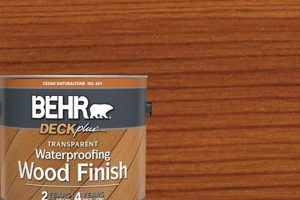
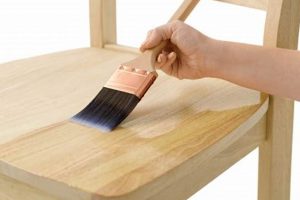
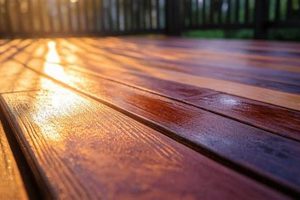
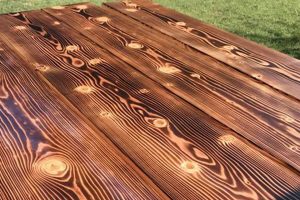
The selection of a protective coating for outdoor timber structures is a critical decision, influencing both the aesthetic appeal and longevity of the wood. This choice dictates how well the material will withstand environmental stressors such as ultraviolet radiation, moisture, temperature fluctuations, and biological attacks from fungi and insects. For example, a durable and appropriate substance can safeguard a cedar siding installation from premature decay and color fading.
The implications of choosing an effective preservative extend beyond simple aesthetics. A robust treatment minimizes the need for frequent repairs and replacements, thereby reducing long-term maintenance costs. Historically, various oils, resins, and pigments have been employed to shield wood, with advancements in chemistry leading to the development of sophisticated formulations designed to offer superior and extended protection.
The subsequent discussion will delve into various types of coatings, application techniques, and factors to consider when selecting a product to maximize the service life and visual appeal of exterior woodwork.
Guidance on Selecting an Optimal Preservative
The following provides actionable advice for choosing a solution that will enhance durability and maintain the aesthetic integrity of exterior wood applications.
Tip 1: Understanding Wood Species: Different wood types exhibit varying levels of natural resistance to decay and moisture. Cedar and redwood, for instance, possess inherent protective oils, requiring different treatment strategies compared to pine or fir. Thoroughly assess the wood’s properties before application.
Tip 2: Evaluating Environmental Exposure: Consider the specific climate conditions to which the wood will be exposed. Areas with high humidity, intense sunlight, or frequent rainfall necessitate a more robust and specialized product designed to withstand these challenges.
Tip 3: Surface Preparation is Paramount: Proper preparation, including cleaning, sanding, and priming, ensures optimal adhesion and performance. Failure to properly prepare the surface can lead to premature failure, blistering, and peeling, regardless of the product’s quality.
Tip 4: Choosing the Right Type: Select a product specifically formulated for exterior use. Options include penetrating oils, stains, varnishes, and paints, each offering different levels of protection and aesthetic effects. Consider the desired appearance and maintenance requirements when making this selection.
Tip 5: Following Manufacturer Instructions: Adhere strictly to the manufacturer’s guidelines regarding application methods, drying times, and recommended number of coats. Deviations can compromise the product’s effectiveness and longevity.
Tip 6: Considering VOC Content: Volatile Organic Compounds (VOCs) can have environmental and health implications. Opt for low-VOC or water-based options to minimize these concerns, while ensuring the product still meets performance requirements.
Tip 7: Regular Maintenance and Inspection: Periodic inspection and maintenance, such as cleaning and re-application, are crucial for extending the life. Address any signs of damage or deterioration promptly to prevent further issues.
These guidelines facilitate informed decisions leading to extended protection, aesthetic preservation, and reduced long-term maintenance costs for outdoor wood structures.
The subsequent section will delve into common problems encountered with protective coatings, followed by strategies for troubleshooting and remediation.
1. Durability

Durability, in the context of selecting a preservative for outdoor wood, signifies the ability of the coating to withstand environmental stressors and physical wear over an extended period. It is a primary determinant of the maintenance frequency and lifespan of the treated structure. A superior product demonstrates resilience against diverse challenges, maintaining its protective qualities and aesthetic appearance despite continuous exposure.
- Resistance to Abrasion and Impact
Abrasion and impact resistance are critical, particularly in high-traffic areas such as decks, railings, and steps. Finishes lacking this quality will degrade rapidly, exhibiting scratches, chips, and loss of protective barrier. For instance, a polyurethane finish, known for its hardness, offers greater resistance to scuffing on deck surfaces compared to softer oil-based options.
- Protection Against Weathering
Weathering encompasses the combined effects of sunlight, rain, temperature fluctuations, and wind. The finish must provide a robust barrier against moisture penetration, preventing rot, decay, and swelling. Furthermore, it should resist degradation from ultraviolet radiation, which can cause fading, cracking, and embrittlement. Acrylic latex paints, formulated with UV absorbers, excel in protecting against sunlight damage.
- Adhesion Strength
Adhesion strength refers to the finish’s ability to bond securely to the wood substrate. Poor adhesion leads to premature peeling, blistering, and flaking, compromising the protective layer. Proper surface preparation, including cleaning, sanding, and priming, is crucial for achieving optimal adhesion. Penetrating oils, for example, rely on absorption into the wood fibers for strong adhesion, unlike film-forming coatings.
- Resistance to Biological Attack
Biological attack involves the growth of fungi, mold, and mildew on the wood surface. A durable finish incorporates fungicides and mildewcides to inhibit microbial growth, preventing discoloration, decay, and structural damage. Certain oil-based preservatives naturally resist fungal growth, while others require the addition of specific additives to enhance their protective capabilities.
These facets of durability collectively determine the long-term performance. Choosing the correct product, tailored to the specific wood type and environmental conditions, provides enhanced protection, extends the service life, and minimizes the need for frequent maintenance or replacement.
2. UV Resistance

Ultraviolet (UV) resistance constitutes a critical attribute in the selection of a protective coating for exterior wood applications. Solar radiation, particularly the UV component, exerts a detrimental effect on wood and many conventional finishes, necessitating coatings specifically formulated to mitigate these effects. The effectiveness of a protective substance in resisting UV degradation significantly influences its long-term performance and the preservation of the wood’s structural integrity and aesthetic qualities.
- Prevention of Lignin Degradation
Lignin, a complex polymer within wood, provides rigidity and strength. UV radiation causes lignin to break down, leading to surface discoloration, graying, and a loss of structural integrity. A UV-resistant finish contains pigments or additives that absorb or reflect UV rays, thereby protecting the lignin from degradation. For instance, paints with titanium dioxide offer superior UV protection compared to clear finishes.
- Maintenance of Coating Integrity
UV exposure can cause coatings to become brittle, crack, and peel. This degradation compromises the protective barrier, allowing moisture to penetrate the wood and leading to rot and decay. UV-resistant finishes maintain their flexibility and adhesion, preserving the integrity of the coating. Acrylic-based coatings, formulated with UV inhibitors, demonstrate enhanced resistance to cracking and peeling compared to oil-based alternatives.
- Color Retention and Fade Resistance
UV radiation fades and alters the color of both the wood itself and the applied coating. This results in an undesirable aesthetic appearance, requiring frequent re-application to maintain the original color. UV-resistant finishes contain pigments that are less susceptible to fading, ensuring long-term color stability. High-quality exterior stains, formulated with UV-stable pigments, provide superior color retention compared to less expensive options.
- Reduction of Surface Checking and Cracking
The breakdown of lignin and the degradation of the coating can lead to surface checking and cracking of the wood. These fissures allow moisture to penetrate, accelerating decay and weakening the structure. UV-resistant finishes maintain the wood’s surface integrity, preventing the formation of checks and cracks. Penetrating oil finishes, enhanced with UV absorbers, protect the wood from within, reducing the likelihood of surface damage.
The selection of a UV-resistant protective coating is paramount for ensuring the longevity and aesthetic preservation of exterior wood structures. By mitigating the harmful effects of solar radiation, these coatings safeguard against lignin degradation, maintain coating integrity, retain color, and reduce surface checking and cracking, thereby extending the service life and minimizing maintenance requirements.
3. Water Repellency

Water repellency is a crucial property of a protective substance intended for exterior wood surfaces. Its effectiveness directly influences the prevention of moisture absorption, a primary cause of wood decay, swelling, and structural damage. An ideal exterior coating impedes water penetration, mitigating the detrimental effects of prolonged exposure to rain, humidity, and condensation. For instance, a properly applied water-repellent treatment on wooden siding can prevent the development of rot, extending the siding’s lifespan and preserving the building’s structural integrity.
The mechanism by which a protective coating achieves water repellency varies depending on its composition. Film-forming substances like paints and varnishes create a physical barrier, while penetrating oils and sealants alter the wood’s surface tension, causing water to bead and run off. The effectiveness of this repellency is affected by factors such as the wood species, the coating’s formulation, and the thoroughness of the application. Failure to maintain water repellency, through regular re-application or selection of an inferior product, results in water ingress and subsequent damage. Consider a deck treated with a low-quality sealant; standing water will penetrate the wood, leading to warping, cracking, and eventual decay.
Therefore, water repellency is an indispensable attribute of an effective exterior wood protection strategy. Its ability to prevent moisture absorption translates directly to extended service life, reduced maintenance costs, and the preservation of both the structural and aesthetic qualities of wooden elements. Selection of a product with demonstrated water-repellent properties, coupled with proper application and maintenance, is essential for achieving optimal performance.
4. Application Ease
The characteristic of application ease plays a significant role in determining the optimal protective coating for exterior wood. The effort and skill required for application directly affect both the project’s overall cost and the likelihood of achieving a successful, long-lasting result. Substances that are difficult to apply are prone to errors, leading to compromised protection and reduced lifespan. For example, a two-part epoxy finish, while offering exceptional durability, demands precise mixing ratios and application techniques. Deviations from these specifications can result in incomplete curing, inconsistent coverage, and a weakened protective barrier.
Furthermore, ease of application impacts project timelines and labor costs. A coating requiring extensive surface preparation, multiple coats, or specialized equipment can significantly increase the overall expense. Conversely, a product that can be applied quickly and efficiently, with minimal surface preparation, offers substantial time and cost savings. Consider the difference between applying a penetrating oil stain, which requires minimal surface preparation and a single coat, versus applying a multi-coat varnish system, which necessitates extensive sanding and multiple applications. The former presents a significantly simpler and less labor-intensive process.
In summary, application ease is an integral component of what defines the most suitable protective solution for exterior wood. It influences not only the immediate cost and time investment but also the long-term effectiveness and maintenance requirements of the treated surface. A balance between desired performance characteristics and the practicalities of application is essential for achieving optimal results.
5. Wood Type
The selection of an appropriate exterior finish is inextricably linked to the specific wood species being treated. Different wood types exhibit varying levels of natural resistance to decay, moisture absorption, and insect infestation, necessitating tailored preservation strategies. The inherent properties of the wood, such as density, grain structure, and oil content, influence the adhesion, penetration, and overall effectiveness of any applied coating. For instance, a dense hardwood like Ipe, commonly used in decking, requires a finish that can penetrate its tight grain structure, whereas a softer wood like Pine benefits from a coating that provides enhanced protection against moisture absorption.
The practical significance of understanding this relationship is evident in the performance of exterior wood structures. Applying a film-forming coating, like paint, to naturally oily woods such as Redwood or Cedar can lead to premature peeling and failure due to poor adhesion. In contrast, penetrating oil finishes often perform better on these species, allowing the wood to breathe and preventing moisture buildup beneath the coating. Similarly, open-grained woods like Fir benefit from finishes that fill the grain, creating a smoother surface and preventing water from lodging in the pores. Failing to account for these wood-specific properties results in compromised protection, increased maintenance requirements, and a reduced lifespan of the treated material.
In conclusion, the selection of an exterior finish should be driven by a comprehensive understanding of the wood species’ characteristics. While the concept of the “best exterior finish” is often discussed, its realization depends significantly on the wood type to which it is applied. Overlooking this critical connection leads to suboptimal performance and increased long-term costs. Prioritizing wood-specific finish selection is essential for maximizing the durability and aesthetic appeal of exterior wood projects.
6. Cost

The element of cost is an integral consideration in determining the most suitable protective coating for exterior wood. It is not merely a question of initial expenditure but rather a comprehensive evaluation encompassing material expenses, labor costs, and long-term maintenance requirements. The selection process must balance the desire for optimal protection and aesthetic appeal with budgetary constraints, recognizing that the least expensive option may not always represent the most economical choice over the lifespan of the treated material. For instance, a low-cost stain might necessitate more frequent reapplication compared to a higher-priced, more durable alternative.
A comprehensive cost assessment incorporates several factors. Material costs include the price of the finish itself, as well as necessary primers, sealers, and application tools. Labor costs reflect the time and skill required for surface preparation and finish application, which can vary considerably depending on the product’s complexity. Long-term maintenance considerations involve the frequency of reapplication, the potential for repairs, and the overall lifespan of the coating. A product with a higher upfront cost but extended durability and reduced maintenance needs could ultimately prove more cost-effective than a cheaper alternative requiring frequent upkeep. Consider the example of a marine-grade varnish, which, despite its high initial expense, offers exceptional resistance to weathering and abrasion, resulting in fewer reapplications and lower long-term maintenance costs for exterior wooden boats or furniture.
Ultimately, the “best exterior finish for wood,” when viewed through the lens of cost, represents a calculated balance between initial investment and long-term performance. A holistic approach that considers all relevant cost factors is essential for making informed decisions that maximize value and ensure the long-term protection and aesthetic appeal of exterior wood structures. Short-sighted decisions based solely on initial price can lead to higher overall expenses and compromised results.
Frequently Asked Questions About Exterior Wood Finishes
The following addresses common inquiries regarding the selection and application of protective coatings for exterior wood surfaces. The aim is to provide clarity on crucial considerations for maximizing longevity and aesthetic preservation.
Question 1: What is the most critical factor in selecting a protective coating?
The most critical factor is matching the finish to the specific wood species and its intended use. Different wood types possess varying levels of natural resistance and require tailored protection strategies. A finish suitable for cedar may not be appropriate for pine.
Question 2: How does UV radiation affect exterior wood finishes?
UV radiation degrades lignin, the structural component of wood, causing discoloration, cracking, and weakening. It also breaks down many finishes, leading to peeling and loss of protection. Finishes with UV absorbers or reflective pigments are essential for mitigating these effects.
Question 3: What role does water repellency play in wood preservation?
Water repellency prevents moisture absorption, which is a primary cause of wood decay, swelling, and structural damage. A finish that effectively repels water minimizes the risk of fungal growth and extends the wood’s lifespan.
Question 4: Is it necessary to prime wood before applying a finish?
Priming is generally recommended, particularly for painted finishes. Primer improves adhesion, seals the wood surface, and provides a uniform base for the topcoat, resulting in enhanced durability and appearance.
Question 5: How often should exterior wood finishes be reapplied?
The reapplication frequency depends on several factors, including the type of finish, the wood species, and the severity of environmental exposure. Regular inspection is crucial. Signs of fading, cracking, or peeling indicate the need for reapplication.
Question 6: Are low-VOC finishes as effective as traditional options?
Low-VOC finishes have improved significantly in recent years and often provide comparable performance to traditional coatings. Select a high-quality low-VOC product formulated for exterior use and ensure proper surface preparation for optimal results.
A thorough understanding of these factors will empower informed decisions, resulting in durable, aesthetically pleasing, and long-lasting exterior wood surfaces.
The subsequent section will explore common problems encountered with exterior wood and their respective solutions.
Determining the Ideal Exterior Wood Protection
The preceding analysis has explored diverse factors influencing the selection of an optimal coating, including durability, UV resistance, water repellency, application ease, wood type compatibility, and cost considerations. The most effective approach mandates a holistic evaluation, integrating these variables to arrive at a solution tailored to specific project requirements.
The informed application of these principles will ensure the longevity and aesthetic preservation of exterior wood structures. Continued advancements in coating technology promise further enhancements in performance and environmental responsibility. Rigorous assessment and diligent application remain paramount for achieving optimal results.