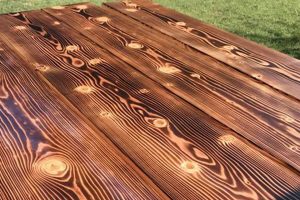
A surface treatment technique imparts a darkened, often charred, aesthetic to timber. This process not only alters the wood’s color but can also modify its texture and durability. For example, Shou Sugi Ban, a traditional Japanese method, achieves this effect by charring cedar planks, rendering them more resistant to fire, insects, and decay.
The application of a darkened surface on wood offers several advantages. It can enhance the wood’s resistance to weathering, extending its lifespan. Historically, techniques like charring were employed to preserve wood in harsh environments. Furthermore, the unique visual appeal created by these methods adds character and value to the finished product, making it a desirable choice for both interior and exterior applications.
Understanding the various methods used to achieve this aesthetic, including both traditional and modern approaches, is crucial. Subsequent sections will delve into specific techniques, materials, and considerations for achieving desired results when applying a darkened effect to wooden surfaces. These include but are not limited to burning, staining and ebonizing solutions.
Essential Considerations for Achieving a Blackened Wood Aesthetic
Successfully imparting a blackened appearance to wood requires careful planning and execution. The following guidelines provide valuable insights to ensure optimal results and longevity of the finished product.
Tip 1: Wood Selection Matters: The species of wood significantly influences the final outcome. Softer woods char more readily, while denser hardwoods may require more intensive methods. Consider the wood’s natural grain and color, as these characteristics will be accentuated by the darkening process.
Tip 2: Surface Preparation is Paramount: Thoroughly sanding the wood surface to a consistent grit level is essential for uniform absorption of stains or even charring. Remove all dust and debris before proceeding with any treatment.
Tip 3: Safety Precautions are Non-Negotiable: When using open flames or chemical treatments, prioritize safety. Work in a well-ventilated area, wear appropriate protective gear (gloves, eye protection, respirator), and adhere to all manufacturer’s safety guidelines.
Tip 4: Control the Burn (if Charring): If employing a charring technique, maintain consistent control over the heat source. Uneven charring can lead to inconsistent coloration and potential structural weakening of the wood. Practice on scrap pieces to refine your technique.
Tip 5: Stain Selection and Application: When using stains or ebonizing solutions, choose products specifically designed for wood. Apply thin, even coats, allowing each coat to dry completely before applying the next. Multiple coats may be necessary to achieve the desired depth of color.
Tip 6: Neutralization is Crucial (for Chemical Treatments): When using chemical solutions to achieve a blackened effect, ensure proper neutralization to prevent ongoing reactions that could degrade the wood over time. Follow the manufacturer’s instructions carefully.
Tip 7: Consider Finishing with a Topcoat: Protect the darkened surface with a durable topcoat to enhance its resistance to wear, moisture, and UV damage. Select a topcoat compatible with the chosen darkening method (e.g., oil-based for charred wood, water-based for certain stains).
Implementing these considerations will maximize the likelihood of achieving a visually appealing and durable blackened wood surface. Careful attention to detail and adherence to safety protocols are essential for successful project outcomes.
With a firm grasp of these techniques and considerations, the subsequent sections will delve into specific applications and case studies, further illustrating the potential of achieving a blackened wood surface.
1. Aesthetics

The aesthetic impact of a darkened timber surface is a primary driver behind its selection and implementation. The appearance, ranging from subtle darkening to deep, charred textures, significantly influences the perceived value and suitability of the finished product in varied applications. The deliberate alteration of the materials surface color and texture through techniques like burning, staining, or chemical treatments creates a distinct visual characteristic that can evoke feelings of rustic charm, modern sophistication, or timeless elegance.
The importance of aesthetics in blackened surfaces extends beyond mere visual appeal. It establishes a crucial design element that dictates the mood and character of a space or object. For instance, Shou Sugi Ban siding on a modern home imparts a sense of grounding and natural connection, contrasting with the clean lines and often sterile feel of contemporary architecture. Similarly, darkened wood furniture in a minimalist interior serves as a focal point, adding depth and visual interest to an otherwise sparse environment. The choice of technique also determines the specific aesthetic outcome, with charred finishes offering a textured, tactile experience while stained surfaces provide a smoother, more consistent appearance.
In conclusion, aesthetic considerations are not merely superficial but are integral to the successful application of darkened wood treatments. Understanding the relationship between different techniques and the resulting visual outcomes allows designers and craftspeople to achieve desired stylistic goals. Selecting an appropriate method that considers wood species, intended use, and desired aesthetic is essential for maximizing the impact and value of the finished piece. Furthermore, achieving a well-executed aesthetic improves marketability and elevates the perception of quality in both functional and decorative applications.
2. Durability

Durability, in the context of blackened wood surfaces, refers to the capacity of the treated wood to withstand environmental stressors, physical wear, and biological degradation over an extended period. The method used to achieve the darkened aesthetic significantly impacts the wood’s resistance to these factors, influencing its suitability for various applications.
- Charring and Fire Resistance
Charring, particularly the Shou Sugi Ban technique, creates a carbonized outer layer that inherently resists fire. This layer reduces the wood’s combustibility and rate of flame spread. The charred surface acts as a sacrificial barrier, protecting the underlying wood structure from ignition. This facet is critical in exterior applications where fire safety is a concern.
- Enhanced Resistance to Decay and Insects
Certain darkening methods, especially charring, eliminate readily available nutrients for fungi and insects on the surface of the wood. The resulting altered chemical composition renders the surface less palatable and less susceptible to decay-causing organisms. This protection is particularly relevant in damp or humid environments where wood is prone to rot and insect infestation.
- UV Protection and Weathering
A darkened surface provides increased protection against ultraviolet (UV) radiation. UV exposure degrades lignin, a component of wood, leading to discoloration and surface checking. Dark pigments and carbonized layers absorb UV radiation, reducing its impact on the underlying wood structure. This enhances the wood’s resistance to weathering, preventing premature aging and deterioration.
- Impact on Physical Wear
The method used to achieve the blackened effect influences the wood’s resistance to physical wear, such as abrasion and impact. A properly charred surface, for instance, can be more brittle and prone to chipping if not sealed appropriately. Conversely, certain stains and protective coatings applied after the darkening process can improve the surface’s resistance to scratches and impacts, enhancing its overall durability in high-traffic areas.
In summary, the durability of darkened wood is not solely determined by the initial treatment but is also contingent on supplementary protective measures and the specific method employed. Understanding the interplay between the darkening technique and the wood’s inherent properties is essential for maximizing its lifespan and ensuring its suitability for the intended application. Different methods like staining, compared to burning provides varying resistance to degradation factors.
3. Technique

The attainment of a darkened surface on timber hinges directly on the chosen technique, with each method yielding distinct aesthetic and performance characteristics. The selection of a specific technique dictates the level of control over the final appearance, the time investment required, and the subsequent durability of the treated wood. For instance, the Shou Sugi Ban method necessitates precise control over the charring process to achieve uniform depth and prevent structural weakening of the timber. In contrast, the application of chemical ebonizing solutions offers a less labor-intensive approach but demands careful consideration of wood species to ensure consistent coloration. The technique employed is not merely a procedural choice but rather a fundamental determinant of the finished product’s qualities.
Consider the differences between staining and charring. Staining involves the application of pigmented solutions that penetrate the wood fibers, altering their color. This technique provides a relatively subtle darkening effect and allows for greater control over the final hue. However, staining may not significantly enhance the wood’s durability or resistance to decay. On the other hand, charring fundamentally alters the wood’s surface composition, creating a carbonized layer that offers increased fire resistance and protection against insects. This technique produces a more dramatic aesthetic and a potentially longer-lasting finish, albeit with a greater risk of uneven results if not executed correctly. A practical example is evident in traditional Japanese architecture, where charred cedar cladding has historically served as both a decorative and a protective element.
In summary, the technique used to achieve a darkened timber surface is inextricably linked to the final outcome. Whether opting for the controlled char of Shou Sugi Ban, the nuanced color of staining, or the chemical alteration of ebonizing, the selection of a technique is a critical decision with cascading effects on aesthetics, durability, and long-term performance. The challenges associated with each technique, such as the risk of uneven charring or inconsistent stain absorption, underscore the importance of proper preparation, execution, and post-treatment sealing to ensure a successful and lasting finish. Understanding this fundamental connection is essential for anyone seeking to create a visually striking and functionally sound darkened wood surface.
4. Wood Species

The selection of wood species is a critical determinant in achieving the desired aesthetic and performance characteristics when implementing a darkened timber surface. Different wood species react uniquely to various darkening techniques, influencing the final color, texture, and durability of the treated material. The inherent properties of the wood, such as density, grain structure, and resin content, dictate its receptiveness to charring, staining, or chemical treatments. For instance, softwoods like cedar and pine char more readily due to their lower density, while hardwoods such as oak and maple require more intensive methods to achieve a similar level of charring. This inherent variability necessitates a careful evaluation of wood species characteristics before selecting a specific darkening technique.
The impact of wood species on the final outcome extends beyond mere aesthetic considerations. Certain species are naturally more resistant to decay and insect infestation, making them more suitable for exterior applications even before undergoing any darkening treatment. Combining a durable wood species with an appropriate darkening technique can significantly enhance the longevity of the finished product. For example, using a naturally rot-resistant wood like redwood and applying a charred finish can provide exceptional protection against the elements. Conversely, using a less durable wood species like poplar and solely relying on a stain for darkening may result in premature deterioration, especially in environments with high moisture or UV exposure. The practical significance of understanding this interaction is evident in construction and furniture design, where the longevity and aesthetic appeal of the material are paramount. Mismatching species with finish can result in premature repairs and replacement.
In conclusion, the connection between wood species and a blackened finish is complex and multifaceted. Recognizing the inherent properties of different wood species and their influence on the final outcome is essential for achieving a successful and durable darkened timber surface. Challenges associated with wood species selection include inconsistent coloration, premature wear, and compromised structural integrity if the wrong species is chosen for the technique or environment. Ignoring this factor can drastically reduce the lifespan and aesthetic value of the finished product, highlighting the critical importance of informed decision-making in the selection process. The understanding of this connection is crucial to achieving a satisfactory result.
5. Protection
Protection constitutes an indispensable element within the realm of blackened wood finishes, influencing its longevity, aesthetic consistency, and overall performance. The blackened surface, while often visually striking, can exhibit varying degrees of vulnerability to environmental stressors, physical abrasion, and biological degradation. Consequently, implementing appropriate protective measures is critical to mitigating these risks and ensuring the enduring integrity of the treated wood. For example, charred surfaces, though inherently fire-resistant, require sealing to prevent carbon residue from rubbing off and to enhance resistance to moisture absorption. Similarly, stained surfaces benefit from a clear topcoat to safeguard against UV radiation, scratching, and chemical exposure. The selection of appropriate protective treatments is thus intrinsically linked to the type of blackened finish applied and the intended application of the wood.
Further elaborating, the specific type of protection needed is dictated by the darkening technique. Ebonized wood, achieved through chemical reactions, may require neutralization to prevent ongoing reactions that could compromise the wood’s structural integrity. Similarly, the choice of sealant or topcoat must be carefully considered to ensure compatibility with the chosen darkening method. For instance, an oil-based topcoat may be more suitable for charred wood, while a water-based acrylic may be preferred for certain stains to prevent yellowing or discoloration. The application environment also plays a crucial role. Exterior applications necessitate UV-resistant and weather-resistant coatings, while interior applications may prioritize abrasion resistance and chemical resistance to cleaning agents. This underscores the complexity of selecting appropriate protective measures and highlights the need for a comprehensive understanding of material properties and environmental factors.
In summary, protection is not a mere add-on but rather an integral component of a well-executed blackened wood finish. The absence of adequate protection can undermine the benefits of the darkening treatment, leading to premature degradation, aesthetic inconsistencies, and ultimately, reduced lifespan of the finished product. Challenges in this area include selecting compatible protective coatings, addressing potential chemical reactions, and adapting protection strategies to specific application environments. Recognizing this interplay is essential for achieving a visually appealing, durable, and long-lasting blackened wood surface, demonstrating the practical significance of integrating protection into the overall process.
6. Application

The specific utilization of darkened timber surfaces dictates the selection criteria for both the darkening technique and the protective measures implemented. Different applications impose varying demands on the wood, influencing factors such as durability requirements, aesthetic considerations, and safety regulations. Therefore, understanding the intended application is paramount to achieving a successful and long-lasting darkened wood finish.
- Exterior Siding and Cladding
In exterior applications, darkened wood siding is subjected to significant weathering, including UV radiation, moisture exposure, and temperature fluctuations. The choice of darkening technique and protective coatings must prioritize weather resistance and UV protection. For example, charred wood siding, such as Shou Sugi Ban, provides inherent fire resistance and protection against decay, making it a suitable option. Additionally, subsequent sealing with UV-resistant coatings is essential to mitigate color fading and surface degradation.
- Interior Paneling and Wall Coverings
Interior applications emphasize aesthetic considerations and durability against physical wear. Darkened wood paneling can contribute to a specific design aesthetic, from rustic to modern. The choice of darkening technique may prioritize visual appeal over extreme durability, allowing for a wider range of staining and finishing options. However, the finish must still be resistant to scratching, cleaning agents, and everyday wear and tear. Protective coatings designed for interior use are typically chosen for their low VOC content and ease of maintenance.
- Furniture and Cabinetry
Furniture and cabinetry applications demand a balance of aesthetic appeal, durability, and resistance to spills and stains. The selected darkening technique must complement the overall design of the furniture, whether it is a subtle stain or a more pronounced charred effect. Protective coatings must provide a durable barrier against liquids and abrasion, ensuring the furniture can withstand daily use. The choice of wood species also plays a critical role in determining the furniture’s structural integrity and resistance to warping or cracking.
- Flooring
Flooring applications necessitate a highly durable finish that can withstand heavy foot traffic and abrasion. Darkened wood flooring can provide a sophisticated and visually appealing surface, but the darkening technique and protective coatings must be selected to ensure long-term performance. Typically, a penetrating stain is followed by multiple coats of a durable polyurethane or epoxy finish to provide a resilient and easily maintained surface. The wood species used for flooring should also be chosen for its hardness and resistance to wear.
These varied applications highlight the importance of tailoring the darkening technique and protective measures to the specific demands of the intended use. The successful application of a blackened finish hinges on a comprehensive understanding of these requirements, ensuring a balance between aesthetic appeal and long-term performance. A failure to properly consider the application can result in premature degradation, aesthetic inconsistencies, and ultimately, reduced lifespan of the treated wood.
Frequently Asked Questions About Blackened Wood Finishes
The following questions address common concerns and misconceptions regarding the application, maintenance, and performance of blackened wood finishes. This information is intended to provide a clear understanding of this specialized surface treatment.
Question 1: What are the primary methods employed to achieve a blackened wood finish?
Common techniques include charring (e.g., Shou Sugi Ban), staining with specialized black or dark-toned stains, and the application of chemical ebonizing solutions. Each method yields distinct aesthetic and performance characteristics.
Question 2: Is a blackened wood finish suitable for exterior applications?
The suitability for exterior use depends on the darkening technique employed and the protective measures implemented. Charred wood, when properly sealed, exhibits enhanced resistance to fire, decay, and insects, making it a viable option for siding and cladding. Stained finishes may require more frequent maintenance and UV-resistant topcoats to prevent fading and degradation.
Question 3: Does a blackened wood finish require special maintenance?
Maintenance requirements vary depending on the specific finish. Charred wood may need occasional cleaning to remove loose carbon residue and reapplication of sealant. Stained wood may require periodic reapplication of topcoat to maintain its protective barrier. Regular inspection and prompt repair of any damage are crucial to preventing long-term deterioration.
Question 4: What wood species are most suitable for a blackened finish?
The choice of wood species influences the final appearance and durability of the blackened finish. Softwoods, such as cedar and pine, char more readily, while hardwoods, such as oak and maple, require more intensive methods. The natural rot resistance and stability of the wood should also be considered, particularly for exterior applications.
Question 5: Can a blackened wood finish be applied to existing wood surfaces?
Yes, a blackened wood finish can be applied to existing wood surfaces, provided the surface is properly prepared. This typically involves thorough cleaning, sanding, and removal of any existing finishes. The success of the application depends on the condition of the existing wood and the selected darkening technique.
Question 6: Is a blackened wood finish environmentally friendly?
The environmental impact depends on the materials and processes used. Natural charring techniques, such as Shou Sugi Ban, can be relatively sustainable. However, some stains and chemical ebonizing solutions may contain volatile organic compounds (VOCs) and other potentially harmful substances. Choosing low-VOC products and implementing proper waste disposal practices are essential for minimizing environmental impact.
Understanding these key aspects is essential for achieving a successful and durable blackened wood finish. Careful consideration of the darkening technique, wood species, protective measures, and intended application is crucial for maximizing the aesthetic appeal and longevity of the treated wood.
The next sections will explore case studies and real-world applications of blackened wood finishes, demonstrating their versatility and enduring appeal.
Conclusion
This exploration has illuminated the multifaceted nature of the blackened wood finish, emphasizing its complex interplay of aesthetics, durability, technique, species selection, protection, and application. The successful implementation of a blackened wood finish hinges on a thorough understanding of these elements, each contributing to the final outcome and the material’s long-term performance. From the fiery transformation of Shou Sugi Ban to the subtle elegance of specialized stains, the methods to achieve this sought-after aesthetic are diverse, each requiring precision and informed decision-making.
The darkened timber aesthetic, whether for exterior cladding or interior furniture, represents a deliberate choice that impacts not only the visual character but also the lifespan and environmental impact of the treated wood. Future advancements in sustainable materials and application techniques will undoubtedly refine these methods, emphasizing both durability and ecological responsibility. The discerning application of the darkened aesthetic demands a commitment to informed practices and a recognition of the lasting implications of material selection and surface treatment. Continued diligence in these areas ensures a lasting legacy of blackened wood artistry.