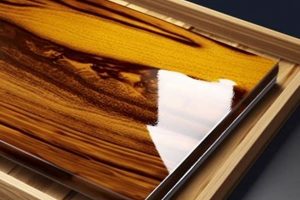
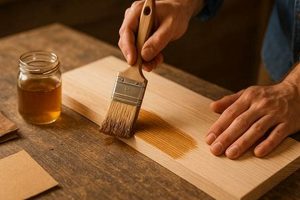
A dark-hued surface treatment applied to timber substrates, yielding a deep, often opaque, color. This technique involves the application of stains, paints, lacquers, or other coatings to achieve the desired aesthetic. Examples range from ebonized furniture reminiscent of antique styles to contemporary architectural details featuring a sleek, modern presentation.
The employment of such dark coatings offers several advantages, including enhanced visual appeal, the ability to mask imperfections within the wood grain, and the creation of a dramatic contrast in interior design schemes. Historically, darkening wood was a way to emulate the costlier look of ebony, providing a luxurious appearance at a more accessible price point. Its continued popularity reflects its versatility in achieving both classic and modern aesthetics.
The subsequent sections will delve into various application methods, explore the types of coatings suitable for achieving the effect, and discuss best practices for surface preparation and long-term maintenance to ensure the longevity and beauty of the treated timber.
Tips for Achieving a Quality Black Wood Finish
Proper application and maintenance are critical for ensuring a durable and aesthetically pleasing dark-toned surface on wood. These tips offer guidance on best practices.
Tip 1: Surface Preparation is Paramount: Prior to applying any coating, the wood surface must be thoroughly cleaned, sanded, and free of any contaminants such as dust, grease, or existing finishes. Failure to adequately prepare the surface will compromise adhesion and result in an uneven or flawed appearance.
Tip 2: Select the Appropriate Coating: Numerous options exist, including stains, paints, lacquers, and specialized ebonizing products. Consider the desired level of opacity, durability requirements, and the intended environment when selecting a coating. For high-traffic areas, a durable lacquer or polyurethane finish is advisable.
Tip 3: Apply Multiple Thin Coats: Rather than applying a single thick coat, opt for several thin coats. This minimizes the risk of runs, drips, and uneven drying. Allow sufficient drying time between coats as specified by the manufacturer’s instructions.
Tip 4: Consider Grain Filling: Open-pore woods, such as oak or ash, may require a grain filler to achieve a smooth, uniform surface. Apply the grain filler before the final coating to prevent the grain from being visible through the finish.
Tip 5: Utilize Proper Application Techniques: Employ high-quality brushes, rollers, or spray equipment to ensure even distribution of the coating. Brushing or rolling should be done in the direction of the wood grain for optimal results. If spraying, maintain a consistent distance and pressure.
Tip 6: Sand Between Coats: Lightly sand between coats with fine-grit sandpaper (e.g., 320-grit or higher) to remove any imperfections and create a smooth surface for subsequent layers. Be sure to remove all sanding dust before applying the next coat.
Tip 7: Topcoat for Protection: A clear topcoat will provide an additional layer of protection against scratches, moisture, and UV damage. Select a topcoat that is compatible with the chosen coating and appropriate for the intended use.
Achieving a high-quality result requires careful attention to detail, proper surface preparation, and the selection of appropriate materials. By following these guidelines, a durable and visually appealing surface can be achieved.
The following sections will address specific types of coatings and their application in greater detail.
1. Aesthetic versatility

The application of a dark-hued surface treatment to timber presents a high degree of aesthetic versatility, influencing its appeal across diverse design styles. This adaptability stems from the inherent neutrality of the color, allowing it to complement a wide spectrum of hues and textures within a given space. The selection of a dark timber surface, therefore, affords designers the flexibility to create both minimalist and opulent environments, as well as transitional styles blending traditional and contemporary elements. The effect, therefore, makes wood surfaces a blank canvas where designers can explore various design concepts.
Consider, for example, the stark contrast a dark wooden floor can provide against light-colored walls, creating a modern and spacious feel. Conversely, dark-stained wood trim and furniture can evoke a sense of traditional elegance and warmth. Architects and interior designers can leverage this color’s ability to both recede and stand out, depending on the surrounding elements. This makes it a strategic choice in projects seeking a distinct visual impact or a unifying design thread.
In summary, the aesthetic versatility of darkened timber surfaces lies in its capacity to adapt to varied design philosophies, from minimalism to classicism. The careful consideration of texture, sheen, and the interplay with ambient lighting further expands the design possibilities. The use of dark timber finishes can be a powerful tool for creating visually engaging and cohesive interior spaces, but requires understanding the nature of the materials and their application.
2. Surface Preparation

Surface preparation constitutes a critical antecedent to achieving a high-quality dark-toned timber surface. The condition of the underlying substrate directly influences the adhesion, appearance, and longevity of the applied coating. Contaminants such as dust, grease, wax, or pre-existing finishes act as barriers, impeding proper bonding and potentially resulting in peeling, blistering, or an uneven color distribution. Likewise, surface irregularities, including scratches, dents, or raised grain, will be accentuated by the dark pigment, detracting from the desired aesthetic outcome. Consider a poorly prepared oak tabletop: residual sanding dust trapped within the open grain will create visible specks and inconsistencies under the dark finish, necessitating rework and compromising the overall result. Thus, meticulous attention to surface preparation is non-negotiable for successful execution.
The practical application of effective surface preparation involves a multi-step process tailored to the specific type of wood and the nature of any existing coatings. This typically encompasses thorough cleaning with appropriate solvents to remove contaminants, followed by sanding to create a smooth and uniform profile. For hardwoods with open grain patterns, such as oak or ash, the application of a grain filler may be necessary to create a level surface, preventing the finish from sinking into the pores and resulting in an uneven sheen. In cases where a previous finish exists, complete removal via sanding or chemical stripping is often required to ensure optimal adhesion of the new dark coating. Proper surface preparation is observable in high-end furniture or architectural millwork: the smooth, uniform, and flawless dark finish achieved reflects the time and effort invested in this crucial preliminary stage.
In summary, the connection between surface preparation and a dark-toned surface treatment is one of direct cause and effect. Inadequate preparation inevitably leads to compromised results, while meticulous attention to detail ensures optimal adhesion, a smooth and uniform appearance, and enhanced durability. Overcoming the challenges associated with surface preparation, such as the time and effort required, is essential for realizing the full aesthetic potential of darkened timber surfaces. It’s an investment that directly translates to a superior, long-lasting finish and a more visually appealing outcome.
3. Coating Selection

The selection of an appropriate coating is paramount in achieving a desirable and durable dark-toned surface on timber. The chosen coating dictates the final aesthetic, protective qualities, and longevity of the treated wood. Variations in chemical composition, viscosity, and application methods significantly influence the outcome. The intended use and environmental conditions of the finished product further inform the coating selection process.
- Stain Composition
Stains penetrate the wood fibers, imparting color without forming a thick film on the surface. Options include water-based, oil-based, and gel stains. Water-based stains offer low VOCs and easy cleanup but may raise the wood grain, necessitating additional sanding. Oil-based stains provide deeper penetration, richer color, and longer working time but require mineral spirits for cleanup and have higher VOC content. Gel stains are useful on non-porous surfaces or when a uniform color is desired. An example of stain application can be seen when creating “ebonized” effects by first staining wood black, but the stain will require a finish coat to protect it.
- Paint Formulation
Paints form an opaque film that completely covers the wood grain. Latex paints are water-based and offer good durability and color retention. Oil-based paints provide a harder, more durable finish but have higher VOCs and longer drying times. Chalk paints offer a matte finish and can be easily distressed for a vintage look. Consider the environment when painting outdoor wood to protect it from UV damage and extreme temperatures.
- Lacquer and Varnish Properties
Lacquers and varnishes are clear or tinted coatings that provide a protective layer over the wood surface. Lacquers dry quickly and offer excellent durability but are typically applied with spray equipment. Varnishes provide superior scratch and water resistance and can be brushed or sprayed. Spar varnish is specifically formulated for marine applications and offers exceptional UV protection. An application of lacquer is common on high end furniture, providing a glossy protective layer on the wood while maintaining the dark coloration.
- Ebonizing Compounds
Ebonizing compounds create a chemical reaction within the wood, darkening it from within. Traditional methods involve the use of iron acetate, created by dissolving steel wool in vinegar. This solution reacts with the tannins in the wood, producing a deep, durable. Some woods with naturally low tannin content may require a tannin solution application prior to the iron acetate. A benefit of this treatment method is the durability and scratch resistance of the darkened wood.
The selection between these coatings and treatments hinges on the project’s requirements. The desired aesthetic, level of durability, and environmental considerations must be carefully balanced to achieve an optimal and lasting dark finish on timber. Some projects may require multiple layers, starting with stain, continuing to lacquer, and finishing with a varnish to meet different aesthetic requirements. The process requires a degree of technical knowledge and attention to the materials used.
4. Application Technique

The method by which a dark coating is applied to timber significantly impacts the final aesthetic quality, uniformity, and durability of the finish. Variations in technique influence the consistency of color distribution, the presence of imperfections, and the overall longevity of the treatment.
- Brush Application
Brush application is suitable for smaller projects or intricate details where precision is required. The choice of brush bristle material (natural or synthetic) and brush size influences the smoothness and uniformity of the coating. Incorrect brush technique can lead to brush strokes, uneven coverage, and air bubbles trapped within the finish. Achieving a streak-free result with a dark coating necessitates careful brushwork, maintaining a wet edge, and avoiding excessive pressure. Improper or ill-suited brushwork will likely result in inconsistencies, and the potential for a longer finishing time.
- Spray Application
Spray application, using compressed air or airless sprayers, allows for even and rapid coverage, particularly on larger surfaces. Factors influencing the outcome include spray gun settings (pressure, nozzle size, fan width), distance from the surface, and the viscosity of the coating. Improper spray technique can result in runs, sags, orange peel texture, or uneven color distribution. Adequate ventilation and proper safety precautions are essential when using spray equipment. Over application of the coating can lead to issues with drying time, and create surface abnormalities in the wood.
- Roller Application
Roller application is a viable option for flat surfaces, providing a balance between speed and uniformity. The type of roller cover (foam, microfiber, nap length) should be selected based on the coating’s viscosity and the desired surface texture. Overlapping roller strokes and maintaining a wet edge are crucial for preventing lap marks. Rollers are less ideal for intricate woodwork, and will not achieve the same smoothness and finish achieved via brushes or sprays.
- Wiping and Ragging
Wiping techniques, often used with stains and glazes, involve applying the coating and then immediately wiping off the excess with a clean cloth. This method allows for controlled color intensity and can enhance the wood grain. The type of cloth used (lint-free cotton, microfiber) and the wiping pressure affect the final appearance. Uneven wiping can lead to blotchiness or streaking, particularly on porous woods. Consistent application pressure will allow for a more consistent tone, and proper disposal of used rags is crucial for minimizing fire risk.
The selection of the appropriate application technique for a dark-toned timber surface necessitates a careful consideration of the project’s size, complexity, and desired aesthetic. Each method presents unique advantages and challenges, and mastering the correct technique is crucial for achieving a professional and durable finish. Understanding the nuanced interdependencies of technique and aesthetic is necessary for a successful outcome.
5. Durability Enhancement

The longevity and resistance to wear of darkened timber surfaces are significantly influenced by durability enhancement strategies. A dark finish, while aesthetically appealing, can accentuate imperfections that arise from physical damage or environmental exposure. Therefore, proactive measures to fortify the wood and its coating are essential to preserving its appearance and structural integrity.
- Protective Topcoats
The application of a clear, durable topcoat is a primary method of enhancing the resilience of a dark finish. Polyurethane, lacquer, and varnish are common options, each offering varying degrees of scratch resistance, UV protection, and water repellency. For example, a polyurethane topcoat on a dark-stained wooden floor provides a sacrificial layer that absorbs the brunt of daily wear and tear, preventing damage to the underlying color. Without such protection, the dark finish would quickly show signs of scuffing and fading.
- Edge and Corner Reinforcement
Edges and corners are particularly vulnerable to impact damage, leading to chipping or peeling of the dark finish. Reinforcing these areas with edge banding, corner protectors, or specialized edge sealants provides an additional layer of defense. This is particularly relevant in high-traffic areas or on furniture pieces subjected to frequent handling. As an example, the edges of a dark-finished conference table can be reinforced to prevent damage from chairs and other objects.
- UV Protection
Prolonged exposure to ultraviolet (UV) radiation can cause fading and discoloration of dark finishes. Selecting coatings with UV inhibitors or applying a UV-resistant topcoat mitigates this effect. This is particularly important for outdoor applications or interiors with abundant sunlight. For instance, dark-stained wood siding on a building requires UV protection to maintain its color and prevent premature degradation of the finish.
- Moisture Control
Excessive moisture can lead to swelling, warping, or cracking of the wood, compromising the integrity of the finish. Proper sealing and moisture control measures are crucial. This includes applying a moisture-resistant primer, sealing exposed end grain, and ensuring adequate ventilation. A dark-finished bathroom vanity, for example, requires thorough sealing to prevent moisture penetration and subsequent damage to the wood and finish.
These strategies are interwoven, contributing to a synergistic effect in preserving the integrity of darkened timber. These techniques provide greater longevity to the wood, especially where durability is an important consideration. The benefits of durability enhancement are not merely aesthetic; they also contribute to the long-term value and sustainability of wooden objects and structures finished with dark coatings.
Frequently Asked Questions Regarding Dark Timber Treatments
The following questions address common concerns and provide informative answers concerning dark surface treatments on timber.
Question 1: What types of wood are best suited for dark surface treatments?
Dense hardwoods with fine grain, such as maple, cherry, or walnut, typically yield the smoothest and most uniform results. Softer woods, like pine, may require more extensive surface preparation to minimize uneven absorption of the coating. Open-grained woods (oak, ash) will require filling.
Question 2: How can I prevent blotchiness when staining wood dark?
Blotchiness often occurs due to inconsistent absorption of the stain. Applying a wood conditioner or sanding sealer prior to staining helps to even out the porosity of the wood surface. Testing the stain on an inconspicuous area is also recommended.
Question 3: What is the best way to achieve a truly opaque finish?
For an opaque appearance, paint is generally preferred over stain. Multiple thin coats of high-quality paint, applied with proper surface preparation and sanding between coats, will provide the most consistent and durable coverage. Consider specialized wood primers.
Question 4: How do I maintain wood with dark finish?
Regular cleaning with a soft cloth and mild soap is essential. Avoid abrasive cleaners or excessive moisture. Periodically applying a furniture polish or wax can help to protect the finish and enhance its luster. Repair scratches as soon as possible.
Question 5: Are dark finishes suitable for outdoor use?
Dark finishes can be used outdoors, but require special attention to UV protection and moisture resistance. Selecting coatings specifically formulated for exterior use and applying regular maintenance will help prevent fading, cracking, and peeling.
Question 6: How can one remove dark finish from furniture?
Dark finishes can be removed through sanding, chemical stripping, or a combination of both. The method employed depends on the type of finish, the complexity of the surface, and the condition of the underlying wood. Safety precautions should be taken when chemical stripping.
Understanding these points ensures a better approach to wood finishing, resulting in a lasting, durable finish.
The following sections will provide information on advanced staining techniques, addressing ways to create complex effects.
black wood finish
This exploration has illuminated critical aspects of the dark surface treatment applied to wood. The topics covered include surface preparation protocols, coating selection, application techniques, and durability enhancement strategies. It underscores that achieving a satisfactory visual outcome requires a thorough grasp of the materials, techniques, and environmental considerations. These considerations impact aesthetic results as well as the longevity of the treated surfaces.
Effective use of a dark-hued surface on timber substrates necessitates the appropriate execution of each stage of the finishing process. The information offered serves to inform and guide professionals and hobbyists seeking to implement high-quality applications. Continued inquiry and experimentation will invariably lead to innovation and advancement within this discipline.
![Buy Quality Finished Shelf Wood - [Your Brand] | Best Final Touch: Elevate Your Projects with Professional Finishing](https://bestfinaltouch.com/wp-content/uploads/2026/05/th-447-300x200.jpg "Buy Quality Finished Shelf Wood - [Your Brand] Best Final Touch: Elevate Your Projects with Professional Finishing")
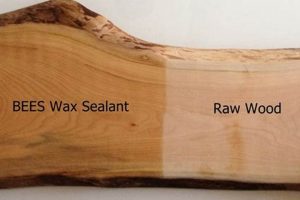
![Buy Premium Walnut Finished Wood [Deals Inside] | Best Final Touch: Elevate Your Projects with Professional Finishing](https://bestfinaltouch.com/wp-content/uploads/2026/05/th-405-300x200.jpg "Buy Premium Walnut Finished Wood [Deals Inside] Best Final Touch: Elevate Your Projects with Professional Finishing")