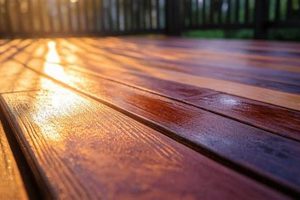
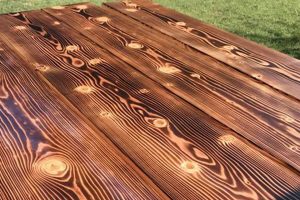
Coatings designed for exterior timber surfaces provide a protective barrier against environmental factors. These products, formulated with varying chemical compositions, safeguard wood from moisture, ultraviolet radiation, temperature fluctuations, and biological threats like fungi and insects. They range from penetrating oils that enhance natural wood grain to film-forming sealants that create a durable, weather-resistant layer. For instance, a clear, oil-based product might be applied to a deck to highlight the wood’s texture while offering water repellency, while a pigmented stain could be used on siding to provide both color and UV protection.
The application of protective treatments to exterior lumber is crucial for prolonging its lifespan and preserving its aesthetic appeal. Untreated wood is susceptible to degradation, leading to warping, cracking, decay, and discoloration. These treatments mitigate these effects, reducing the need for frequent repairs or replacements. Historically, natural oils and waxes were employed for this purpose; however, modern formulations offer superior performance and longevity, with some products lasting for several years before requiring reapplication. This preservation not only saves resources but also contributes to the long-term sustainability of wooden structures.
Understanding the diverse range of available products and their specific properties is essential for selecting the appropriate solution for a given project. Subsequent sections will delve into the different types of treatments, their application methods, and factors to consider when making a selection, ensuring optimal protection and enduring beauty for all outdoor timber projects.
Essential Considerations for Exterior Timber Protection
Selecting and applying appropriate treatments to outdoor timber requires careful consideration to ensure longevity and aesthetic appeal. The following guidelines outline critical factors for achieving optimal results.
Tip 1: Surface Preparation is Paramount: Prior to application, ensure the wood surface is clean, dry, and free from any existing coatings, dirt, or mildew. Sanding may be necessary to remove imperfections and create a suitable profile for adhesion.
Tip 2: Understand the Wood Species: Different wood species possess varying degrees of permeability and natural resistance to decay. This inherent variability influences the type of treatment required and its application rate. Research the specific characteristics of the wood being treated.
Tip 3: Choose the Correct Product Type: Select a product formulated specifically for exterior use, considering factors such as UV resistance, water repellency, and intended aesthetic outcome. Options include penetrating oils, stains, sealants, and paints, each offering distinct advantages and disadvantages.
Tip 4: Application Technique Matters: Adhere strictly to the manufacturer’s instructions regarding application methods, drying times, and recommended number of coats. Improper application can compromise the product’s performance and longevity.
Tip 5: Consider Environmental Factors: Evaluate the prevailing environmental conditions in the application area, including temperature, humidity, and exposure to direct sunlight. These factors can significantly affect the curing process and the long-term durability of the treatment.
Tip 6: Regular Maintenance is Essential: Implement a routine maintenance schedule to inspect the treated surface for signs of wear or degradation. Promptly address any issues, such as cracking or peeling, to prevent further damage and extend the product’s lifespan. Reapplication may be necessary every few years, depending on the product and exposure conditions.
Tip 7: Safety Precautions are Mandatory: Always wear appropriate personal protective equipment, including gloves, masks, and eye protection, when handling and applying these treatments. Ensure adequate ventilation to avoid inhalation of harmful vapors.
By adhering to these principles, optimal protection can be achieved, maximizing the lifespan and aesthetic value of exterior timber structures.
The subsequent section will offer a detailed discussion of specific product types and their suitability for various applications.
1. Protection from Elements

The primary purpose of treatments for outdoor timber is to shield the wood from the damaging effects of the environment. This protection directly impacts the lifespan, structural integrity, and aesthetic appearance of exterior wood structures. The effectiveness of any coating depends on its ability to withstand and mitigate various environmental factors.
- Ultraviolet (UV) Radiation Resistance
Solar radiation, particularly UV rays, causes lignin in wood to degrade, leading to discoloration, surface checking, and eventual structural weakening. Treatments formulated with UV absorbers or pigments minimize this damage by blocking or reflecting harmful radiation. For example, pigmented stains and opaque paints provide better UV protection compared to clear finishes. The absence of adequate UV protection can result in rapid deterioration, requiring frequent reapplication or even replacement of the wood.
- Water Resistance and Moisture Control
Excessive moisture absorption promotes fungal growth, decay, and dimensional instability, such as warping and cracking. Treatments with hydrophobic properties repel water, reducing the rate of moisture penetration. Penetrating oils and water-repellent sealants are commonly used to mitigate moisture damage. Failure to control moisture can lead to costly repairs and compromise the structural safety of wooden elements.
- Temperature Fluctuation Tolerance
Repeated expansion and contraction due to temperature changes can stress coatings, leading to cracking, peeling, and loss of adhesion. Flexible treatments that can accommodate dimensional changes in the wood are crucial for long-term performance. Elastomeric coatings, for instance, offer greater flexibility compared to rigid varnishes. In areas with extreme temperature variations, selecting a treatment with high flexibility is essential to prevent premature failure.
- Resistance to Biological Attack
Fungi, insects, and other organisms can cause significant damage to exterior timber. Some coatings contain biocides that inhibit the growth of fungi and deter insect infestations. Preservative treatments are often used on wood that is in direct contact with the ground or exposed to high levels of moisture. The appropriate biocide selection is important to be both effective and compliant with local regulations.
The selection of the appropriate “outdoor wood finishes” depends heavily on understanding the specific environmental challenges faced by the wooden structure. A comprehensive evaluation of these factors will ensure long-lasting protection and maintain the aesthetic appeal of the wood over time. Ignoring these environmental considerations can lead to premature failure of the wood structure and increased maintenance costs.
2. Species of wood

The selection of appropriate exterior timber treatments is inextricably linked to the specific wood species being used. The inherent characteristics of different wood types significantly influence their susceptibility to environmental degradation, the absorption rate of protective coatings, and the overall performance of the applied finish. Consequently, a comprehensive understanding of a wood’s properties is essential for ensuring the longevity and efficacy of the chosen outdoor treatment.
Wood density, grain structure, and natural oil content are critical factors. Dense hardwoods like teak or ipe, possessing high oil content, exhibit natural resistance to decay and moisture penetration. These species typically require less intensive treatment and may benefit from penetrating oils that enhance their natural beauty without forming a thick surface film. Conversely, softer woods such as pine or fir are more porous and vulnerable to moisture absorption and insect infestation. These species necessitate robust treatments, including preservatives and film-forming coatings that provide a durable barrier against environmental elements. The improper selection of a coating for a particular wood species can lead to premature failure, such as cracking, peeling, or uneven absorption, thereby negating the intended protective benefits. For instance, applying a thick, inflexible coating to a naturally oily wood can prevent proper adhesion, resulting in eventual delamination.
In summary, the choice of exterior timber treatments must be informed by the specific characteristics of the wood species to ensure optimal protection and aesthetic preservation. A mismatch between wood type and treatment can compromise the coating’s performance, leading to accelerated degradation and increased maintenance costs. Therefore, a careful evaluation of wood properties is a prerequisite for selecting the most appropriate solution for any outdoor application.
3. Preparation is critical

The longevity and performance of “outdoor wood finishes” are inextricably linked to the thoroughness of surface preparation. Inadequate preparation compromises adhesion, reduces penetration of preservatives, and ultimately shortens the lifespan of any applied coating. Contaminants such as dirt, mildew, loose paint, or mill glaze create barriers that prevent the finish from properly bonding with the wood substrate. This weakened bond leads to premature peeling, cracking, and blistering, rendering the coating ineffective. For example, applying a stain to a deck without first removing existing mildew will trap the mildew spores beneath the stain, accelerating decay and discoloration of the wood. Similarly, failing to sand a glossy surface prior to applying a new coat of paint will result in poor adhesion, leading to peeling within a short timeframe. Effective preparation, conversely, creates a clean, sound surface that maximizes the finish’s ability to protect the wood.
Surface preparation methods vary depending on the condition of the wood and the type of finish to be applied. For new wood, removing mill glaze (a shiny, smooth surface created during milling) through sanding is essential to allow proper penetration of stains or sealants. For weathered wood, power washing or scrubbing with a specialized cleaner removes dirt, algae, and loose fibers. Scraping and sanding are necessary to remove failing paint or varnish. Addressing any existing wood damage, such as rot or insect infestation, is also a critical step before applying any “outdoor wood finishes.” Neglecting to repair damaged areas compromises the integrity of the entire structure, and the finish will simply mask the problem temporarily. In practical terms, meticulous preparation ensures that the protective qualities of the “outdoor wood finishes” are fully realized, offering long-term resistance to weathering and decay.
Therefore, preparation is not merely a preliminary step, but an integral component of the entire finishing process. The time and effort invested in thorough preparation directly translate into increased durability, enhanced aesthetic appeal, and reduced maintenance costs over the long term. While proper preparation can be labor-intensive, the resulting benefits far outweigh the initial investment. Failing to prioritize preparation undermines the effectiveness of even the highest-quality “outdoor wood finishes,” ultimately resulting in costly repairs and premature replacement of the wood structure.
4. Application techniques

The effectiveness of “outdoor wood finishes” is contingent upon the precise execution of application techniques. Deviations from recommended procedures can negate the protective qualities inherent in even the highest-quality products. Application techniques dictate the uniformity, penetration, and adherence of coatings, directly influencing resistance to moisture, ultraviolet radiation, and biological degradation. For instance, improperly applied stain can result in uneven coloration, while insufficient sealant application fails to provide adequate water repellency. Moreover, the consistency and method of application determine the thickness and durability of the protective film. Brushing, spraying, or rolling each yields distinct results, impacting the final appearance and performance of the finish. The incorrect choice of application method, or the failure to follow product-specific instructions, represents a common cause of premature coating failure. Consider the consequences of applying a spar varnish, designed for flexible marine applications, to a rigid wooden door using an overly thick coat. The result is likely to be cracking and peeling due to the varnish’s inability to accommodate the wood’s natural expansion and contraction. Therefore, mastery of application techniques is not merely a cosmetic consideration, but a fundamental requirement for ensuring the longevity of exterior wood structures.
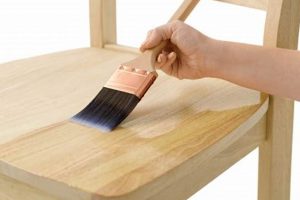
Specific application parameters warrant close attention. Surface preparation, addressed previously, is intrinsically linked to the application technique. A clean, properly abraded surface allows for optimal bonding. Temperature and humidity levels during application impact the curing process and can affect the final finish. Applying “outdoor wood finishes” in direct sunlight or during periods of high humidity can cause blistering or uneven drying. The number of coats and drying times between coats must also adhere to manufacturer’s specifications. Applying subsequent coats before the previous coat has fully cured can trap moisture and solvents, leading to adhesion problems. Furthermore, the type of applicator used plays a critical role. The selection of brush bristle type, roller nap length, or spray nozzle size must be aligned with the viscosity and properties of the chosen finish. An inappropriate applicator can result in brush marks, runs, or an uneven spray pattern, compromising both the appearance and protective function of the coating. Consequently, a thorough understanding of the chosen product’s requirements, coupled with the skillful execution of appropriate application techniques, is indispensable for achieving optimal results.
In conclusion, the relationship between application techniques and “outdoor wood finishes” is symbiotic. The finest product applied incorrectly offers limited protection, while even a moderately performing finish can achieve satisfactory results with proper execution. The commitment to meticulous surface preparation, adherence to manufacturer’s instructions, and skillful application methods are essential for maximizing the lifespan and aesthetic value of exterior wood structures. Addressing these critical aspects upfront mitigates the risk of costly repairs and replacements in the long term, solidifying the importance of application techniques as an integral component of effective exterior wood preservation.
5. Type of treatment

The selection of an appropriate treatment is fundamental to the efficacy of “outdoor wood finishes.” Different treatment types offer distinct protective mechanisms and are suited to varying wood species, environmental conditions, and aesthetic preferences. A comprehensive understanding of the available options is essential for achieving optimal performance and longevity.
- Penetrating Oils
Penetrating oils, such as linseed or tung oil, are absorbed into the wood fibers, enhancing the natural grain and providing water repellency. These treatments do not form a surface film and are therefore less prone to cracking or peeling. They are best suited for dense hardwoods and applications where a natural, matte appearance is desired. Periodic reapplication is necessary to maintain their protective properties. For example, teak decking frequently benefits from penetrating oil treatments to preserve its natural beauty and water resistance without creating a slippery surface.
- Film-Forming Sealants and Varnishes
Film-forming sealants and varnishes create a protective layer on the surface of the wood, providing resistance to water, UV radiation, and abrasion. These treatments offer a wider range of finishes, from glossy to satin, and can be tinted or pigmented for added aesthetic appeal. However, they are more susceptible to cracking, peeling, and blistering if improperly applied or if the wood experiences significant dimensional changes. Spar varnishes, formulated for marine applications, offer superior flexibility and UV resistance compared to standard varnishes. Exterior doors and window frames often benefit from these treatments to provide durable protection and an attractive finish.
- Stains
Stains penetrate the wood to add color while allowing the natural grain to remain visible. They offer varying degrees of UV protection and water repellency, depending on their formulation. Semi-transparent stains provide minimal protection but showcase the wood’s natural beauty, while solid stains offer greater protection but obscure the grain. Stains are commonly used on fences, siding, and decks to enhance their appearance and provide weather resistance. A common application includes staining cedar siding with a semi-transparent stain to enhance the natural wood grain while adding UV protection.
- Paints
Paints form an opaque coating on the surface of the wood, providing the highest level of protection against UV radiation and moisture penetration. They offer the widest range of color options but completely conceal the natural grain of the wood. Exterior paints must be specifically formulated for wood to allow for expansion and contraction without cracking or peeling. Siding and trim are frequently painted to provide durable protection and a uniform appearance. For example, painting wooden siding with a high-quality acrylic latex paint provides durable weather protection and a consistent color across the entire surface.
The selection of treatment type for “outdoor wood finishes” should be based on a careful evaluation of the wood species, environmental conditions, desired aesthetic, and maintenance requirements. Failure to choose the appropriate treatment can result in premature failure, increased maintenance costs, and compromised aesthetic appeal. Each option offers a different balance of protection, appearance, and durability, necessitating a tailored approach for optimal results.
6. Regular Maintenance
The long-term effectiveness of “outdoor wood finishes” is directly correlated with the implementation of consistent maintenance practices. The protective qualities of any exterior timber treatment degrade over time due to environmental exposure, physical wear, and biological activity. Regular maintenance serves to mitigate these factors, preserving the integrity and aesthetic appeal of the treated wood. Neglecting maintenance leads to a gradual decline in the finish’s protective capabilities, rendering the wood susceptible to moisture intrusion, ultraviolet damage, and eventual decay. For instance, a deck treated with a sealant but left uncleaned will accumulate dirt and debris, trapping moisture and accelerating the growth of mildew. This, in turn, compromises the sealant’s water-repellent properties, leading to wood rot and structural damage. Thus, regular maintenance functions as an integral component of any successful exterior wood finishing strategy.
Maintenance routines encompass several key activities. Periodic cleaning removes dirt, mildew, and other surface contaminants that can degrade the finish and promote biological growth. Mild detergents and gentle scrubbing are typically sufficient for routine cleaning, while more aggressive methods may be required to address stubborn stains or mildew infestations. Inspections should be conducted regularly to identify signs of wear, such as cracking, peeling, or discoloration. Promptly addressing these issues prevents further damage and extends the lifespan of the finish. For instance, spotting a small area of peeling paint on siding allows for localized repairs, preventing the problem from spreading and requiring a complete repaint. Reapplication of the finish is often necessary after several years, depending on the type of treatment and the severity of environmental exposure. This typically involves cleaning the surface, lightly sanding to improve adhesion, and applying a fresh coat of the selected product. Ignoring the need for reapplication exposes the wood to the elements, undoing the benefits of the initial treatment.
In summary, regular maintenance is not merely an ancillary task but a crucial element in ensuring the long-term performance of “outdoor wood finishes.” Proactive cleaning, inspection, and reapplication practices protect the investment in both the wood structure and the chosen treatment. The challenges associated with maintenance such as time constraints and the perceived inconvenience are outweighed by the significant cost savings and extended lifespan achieved through consistent care. Ultimately, understanding the symbiotic relationship between “outdoor wood finishes” and regular maintenance is essential for preserving the beauty and integrity of exterior timber structures.
7. Safety considerations
The application and maintenance of treatments for outdoor timber necessitates diligent adherence to safety protocols to mitigate potential health risks. These risks stem from the chemical composition of many “outdoor wood finishes,” their application methods, and the long-term exposure to treated surfaces.
- Chemical Exposure Mitigation
Many treatments for outdoor wood contain volatile organic compounds (VOCs), biocides, and other potentially harmful chemicals. Inhalation, skin contact, and ingestion of these substances can lead to adverse health effects ranging from mild irritation to severe systemic toxicity. Mitigation strategies include the use of personal protective equipment (PPE) such as respirators, gloves, and eye protection during application. Ensuring adequate ventilation in the work area is crucial to minimize inhalation exposure. Proper disposal of used containers and application materials in accordance with local regulations is essential to prevent environmental contamination and accidental exposure. For example, improperly disposing of rags soaked in oil-based stain can create a fire hazard due to spontaneous combustion.
- Flammability Hazards
Certain “outdoor wood finishes,” particularly those containing solvents, are highly flammable. Improper handling and storage of these products can pose a significant fire risk. Precautions include storing flammable materials in well-ventilated areas away from heat sources and open flames. Smoking should be strictly prohibited in areas where flammable products are being used or stored. Ensuring readily available fire extinguishers and training personnel on their proper use is crucial. Spontaneous combustion of oil-soaked rags is a well-documented hazard, emphasizing the need for proper disposal procedures, such as soaking rags in water and sealing them in a metal container before disposal.
- Surface Hazards on Treated Wood
While “outdoor wood finishes” are intended to protect the wood, they can also create surface hazards. Some treatments, particularly those that form a glossy film, can become slippery when wet, increasing the risk of falls. Textured additives can be incorporated into the finish to improve traction. Regular cleaning to remove algae and mildew is essential to maintain a safe walking surface. Splintering or cracking of the treated wood can also pose a hazard. Regular inspection and repair of damaged areas are necessary to prevent injuries. For instance, a deck treated with a high-gloss sealant may become dangerously slippery when wet, requiring the application of a non-slip coating to ensure safe use.
- Long-Term Environmental Impact
The long-term use of certain “outdoor wood finishes” can have environmental consequences. Some biocides used to prevent fungal growth and insect infestation can leach into the soil and water, potentially harming non-target organisms. Selecting treatments with low-VOC formulations and environmentally friendly biocides can minimize these risks. Proper application techniques, such as avoiding overspray, can also reduce environmental contamination. The responsible use and disposal of these products are crucial for minimizing their long-term environmental impact. For example, using a water-based stain with low VOC content is environmentally responsible to ensure a safer environment.
These facets highlight the importance of integrating safety considerations into every stage of the selection, application, and maintenance of “outdoor wood finishes.” A proactive approach to risk management not only protects individuals but also minimizes the environmental impact of these treatments.
Frequently Asked Questions
This section addresses common inquiries regarding the selection, application, and maintenance of coatings designed for outdoor timber, aiming to provide clarity and dispel misconceptions.
Question 1: What factors determine the appropriate coating for exterior wood?
Selection depends on wood species, intended use, environmental exposure, and desired aesthetic. Consider inherent wood properties, such as density and oil content, alongside climate conditions, including UV radiation and moisture levels. Performance requirements, like abrasion resistance for decking, also influence the decision.
Question 2: How can surface preparation improve the lifespan of exterior wood finishes?
Thorough surface preparation, involving cleaning, sanding, and removal of existing coatings, ensures proper adhesion and penetration. Contaminants such as dirt, mildew, and loose paint impede bonding, leading to premature failure. Proper preparation optimizes the coating’s protective qualities and extends its longevity.
Question 3: What are the key differences between penetrating oils and film-forming coatings?
Penetrating oils absorb into the wood fibers, enhancing natural grain and providing water repellency without creating a surface layer. Film-forming coatings create a protective layer on the surface, offering greater resistance to UV radiation and abrasion. The choice hinges on desired aesthetic, durability requirements, and maintenance preferences.
Question 4: How frequently should exterior wood finishes be reapplied?
Reapplication frequency varies based on coating type, environmental exposure, and maintenance practices. Penetrating oils typically require more frequent reapplication than film-forming coatings. Inspect surfaces annually for signs of wear, such as cracking, peeling, or discoloration, and reapply as needed to maintain protection.
Question 5: What safety precautions are necessary when working with exterior wood treatments?
Many treatments contain volatile organic compounds (VOCs) and other potentially harmful chemicals. Wear appropriate personal protective equipment (PPE), including respirators, gloves, and eye protection. Ensure adequate ventilation, and adhere to proper disposal procedures for used containers and application materials to minimize health and environmental risks.
Question 6: How does climate affect the choice and performance of exterior wood coatings?
Climate conditions significantly impact coating selection and performance. High UV exposure necessitates UV-resistant formulations. Areas with frequent rainfall require water-repellent treatments. Extreme temperature fluctuations demand coatings with flexibility to accommodate dimensional changes in the wood. Climate-specific considerations are crucial for achieving long-term durability.
Effective exterior timber protection requires careful consideration of wood properties, environmental factors, and product characteristics. Adherence to proper application and maintenance practices ensures long-lasting performance and aesthetic appeal.
The next section will offer specific product recommendations and case studies.
Outdoor Wood Finishes
The preceding exploration has illuminated the multifaceted nature of protective treatments for exterior timber. Critical elements, including wood species selection, meticulous surface preparation, appropriate application techniques, suitable product selection, diligent maintenance routines, and unwavering adherence to safety protocols, have been addressed. The objective is to emphasize the interdependency of these factors in securing longevity and aesthetic preservation for wooden structures exposed to environmental stressors.
Effective implementation of these principles will yield tangible benefits, mitigating structural degradation, minimizing life-cycle costs, and maximizing the inherent value of wood as a sustainable building material. The informed selection and responsible application of “outdoor wood finishes” are not merely cosmetic considerations, but rather essential investments in the enduring quality and environmental responsibility of timber construction.