



The application of specialized techniques and high-quality materials to protect and enhance the aesthetic appeal of wooden surfaces constitutes a skilled trade. This meticulous process involves surface preparation, the application of coatings like stains, sealers, and topcoats, and often includes intermediate sanding or polishing steps to achieve a desired look and durability. Consider, for example, the transformation of raw lumber into a finely crafted piece of furniture boasting a smooth, lustrous, and resilient surface.
Proper surface treatment is critical for preserving wood against environmental factors, wear, and tear. It extends the lifespan of wooden objects, from structural elements to decorative items. Historically, these specialized skills have been essential in construction, furniture making, and the creation of musical instruments, contributing significantly to both the functionality and beauty of numerous artifacts.
A detailed examination of surface preparation methods, the properties and applications of various coating systems, and techniques for achieving specific aesthetic results will now follow. These discussions will provide a thorough understanding of the processes involved in achieving superior results.
Essential Guidance
The following outlines crucial recommendations for achieving high-quality outcomes. Adherence to these guidelines significantly increases the likelihood of a durable and aesthetically pleasing result.
Tip 1: Proper Surface Preparation is Paramount. Thoroughly clean the wood surface, removing any dirt, grease, or existing coatings. Sanding to the appropriate grit level ensures optimal adhesion of subsequent coatings. Inadequate preparation invariably leads to adhesion failures and an unsatisfactory visual appearance.
Tip 2: Select Appropriate Coatings for the Intended Use. Consider the environment and intended use of the finished piece. Interior projects may benefit from specific water-based acrylics, while exterior applications require durable, UV-resistant formulations like spar urethanes or specialized exterior stains. Incorrect product selection jeopardizes longevity and protective capabilities.
Tip 3: Apply Thin, Even Coats. Multiple thin coats are preferable to a single thick coat. Thick applications are prone to runs, sags, and extended drying times, potentially resulting in an uneven and unprofessional appearance. Thin coats allow for proper curing and layering of the protective finish.
Tip 4: Inter-Coat Sanding is Crucial for Smoothness. After each coat of finish has dried completely, lightly sand with a fine-grit sandpaper (e.g., 320-grit or higher). This removes imperfections and creates a smooth surface for subsequent coats, improving the overall aesthetic outcome.
Tip 5: Maintain Consistent Environmental Conditions. Temperature and humidity significantly impact drying times and finish quality. Work in a well-ventilated area with consistent temperature and humidity levels to ensure proper curing and prevent issues such as blushing or hazing. Monitor the manufacturers recommendations regarding environmental parameters.
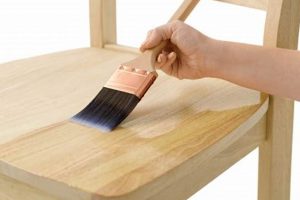
Tip 6: Invest in Quality Application Tools. The use of high-quality brushes, spray guns, and applicators is essential for achieving a uniform and professional-looking finish. Inferior tools often result in uneven application, brush marks, and other defects that detract from the final product. Clean application tools appropriately after each use.
Tip 7: Allow Adequate Drying Time Between Coats. Strictly adhere to the manufacturer’s recommended drying times for each coating. Premature application of subsequent coats can lead to trapped solvents, blistering, and other finish defects that compromise the integrity and appearance of the final product. Longer drying times are generally preferable to shorter ones.
Consistent application of proper techniques, suitable materials, and controlled environmental conditions guarantees superior and lasting aesthetic appeal. Mastering these principles is indispensable for superior outcomes.
Having explored detailed recommendations, subsequent sections will delve into specific application techniques and problem-solving strategies.
1. Surface Preparation Protocols

Surface preparation protocols form the indispensable foundation of any professional wood finishing endeavor. The quality of the finish, its longevity, and its overall aesthetic appeal are directly and irrevocably linked to the thoroughness and precision of the preparation process. Neglecting or inadequately performing these protocols inevitably leads to compromised results, regardless of the quality of the materials or the skill of the applicator in later stages.
- Cleaning and Degreasing
The initial step involves removing all surface contaminants, including dirt, grease, wax, and previous coatings. This often necessitates the use of specialized cleaning agents and solvents. In cabinet refinishing, for instance, residual cooking grease must be completely eliminated to prevent adhesion failures. Inadequate cleaning undermines the bond between the wood and the subsequent finish layers, leading to peeling, blistering, or an uneven appearance.
- Sanding and Abrading
Sanding serves multiple purposes: it smooths the surface, removes imperfections like scratches and dents, and creates a mechanical key for the finish to adhere to. Progressing through a series of increasingly finer grits is essential for achieving a consistent and uniform surface texture. For example, when refinishing a hardwood floor, coarse grits are used to remove old finish, followed by finer grits to refine the surface and minimize visible scratches. Improper sanding leaves behind imperfections that become magnified by the finish, resulting in an unsatisfactory final product.
- Dust Removal and Tack Cloth Application
After sanding, meticulous removal of all dust particles is crucial. Compressed air, vacuuming, and the use of tack cloths are standard practices. Even microscopic dust particles can compromise the finish by creating surface imperfections and interfering with adhesion. Consider the creation of a fine musical instrument; any dust contamination would detract from the clarity and smoothness of the finish. Insufficient dust removal leads to a gritty texture and a visibly flawed surface.
- Repair and Filling
Prior to applying the finish, any significant imperfections, such as cracks, holes, or dents, must be addressed using appropriate wood fillers or repair compounds. These materials must be carefully selected to match the color and grain of the surrounding wood. The seamless integration of the repair material with the existing wood is critical for achieving a flawless finish. If one were to create a custom built bookshelf, careful filling would prevent any visual distractions from the woods natural beauty. Inadequate repairs result in visible flaws and a compromised overall appearance.
These surface preparation protocols collectively contribute to the overall quality and longevity of professional wood finishing. Mastering and meticulously executing each step is fundamental to achieving a durable, aesthetically pleasing, and ultimately professional result. The absence of any one of these stages significantly increases the likelihood of premature failure and a less-than-satisfactory appearance, underscoring their critical importance in the broader context of achieving excellence in wood finishing.
2. Coating System Selection

Coating system selection directly dictates the durability, aesthetic character, and protective capabilities of a wood finish. The professional application of wood finishing relies heavily on the understanding and application of appropriate coating systems. Inadequate selection introduces vulnerabilities leading to premature failure and visual deficiencies. The selection process requires consideration of the wood species, intended use (interior or exterior), environmental exposure, and desired aesthetic. The professional must correlate these parameters to the properties of various coatings, including varnishes, lacquers, polyurethanes, stains, and oils.
For instance, a marine environment necessitates a coating system specifically formulated to withstand constant exposure to saltwater and UV radiation. A spar varnish, known for its flexibility and UV resistance, would be a suitable choice for finishing wooden boats, contrasting sharply with the inappropriate use of a water-based acrylic intended for interior applications. Similarly, furniture intended for heavy use requires a robust, scratch-resistant finish, such as a catalyzed conversion varnish, while decorative interior trim may benefit from a less durable but aesthetically pleasing lacquer. In historic preservation, matching the original coating system’s appearance and properties is paramount. Incorrect coating selection leads to accelerated degradation and undermines the historical accuracy of the restoration. Another consideration is the volatile organic compound (VOC) content of the coatings, with many jurisdictions imposing restrictions on the use of high-VOC materials.
In conclusion, coating system selection constitutes an integral part of any wood finishing process. Understanding the interconnected factors wood characteristics, environmental stressors, performance requirements, and regulatory constraints is crucial. The ultimate goal is to match the characteristics of a coating system to the needs of the project, therefore ensuring the longevity, visual integrity, and performance. Challenges may arise in situations involving unknown coatings or conflicting requirements, which requires thorough testing, analysis and professional judgement. The subsequent sections will address proper application techniques, complementing the selection process for a successful project.
3. Precise Application Techniques

The intersection of precise application techniques and professional wood finishing is where theory meets practice, and where the intended qualities of a coating are either realized or compromised. These techniques are not merely about applying a finish; they are about controlling the application process to achieve specific, measurable outcomes. The failure to employ precise methods introduces variables that lead to inconsistency, defects, and ultimately, a subpar result. For example, improper spray gun technique can result in orange peel texture, runs, or uneven coverage, regardless of the quality of the coating being used. The absence of proper brush technique leads to brush marks and uneven distribution of the finish, detracting from the aesthetic appearance.
Precise application necessitates a comprehensive understanding of the coating’s properties, including viscosity, drying time, and application temperature. It also requires mastery of the chosen application tool, be it a brush, sprayer, or roller. Professionals meticulously adjust equipment settings, control application speed, and maintain consistent overlap to ensure uniform film thickness and coverage. The consequences of neglecting these details are readily apparent in common finishing defects such as blistering, cracking, and poor adhesion. Consider the application of a conversion varnish to a high-end cabinet; the proper atomization pressure and spray pattern are critical for achieving a glass-smooth finish that highlights the wood’s natural grain. Conversely, a rushed or careless application can result in a finish that is both unsightly and structurally unsound.
In summary, precise application techniques represent an essential element of achieving professional wood finishing results. Mastery over application techniques is not merely about avoiding errors; its about controlling the entire process to guarantee a predictable and repeatable outcome that meets the highest standards. The challenge lies in integrating an understanding of the material science with the skills of an artist. These techniques collectively ensure that the desired performance characteristics are fully realized. Subsequent discussions will address the importance of Environmental Control Factors.
4. Environmental Control Factors

Environmental control exerts a decisive influence on the quality and longevity of professional wood finishing projects. The ambient conditions during application and curing fundamentally affect the finish’s appearance, adhesion, and overall performance. Precise management of these factors is therefore essential to achieving superior results. Suboptimal environmental conditions frequently precipitate finish defects and compromise the integrity of the completed work.
- Temperature Regulation
Temperature influences viscosity, drying time, and curing rate of coatings. Extremes in temperature can lead to various defects. High temperatures may accelerate drying, resulting in solvent entrapment and blistering. Conversely, low temperatures can inhibit curing, leading to a soft or tacky finish. In a controlled finishing environment, temperature is typically maintained within a specific range, for example, between 65F and 75F, to ensure proper application and curing. The refinishing of a grand piano, for example, demands strict temperature regulation to avoid surface imperfections that would compromise the instruments tonal quality and aesthetic appeal.
- Humidity Management
Humidity directly impacts the absorption and evaporation rates of solvents in coatings. High humidity can impede solvent evaporation, leading to prolonged drying times, blushing, and poor film formation. Conversely, low humidity may cause rapid solvent evaporation, resulting in inadequate flow and leveling. Maintaining consistent humidity levels, typically within a range of 40% to 60%, is crucial for optimal finish performance. In woodworking shops located in humid climates, dehumidification systems are often used to regulate humidity during the finishing process, preventing moisture-related issues.
- Airflow and Ventilation
Adequate airflow is necessary to remove solvent vapors and ensure uniform drying. Insufficient ventilation can lead to a buildup of solvent vapors, creating health hazards and increasing the risk of fire or explosion. Moreover, stagnant air can trap dust and other airborne contaminants, resulting in surface imperfections. Spray booths are equipped with efficient ventilation systems to provide a safe and clean environment for applying coatings. When finishing furniture, strategic placement of fans can promote airflow and accelerate drying times, contributing to a more consistent finish.
- Contamination Control
Airborne particles, such as dust, dirt, and fibers, can contaminate the finish, resulting in a rough or uneven surface. Strict measures to control contamination are therefore essential. These may include using air filters, wearing appropriate personal protective equipment (PPE), and maintaining a clean and organized workspace. For example, in aerospace applications, where surface smoothness is paramount, cleanrooms are often used to minimize contamination during the finishing process. Wood shops commonly use tack cloths to remove any remaining dust particles just before coating application.
These Environmental Control Factors are not isolated variables; rather, they interact to influence the overall outcome of professional wood finishing. Mastery of these factors enables finishers to mitigate risks, improve efficiency, and achieve consistently superior results. The effective integration of temperature, humidity, airflow, and contamination control is a hallmark of professional practice and an indicator of the commitment to excellence. This underscores the need for a disciplined and informed approach to achieve the best possible outcomes in all finishing endeavors. These measures collectively contribute to the longevity, durability, and aesthetic value of a wooden product.
5. Long-Term Durability Assurance

The pursuit of long-term durability represents a central objective in professional wood finishing. The techniques, materials, and processes employed are directly correlated to the lifespan and resilience of the finished product. Deficiencies in any aspect of the finishing process compromise the wood’s ability to withstand environmental stressors, physical wear, and chemical exposure, inevitably leading to premature degradation. For example, furniture finished with a low-quality varnish may exhibit cracking, peeling, and discoloration within a few years, whereas a properly finished piece, utilizing high-quality materials and meticulous application techniques, can retain its aesthetic appeal and structural integrity for decades.
Long-term durability assurance manifests practically through several key strategies. These include selecting coating systems appropriate for the intended environment and usage, implementing meticulous surface preparation to ensure optimal adhesion, applying coatings with uniform thickness and proper curing, and incorporating protective measures against moisture, UV radiation, and abrasion. Consider exterior applications, where the use of UV-resistant stains and sealers significantly mitigates the damaging effects of sunlight. Marine applications often demand epoxy coatings to protect against constant water exposure. The restoration of historic structures emphasizes durability through the use of historically appropriate and long-lasting materials, thus ensuring that the restored elements endure for generations. Inadequate attention to these details often results in expensive repairs, shortened lifecycles, and dissatisfied clients.
Achieving long-term durability in wood finishing presents certain challenges, including the variability of wood as a natural material, the complexities of coating chemistry, and the influence of environmental factors. However, a commitment to best practices, ongoing education, and rigorous quality control enables professionals to consistently deliver finishes that stand the test of time. Ultimately, the assurance of long-term durability is a defining characteristic of expertise and reflects a commitment to providing lasting value. This ensures a cost-effective result and supports a practice promoting sustainability by extending the usable life of wooden products.
Frequently Asked Questions
The following addresses common inquiries pertaining to achieving optimal outcomes. Understanding these points aids in project planning and execution.
Question 1: What distinguishes professional wood finishing from DIY attempts?
Distinctions arise from specialized knowledge, high-grade materials, and meticulous application techniques. Professionals possess extensive experience in selecting appropriate coatings, preparing surfaces, and controlling environmental variables to ensure durability and aesthetic quality surpassing typical DIY endeavors. Investment in professional expertise reflects a commitment to superior results and longevity.
Question 2: What are the key indicators of a high-quality wood finish?
Indicators include a smooth, uniform surface devoid of imperfections like brush marks or orange peel texture. Consistent color and sheen, coupled with excellent scratch resistance and adhesion, signify a high-quality finish. Professionals rigorously inspect finished pieces to meet stringent standards.
Question 3: How does surface preparation impact the final result?
Surface preparation is critical; proper cleaning, sanding, and filling create an optimal substrate for coating adhesion and appearance. Inadequate preparation invariably leads to finish defects, such as peeling, blistering, or an uneven texture. Professionals prioritize surface preparation as a foundational step.
Question 4: What environmental factors influence wood finishing outcomes?
Temperature, humidity, and airflow significantly affect drying times, curing rates, and overall finish quality. Professionals closely monitor and control these factors to prevent issues like blushing, cracking, or improper adhesion. Controlled environments yield more predictable and consistent results.
Question 5: How is the selection of coating systems determined?
Selection hinges on the wood species, intended use, environmental exposure, and desired aesthetic. Exterior applications require UV-resistant coatings, while high-traffic areas necessitate durable, scratch-resistant finishes. Professionals possess the expertise to match coatings to specific project needs, ensuring optimal performance and longevity.
Question 6: What steps are taken to ensure long-term durability?
Long-term durability is achieved through meticulous surface preparation, appropriate coating system selection, proper application techniques, and the implementation of protective measures against moisture, UV radiation, and abrasion. Professionals prioritize durable finishes that withstand wear and environmental factors, preserving the aesthetic and structural integrity of the wood.
Professional wood finishing combines expertise, precision, and material science to produce durable and visually stunning results. Engaging a professional ensures a quality outcome and preserves the beauty of wood for generations.
This completes a detailed examination of professional wood finishing practices. Further study and hands-on experience will lead to a more complete understanding of the process.
Conclusion
This exploration has elucidated the multifaceted nature of professional wood finishing, emphasizing its critical role in both the preservation and enhancement of wooden materials. The discourse has highlighted surface preparation, coating system selection, precise application techniques, environmental control, and long-term durability as essential pillars of the practice. Furthermore, the responses to frequently asked questions have addressed common points of uncertainty and underscored the value of expertise in achieving superior and lasting results.
The information presented advocates for a discerning approach to wood finishing, one that prioritizes informed decision-making and meticulous execution. A commitment to these principles ensures not only the immediate aesthetic appeal of finished wood but also its resilience against the inevitable passage of time and the persistent forces of the environment. It is through this dedication to quality and durability that professional wood finishing truly distinguishes itself, guaranteeing enduring value and satisfaction.

![Buy Quality Finished Shelf Wood - [Your Brand] | Best Final Touch: Elevate Your Projects with Professional Finishing](https://bestfinaltouch.com/wp-content/uploads/2026/05/th-447-300x200.jpg "Buy Quality Finished Shelf Wood - [Your Brand] Best Final Touch: Elevate Your Projects with Professional Finishing")